
Learn how to attract foreign customers to restaurants in Shizuoka. Overcome language barriers, optimize Google Business Profile, and welcome global tourists.
 執筆者:Hikaru SonedaCEO
Many local restaurant owners in Shizuoka watch international visitors pass by daily, wondering how to welcome them without English-speaking staff.
This practical guide provides proven, low-cost steps to attract foreign customers to restaurants in Shizuoka by optimizing digital visibility and everyday dining operations.
Why are foreign travelers visiting Shizuoka, and why do local restaurants miss them?
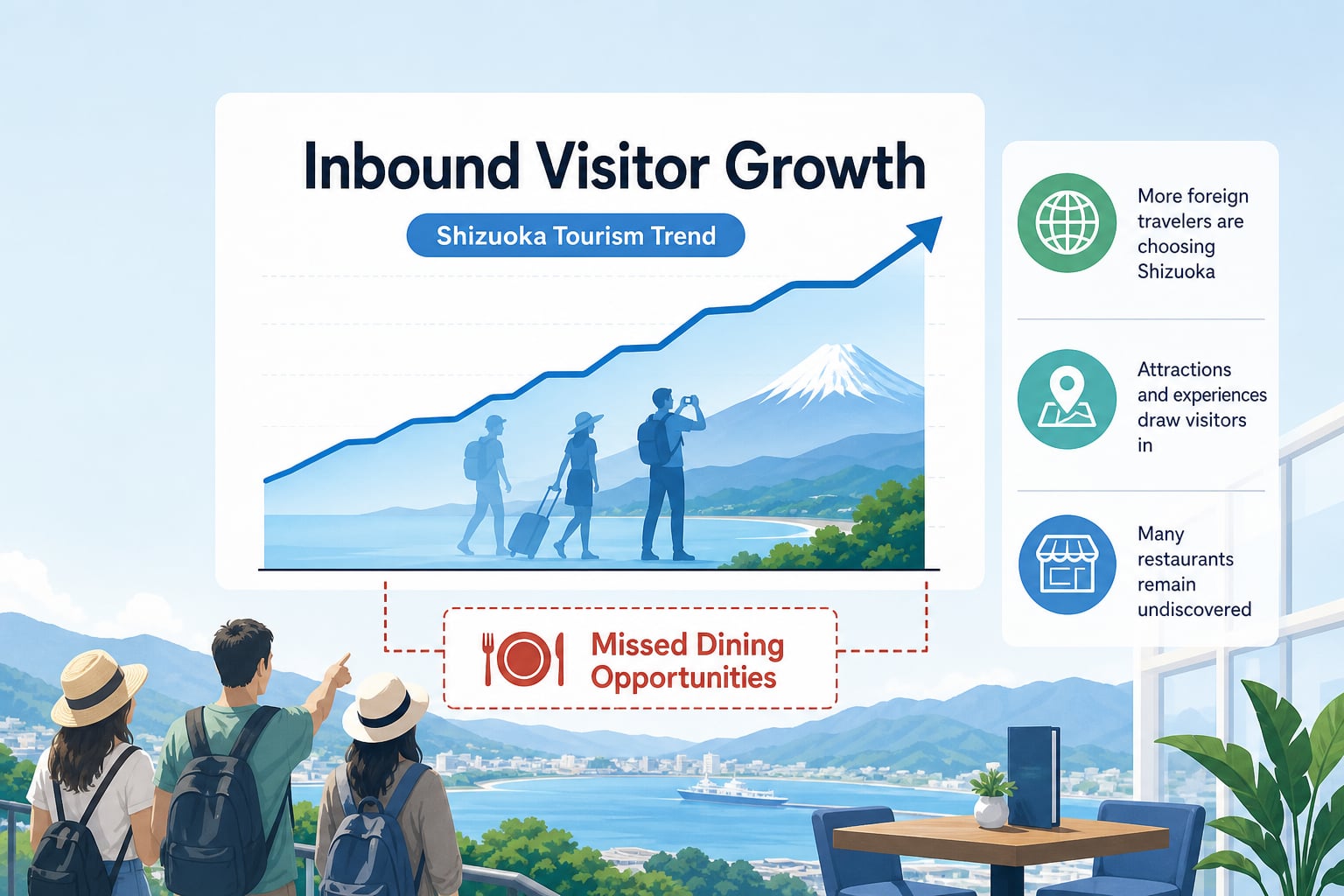
Shizuoka Prefecture welcomes a massive volume of international travelers, yet local independent dining establishments often struggle to capture this demand. In 2025, Shizuoka recorded 2.229 million foreign guest overnight stays, representing an 18.2% increase compared to 2024 and ranking 12th nationwide in Japan. While foreign visitors account for 9.9% of total overnight guests in the prefecture, many dining rooms remain entirely dependent on domestic trade because passing travelers cannot easily identify what local eateries offer.
The fundamental issue stems from travel geography along the Golden Route between Tokyo and Kyoto or Osaka. A substantial segment of tourists visits iconic spots like Mt. Fuji, Shiraito Falls, or Izu Peninsula hot springs during daylight hours before boarding the Shinkansen or tour buses to lodge elsewhere. When overseas travelers look for dinner or lunch near transit hubs, Japanese-only storefronts without exterior pricing or English guidance cause hesitation, prompting them to default to international fast-food chains or convenience stores instead of authentic local venues.
Recognizing visitor origin patterns helps restaurateurs tailor their welcoming strategy effectively. Official tourism data shows that visitors from East Asia make up the largest share of foreign overnight stays in Shizuoka, with China representing 39.7%, Taiwan accounting for 9.0%, and South Korea at 8.3%. In contrast, travelers from Europe, North America, and Australia collectively comprise 13.7% of stays, creating distinct dining preferences across regional corridors.
Understanding Regional Flow Across Shizuoka’s Tourism Zones
The prefecture divides its tourism management across distinct zones, including Izu, Fuji, Suruga, West Suruga/Okuoi, Chutoen, and Saihoku-en. In fiscal year 2024, Izu welcomed 10.495 million overnight visitors, representing 53.8% of the prefecture’s total overnight travelers, while the Fuji area saw overnight stays jump by 14.3% to 2.772 million. Major roadside stations like Michi-no-Eki Asagiri Kogen more than doubled visitors year-over-year to approximately 780,000, and Fujikawa Rakuza saw roughly 3.51 million visits.
参考: Shizuoka Prefecture’s inbound tourism growth
How can Google Business Profile attract foreign customers to restaurants in Shizuoka?
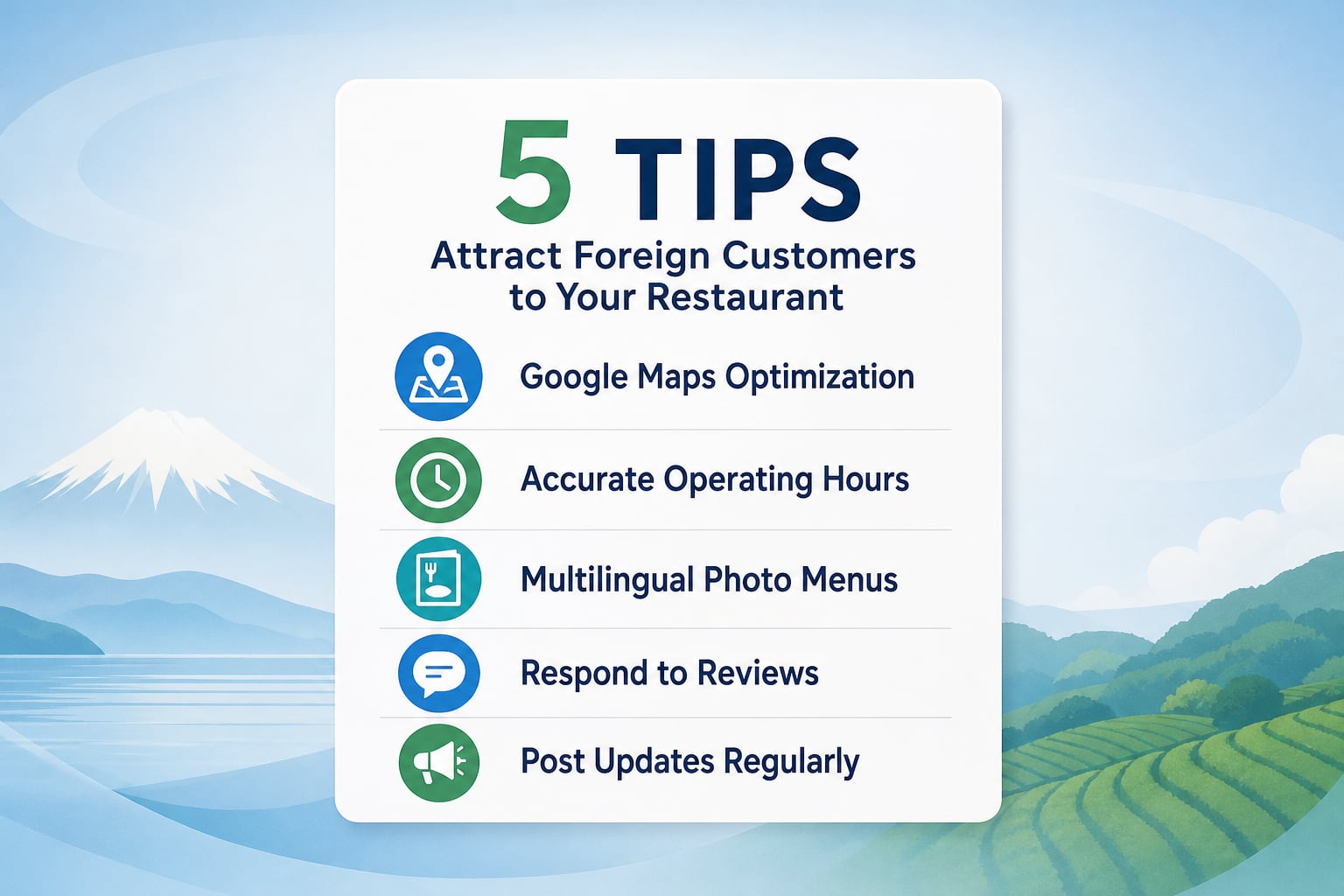
Optimizing a Google Business Profile is the single most cost-effective method to intercept international tourists looking for nearby meals. Foreign travelers rely almost exclusively on Google Maps and smartphone location searches rather than domestic Japanese review platforms. By properly configuring primary categories, operating hours, and photo albums, small independent eateries can dramatically increase local map pack visibility for non-Japanese search queries.
Multilingual profile optimization operates automatically through Google’s localized infrastructure when accurate data is supplied. When an overseas visitor opens Google Maps, the app displays business details translated into the user’s system language, such as English, Traditional Chinese, or Korean. Adding clear photo menus, high-resolution food imagery, and exact dietary attributes allows search engine algorithms to match your venue with specific intent queries like ‘seafood lunch near Shizuoka Station’ or ‘soba noodles near Mt. Fuji’.
- Claim and Verify Primary Store Information: Confirm precise map pin placement, official romanized business names, accurate open hours, and holiday schedules to prevent travelers from arriving at closed doors.
- Upload High-Resolution Photos of Signature Dishes: Post brightly lit images of individual menu items, drink selections, storefront entrances, and seating layouts so first-time visitors feel comfortable entering.
- Input the Complete Menu with Latin Alphabet Names: Utilize the built-in menu feature within Google Business Profile to list dish titles, descriptions, and accurate yen pricing for transparent dining decisions.
- Specify Dining Attributes and Dietary Features: Check relevant business attributes including indoor seating, credit card acceptance, vegetarian options, Wi-Fi availability, and wheelchair accessibility.
- Encourage and Respond to Multilingual Reviews: Display courteous review invitation cards at the cashier, and use automated translation tools to reply politely to foreign-language feedback.
参考: Google Business Profile English optimization
How do visual menus and dietary labels eliminate dining barriers for foreign guests?
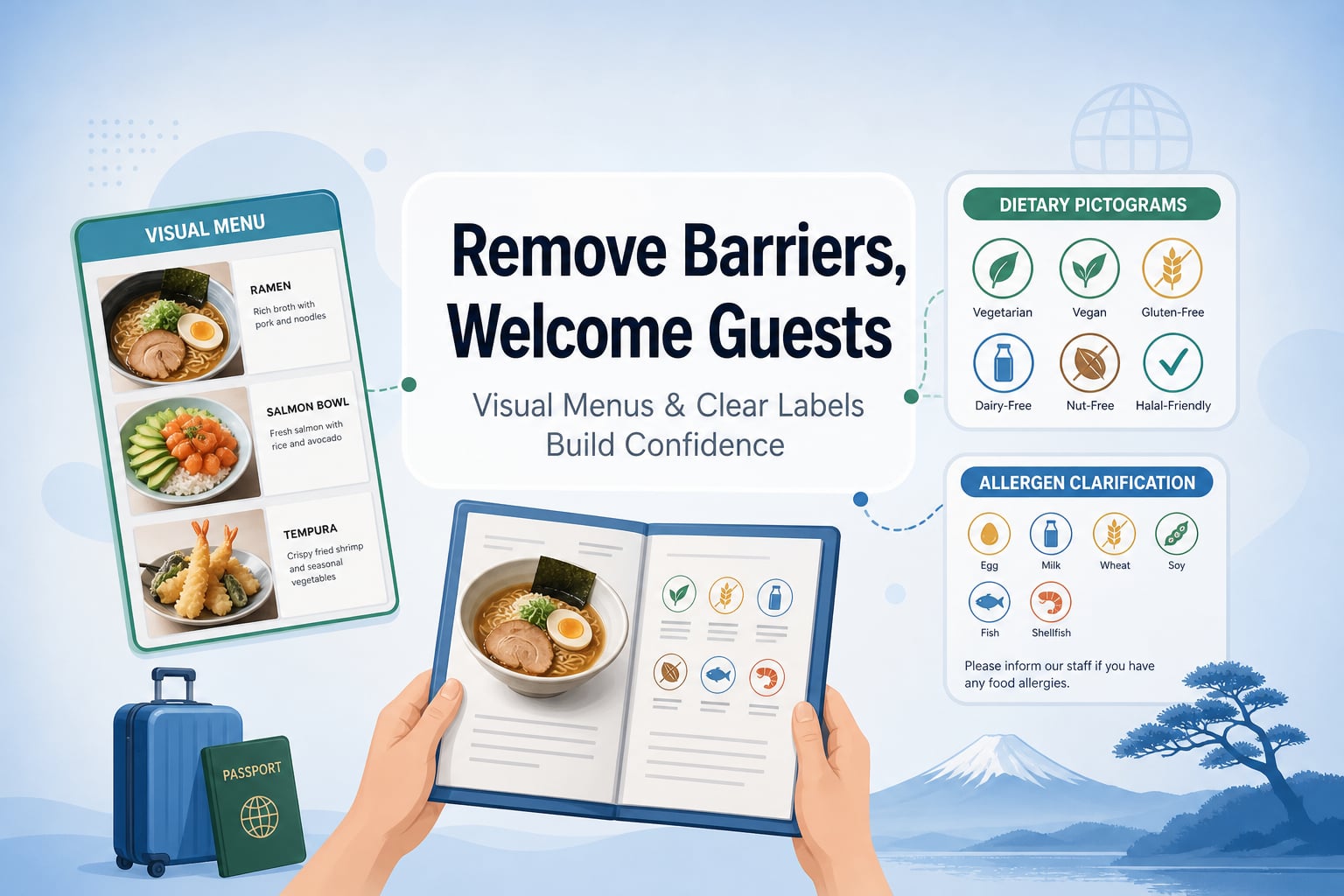
Visual menus featuring dish photographs and universal dietary pictograms remove the anxiety foreign guests face when ordering Japanese food. Many tourists worry about hidden allergens, religious dietary restrictions, or accidental meat consumption in broth bases. Presenting clear graphic symbols alongside Latin alphabet descriptions enables visitors to make confident ordering decisions without demanding complex explanations from kitchen staff.
Effective menu translation goes beyond literal machine translation by describing core ingredients, cooking methods, and flavor profiles. Instead of translating regional dishes into confusing phonetic names, provide simple contextual explanations such as ‘Deep-fried Sakura shrimp from Suruga Bay served over rice’ or ‘Simmered local beef tendon in Shizuoka black broth’. Clarifying portion sizes, tax inclusion, and standard dining etiquette directly on the physical printed menu book significantly reduces order misunderstandings at the table.
Essential Visual Menu Elements Checklist
A high-converting inbound menu incorporates transparent visual cues rather than dense blocks of text. Ensure every signature entree showcases a colorful photo, clear price in yen, and standardized dietary icons indicating pork, beef, seafood, dairy, eggs, peanuts, or vegetarian suitability. Including numbered ordering codes on the menu sheet allows guests to point or write numbers directly on order tickets.
参考: dietary labels and allergen information
Which digital tools help restaurant staff serve international tourists without speaking English?
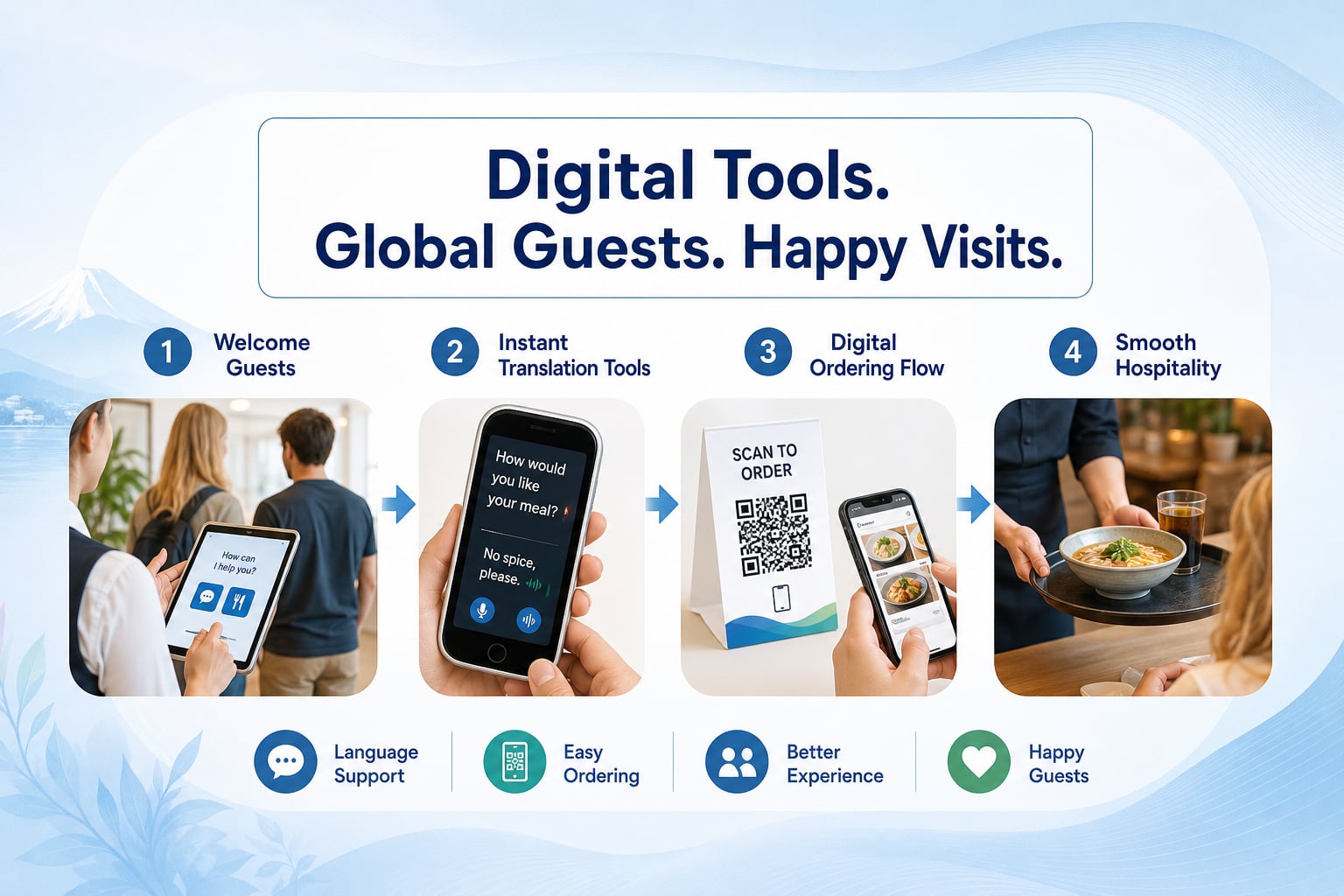
Service teams do not need fluent English skills to provide exceptional hospitality to inbound tourists. Deploying accessible digital communication tools bridges language gaps efficiently while preserving table turnover speed. Dedicated pocket translation hardware, smartphone translation applications, and multi-language QR code ordering systems allow service staff to answer common operational questions accurately.
Operational friction drops sharply when restaurants prepare standardized physical pointing boards for recurring interactions. Laminated communication cards covering table charges, water refills, last orders, payment procedures, and restroom locations resolve 90% of front-of-house inquiries instantly. Pairing these visual aids with stable customer Wi-Fi access ensures overseas guests can access digital translation tools smoothly on their personal smartphones.
- Hardware Pocket Translators: Dedicated handheld translation devices supporting over 70 spoken languages allow kitchen and floor teams to converse verbally with international diners during complex requests.
- Self-Ordering Smartphone QR Codes: Tabletop QR code systems that render menus in English, Simplified Chinese, Traditional Chinese, and Korean let diners order directly without verbal communication.
- Laminated Pointing Communication Sheets: Bilingual visual cards placed at customer service counters outline essential steps like split-bill policies, minimum spend rules, and allergen disclaimers.
- Cloud-Based Cashless POS Terminals: Terminals accepting major international credit cards, IC transportation cards, and global mobile wallets speed up checkout times and reduce currency exchange confusion.
参考: digital communication tools for restaurants
How can Shizuoka restaurants showcase regional food culture to attract global travelers?
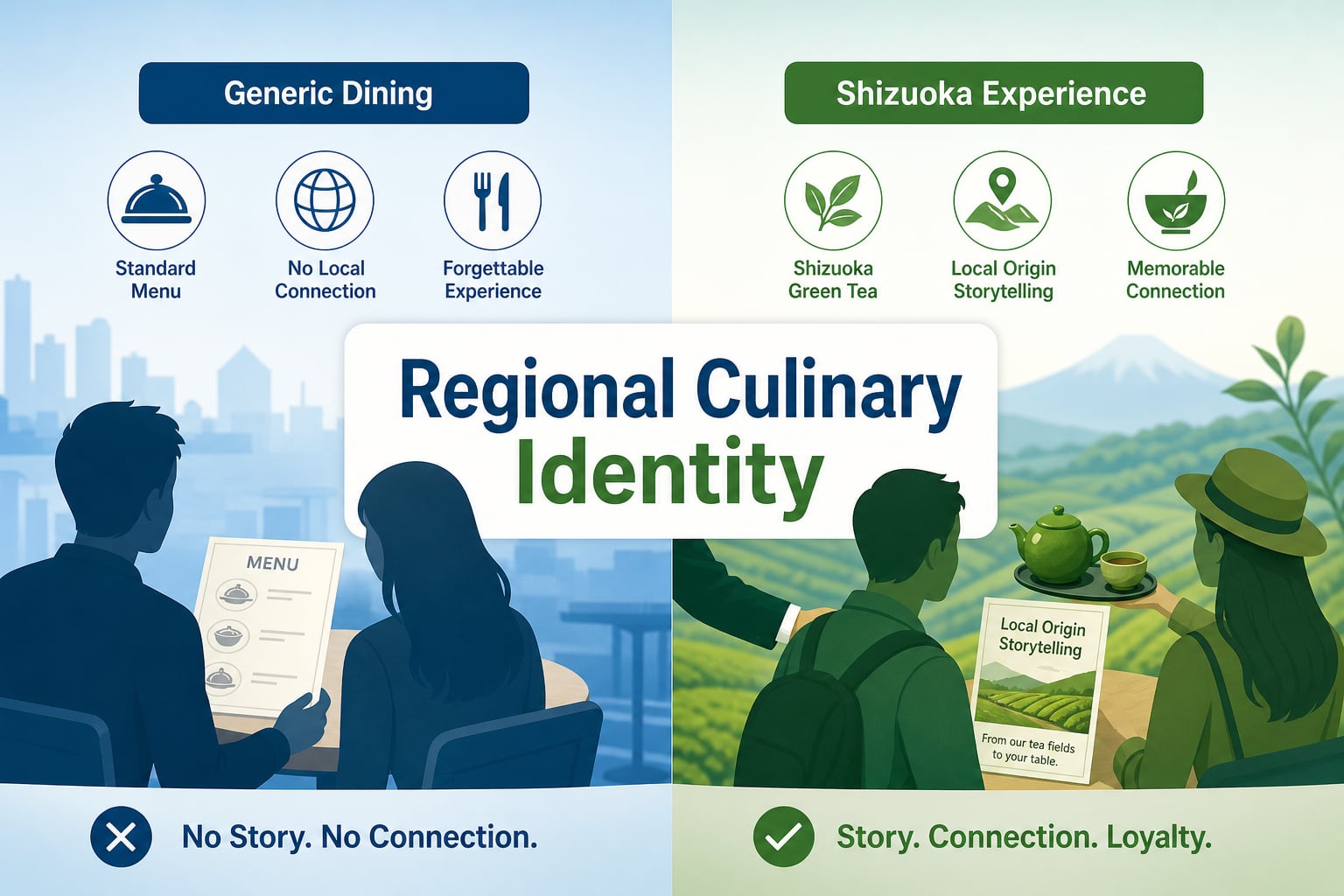
International tourists actively seek memorable regional food stories rather than generic Western or unbranded Japanese dishes. Shizuoka Prefecture possesses exceptional culinary branding assets, including accounting for approximately 40% of Japan’s total green tea production, with celebrated growing zones such as Kakegawa, Makinohara, Fuji, and Honyama. Highlighting the geographical origin of local green tea, Suruga Bay seafood, or Mt. Fuji spring water transforms an ordinary lunch into a cultural discovery.
Unique marine biodiversity provides another powerful storytelling angle for local dining operators. Suruga Bay reaches a maximum depth of 2,500 meters, making it the deepest bay in Japan and home to rare culinary ingredients like Sakura shrimp, spider crabs, and deep-sea catches. When restaurant menus explain that Sakura shrimp are caught exclusively in Suruga Bay or that wasabi was cultivated using pure alpine snowmelt, international visitors perceive substantial added culinary value and eagerly share their dining experiences online.
Storytelling Phrases to Elevate Shizuoka Specialties
Communicating regional uniqueness requires simple, descriptive English framing. For example, introduce Shizuoka oden as ‘Simmered skewers in rich black dashi broth, dusted with dashi powder and blue seaweed.’ Presenting local green tea with brewing instructions or pairing local craft sake with seasonal seafood creates authentic hospitality that foreign diners enthusiastically review on international platforms.
参考: Shizuoka’s regional culinary branding
What are the common inbound payment and hospitality pitfalls to avoid?
Restricting payment options to Japanese yen cash alone represents one of the largest obstacles turning away international diners. While overseas visitors carry some cash, most travelers strongly prefer using international credit cards, mobile tap-to-pay systems, or transportation IC cards for dining expenses. Displays clearly indicating accepted payment methods at the entrance door eliminate customer anxiety before seating.
Unclear seating policies, table covers, and appetizer fees (otoushi) create frequent misunderstandings between izakaya staff and overseas diners. In Western and East Asian dining cultures, paying for unrequested food items is uncommon and can feel deceptive if not disclosed in advance. Explaining mandatory table charges in plain English on the entrance board or menu cover ensures transparent service and protects restaurant staff from disputes during final checkout.
- Transparent Table Charge Notices: State clearly whether seating fees or appetizer dishes are included, providing a polite English explanation of traditional Japanese dining customs.
- Visible Entrance Cashless Signage: Affix official stickers for Visa, Mastercard, American Express, and mobile payment platforms directly on exterior entryways to welcome non-cash users.
- Clear Smoking and Seating Regulations: Indicate indoor smoking policies, private room surcharges, and minimum beverage orders clearly on menu covers to avoid seating misunderstandings.
- Itemized Final Checkout Receipts: Provide printed, itemized sales slips showing broken-down food, beverage, and tax amounts so foreign diners verify their expenses confidently.
How does partnering with inbound tourism marketing specialists accelerate growth?
Independent restaurant owners often lack the surplus operational time required to design comprehensive multilingual marketing campaigns while managing daily kitchen prep. Partnering with an experienced inbound digital marketing provider enables businesses to implement professional overseas promotions, Google Business Profile enhancements, and social media outreach without overwhelming in-house teams. Professional marketing teams translate local culinary narratives into engaging global content that resonates with international audiences.
At Glocal by Shinker, operated by Shinker Inc. in Shizuoka City, our inbound marketing specialists connect regional Japanese businesses with international travelers. Led by CEO Hikaru Soneda, our team combines extensive overseas tourism expertise with localized regional insight. We deliver data-driven multilingual marketing solutions that help local restaurants, ryokans, and tourism facilities build sustainable global visibility.
Our client results demonstrate the tangible business impact of focused inbound marketing support. In one tourism promotion case study, a local tourism business partnered with Glocal to promote cultural experiences to overseas travelers; through multilingual content and digital campaigns, the business expanded global awareness and supported sustainable visitation growth. Similarly, in a regional hotel project, optimizing OTA channels and strengthening English social media generated measurable increases in overseas inquiries and international brand recognition.
Step-by-Step Consultation and Onboarding Process
Starting an inbound marketing engagement follows a straightforward, structured consultation workflow. Businesses submit an inquiry via our official website contact form or telephone to schedule an initial consultation. During this meeting, our marketing specialists review specific dining concepts, target traveler nationalities, and operational capacities to deliver a tailored promotional proposal and transparent quotation. Inquiries are accepted 24/7 by email, with consultations conducted at our office located approximately 10 minutes on foot from the North Exit of JR Shizuoka Station.
Frequently Asked Questions
Q1. What is a Google Business Profile?
It is a free online tool that lets business owners manage how their restaurant appears on Google Search and Maps. It displays your location, opening hours, photos, and customer reviews so travelers can find you easily.
Q2. How can my staff take orders if nobody speaks English?
You can use digital translation apps on smartphones or tablets, print photo menus with simple English labels, or set up QR code ordering systems that allow foreign guests to view menus and order in their own language.
Q3. Which dietary labels are most important to include on our menus?
Add clear symbols or simple text indicating common dietary needs, such as vegetarian, vegan, and halal options, as well as major allergens like dairy, gluten, nuts, and shellfish, to help travelers order safely.
Q4. How do we highlight Shizuoka’s local food culture to travelers?
Feature regional specialties like local green tea, fresh seafood, and Shizuoka-style dishes directly on your menu. Use brief descriptions and photos to explain where the ingredients come from and how guests should enjoy them.
Q5. Do I need a large budget to start attracting international tourists?
No, you can start with low-cost steps. Setting up a Google Business Profile is completely free, and creating photo-based menus or using free digital translation apps requires very little financial investment.