

Explore top English translation tools for restaurants. Use AI and QR menus to overcome language barriers and grow inbound revenue for your Shizuoka business.
Many restaurant owners in Shizuoka struggle to provide high-quality service to international visitors because their staff find it difficult and time-consuming to memorize long lists of English phrases.
This article explores the best English translation tools for restaurants, focusing on automated AI solutions and digital systems that reduce training time and eliminate communication errors.
Why automated translation tools are more effective than memorizing English phrases?
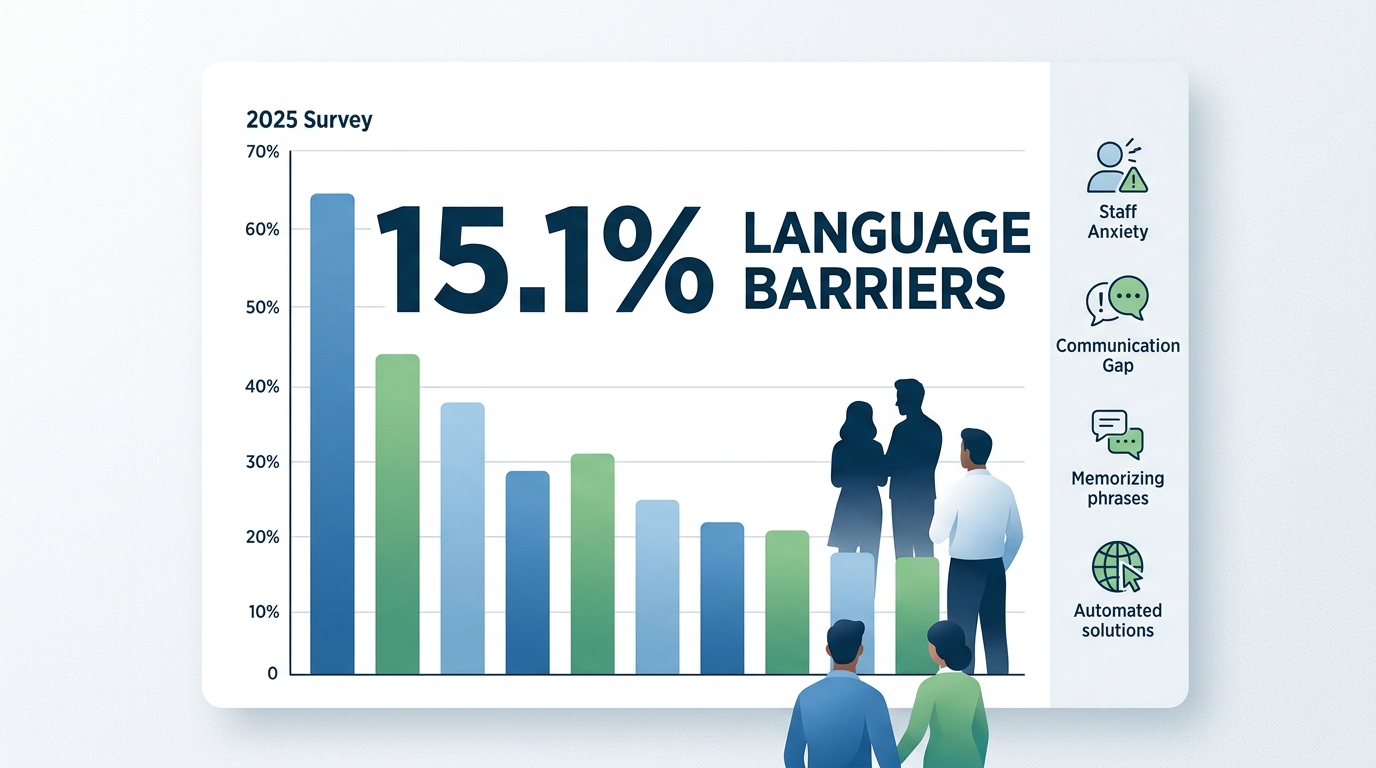
Relying solely on memorized phrase lists puts immense pressure on restaurant staff, leading to anxiety and potential service delays. According to a 2025 survey by the Japan Tourism Agency, approximately 15.1% of international travelers reported significant difficulty communicating at restaurants due to language barriers. By implementing automated English translation tools for restaurants, business owners can ensure that even staff with zero English proficiency can handle complex dietary requests or explain daily specials accurately.
Automated tools provide a level of flexibility that static phrasebooks simply cannot match. While a phrasebook might cover ‘Where is the restroom?’, it rarely helps when a guest asks about specific allergens or the local origin of Shizuoka’s famous green tea. Digital tools allow for real-time, two-way communication, which significantly improves the customer experience and encourages positive reviews on platforms like Google Maps and TripAdvisor.
参考: 訪日外国人旅行者の受入環境に関する調査を実施しました ~ …
出典・参考: 宇治商工会議所の多言語接客ツール
Which translation tools and AI apps provide the best support for restaurant staff?
Modern technology has moved far beyond simple text translation, offering specialized hardware and software designed for the fast-paced environment of a busy kitchen or dining room. Selecting the right English translation tools for restaurants involves balancing speed, accuracy, and ease of use for the staff. Based on industry trends in 2026, the following five tools have proven most effective for local businesses in areas like Shizuoka’s Gofuku-cho.
- POCKETALK (Handheld Hardware): A dedicated translation device that supports over 70 languages. It is ideal for face-to-face interactions because it offers native-level voice translation and works reliably even in noisy restaurant environments.
- Google Lens (Visual AI): Essential for staff to quickly translate handwritten notes or specialized labels. By simply pointing a smartphone camera at text, staff can understand guest requests written on napkins or translate complex ingredient lists instantly.
- DeepL (High-Accuracy Text): Widely regarded as the most accurate AI for nuanced language. It is best used for creating printed menus or promotional materials, ensuring that the ‘soul’ of the dish isn’t lost in a literal translation.
- Voice-to-Text Specialized Apps: Apps designed specifically for the hospitality industry often include pre-set categories for ‘orders,’ ‘allergies,’ and ‘billing,’ allowing for rapid communication without typing.
- Integrated Multilingual QR Systems: These systems allow guests to view the menu and order in their native language directly from their smartphones, removing the need for a translator during the ordering phase entirely.
出典・参考: App Storeの飲食店向け接客英語アプリ
How do multilingual QR code menus solve communication barriers for international diners?
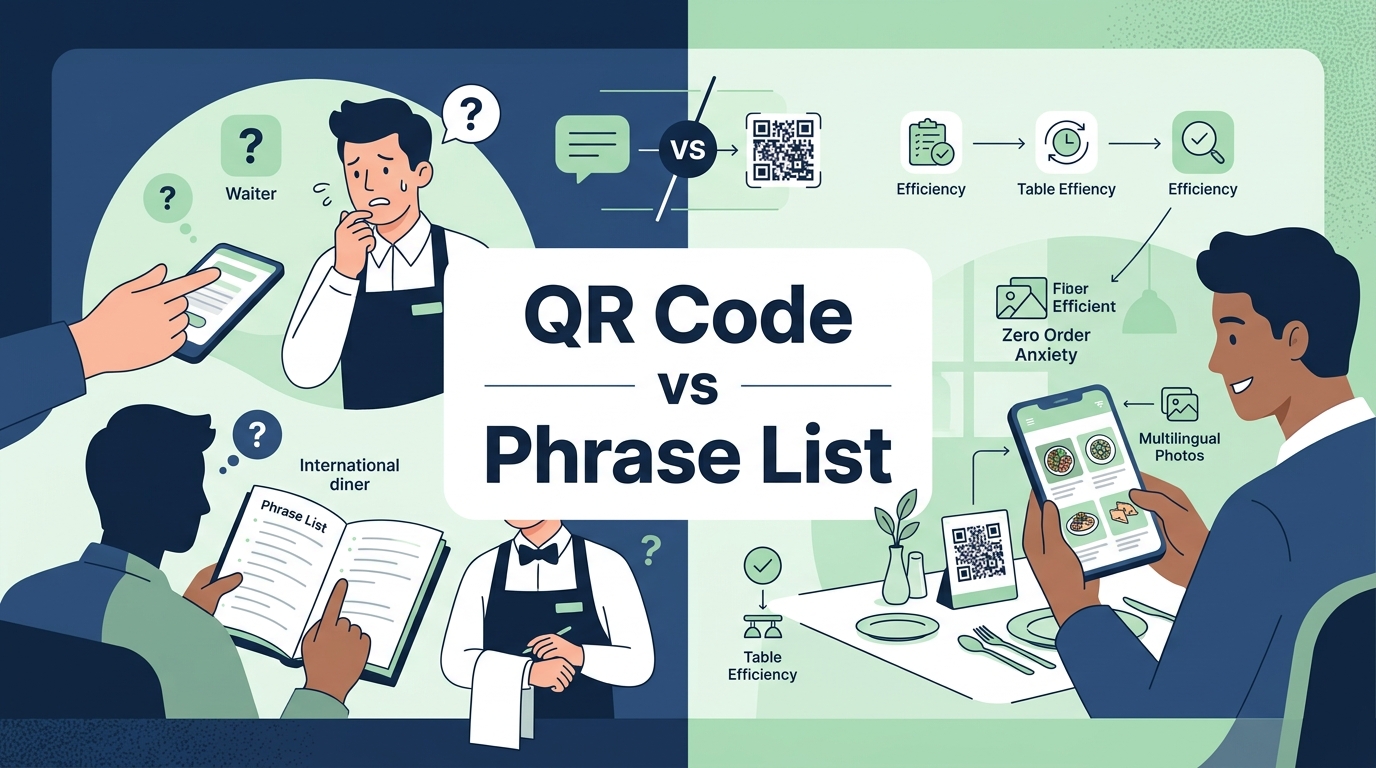
Multilingual QR code menus are arguably the most impactful English translation tools for restaurants today. By digitizing the menu, you allow international guests to browse dishes with high-quality photos and detailed descriptions in English, Chinese, or Korean without needing a staff member to stand at the table. This technology reduces ‘order anxiety’ for the guest and prevents the common problem of staff misinterpreting a verbal order.
For restaurants in Shizuoka, where local specialties like ‘Shizuoka Oden‘ or ‘Sakura Shrimp’ might be unfamiliar to foreigners, a digital menu can include pop-up explanations. This educational aspect adds value to the meal and increases the likelihood of guests trying premium items, which directly boosts the average check size. Furthermore, these systems can be updated instantly to reflect seasonal availability, ensuring that your English-speaking guests always have accurate information.
参考: 観光立国実現に向けた 多言語対応の改善・強化のための …
Real-world success: How Shizuoka restaurants are winning with digital tools
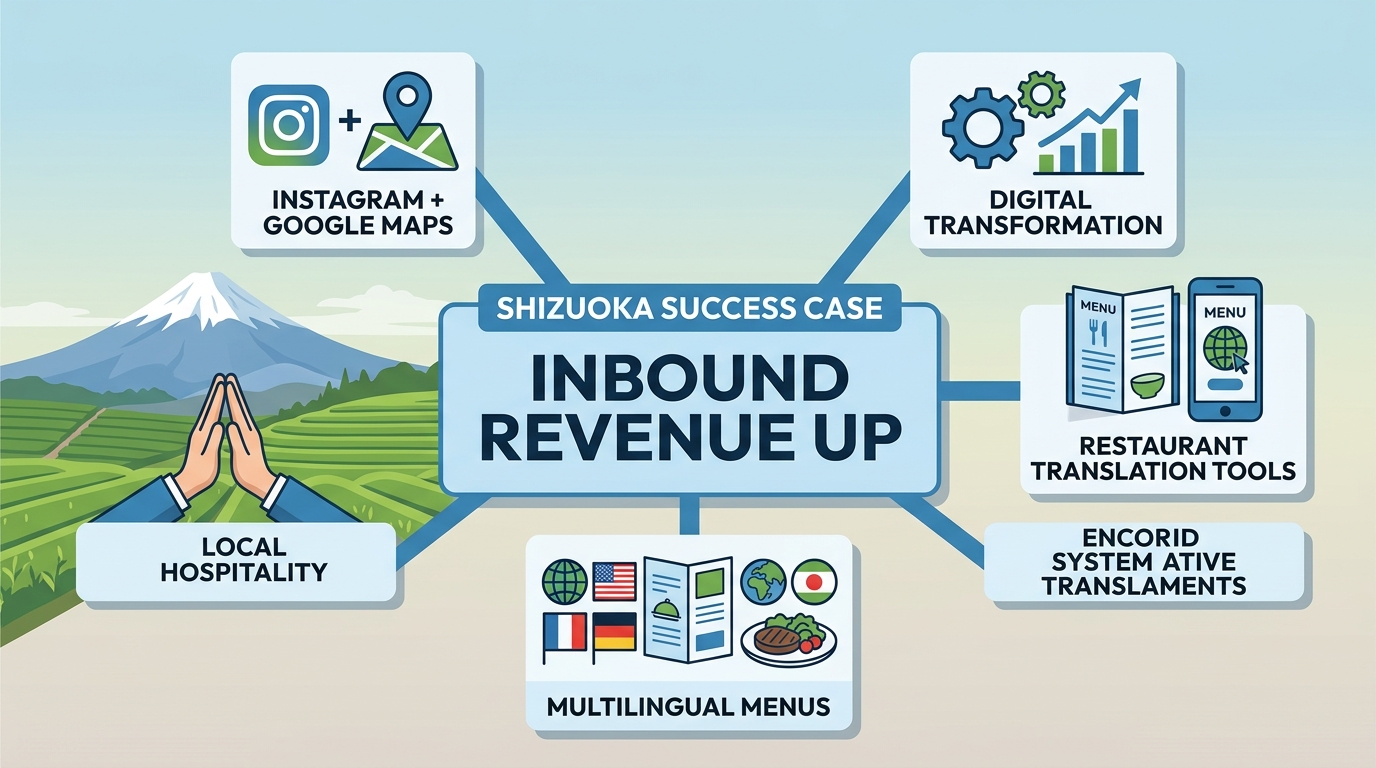
At Shinker Inc., through our Glocal service, we have seen firsthand how digital transformation changes the trajectory of local businesses. One restaurant owner in Shizuoka implemented a combined strategy of English Instagram management and a multilingual Google Business Profile. By making their menu accessible through digital tools, they became a top-rated destination for inbound travelers. The restaurant saw a significant increase in engagement from overseas visitors who found the digital interface more welcoming than a traditional paper menu.
Our experience shows that the most successful restaurants don’t just ‘use a tool’; they integrate it into their hospitality. For example, by using POCKETALK for welcoming guests and a QR system for ordering, a small izakaya in Shizuoka was able to serve three times as many international groups per night compared to the previous year. This results in not just higher revenue, but also a more confident and motivated staff who no longer fear interacting with foreigners.
Key criteria for choosing the right translation technology for your business
Not all English translation tools for restaurants are created equal. When selecting a solution for your Shizuoka-based business, you must consider the specific layout of your shop and the technical literacy of your team. A high-end ryokan might require a sophisticated handheld device for personalized service, whereas a fast-casual ramen shop near JR Shizuoka Station would benefit more from a high-speed QR ordering system.
Three Essential Factors for Selection
undefined
undefined
Why professional support is essential for implementing inbound marketing tools
While many English translation tools for restaurants are available for download, simply having the app is not enough to attract international customers. Professional guidance is necessary to ensure that your digital presence—from your website to your social media—is optimized for discovery. Shinker Inc., located just 10 minutes from the North Exit of JR Shizuoka Station, provides the local expertise needed to bridge the gap between technology and traditional Japanese hospitality.
Our team, led by CEO Hikaru Soneda, combines international experience with deep roots in Shizuoka. We don’t just provide tools; we provide a comprehensive inbound marketing strategy. This includes everything from OTA optimization on platforms like TripAdvisor to managing your English-language Instagram account. We believe that authentic local experiences, when shared correctly through digital channels, create the strongest connections with travelers.
| Plan | Monthly Fee | Core Services |
|---|---|---|
| Economy | ¥120,000 | English Instagram management |
| Standard | ¥250,000 | Instagram, YouTube Shorts, and TikTok |
| Premium | ¥350,000 | Standard Plan + X (Twitter) management |
How can Shizuoka businesses leverage translation technology to grow their inbound revenue?
The ultimate goal of using English translation tools for restaurants is to build a sustainable business that thrives on international tourism. Shizuoka Prefecture is perfectly positioned to capture the ‘slow travel’ market, but only if local businesses can communicate their unique value. By removing the language barrier, you open your doors to a global audience that is eager to spend on high-quality, authentic Japanese dining experiences.
Ready to attract more international visitors? Contact Glocal today for a free consultation and discover a customized inbound marketing strategy for your business. Whether you are a small café or a large hotel, our team at Shinker Inc. is ready to help you grow your hotel, restaurant, or tourism business through inbound tourism. Visit us at our office in Gofuku-cho or submit an inquiry through our website to begin your journey toward global success.
Frequently Asked Questions
Q1. What are multilingual QR code menus?
Multilingual QR code menus are digital menus that customers access by scanning a code with their smartphones. They automatically display dish names and descriptions in the diner’s native language, making it easier for international guests to order without needing a translated physical menu.
Q2. Why are automated tools better than memorizing English phrases?
Memorizing phrases is time-consuming and limited to specific scenarios. Automated tools allow staff to handle unexpected questions or complex requests in real-time. This flexibility reduces stress for the employees and ensures that communication remains accurate regardless of the topic.
Q3. How do translation apps help staff handle customer allergies?
AI-powered translation apps can accurately translate specific ingredient lists and dietary restrictions. This helps staff communicate safely with international diners about food allergies, reducing the risk of dangerous misunderstandings that might occur when relying on simple, pre-written phrase lists.
Q4. Do restaurant employees need advanced technical skills to use these tools?
No, most modern translation apps and QR tools are designed for simplicity. Staff typically only need to know how to operate a smartphone or tablet. These user-friendly interfaces allow even non-tech-savvy employees to provide high-quality service to foreign visitors immediately.
Q5. How does this technology improve revenue for Shizuoka businesses?
By removing language barriers, Shizuoka restaurants can attract more international tourists who might otherwise avoid local spots. Better communication leads to higher customer satisfaction, more accurate orders, and positive online reviews, which ultimately brings more global travelers to the business.