
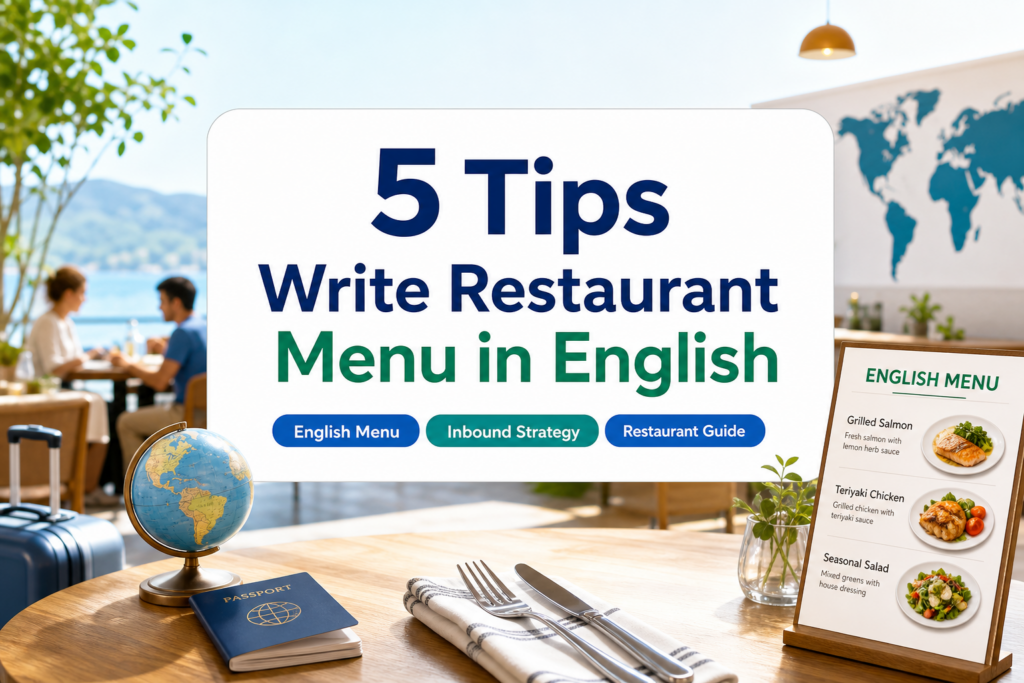
Learn how to write restaurant menus in English to attract inbound guests in Shizuoka. Discover tips on translation, dietary icons, and ingredient transparency.
 執筆者:Hikaru SonedaCEO
As a restaurant owner in Shizuoka, you likely see more international travelers walking past your door, yet feel the frustration of not being able to welcome them properly due to language barriers.
This guide provides five practical tips for creating a self-explanatory English menu that increases sales and reduces staff stress, specifically tailored for Shizuoka’s vibrant food scene. By learning how to write restaurant menu in english effectively, you can turn your local flavors into global favorites.
What should you prepare before writing an English menu?
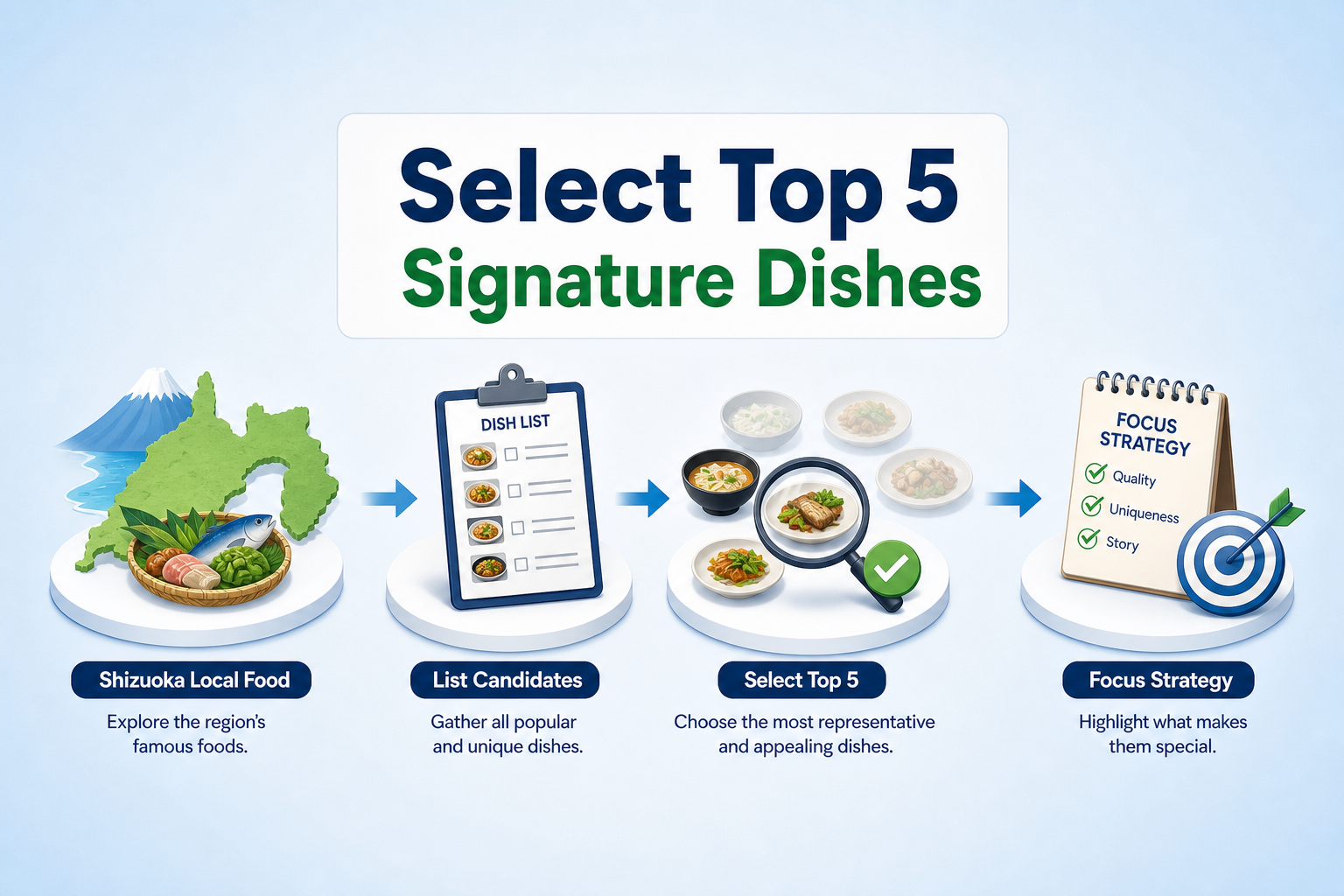
Before you begin translating, you must identify your most popular and profitable dishes to create a focused inbound strategy. Many restaurant owners in Shizuoka make the mistake of trying to translate their entire Japanese menu at once, which can be overwhelming and lead to errors. Instead, start by selecting your top five signature items that showcase the unique flavors of our region, such as fresh Suruga Bay seafood or local Shizuoka green tea-infused dishes. Focusing on a curated selection allows you to ensure the highest quality of translation and presentation for your international guests.
Gathering high-quality visual assets is equally important because photos are the most powerful communication tool for travelers who do not speak Japanese. In the 2024 tourism season, data indicated that many inbound travelers found communication in restaurants to be a major challenge. Clear, bright photos of your dishes bridge this gap instantly, allowing guests to see exactly what they are ordering without needing a deep understanding of the language. Ensure your photos reflect the actual portion size and presentation to build trust with your international clientele from their very first glance.
- Select your bestsellers: Choose the top 5 to 10 dishes that represent your restaurant’s identity and appeal most to visitors.
- Capture professional photos: Take high-resolution images of each selected dish under natural lighting to make them look appetizing.
- Determine your pricing: Decide whether to include tax in the displayed price, as many international guests prefer ‘tax-included’ transparency.
How can you translate dish names while keeping their Japanese charm?
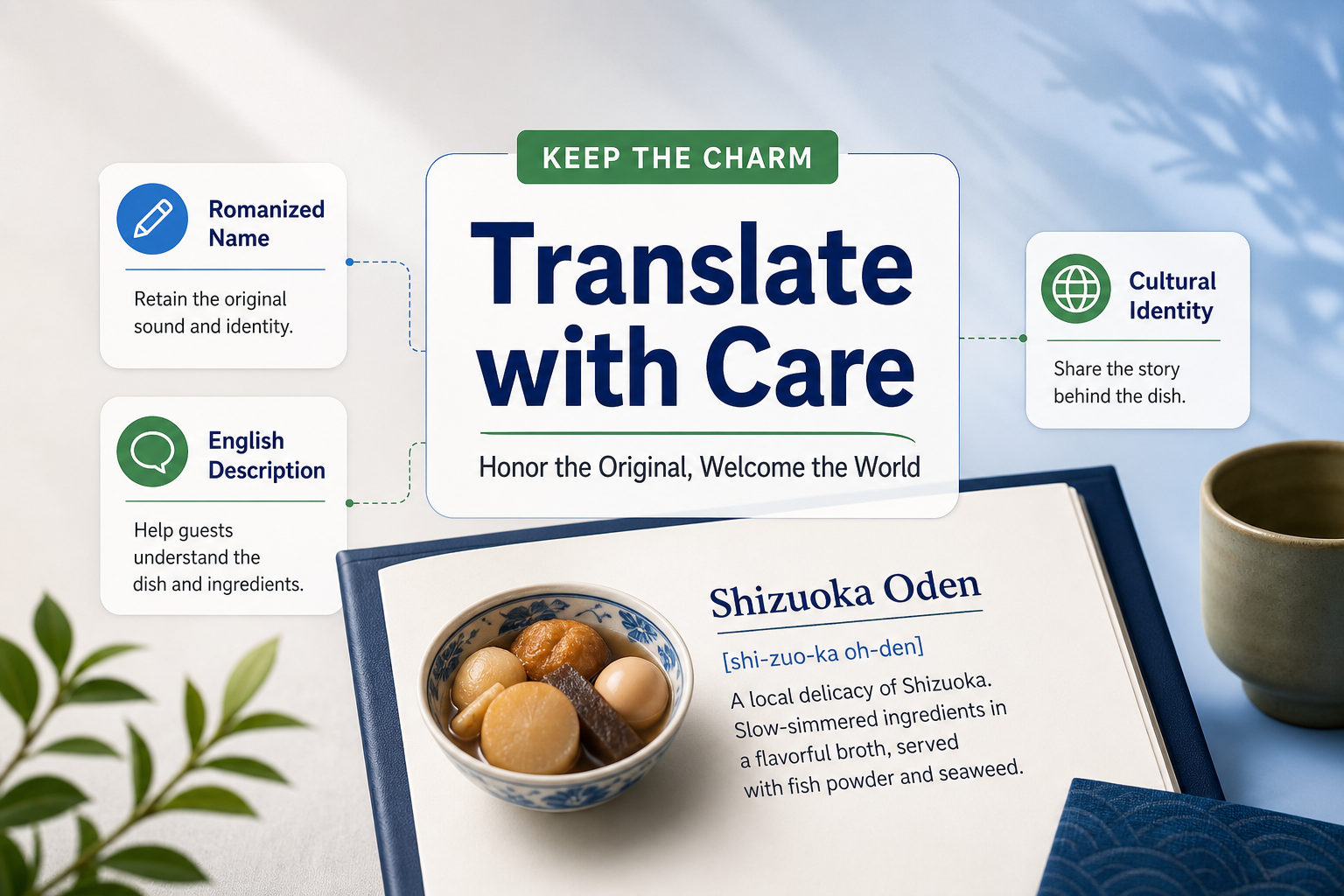
The most effective way to translate Japanese dish names is to use a combination of Romanized Japanese and a descriptive English explanation. Using only English names like ‘Fish Cake Soup’ for Shizuoka Oden loses the cultural identity of the dish and may confuse guests who have heard the Japanese name. By writing ‘Shizuoka Oden’ followed by a description like ‘Japanese-style stewed fish cakes and vegetables in a rich, dark dashi broth,’ you maintain the authentic charm while providing clarity. This dual approach helps guests learn about Japanese culture while feeling confident in their meal choice.
When writing descriptions, focus on the ingredients and the cooking method rather than just using adjectives like ‘delicious’ or ‘tasty.’ For example, instead of saying ‘Good Chicken,’ describe it as ‘Grilled Shizuoka-grown chicken seasoned with local sea salt.’ This level of detail appeals to the growing number of travelers seeking authentic regional experiences in Shizuoka Prefecture. Using specific terms like ‘grilled,’ ‘simmered,’ or ‘deep-fried’ helps guests understand the texture and preparation of the food, which is essential for a satisfying dining experience.
Effective Translation Examples for Shizuoka Specialties
参考: translation tools for restaurants
Why are dietary icons and ingredient transparency essential for inbound guests?
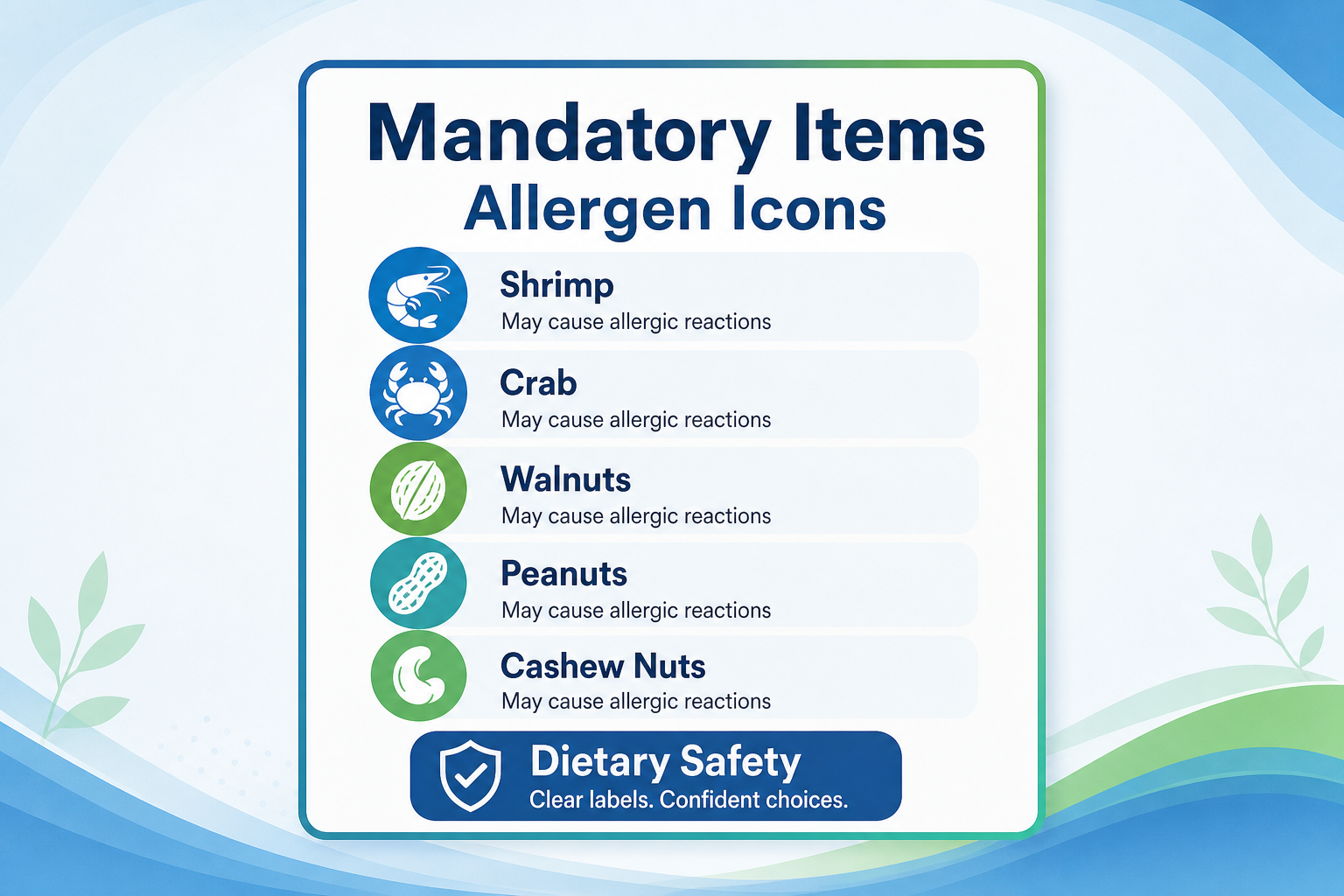
Providing clear information about allergens and dietary restrictions is a critical safety requirement that also builds immense trust with international guests. In Japan, it is standard to track 8 mandatory items including shrimp, crab, walnut, wheat, buckwheat, egg, milk, and peanut, with cashew nuts being added to the list of recommended items for 2025. Many inbound travelers have strict dietary needs due to allergies, religion, or lifestyle choices, such as vegan or halal diets. By using recognizable icons for these ingredients, you allow guests to navigate your menu safely without needing to ask the staff repetitive questions in English.
The demand for vegan and vegetarian options has seen a massive global surge, with Google searches for ‘Vegan Food Near Me’ increasing significantly in recent years. If your restaurant in Shizuoka can accommodate these needs, clearly marking them on your English menu can lead to higher review scores on platforms like TripAdvisor or Google Maps. Transparency about ingredients like dashi (fish stock) is particularly important, as many vegetarians may not realize that traditional Japanese seasonings often contain animal products. Being honest and clear about your ingredients prevents misunderstandings and ensures a positive experience for everyone.
- Allergy Icons: Use standard symbols for the 8+1 essential allergens to protect guest health.
- Vegan/Vegetarian Labels: Clearly mark dishes that contain no meat, seafood, or animal-derived broths.
- Pork-Free/Alcohol-Free: Essential for Halal-conscious guests who need to avoid specific ingredients common in Japanese cooking.
How can you design a self-explanatory menu that reduces staff workload?
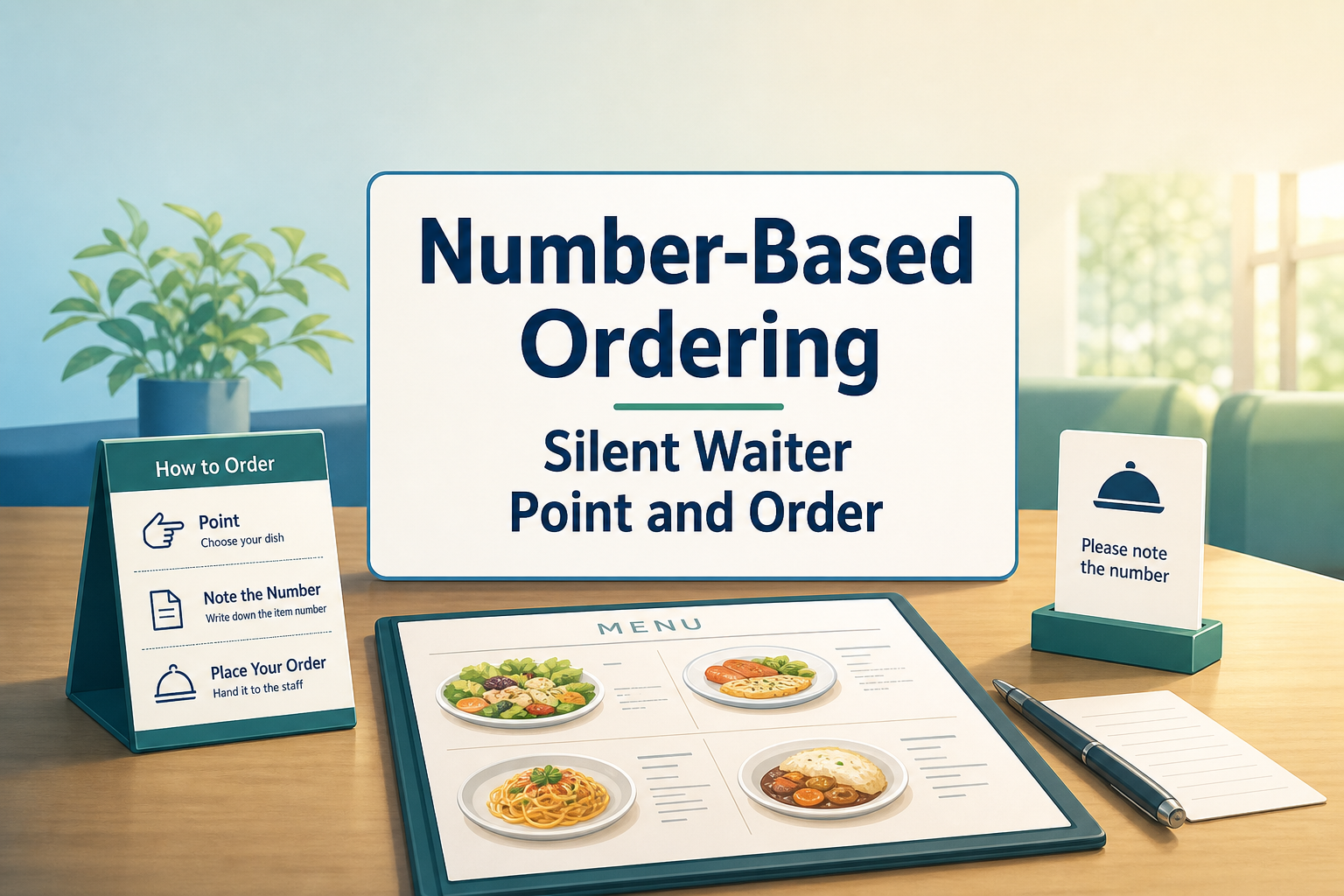
A well-designed English menu should function as a silent waiter, allowing guests to order with minimal assistance from your staff. One of the most effective techniques is to assign a unique number to every item on the menu. This ‘number-based ordering’ system allows guests to simply point to a number or say ‘Number 5, please,’ which eliminates the stress for staff who may not feel confident in their English pronunciation. This simple change can significantly improve your restaurant’s operational efficiency during busy lunch or dinner rushes in tourist-heavy areas like Shizuoka Station.
Visual hierarchy is another key element of a self-explanatory menu. Use larger fonts and boxes to highlight your ‘Recommended’ or ‘Chef’s Choice’ items to guide the guest’s decision-making process. Since many international visitors are unfamiliar with Japanese dining etiquette, including a small ‘How to Eat’ section can be incredibly helpful. For example, explaining how to mix wasabi into soy sauce or how to pour tea can make the guest feel more comfortable. When guests feel confident, they are more likely to order more items and leave positive reviews, which directly impacts your business growth.
- Implement a numbering system: Label every dish and drink with a number for easy pointing and verbal ordering.
- Add a ‘How to Eat’ guide: Include 2-3 simple steps with illustrations for dishes that require specific techniques.
- Display payment methods: Clearly list accepted credit cards and QR codes at the bottom of the menu to avoid checkout confusion.
参考: attracting foreign tourists to restaurants
What are common pitfalls to avoid when creating English menus in Shizuoka?
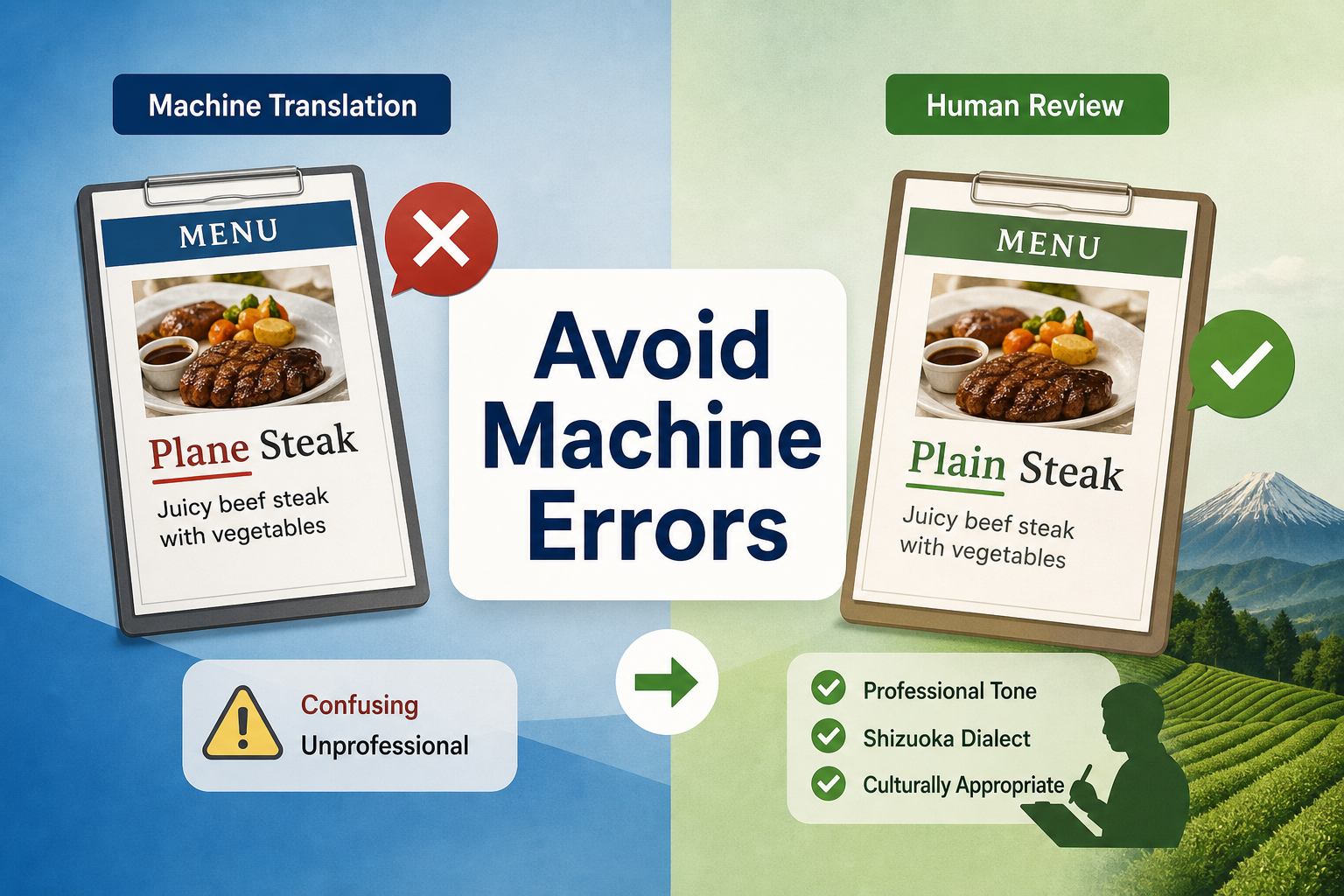
One of the most frequent mistakes in English menus is the over-reliance on automatic machine translation without human review. While translation tools for restaurants have improved, they often produce humorous or confusing errors, such as translating ‘plain’ waffles as ‘plane’ waffles, or mistranslating regional Shizuoka dialect terms. These errors can make your business look unprofessional and may even lead to safety issues if ingredients are mistranslated. Always have a proficient English speaker or a professional service review your menu to ensure the tone is appropriate and the information is 100% accurate.
Another pitfall is failing to update the English menu when prices or ingredients change. Inbound guests often feel slighted if they see a different price on the English menu compared to the Japanese one, even if it is just a delay in updating. Furthermore, neglecting to mention extra charges, such as ‘Otoshi’ (table charge), can lead to uncomfortable disputes at the register. To maintain a high reputation in the international travel market, consistency across all language versions of your menu is essential for building long-term trust with visitors to Shizuoka.
| Incorrect/Confusing | Correct English | Reason |
|---|---|---|
| Plane Rice | Steamed Rice | Avoids confusion with airplanes. |
| Hormone | Beef/Pork Offal | Biological term vs. culinary term. |
| Boiled Child | Boiled Small Sardines (Shirasu) | Direct translation of ‘Ko’ (child) is incorrect. |
| Vinegared Thing | Pickled Vegetables / Sunomono | Uses culinary terms instead of ‘thing’. |
参考: hybrid strategy
Which digital tools can help you create professional menus efficiently?
You do not need to be a professional graphic designer to create a beautiful English menu. Free tools like Canva offer thousands of ‘menu’ templates that allow you to simply drag and drop your photos and type in your English text. For those in Shizuoka looking for specific culinary translations, the ‘EAT TOKYO’ website provides a multilingual menu creation support tool that includes a database of common Japanese dish names in English. Utilizing these resources can save you dozens of hours in design time while ensuring a polished, professional look that appeals to global travelers.
In addition to physical menus, digital menus accessible via QR codes are becoming a global standard. This allows guests to view the menu on their own smartphones and often includes auto-translation features for multiple languages. Recent surveys show that a large majority of travelers check reviews online before deciding where to eat. By having a digital version of your English menu linked to your Google Business Profile, you can attract more guests to your restaurant in Aoi-ku or other popular areas in Shizuoka before they even leave their hotel room.
3 Simple Steps to Use Canva for Your Menu
How can Glocal by Shinker help you succeed in the inbound market?
Creating an English menu is just the first step toward becoming a successful inbound destination. At Glocal by Shinker, we specialize in helping Shizuoka-based businesses connect with the world through comprehensive inbound marketing strategies. Our team, led by CEO Hikaru Soneda, combines international experience with deep local knowledge to provide practical solutions that go beyond simple translation. We offer dedicated restaurant plans, which include English Instagram management designed to put your restaurant on the map for international travelers. Details regarding pricing and service plans are available upon request.
Located just 10 minutes from JR Shizuoka Station in Gofuku-cho, we are your local partner in regional revitalization. We believe that every restaurant in Shizuoka has a unique story to tell, and our mission is to help you share that story with the world. Whether you need help with OTA optimization, multilingual website development, or a complete inbound marketing strategy, Glocal is here to ensure your business grows sustainably in the global market. Contact us today to schedule a consultation and take the first step toward welcoming more international guests to your table.
- Expert Consultation: Discuss your goals and receive a customized proposal for your inbound marketing needs.
- Multilingual Social Media: Management of Instagram, TikTok, and YouTube to reach a global audience.
- Data-Driven Results: We focus on increasing visibility and bookings to deliver measurable business success.
Frequently Asked Questions
Q1. What is a self-explanatory menu?
A self-explanatory menu is a design that uses clear English, photos, and symbols so guests can understand what is offered without needing staff assistance. This reduces language barriers and saves time for your employees during busy shifts.
Q2. How can I translate dish names without losing their unique Japanese appeal?
Use a combination of the Japanese name in romaji followed by a clear English description. For example, instead of just saying ‘fish,’ describe it as ‘Local Shizuoka Seared Bonito’ to highlight the regional specialty and its unique preparation method.
Q3. Why should I include dietary icons if I already have English descriptions?
Dietary icons provide instant visual cues for guests with allergies or religious restrictions. Many travelers scan menus quickly for symbols like ‘vegetarian’ or ‘no pork,’ making them feel safe and welcomed even if they are not fluent in English.
Q4. What is the best way to handle ingredients that are hard to translate?
Focus on transparency by listing the main components and the flavor profile. If a specific local ingredient has no direct English equivalent, describe its texture or taste, such as ‘savory local root vegetable,’ to help guests make an informed choice.
Q5. What are the common mistakes to avoid when creating menus in Shizuoka?
Avoid relying solely on automated translation tools, which often produce confusing results. Also, ensure you don’t overlook local context; explain Shizuoka-specific ingredients clearly so international visitors can appreciate the regional flavors you are offering.