
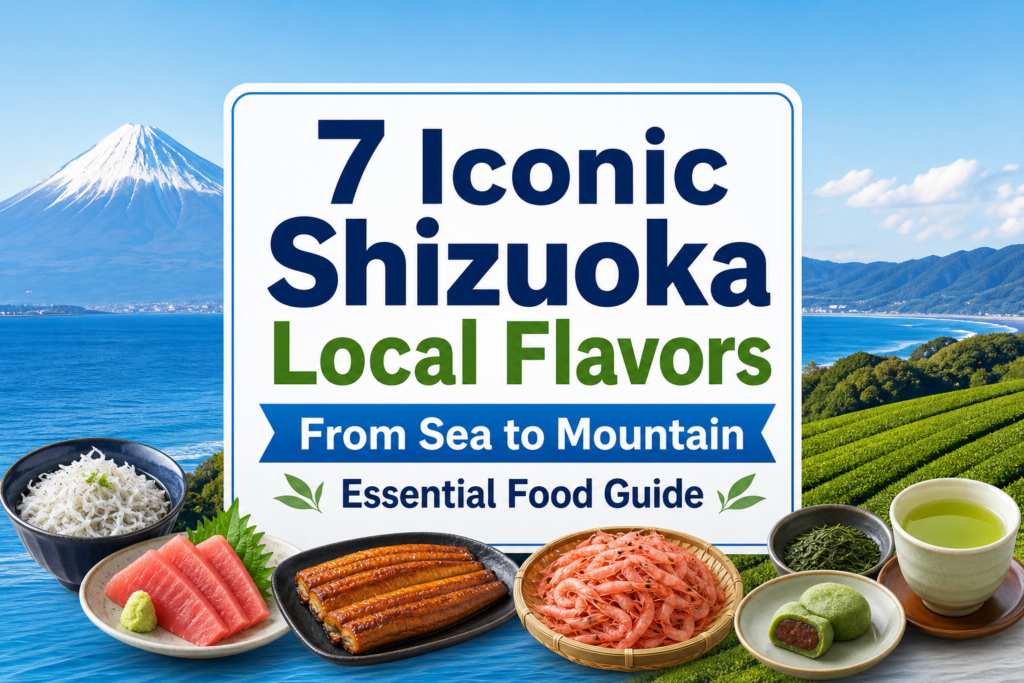
Discover authentic Shizuoka local food from Suruga Bay seafood to mountain-grown wasabi. A guide to the region’s diverse flavors and culinary geography.
 執筆者:Hikaru SonedaCEO
Many travelers and business owners struggle to identify which Shizuoka local food truly represents the region’s diverse culture amidst a sea of generic tourist recommendations.
This guide provides expert insights into Shizuoka’s culinary geography, helping you discover authentic flavors and learn how local businesses can leverage these assets for inbound success.
Why is Shizuoka’s unique topography the secret to its diverse local food?
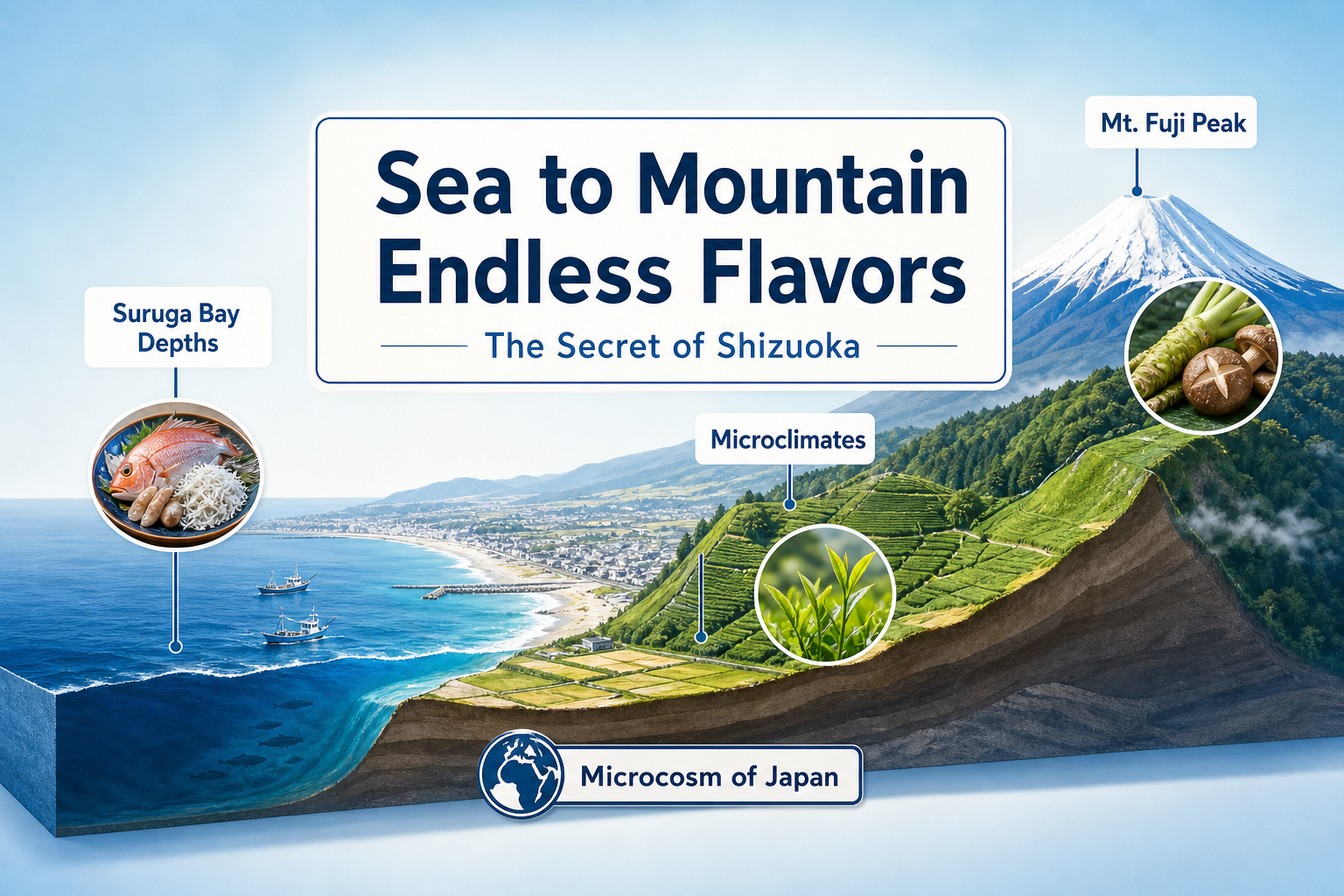
Shizuoka Prefecture is often called a microcosm of Japan because its geography includes everything from the towering peak of Mt. Fuji to the immense depths of Suruga Bay. This dramatic elevation change creates distinct microclimates that allow for an incredible variety of Shizuoka local food to thrive within a single prefecture. The region is traditionally divided into three areas—Eastern, Central, and Western—each boasting its own specialized culinary identity based on the nearby natural resources.
In the East, the volcanic soil near Mt. Fuji produces crisp vegetables and pure spring water, while the Central region benefits from the fertile plains of the Oi River and the bounty of Suruga Bay. The Western region, centered around Lake Hamana, offers a mix of freshwater delicacies and coastal flavors. Understanding these geographical nuances is essential for any business looking to promote regional tourism, as it allows for a more authentic storytelling approach that resonates with international visitors seeking genuine experiences.
参考: Shizuoka’s tourism potential
What are the essential seafood delicacies from the depths of Suruga Bay?
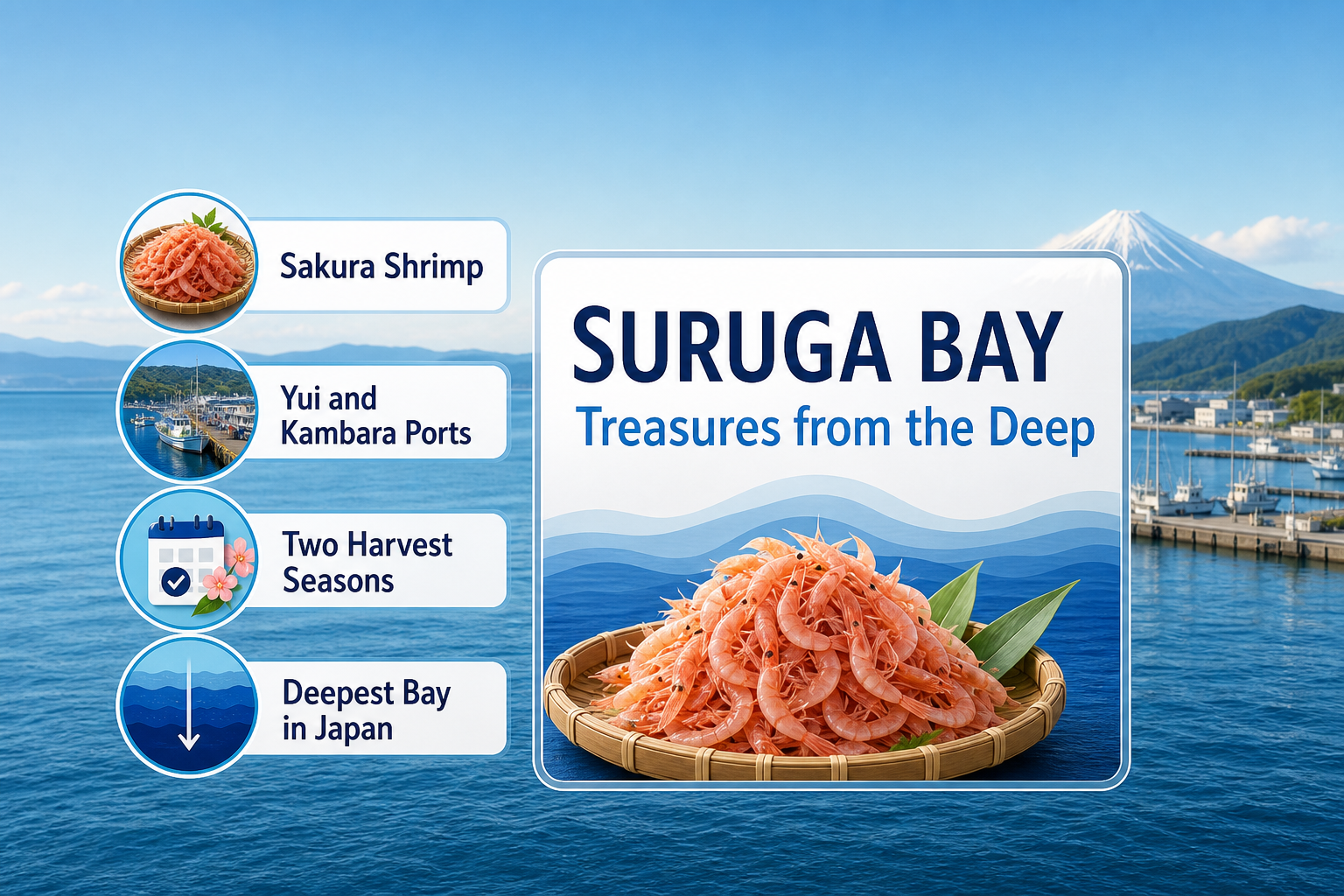
Suruga Bay is the deepest bay in Japan, reaching significant depths, which provides a unique habitat for rare marine life found nowhere else. The most iconic Shizuoka local food from these waters is Sakura Shrimp (Sakura-ebi), tiny, translucent pink shrimp that are primarily landed at Yui and Kambara ports. Because they are only harvested during two short seasons each year, they are considered a premium delicacy that attracts gourmets from across the country.
Another staple of the coastal diet is Shirasu (whitebait), which are young sardines caught in the shallow coastal waters. In areas like Mochimune in Shizuoka City, Shirasu is often served raw (Nama-shirasu) immediately after being caught, offering a sweet and briny flavor that is a hallmark of local freshness. For restaurants and hotels, highlighting the specific port of origin and the seasonal timing of these catches is a powerful way to demonstrate commitment to quality and local heritage.
- Sakura Shrimp (Sakura-ebi): Known as the ‘Jewels of Suruga Bay,’ these tiny shrimp are famous for their sweet flavor and are often enjoyed as Kakiage (tempura fritters).
- Raw Whitebait (Nama-shirasu): Exceedingly fresh young sardines that must be eaten the day they are caught, typically served over a bowl of rice with ginger and soy sauce.
- Golden Eye Bream (Kinmedai): Caught in the deep waters off the Izu Peninsula, this fatty red fish is a luxury item often simmered in a sweet soy glaze.
参考: local seafood
How do Shizuoka black oden and Hamamatsu gyoza differ by region?
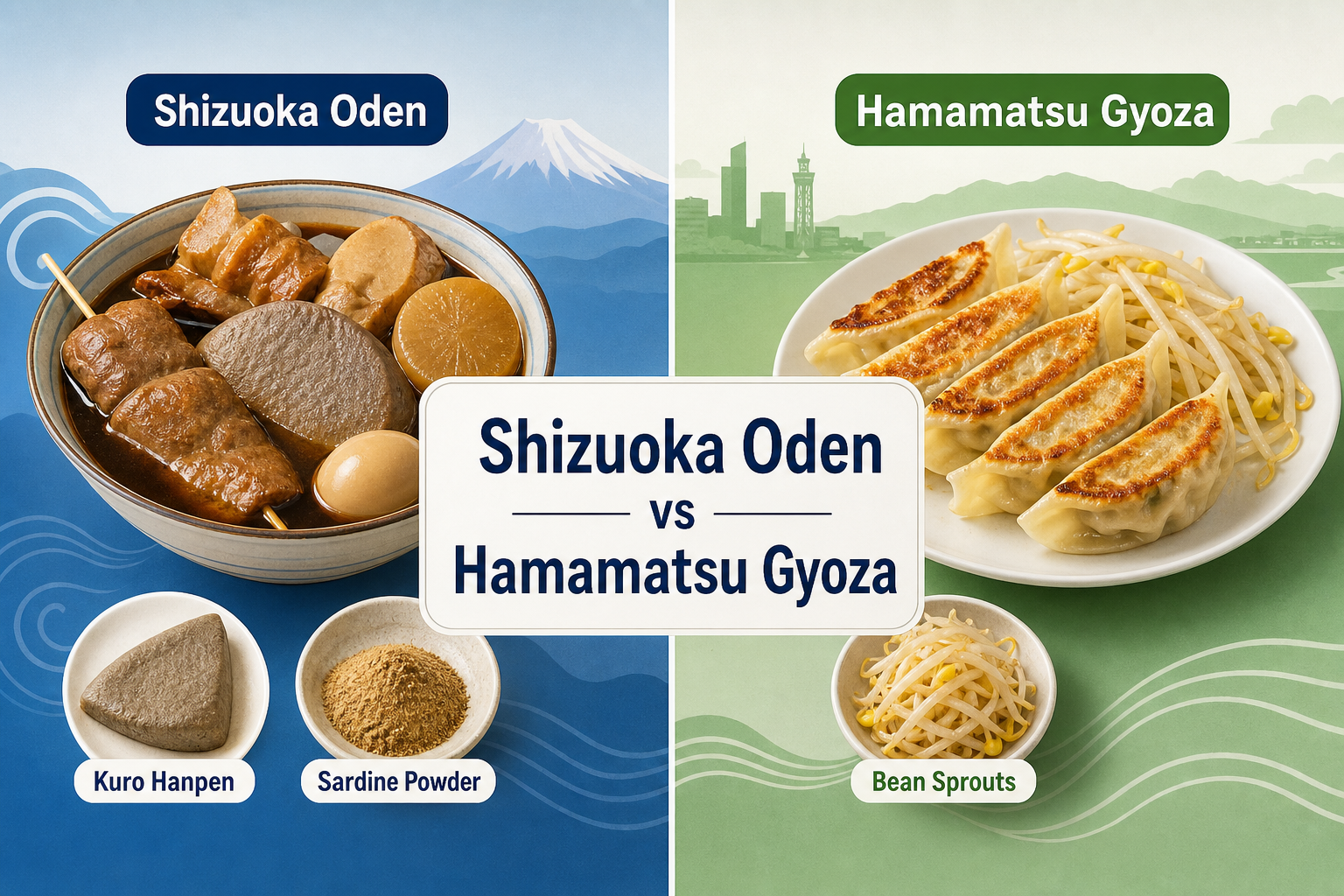
Shizuoka local food is famous for its regional rivalries, particularly between the soul foods of Shizuoka City and Hamamatsu. Shizuoka Oden is instantly recognizable by its dark, soy-based broth and the use of ‘Kuro Hanpen’ (black fish cake) made from minced sardines and mackerel. Unlike standard Japanese oden, every ingredient is skewered, and the dish is topped with a distinct powder of ground fish and seaweed, creating a savory depth that pairs perfectly with local sake.
Moving west to Hamamatsu, the culinary focus shifts to Hamamatsu Gyoza, which consistently ranks as some of the most popular dumplings in Japan. These gyoza are characterized by their circular arrangement in the pan and the addition of boiled bean sprouts in the center to cleanse the palate. The filling typically contains a high ratio of local cabbage and onions, making them lighter and sweeter than the meat-heavy versions found in other cities, which appeals to a wide range of international tastes.
The Cultural Hub of Aoba Oden Yokocho
参考: Shizuoka local food marketing
Where can travelers experience authentic mountain-grown wasabi and Shizuoka green tea?
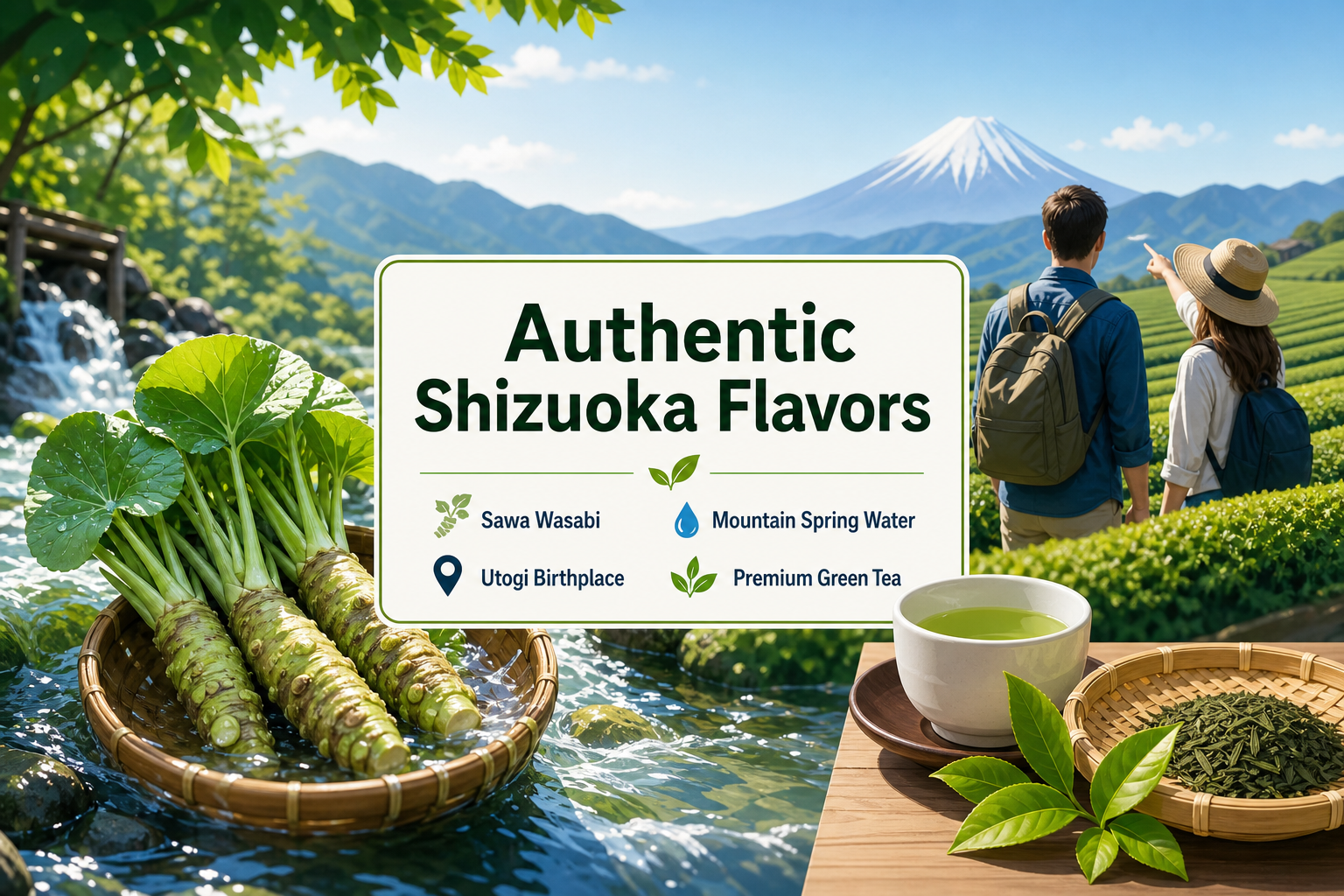
Shizuoka is the birthplace of wasabi cultivation, specifically in the Utogi district of Shizuoka City, where the cool, mineral-rich mountain spring water provides the perfect environment for this difficult-to-grow plant. Authentic Shizuoka local food features ‘Sawa Wasabi,’ which is grown in gravel beds within running streams. Unlike the imitation paste often found abroad, real Shizuoka wasabi has a complex, floral sweetness and a heat that dissipates quickly, making it an essential accompaniment for high-quality sushi and grilled meats.
Complementing the mountain flavors is Shizuoka Green Tea, which accounts for a significant portion of Japan’s total tea production. The rolling hills of Makinohara and the misty valleys of Kawane produce teas with vastly different flavor profiles, from deep-steamed ‘Fukamushi’ tea to delicate, aromatic mountain teas. For tourism operators, offering a ‘tea ceremony’ or ‘wasabi grating’ experience provides a tactile connection to the land that goes beyond a simple meal, enhancing the overall value of the visit.
Fujinomiya Yakisoba and the B-grade gourmet culture
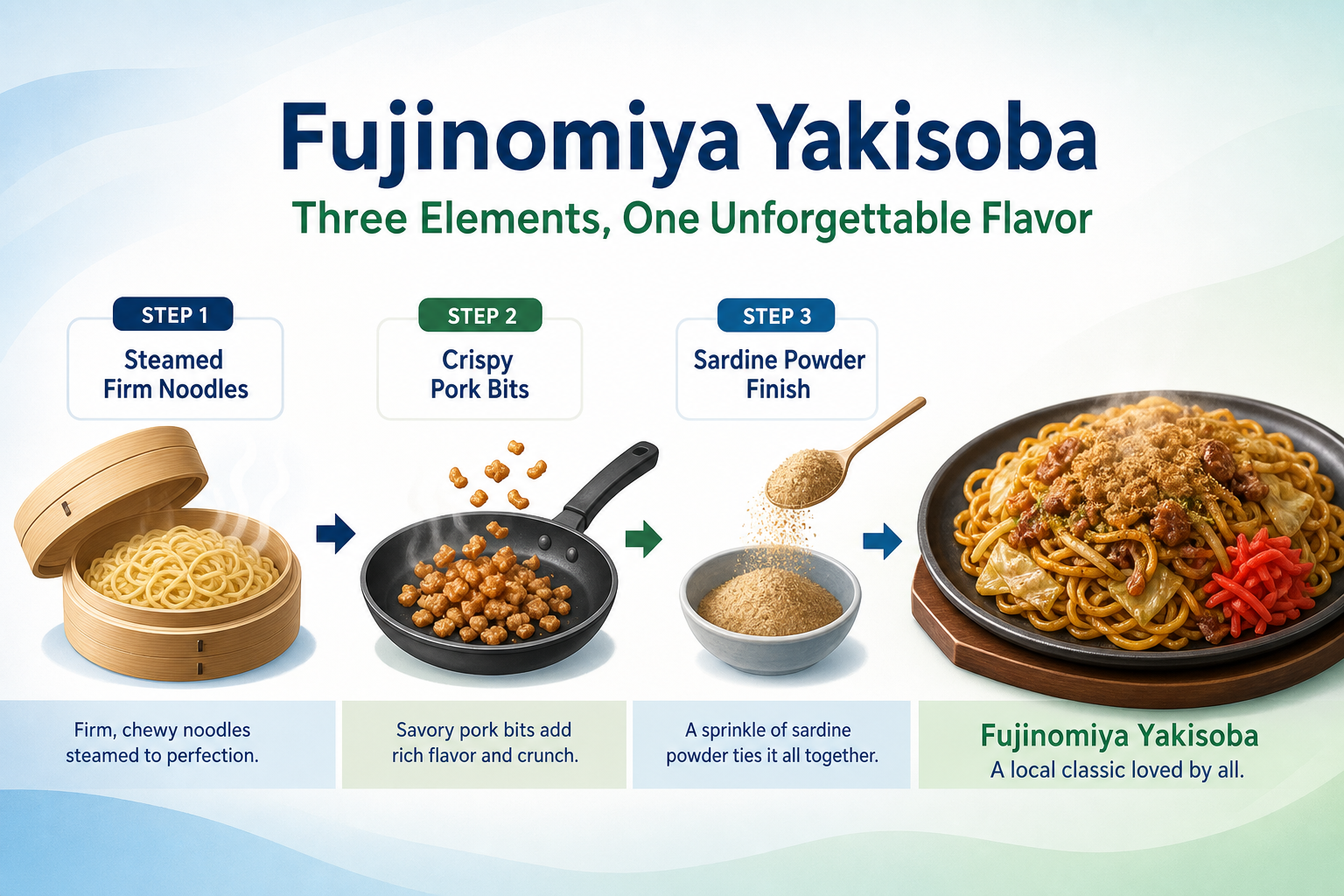
In the shadow of Mt. Fuji lies Fujinomiya City, home to Fujinomiya Yakisoba, a highly acclaimed dish in national competitions for local gourmet food. What sets this Shizuoka local food apart is the unique texture of the noodles, which are steamed and then cooled to create a firm, chewy bite. The dish is cooked with ‘Niku-kasu’ (crispy pork bits) and finished with a generous dusting of sardine powder, providing a rich umami flavor that is deeply satisfying and affordable.
This ‘B-grade gourmet’ culture—referring to delicious, everyday food that is loved by locals—is a significant trend in Japanese domestic travel that is now gaining traction with inbound tourists. By promoting these accessible and flavorful dishes, local eateries can attract younger travelers and foodies who are looking for ‘hidden gems’ rather than expensive fine dining. Highlighting the specific cooking method and the historical background of the dish can turn a simple plate of noodles into a memorable cultural experience.
参考: market your local specialties
How can local hospitality businesses leverage Shizuoka local food for inbound marketing?
To attract international visitors, regional businesses must bridge the gap between their local offerings and global digital presence. Many tourism businesses in Shizuoka struggle to reach overseas travelers due to limited English-language marketing and low visibility on global travel platforms. By optimizing Google Business Profiles and managing English social media accounts, a local restaurant or hotel can ensure that when a traveler searches for Shizuoka local food, their business appears at the top of the results.
Glocal by Shinker specializes in helping Shizuoka-based businesses navigate this transition. Whether it is through OTA (Online Travel Agency) optimization for ryokans or creating engaging Instagram content for cafes, our goal is to showcase the unique charm of Shizuoka to the world. We believe that every region has unique stories and cultures worth sharing, and by using data-driven marketing strategies, we help local businesses achieve sustainable growth in the international market.
| Service Category | Economy Plan | Standard Plan | Premium Plan |
|---|---|---|---|
| Accommodation | ¥50,000/mo + 3% comm. | ¥150,000/mo + 3% comm. | ¥200,000/mo + 3% comm. |
| Restaurant (SNS) | ¥120,000/mo (Instagram) | ¥250,000/mo (IG, YT, TikTok) | ¥350,000/mo (Full SNS + X) |
| Key Features | OTA Setup & English SNS | Multi-platform Content | Comprehensive Strategy |
Success stories: Boosting regional visibility through food marketing
Our company’s results demonstrate the power of specialized inbound marketing for the food and hospitality sectors. In one instance, a local restaurant implemented Glocal’s multilingual marketing strategy, which included English Instagram management and Google Business Profile optimization. As a result, the restaurant became significantly easier for international tourists to discover online, leading to increased engagement and establishing the venue as a popular dining destination for inbound travelers.
Similarly, a regional hotel partnered with us to improve its visibility among international travelers. By creating English-language content and strengthening social media marketing, the hotel significantly increased its exposure to overseas audiences. These results show that even small-to-medium businesses can compete on a global stage when they have a trusted partner to handle their digital marketing and English communication, allowing them to focus on providing top-tier hospitality.
How to get started: Connecting Shizuoka with the world
If you are a business owner in Shizuoka looking to attract more international visitors through the power of Shizuoka local food and culture, Glocal by Shinker is here to help. Based in the heart of Shizuoka City, just 10 minutes from the JR Shizuoka Station North Exit, our team combines local market knowledge with global marketing expertise. We offer a clear path to growth, starting with an initial consultation to discuss your specific business goals and inbound marketing needs.
Our reservation and inquiry flow is designed to be simple and efficient. You can submit an inquiry through our website contact form or by phone during our business hours, Monday through Friday, 9:00 AM to 6:00 PM (JST). Once we understand your needs, we provide a customized proposal and quotation. By signing an agreement with Glocal, you are taking the first step toward sharing the unique hospitality of Shizuoka with travelers from around the world.
- Initial Inquiry: Contact us via our website form or phone (+81-54-204-0326) to express your interest in inbound marketing.
- Consultation: Schedule a meeting to discuss your current challenges, such as limited international visibility or lack of English staff.
- Customized Proposal: Receive a tailored strategy including OTA optimization, SNS management, or multilingual website development.
- Project Launch: Sign the agreement and begin your journey toward sustainable growth in the international tourism market.
Frequently Asked Questions
Q1. What is Shizuoka black oden?
Shizuoka black oden is a unique local dish featuring a dark, soy-based broth. Unlike standard oden, the ingredients are skewered and the broth is seasoned with beef tendon, resulting in a deep color. It is typically served with a topping of fish powder and dried seaweed.
Q2. How does Shizuoka’s geography influence its local food variety?
The region’s topography ranges from the high peaks of the Southern Alps to the extreme depths of Suruga Bay. This dramatic change in elevation allows the area to produce both mountain specialties like wasabi and tea, as well as unique deep-sea seafood.
Q3. What makes the seafood from Suruga Bay unique?
Suruga Bay is the deepest bay in Japan, reaching depths of over 2,500 meters. This specific environment supports rare marine life not found elsewhere, providing local markets with distinct delicacies like Sakura shrimp and deep-sea fish that define Shizuoka’s coastal cuisine.
Q4. What is the main difference between Shizuoka oden and Hamamatsu gyoza?
The difference lies in their regional roots and ingredients. Shizuoka oden is a simmered stew known for its dark broth and fish powder. In contrast, Hamamatsu gyoza are pan-fried dumplings characterized by a high cabbage content and often served with fresh bean sprouts.
Q5. How can businesses use these local foods to attract international tourists?
Hospitality businesses can use Shizuoka’s authentic food culture as a marketing tool by highlighting the ‘sea to mountain’ story. By offering regional specialties that cannot be found in generic tourist spots, businesses create a unique cultural experience that appeals to inbound travelers.