

Discover the 5 best Halal restaurants Shizuoka has to offer. Enjoy authentic Suruga Bay seafood, local tea culture, and facilities with dedicated prayer spaces.
Finding authentic local cuisine that adheres to Halal standards can be a significant challenge for Muslim travelers exploring regional Japan, often leading to limited dining choices.
This guide highlights the best Halal restaurants Shizuoka offers, showcasing how businesses can combine authentic seafood and tea culture with inclusive hospitality to attract international visitors.
Why is Shizuoka a premier destination for Halal-conscious travelers?
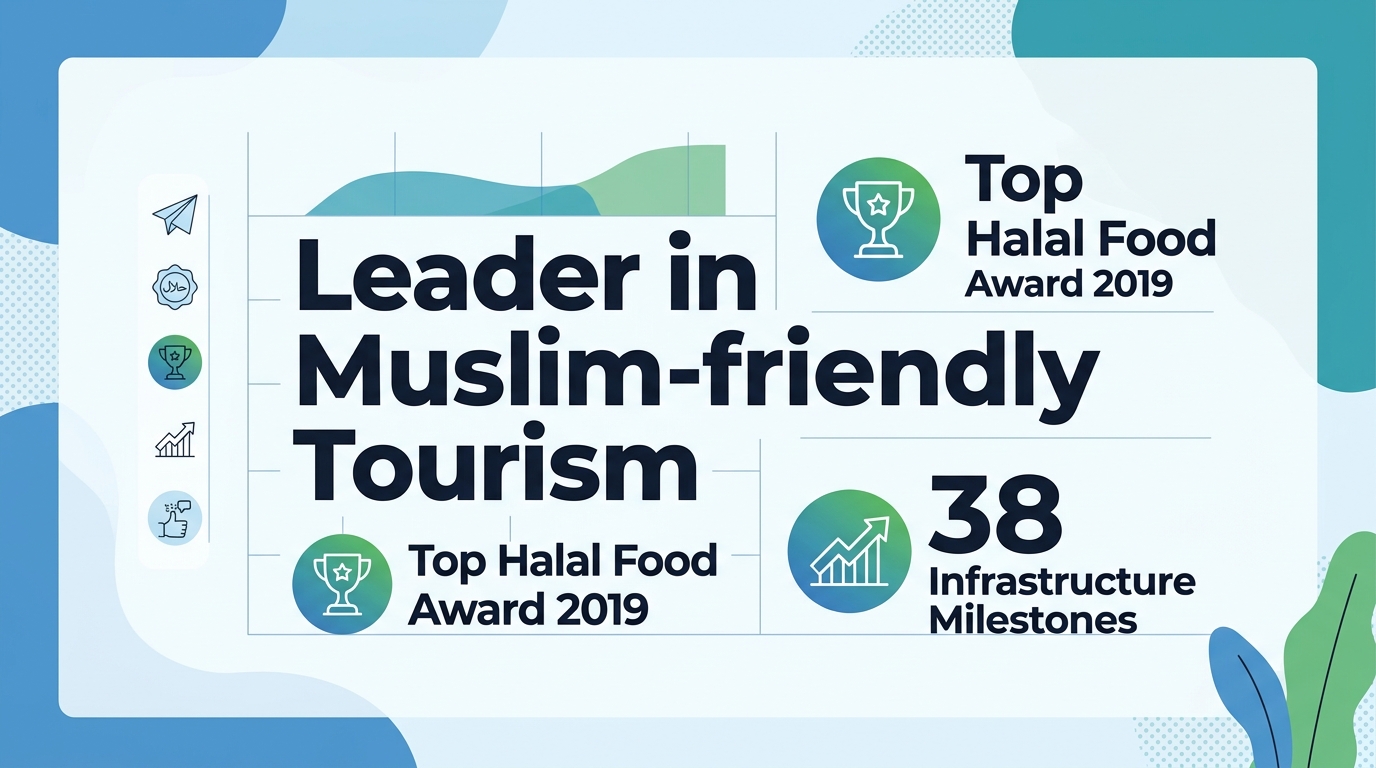
Shizuoka Prefecture has established itself as a leader in Muslim-friendly tourism by proactively developing infrastructure that caters to diverse dietary needs. In April 2019, Shizuoka won the top award in the inbound category at the second Halal Food Awards, recognizing its commitment to creating a welcoming environment for Muslim guests. This achievement is backed by the prefectural government’s ‘Halal Portal,’ which provides comprehensive data on certified restaurants and prayer facilities across the region.
The strategic importance of Shizuoka as a Halal hub is further amplified by its role as a major international gateway. For instance, Shimizu Port was designated as an international cruise hub, and records show that in a single eight-month period in 2017, approximately 38 cruise ships visited the port. This influx of global travelers, including many from Southeast Asia and the Middle East, has driven local businesses to adopt Halal-certified practices to remain competitive in the global tourism market.
Where can you enjoy Halal-certified sushi and fresh Suruga Bay seafood?
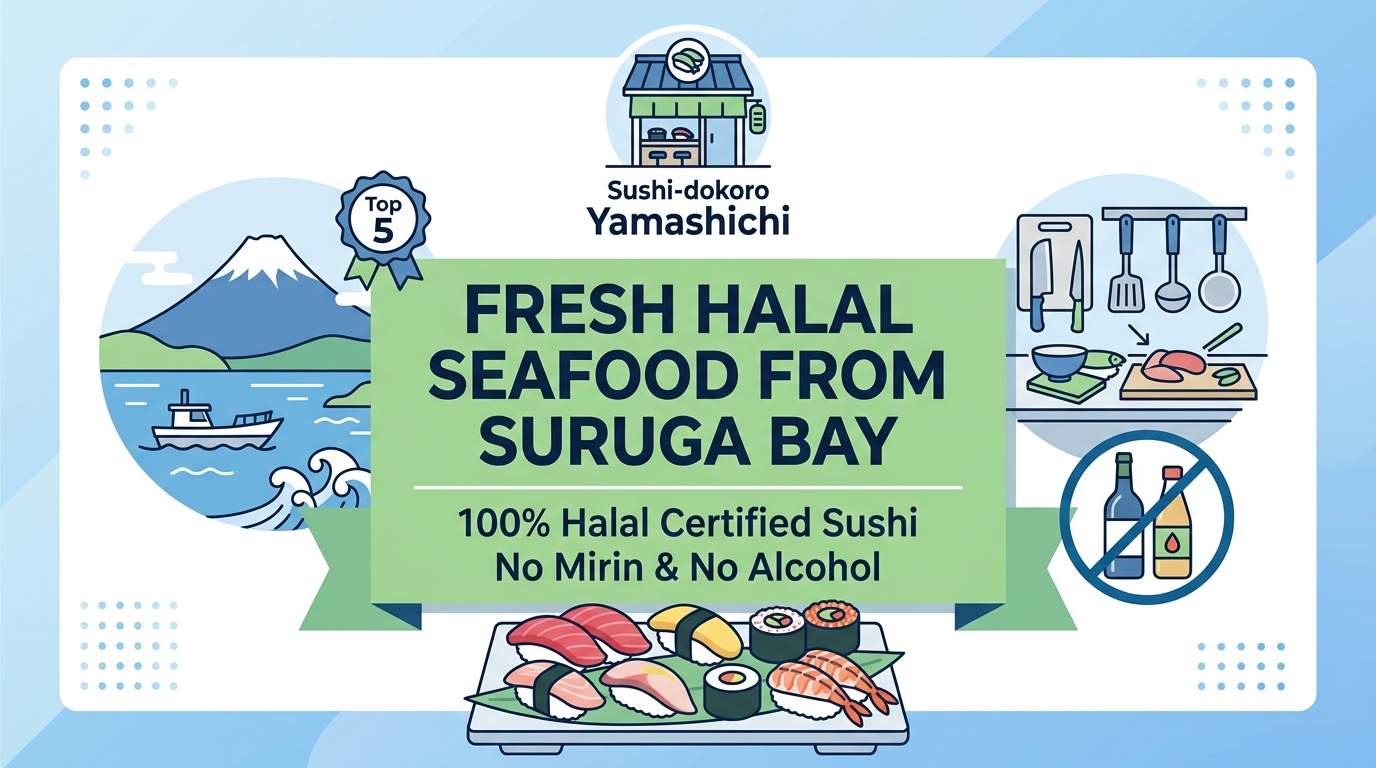
Authentic Japanese seafood is often difficult for Halal-conscious travelers to enjoy due to the use of mirin or alcohol in sushi rice and sauces. However, Sushi-dokoro Yamashichi in the Kanbara area of Shimizu Ward has gained international acclaim for providing fully Halal-certified sushi experiences. By using specialized ingredients that comply with Islamic law, they allow visitors to safely enjoy the bounty of Suruga Bay, including local specialties like Sakura shrimp and raw whitebait.
The ‘Shizumae-don‘ is a must-try dish at Yamashichi, featuring a variety of locally caught fish such as tuna, scabbard fish, and the iconic Sakura shrimp kageage. This restaurant has become a model for regional inbound success, frequently hosting Muslim students from Shizuoka University and international tour groups. Their dedication to authenticity ensures that the flavor of Shizuoka’s seafood remains uncompromised while meeting strict dietary requirements.
How can you experience Shizuoka tea culture through Halal-friendly dining?

Shizuoka is globally famous as Japan’s tea capital, and many Halal-friendly establishments now incorporate this heritage into their menus. Beyond standard green tea, some local cafes offer specialized blend tea sets featuring up to 21 different varieties of herbs. These experiences often pair high-quality Shizuoka tea with Halal-compliant sweets or light meals, allowing travelers to immerse themselves in the local ‘Omotenashi’ culture without religious concerns.
Innovative dining spots in the prefecture also use tea as a culinary ingredient in savory dishes. For example, seasonal takikomi gohan (mixed rice) infused with local tea leaves or served alongside roasted Wagyu beef provides a unique flavor profile that is both Halal-friendly and deeply rooted in Shizuoka’s agricultural identity. These tea-centric dining options are essential for visitors looking to experience the authentic ‘Shizuoka Flavor’ itinerary.
Which Shizuoka restaurants provide dedicated prayer spaces and Muslim-friendly facilities?

For Muslim travelers, the availability of a prayer space (Mushola) is often as important as the food itself. Leading establishments like Sushi-dokoro Yamashichi have converted their second-floor Japanese-style rooms into dedicated prayer areas. These spaces are thoughtfully equipped with handmade prayer mats crafted from traditional Japanese ‘obi’ and ‘kimono’ fabrics, blending cultural appreciation with religious necessity.
Institutional support for Halal facilities is also evident in higher education and hospitality sectors. The Repast Shizuoka Prefectural University branch operates a Muslim-friendly kitchen that serves Halal meat and seafood while maintaining an alcohol-free environment. Additionally, major hotels like Hotel Associa Shizuoka offer specialized Halal menus for breakfast, lunch, and dinner, provided that guests book at least one week in advance, ensuring a seamless stay for international visitors.
参考: ハラールポータルについて – しずおか食の情報センター – 静岡県
Top 5 Halal and Muslim-Friendly Dining Experiences in Shizuoka
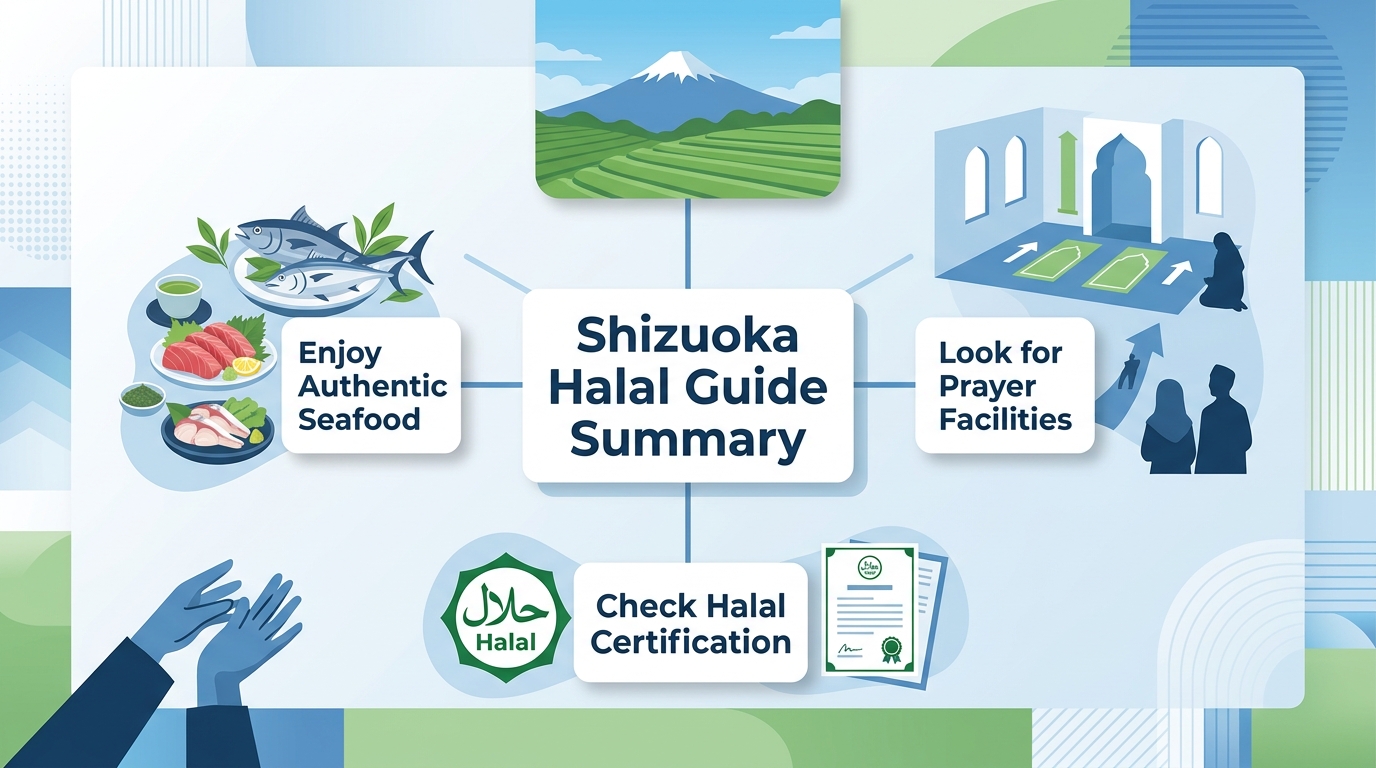
Shizuoka offers a diverse range of dining options that cater to Muslim travelers, ranging from high-end hotel dining to local specialty shops. By selecting establishments that have made tangible investments in Halal certification or Muslim-friendly training, travelers can enjoy the region’s culinary highlights with peace of mind. The following list represents the best-in-class options for those seeking authentic Shizuoka flavors.
- Sushi-dokoro Yamashichi (Kanbara): The premier spot for Halal-certified sushi and Suruga Bay seafood. It features a dedicated prayer room with Qibla direction and unique kimono-fabric mats.
- Hotel Associa Shizuoka: Located just one minute from Shizuoka Station, this hotel provides high-quality Halal-certified courses for all meal times with advanced reservation.
- Bengal Kitchen: A popular choice for those seeking authentic Bengali home cooking. It uses Halal-certified meats and offers a spicy, comforting alternative to Japanese fare.
- Repast (Shizuoka Prefectural University): A Muslim-friendly cafeteria that serves the academic community and visitors, focusing on Halal meat and seafood dishes in a convenient setting.
- Local Tea Cafes in Aoi-ku: Various establishments in central Shizuoka City offer herb-infused teas and Halal-friendly sweets, perfect for experiencing the local tea culture.
Navigating Halal Food Standards in Japan’s Regional Areas
Understanding the distinction between ‘Halal Certified‘ and ‘Muslim Friendly‘ is crucial for both travelers and business owners in Shizuoka. Halal certification involves a rigorous audit by a third-party religious body, ensuring every ingredient and process is compliant. In contrast, many Shizuoka businesses adopt a ‘Muslim-friendly’ approach, which typically means they provide pork-free and alcohol-free menus even if the entire kitchen is not certified.
Transparency is the most valued trait for international diners. Businesses that clearly label their ingredients in English and provide ‘Point-and-Speak’ menus for dietary restrictions see higher engagement from inbound tourists. In Shizuoka, the government has supported this by providing subsidies for businesses to improve their reception environment, including the creation of multilingual menus and the installation of bidet toilets in accordance with Muslim customs.
How can local businesses effectively attract more Muslim travelers to Shizuoka?
Attracting Muslim travelers requires a strategic combination of digital visibility and authentic hospitality. Local businesses should prioritize optimizing their Google Business Profile with English keywords such as ‘Halal restaurants Shizuoka’ and ‘Muslim-friendly dining.’ High-quality photos of the food, the prayer space, and the Halal certificate (if applicable) are essential for building trust before the traveler even arrives in Japan.
Social media platforms, particularly Instagram, are powerful tools for reaching the Southeast Asian market. By showcasing the unique ‘Shizuoka experience’—such as eating fresh sushi with a view of Mt. Fuji—businesses can create a compelling narrative that resonates with global audiences. Partnering with inbound marketing experts like Glocal by Shinker can help bridge the gap between local traditions and international digital trends.
Case Studies: Success Stories in Shizuoka Inbound Marketing
Our company’s results demonstrate that a targeted approach to inbound marketing significantly boosts visibility for regional businesses. For instance, a local restaurant in Shizuoka implemented Glocal’s multilingual marketing strategy, focusing on English Instagram management and Google Business Profile optimization. This led to a measurable increase in engagement from overseas visitors, establishing the restaurant as a top-of-mind destination for inbound travelers.
Similarly, our hotel inbound marketing support has helped regional properties strengthen their brand recognition among international guests. By optimizing OTA listings and creating English-language content that highlights inclusive facilities like Halal menus, hotels have seen a rise in inquiries and bookings from the global market. These successes highlight the importance of data-driven digital strategies in achieving sustainable growth for Shizuoka’s tourism sector.
Ready to attract more international visitors to your Shizuoka business?
undefined
undefined
Frequently Asked Questions
Q1. What is Halal-friendly dining in the context of Japanese cuisine?
Halal-friendly dining refers to meals prepared according to Islamic dietary laws. This involves avoiding pork and alcohol, and using certified meats. In Japan, it also means using special seasonings, like alcohol-free soy sauce and mirin, to ensure traditional dishes like sushi remain authentic yet safe for Muslim guests.
Q2. Is all seafood found in Shizuoka naturally Halal for travelers?
While raw seafood is generally acceptable, many Japanese seafood dishes use alcohol-based seasonings during preparation. Shizuoka’s Halal-certified restaurants are important because they use specific, alcohol-free ingredients and separate kitchen tools to ensure that fresh catches from Suruga Bay are prepared strictly according to Halal standards.
Q3. Do I need to make a reservation to eat at these Halal restaurants?
It is highly recommended to book in advance. Many restaurants in Shizuoka prepare Halal ingredients or set up dedicated cooking areas specifically upon request. Making a reservation ensures the staff is ready to provide a high-quality, Muslim-friendly dining experience without any cross-contamination risks.
Q4. Are prayer spaces readily available at these dining locations?
Many of the top Halal-friendly restaurants in Shizuoka provide dedicated prayer rooms or quiet, private spaces for guests. Some locations also offer prayer mats and washing facilities. It is a good idea to check the specific restaurant’s facilities in this guide before your visit.
Q5. How can I ensure the tea snacks served in Shizuoka are Halal?
While pure green tea is naturally Halal, traditional tea snacks can sometimes contain animal-derived gelatin or fats. The restaurants highlighted in this guide focus on Shizuoka tea culture and serve snacks specifically made with Halal-compliant ingredients, allowing you to enjoy the local culture worry-free.