
Explore the 12 best things to do in Atami! Discover hot springs, local seafood, and coastal charm in Shizuoka. Plan your perfect day trip from Tokyo today.
![12 Best Things to do in Atami [Shizuoka’s Authentic Coastal Escape]](https://glocal-world.jp/glocal-cms/wp-content/uploads/2026/07/best-things-to-do-in-atami-eyecatch-1-1024x683.png)
Planning a trip to Japan often leads travelers to the same crowded spots in Tokyo or Kyoto, leaving many feeling overwhelmed and missing the genuine, relaxing coastal atmosphere they truly crave.
This guide provides a curated list of the 12 best things to do in Atami, offering practical insights into authentic hot springs, seafood, and Showa-era heritage to ensure your coastal escape is both seamless and unforgettable.
What are the best things to do in Atami for an authentic coastal experience?
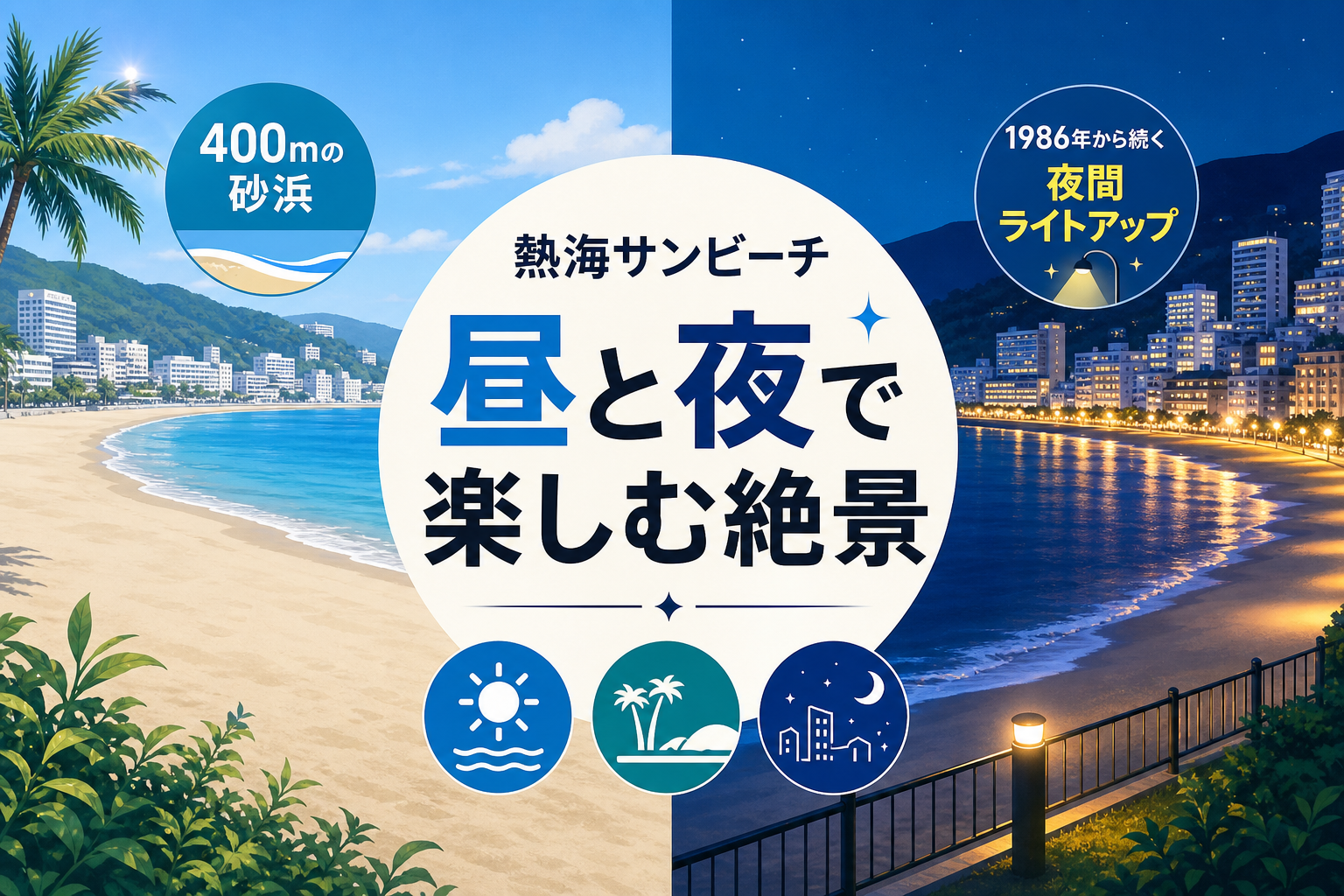
Atami Sun Beach serves as the definitive center of the city’s coastal identity, offering a 400-meter stretch of sandy shoreline that transforms into a brilliant blue illumination after sunset. This beach was the first in Japan to introduce nighttime lighting designed by world-renowned lighting designer Motoko Ishii in 1986, creating a romantic atmosphere that rivals Mediterranean resorts. Visitors can enjoy a leisurely stroll along the palm-tree-lined walkway, which provides a perfect vantage point for the Pacific Ocean while remaining just a 15-minute walk from the main JR Atami Station.
The Atami Ropeway offers a breathtaking three-minute aerial journey that takes you to the summit of Mount Hachiman, providing the most iconic panoramic view of the city and Sagami Bay. Reaching an altitude of 120 meters, the observation deck at the top allows travelers to see the entire crescent-shaped coastline and the distant Hatsushima Island on clear days. This short but impactful trip is essential for understanding Atami’s unique geography, where steep volcanic mountains meet the deep blue sea, creating the dramatic landscape that has drawn vacationers for over 1,000 years.
- Atami Sun Beach: A 400-meter white sand beach perfect for swimming in summer and enjoying artistic nighttime illuminations year-round.
- Atami Ropeway: A scenic cable car ride leading to a 120-meter high observation deck with 360-degree views of the Shizuoka coastline.
How can you explore Atami’s unique Showa-era charm and cultural heritage sites?
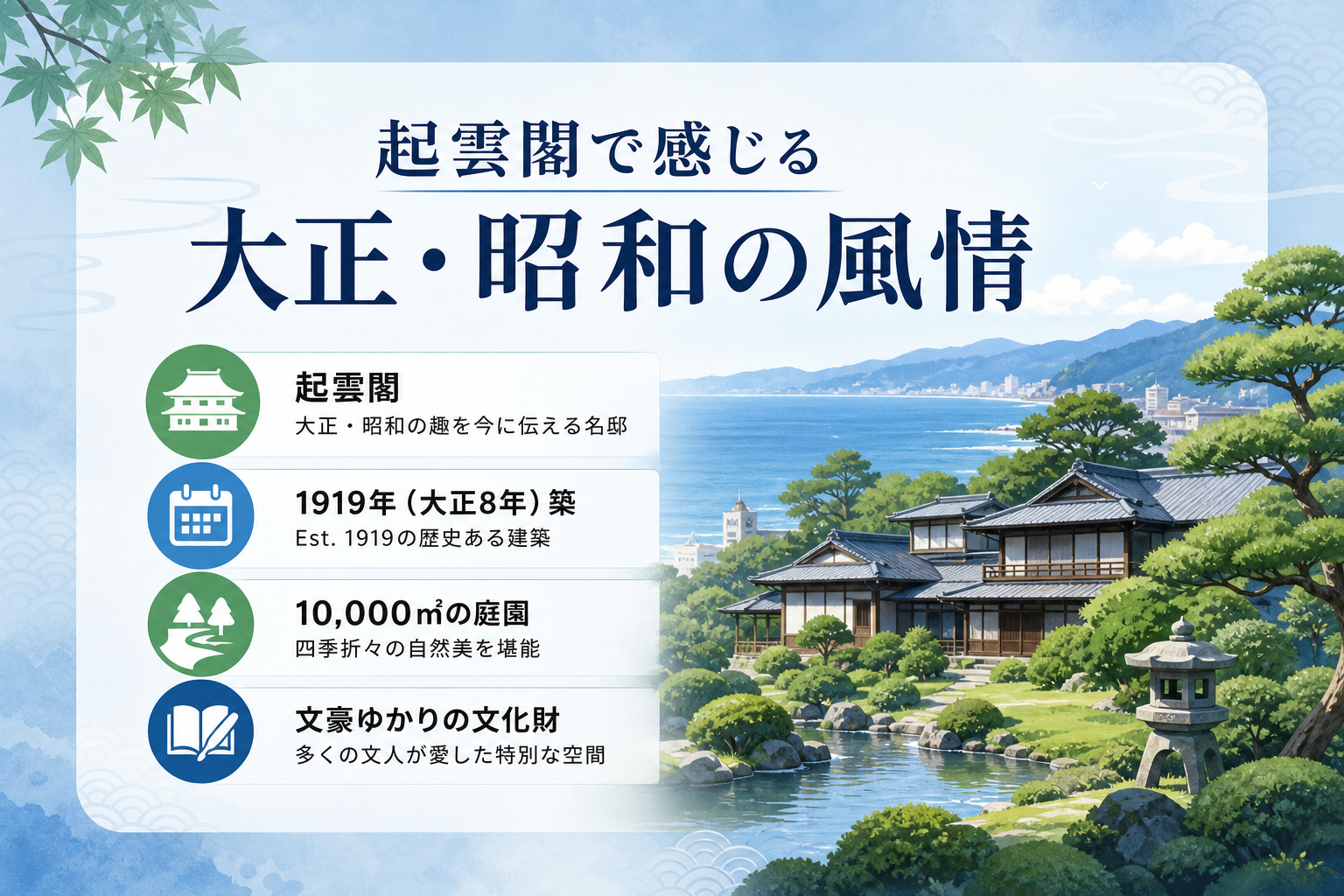
Kiunkaku, established in 1919, stands as one of Atami’s ‘Three Great Villas’ and represents a fascinating fusion of traditional Japanese, Tudor, and Art Deco architectural styles. Originally built as a private residence, it later became a high-end ryokan frequented by legendary Japanese authors like Osamu Dazai and Yukio Mishima during the mid-20th century. Walking through its 10,000-square-meter grounds, visitors can see the transition from the Taisho era to the Showa era, particularly in the Roman-style baths and the intricately carved wooden corridors that overlook a lush central garden.
The MOA Museum of Art offers a world-class cultural experience, housing approximately 3,500 works including three National Treasures and 67 Important Cultural Properties. Located on a hill 250 meters above sea level, the museum features a massive circular hall with a kaleidoscopic ceiling and a Noh theater made of Japanese cypress. The museum is not just about the art; its ‘Moore Square’ provides a stunning view of the ocean, making it a masterpiece of landscape design that integrates Shizuoka’s natural beauty with human creativity.
- Kiunkaku Cultural Heritage: A historic villa from 1919 showcasing a unique blend of Western and Japanese architecture across 10,000 square meters.
- MOA Museum of Art: A hilltop museum housing 3,500 masterpieces and offering the best ocean views in the Shizuoka region.
出典・参考: 日経ビジネスによる熱海再生の分析
What are the top things to do in Atami for hot springs and nature?
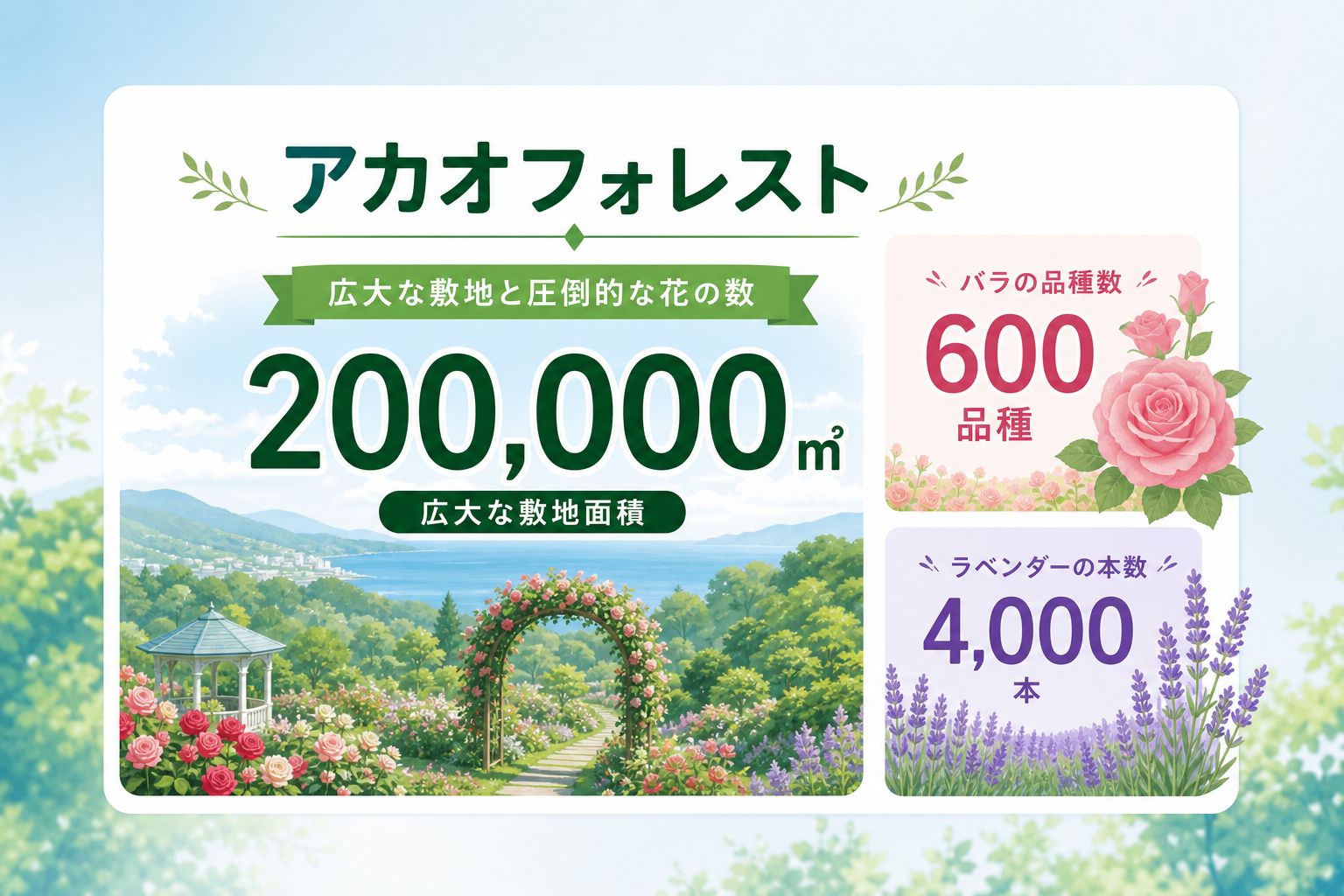
Akao Forest, formerly known as the Akao Herb and Rose Garden, spans over 200,000 square meters of hillside, featuring 12 themed gardens with approximately 600 varieties of roses and 4,000 lavender plants. This botanical paradise is famous for the ‘COEDA HOUSE,’ a café designed by architect Kengo Kuma that uses stacked cedar beams to create a structure that blends seamlessly with the surrounding forest. Visitors often spend 2 to 3 hours here, taking photos at the ‘swing in the sky’ which overlooks the Pacific, providing a modern contrast to the city’s vintage hot spring reputation.
The Atami Plum Garden, or Atami Baien, is renowned for having the earliest blooming plum trees in Japan, with some of its 469 trees starting to flower as early as late November. Established in 1886, the garden features 60 different varieties of plum trees, some of which are over 100 years old. During the peak season from January to March, the garden hosts a festival attracting thousands of visitors who come to see the vibrant pink and white blossoms reflected in the garden’s streams and traditional bridges, offering a quintessential Japanese spring experience.
For a truly authentic onsen experience, the Ouyu Geyser stands as a symbol of Atami’s geothermal power, historically recognized as one of the seven great springs of the region. While many visitors enjoy the luxury baths in local ryokans, visiting the public footbaths like ‘Ieyasu-no-Yu’ in front of Atami Station allows you to soak in 100% natural hot spring water for free. This water is rich in chloride and sulfates, known for its skin-healing properties and its ability to retain body heat, which has made Atami a top wellness destination since the Edo period (1603-1868).
- Akao Forest: A 20-hectare landscape garden featuring Kengo Kuma’s architecture and thousands of blooming flowers.
- Atami Plum Garden: The site of Japan’s earliest plum blossoms, featuring 469 trees and a history dating back to 1886.
- Ouyu Geyser & Footbaths: Natural geothermal springs that provide a quick and authentic way to experience Atami’s famous mineral-rich waters.
Where can you find the best things to do in Atami for local seafood?
Atami Ekimae Heiwa-dori Shopping Street is the culinary heart of the city, located just steps from the JR Atami Station exit. This bustling arcade is lined with over 50 shops and restaurants offering local delicacies like ‘Himono’ (sun-dried fish) and ‘Atami Pudding.’ For a savory lunch, travelers should look for restaurants serving ‘Kinme-dai’ (Splendid Alfonsino), a deep-sea red fish that is a local specialty. It is typically served simmered in a sweet soy glaze or as fresh sashimi, representing the high-quality seafood caught daily in the deep waters of Sagami Bay.
The Atami Port area offers a more industrial but authentic dining experience where you can find ‘Kaisen-don’ (seafood bowls) piled high with local catches like whitebait, mackerel, and squid. Many restaurants in this area are operated by local fishing cooperatives, ensuring that the prices remain competitive and the ingredients are exceptionally fresh. Sampling ‘Shirasu’ (baby sardines) is a must; they are served either raw or boiled and are considered a delicacy of the Shizuoka coast, providing a true taste of the region’s marine bounty.
- Heiwa-dori Shopping Street: The best place to sample street food and purchase high-quality sun-dried fish from vendors with decades of history.
- Atami Port Seafood Markets: Authentic dining spots where you can enjoy Kaisen-don and Kinme-dai directly from the local fishing fleets.
What are the must-see seasonal events and hidden gems in Atami?
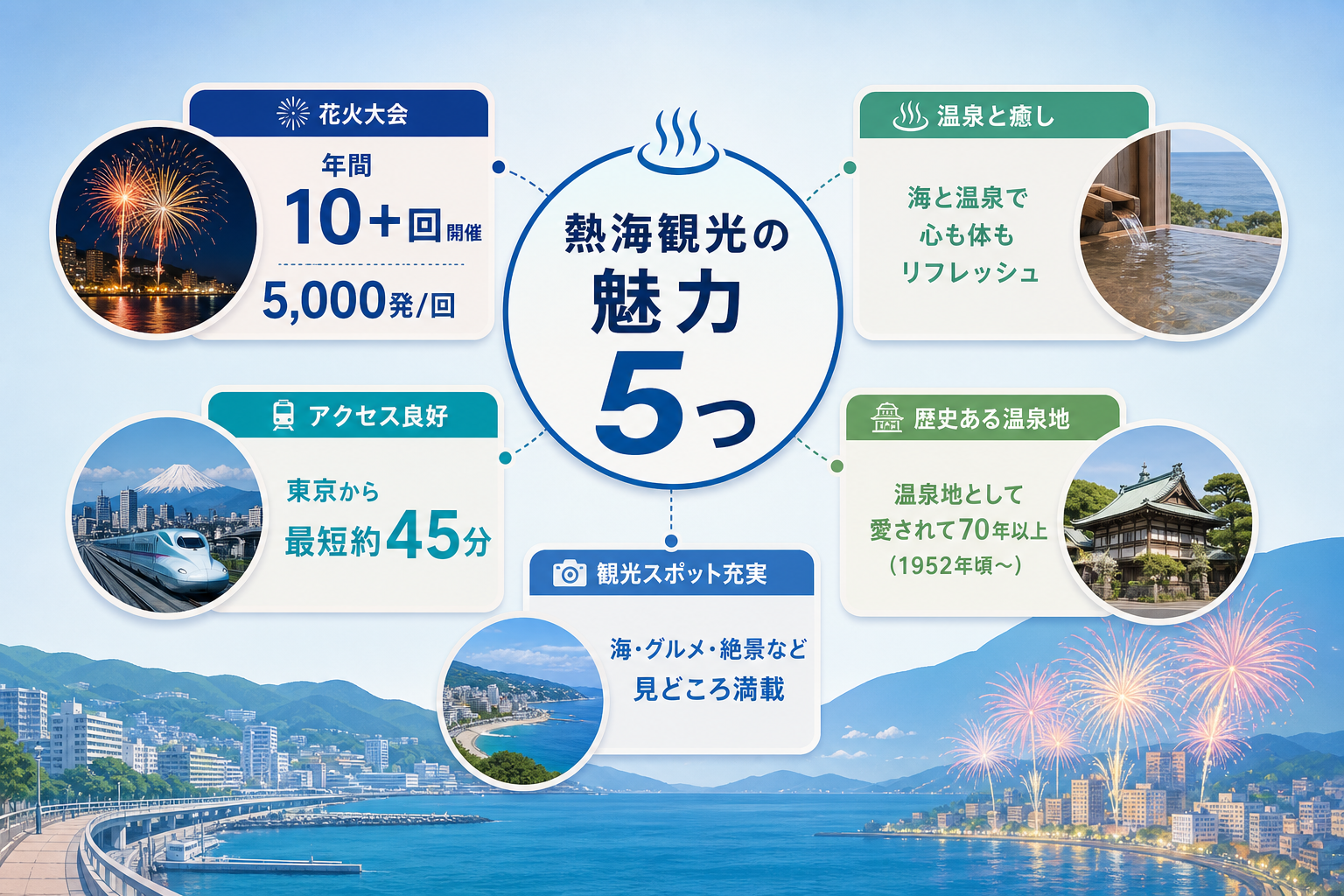
The Atami Sea Fireworks Festival is a legendary event that occurs more than 10 times throughout the year, rather than just in the summer. This tradition began in 1952 to boost morale after a major fire and has since become the city’s most famous attraction. Because Atami is surrounded by mountains on three sides, the sound of the 5,000 fireworks shells launched per show echoes like a stadium, creating a powerful acoustic experience that is unique to this coastal town. Watching the ‘Niagara Falls’ finale from the beach is widely considered one of the best free experiences in Shizuoka.
Kinomiya Shrine is a hidden gem that houses a 2,000-year-old Great Camphor tree, designated as a National Natural Monument. Standing at 26 meters tall with a circumference of 24 meters, it is the second-largest tree in Japan. Local legend states that walking around the tree once will add a year to your life, and making a wish while circling it will ensure its fulfillment. The shrine has recently been modernized with stylish wooden decks and a café, making it a peaceful retreat for those looking to combine ancient spirituality with modern comfort.
Hatsushima Island is Shizuoka’s only inhabited island and is reachable via a 30-minute ferry ride from Atami Port. This 4-kilometer circumference island offers a resort-like atmosphere with an ocean-view infinity pool, an adventure course, and fresh seafood stalls. It is an ideal day trip for those who want to escape the mainland and experience an island lifestyle. With only about 200 residents, the island maintains a tranquil pace, offering clear waters for snorkeling and diving that are among the best in the Kanto and Tokai regions.
- Atami Sea Fireworks Festival: A year-round spectacular featuring 5,000 shells and incredible acoustics due to the surrounding mountains.
- Kinomiya Shrine: Home to a 2,000-year-old sacred tree and modern shrine facilities that offer a serene spiritual experience.
- Hatsushima Island: A quick 30-minute escape to a subtropical island perfect for outdoor activities and fresh island seafood.
How do you plan a seamless trip to Atami from Tokyo or Shizuoka?
Reaching Atami is remarkably efficient, taking only 45 to 50 minutes from Tokyo Station via the Tokaido Shinkansen ‘Kodama’ or ‘Hikari’ trains. For those traveling on a budget, the JR Tokaido Line rapid service takes approximately 100 minutes and costs about half the price of the bullet train. Since Atami is a major stop on the way to Kyoto and Osaka, it is an ideal first or last stop for travelers exploring the Golden Route. The station itself is a modern hub with the ‘Laska Atami’ shopping mall, providing immediate access to lockers, tourist information, and local souvenirs.
From Shizuoka City, Atami is even more accessible, with a Shinkansen ride taking only 25 minutes. If you prefer a more scenic route, local trains take about 75 minutes and offer glimpses of Suruga Bay and Mount Fuji on clear days. Once you arrive at Atami Station, most major attractions are within a 2-kilometer radius. While the city is walkable, the hills are steep; therefore, utilizing the ‘Yu-Yu Bus’ or local taxis is highly recommended for those with luggage or limited mobility. This connectivity makes Atami a perfect weekend getaway for both locals and international tourists.
Why is professional inbound marketing essential for Atami’s tourism growth?
As Atami transitions from a domestic favorite to an international destination, local businesses face the challenge of reaching global audiences through effective digital channels. Glocal by Shinker specializes in bridging this gap by providing multilingual marketing strategies that increase visibility on platforms like Google Maps, Instagram, and major OTAs. By optimizing English-language content and managing social media presence, we help hotels and restaurants in Shizuoka attract high-value international travelers who are looking for the authentic experiences Atami offers.
Our data-driven approach has already helped regional hotels see significant increases in international inquiries and bookings. We offer flexible plans, such as our Economy Accommodation Plan starting at ¥50,000 per month, which includes OTA optimization and English-language support. For restaurant owners, our social media management plans ensure that your local seafood specialties are discovered by tourists before they even arrive in the city. Partnering with a local expert like Shinker Inc. allows business owners to focus on hospitality while we handle the complexities of global digital marketing.
出典・参考: 熱海市役所による観光基本計画
Frequently Asked Questions
Q1. What is the Showa-era charm mentioned in the guide?
Showa-era charm refers to the nostalgic atmosphere of Japan between 1926 and 1989. In Atami, this is found in retro architecture, old-fashioned coffee shops, and traditional shopping arcades that offer a glimpse into Japan’s mid-20th-century coastal resort culture.
Q2. Is Atami a suitable destination for a day trip from Tokyo?
Yes, Atami is perfect for a day trip. It takes only 45 minutes to reach via the Shinkansen bullet train from Tokyo Station. Most major attractions, including the beach, local seafood markets, and hot springs, are easily accessible from the station.
Q3. Can I enjoy the hot springs without staying overnight at a hotel?
Many hotels and bathhouses in Atami offer ‘day-use’ hot springs, known as higaeri onsen. You can pay a small fee to access their facilities for a few hours. Some even offer packages that include lunch and private bath rentals.
Q4. When is the best time to see the famous Atami fireworks?
Atami is unique because it hosts fireworks displays throughout the entire year, not just in summer. There are scheduled shows in spring, autumn, and winter. The city’s coastal geography creates a natural acoustic effect that makes the explosions sound incredibly powerful.
Q5. What kind of local seafood is Atami most famous for?
Atami is best known for ‘himono,’ which is sun-dried fish that is grilled before eating. Because of its location on Sagami Bay, you can also find incredibly fresh seafood like red snapper, squid, and shellfish at the local markets and restaurants.
出典・参考: 朝日新聞による熱海観光局の報道