

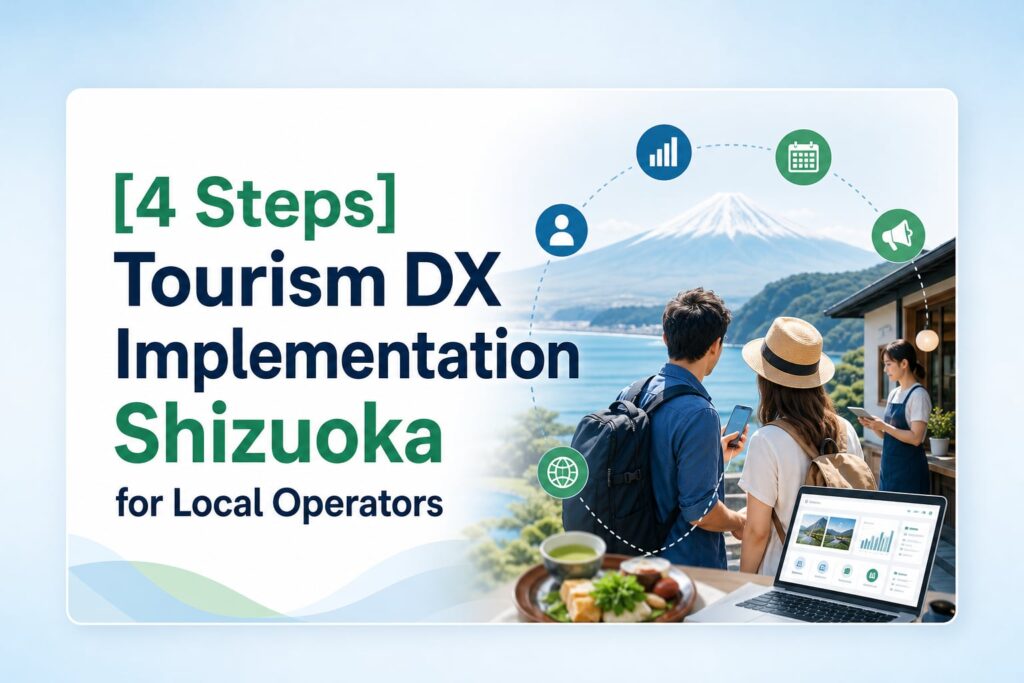
Learn 4 steps for tourism DX implementation in Shizuoka. Overcome labor shortages, streamline regional transit, and leverage subsidies for your business.
 執筆者:Hikaru SonedaCEO
Many tourism and hospitality operators across Shizuoka struggle to connect with international travelers while facing persistent labor shortages and complex regional transit challenges.
This guide provides an actionable roadmap for tourism DX implementation Shizuoka businesses can execute to streamline daily operations, expand global visibility, and achieve sustainable revenue growth.
Why is tourism DX implementation essential for Shizuoka hospitality and attraction operators?
Shizuoka Prefecture occupies a prime position along the golden route between Tokyo and Kyoto, yet local hospitality operators frequently lose potential overnight stays because travelers merely pass through on the Tokaido Shinkansen. Without digital touchpoints that capture international interest before arrival, traditional ryokans, boutique hotels, and regional attractions across Suruga Bay, Lake Hamana, and the Mt. Fuji foothills remain largely invisible to self-guided international travelers. Implementing modern digital transformation bridges this gap by establishing multilingual visibility on the exact platforms foreign visitors use to plan their itineraries.
Severe operational bottlenecks intensify the urgency for digital adaptation across regional lodging and dining establishments. Small, dedicated teams in coastal hot-spring towns like Atami or Izu often spend excessive hours manually managing phone inquiries, paper reservation ledgers, and on-site translation hurdles. Adopting standardized digital management systems reduces routine administrative strain, enabling on-site personnel to focus their energy entirely on authentic Japanese hospitality rather than repetitive manual coordination.
Modern international visitors demand seamless booking workflows, real-time availability, and mobile-friendly regional information. When independent travelers encounter outdated, single-language websites with manual email reservation forms, conversion rates drop dramatically as users seek alternatives with instant confirmation. Establishing integrated digital infrastructure directly addresses these traveler expectations, safeguarding long-term competitiveness across Shizuoka’s distinct travel zones.
Addressing regional disparity between urban transit hubs and rural destinations
What are the 4 practical steps for tourism DX implementation in Shizuoka?
Executing digital transformation does not require an immediate, high-cost overhaul of every internal system. Regional operators achieve the highest return on investment by adopting a structured phased approach that prioritizes foundational digital assets before scaling promotional campaigns. Following a step-by-step roadmap ensures internal staff build digital confidence without compromising day-to-day hospitality standards.
Each phase directly targets a core operational vulnerability common among Shizuoka ryokans, restaurants, and experiential tourism providers. By transitioning systematically from fundamental profile setups to advanced performance tracking, businesses create an enduring infrastructure that steadily drives inbound tourist reservations.
- Step 1: Digital Asset Audit and Multilingual Foundations: Inventory your existing web presence, claim your Google Business Profile, and establish accurate English information covering operating hours, location details, dietary accommodations, and direct contact options.
- Step 2: OTA Optimization and Centralized Inventory Management: Integrate your lodging or activity inventory into key global booking channels such as Booking.com, Airbnb, and TripAdvisor, utilizing a channel manager to prevent double bookings across platforms.
- Step 3: Social Media and Discovery Channel Expansion: Deploy targeted visual storytelling across international social channels, highlighting authentic seasonal cuisine, local tea culture, and scenic viewpoints to engage travelers during their pre-trip discovery phase.
- Step 4: Data-Driven Performance Review and Continuous Optimization: Analyze reservation trends, visitor review sentiment, and search analytics monthly to refine listing keywords, seasonal rate plans, and guest communication protocols for sustained growth.
How can digital tools solve secondary transport and labor shortages in Shizuoka?
Secondary transportation friction remains one of the largest obstacles preventing international travelers from exploring deeper into the Izu Peninsula, Kawanehon, and the Omae-zaki coastline. Disconnected rural bus lines and confusing paper ticket systems often discourage visitors who do not hold an international driving permit. Integrating digital mobility services, such as smartphone-based multi-modal transit ticketing, QR-code taxi dispatch, and real-time localized transit maps, removes geographical isolation and disperses visitor spending evenly throughout rural communities.
Labor shortages in rural accommodations can be effectively mitigated through targeted front-desk automation without eroding guest satisfaction. Implementing self-service digital check-in tablets equipped with multilingual passport scanning relieves front-desk personnel from lengthy administrative registration tasks during peak check-in hours. Smart door lock integrations and mobile concierge applications allow guests to access facility guidelines, onsen etiquette, and local dinner recommendations in their native language directly on their smartphones.
Dining facilities face identical workforce limitations that can be managed through intuitive digital menu software. Contactless table ordering through personal smartphones eliminates language communication barriers between service staff and foreign diners, while reducing food preparation errors caused by miscommunication. These streamlined workflows protect staff morale, maintain high service velocity during peak dining rushes, and expand culinary sales through clear, photo-rich English ingredient descriptions.
Unifying destination mobility data through regional stakeholder collaboration
How can local businesses leverage Shizuoka subsidies and data for tourism DX?
Financing digital transformation initiatives is significantly more manageable when operators utilize regional public support programs and national economic grants. Both the national government and Shizuoka Prefecture regularly provide funding programs, such as the national IT Introduction Subsidy and inbound revitalization project subsidies, to help small and medium tourism operators modernize their operations. These initiatives frequently offset substantial portions of qualifying expenses for multilingual booking software, automated check-in systems, and international digital marketing strategies.
Securing public subsidy support requires rigorous preparation and alignment with verified operational KPIs. Grant assessment committees evaluate applications based on concrete productivity improvements, regional economic spillover, and targeted inbound visitor acquisition metrics. Working with an experienced digital implementation partner ensures that project specifications, cost breakdowns, and post-implementation reporting fulfill all regulatory filing standards without burdening internal operational staff.
Public destination data provided by regional DMOs and tourism federations represents another high-value asset for commercial operators. Analyzing anonymized mobile location patterns and foreign payment data collected across Shizuoka reveals where international travelers concentrate, their average length of stay, and seasonal consumption trends. Leveraging these insights empowers individual ryokans, tour guides, and restaurants to tailor their promotional campaigns to the highest-demand geographic feeder markets.
What real case studies demonstrate tourism digital transformation success in Shizuoka?
Practical digital transformation proves its worth through measurable business outcomes rather than abstract technology deployments. A local restaurant implemented our company’s multilingual marketing strategy, including professional English Instagram management and targeted Google Business Profile optimization. As a direct result, the dining establishment became substantially easier for international tourists to discover online, increasing engagement from overseas visitors and strengthening its position as a preferred dining destination for inbound travelers visiting Shizuoka.
Experiential cultural providers can achieve remarkable global visibility by combining storytelling with digital promotion. In another engagement, a tourism business worked with our team to promote local attractions and cultural experiences to international audiences. Through multilingual content creation, destination marketing, and digital promotion, the business expanded its global reach and improved awareness among potential visitors. The initiative highlighted the region’s cultural value while supporting sustainable tourism growth across surrounding hospitality businesses.
These real-world outcomes confirm that regional operators do not need massive corporate advertising budgets to achieve meaningful inbound revenue growth. Focusing on authentic local storytelling, polished multilingual presentation, and structured online discoverability creates sustainable momentum that continuously attracts international travelers eager to experience authentic Japanese culture.
What should operators check when evaluating quotes and selecting a tourism DX partner?
Selecting the right marketing and digital transformation agency requires careful scrutiny of commercial proposals to prevent hidden operational expenses. Agencies frequently quote low entry costs while excluding essential implementation scopes such as ongoing platform maintenance, native translation validation, or direct platform channel management. Business owners should request granular breakdowns that detail exactly which services are included within the initial retainer versus which deliverables require additional billable hours.
Transparency regarding performance metrics and ownership of digital accounts is equally critical for long-term independence. Any professional agency partner should guarantee that social media profiles, Google Business listings, and OTA credentials remain the permanent intellectual property of your business. Clarifying these operational terms prior to contract execution protects your investment and ensures seamless long-term continuity.
| Proposal Item | What to Verify | Why It Matters for Your Business |
|---|---|---|
| Initial Setup & Integration Scope | Confirm whether OTA setup, channel manager sync, and multili | Prevents unexpected out-of-scope invoices after onboarding b |
| Booking Commission & Fee Basis | Clarify whether variable commissions apply to direct booking | Protects operating profit margins as inbound reservation vol |
| Account Ownership & Data Rights | Ensure all social media handles, analytics accounts, and OTA | Avoids losing digital assets and customer review history if |
| Post-Launch Technical Support | Check available support hours, emergency response windows, a | Ensures rapid resolution of front-desk or reservation bookin |
| Content Revision Policies | Verify the number of permitted copy revisions, image updates | Eliminates friction when adjusting dining menus, room packag |
How can operators get started with inbound marketing and tourism DX support in Shizuoka?
Initiating your tourism digital transformation journey begins with a clear, stress-free consultation process tailored to your operational realities. At Glocal by Shinker, our inbound marketing team combines deep regional insight with international communication expertise to help regional accommodations, restaurants, and activity providers thrive in the global travel market. Led by CEO Hikaru Soneda, who studied in the United States and worked overseas for a major travel company, our team brings hands-on experience in inbound tourism, destination marketing, and global customer engagement.
Our headquarters is located at 7F Oak Shizuoka Building, 17-5 Gofuku-cho 2-chome, Aoi-ku, Shizuoka City, just a 10-minute walk from the North Exit of JR Shizuoka Station. Operating Monday through Friday from 9:00 AM to 6:00 PM JST, we welcome email inquiries 24 hours a day and provide responsive support via phone at +81-54-204-0326 or +81-54-292-7772. Operators can easily explore our inbound marketing capabilities through our official websites at https://glocal-world.jp/ and https://shinker.co.jp/glocal/.
Getting started is straightforward: submit an inquiry through our website contact form or telephone, schedule an initial consultation to discuss your inbound business goals, receive a customized proposal and quotation tailored to your operational capacity, and sign the agreement to launch your project. Partnering with a dedicated regional specialist allows your team to focus on exceptional on-site hospitality while your digital channels consistently attract high-value international travelers to Shizuoka.
A proven partnership model built on authentic local hospitality
Frequently Asked Questions
Q1. What is tourism DX?
Tourism DX, or digital transformation, means using modern digital technologies and online tools to improve travel services, streamline business operations, and create better experiences for both visitors and local staff.
Q2. How can small Shizuoka businesses start DX on a tight budget?
Small businesses can begin by adopting free or low-cost digital tools, such as mobile payment systems or online booking forms, and apply for local government subsidies designed to support digital adoption.
Q3. How does digital transformation solve secondary transport issues?
Digital tools can integrate local bus schedules, ride-sharing options, and rental bicycle services into easy-to-use apps or digital maps, making it simpler for travelers to reach remote attractions.
Q4. Will staff need advanced technical skills to use these systems?
No, staff do not need complex technical skills. Most modern digital platforms are user-friendly, and operators can choose simple software that offers intuitive controls and clear training guides for employees.
Q5. How does tourism DX help connect with international visitors?
Digital tools provide automated multilingual menus, websites, and reservation systems. This removes language barriers, making foreign travelers feel welcome and allowing them to explore and book services with ease.