

Discover an effective Shizuoka hotel inbound strategy to capture Golden Route travelers. Learn how to convert transit passengers into profitable overnight stays.
 執筆者:Hikaru SonedaCEO
As a Shizuoka accommodation operator watching bullet trains speed between Tokyo and Kyoto, you likely feel frustrated seeing millions of international travelers bypass your property every single year.
This guide reveals an actionable Shizuoka hotel inbound strategy to convert high-speed transit passengers into profitable overnight guests through sub-regional marketing, global distribution, and lean operations.
Why do Golden Route travelers bypass Shizuoka instead of booking overnight stays?
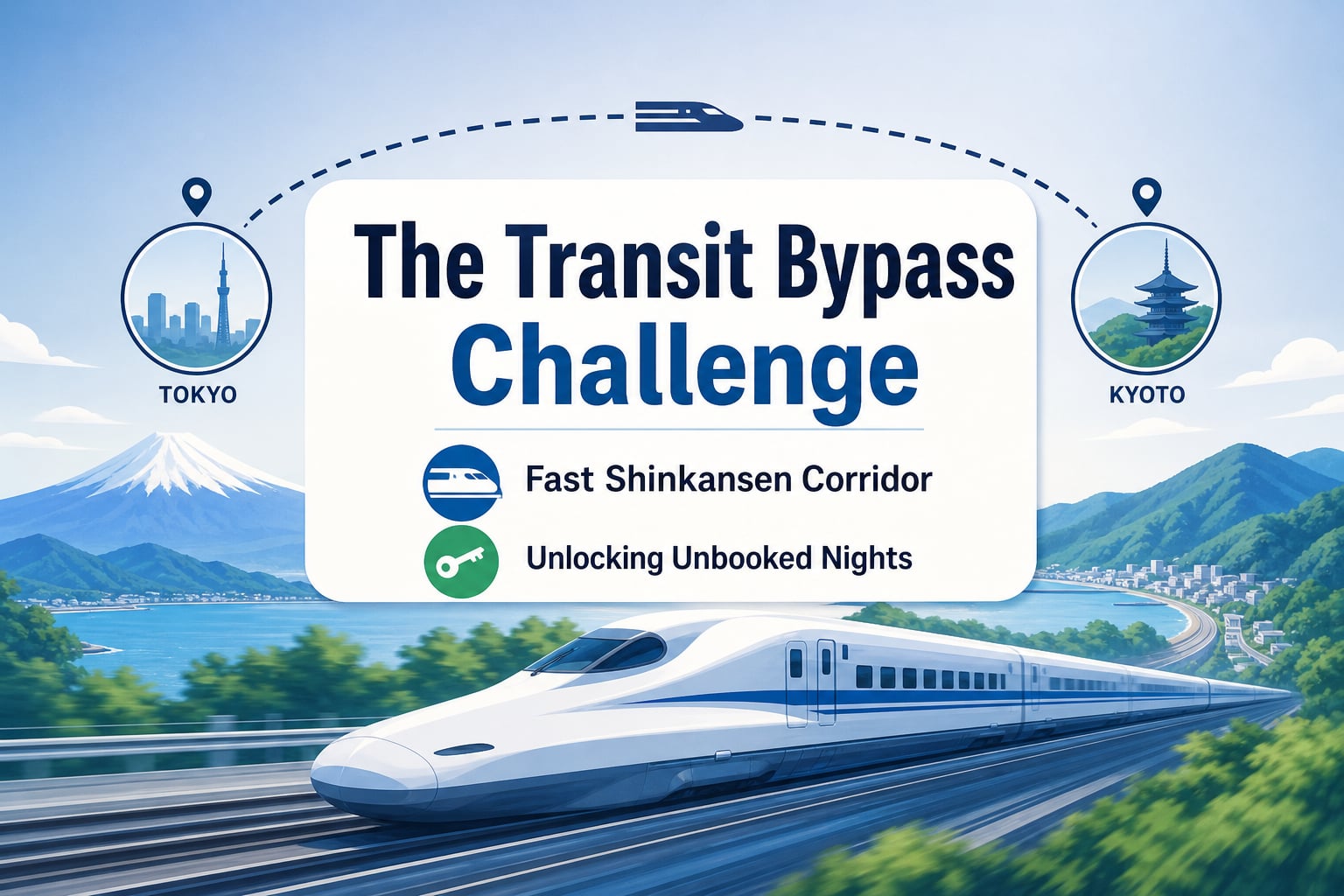
Shizuoka Prefecture sits directly along the world-famous Golden Route, yet the high-speed Tokaido Shinkansen allows travelers to traverse the region between Tokyo and Kyoto in roughly one hour without stopping. Most overseas visitors plan their itineraries around widely marketed metropolitan hubs, viewing Shizuoka merely as a scenic backdrop framed by train windows. Overcoming this structural transit problem requires repositioning your property as an intentional destination rather than an incidental waypoint.
International tourists bypass regional Japanese accommodations primarily because of fragmented destination marketing and a lack of clear travel narratives in English. While overseas visitors actively search for authentic hot springs, tea plantations, and unobstructed Mount Fuji vistas, they struggle to identify how regional properties integrate with their transit route. Without clear multi-night itineraries and seamless station access instructions, overseas travelers defaulted to standard urban hotel chains in major metropolitan centers.
Capturing these fast-moving tourists requires demonstrating that an overnight stay in Shizuoka enriches their journey far more than another crowded night in Tokyo or Osaka. Hoteliers must address specific traveler friction points, including luggage handling, local train transfers, and late-evening dining availability. When regional properties proactively resolve these logistical anxieties through digital touchpoints, travelers eagerly trade generic city stays for immersive cultural hospitality.
Breaking the High-Speed Shinkansen Bypass Pattern
The Tokaido Shinkansen operates dozens of departures daily through Shizuoka stations, creating an optical illusion of constant tourist availability that rarely translates into room reservations. Properties that succeed in capturing international guests do not wait for spontaneous walk-ins; they publish digital transit guides that show travelers how convenient a one-night or two-night stopover truly is.
参考: Shizuoka inbound tourism marketing
How can a Shizuoka hotel inbound strategy highlight unique sub-regional assets?
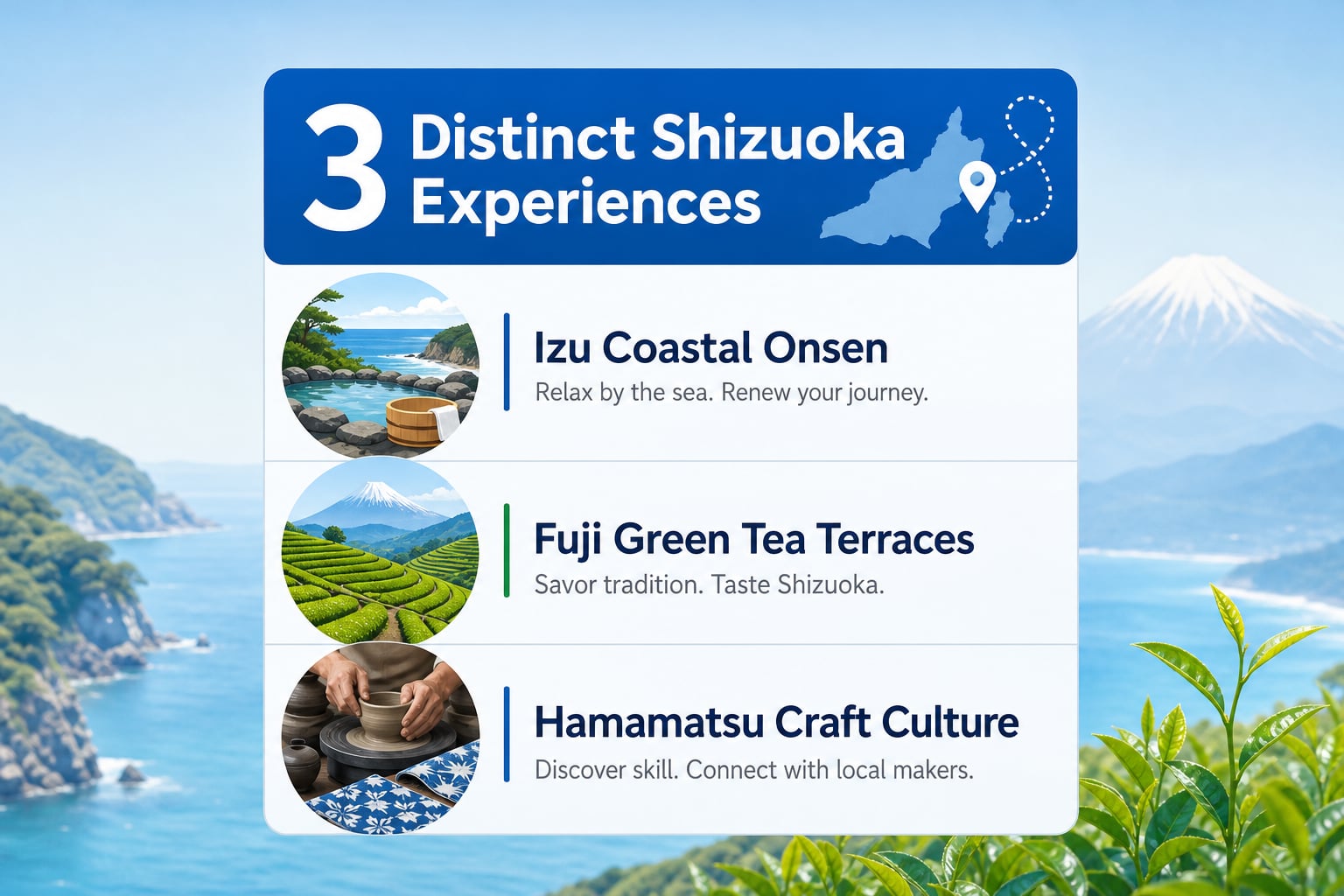
A successful Shizuoka hotel inbound strategy must abandon one-size-fits-all prefecture branding and instead showcase the distinct cultural identities of its diverse sub-regions. Shizuoka spans geographically contrasting areas, ranging from the rugged coastal onsen towns of the Izu Peninsula to the tea terraces overlooking Mount Fuji and the industrial craftsmanship of Western Hamamatsu. Tailoring your marketing message to match your specific geographic micro-climate connects directly with foreign traveler motivations.
Foreign travelers seek genuine, experiential hospitality rather than generic room descriptions. For instance, an accommodation near Suruga Bay creates compelling marketing by highlighting private dockside seafood auctions, local wasabi harvesting, and sunset views over Mount Fuji. Highlighting authentic regional narratives establishes emotional resonance with global guests who are eager to escape crowded tourist traps.
- Izu Peninsula & Coastal Hot Springs: Emphasize historic ryokan architecture, coastal open-air onsen baths, fresh ocean culinary courses, and scenic rail excursions along the eastern coastline to attract wellness-focused inbound travelers.
- Mount Fuji Foothills & Suruga Bay: Showcase unobstructed mountain views, Nihondaira ropeway excursions, green tea plantation tastings, and marine activities to position your lodging as the premier peaceful basecamp between Tokyo and Nagoya.
- Central Shizuoka City & Western Lake Hamana: Highlight castle ruins, Tokaido post-town heritage, cycling around Lake Hamana, and eel gastronomy to attract independent travelers seeking deep cultural immersion without heavy tourist congestion.
参考: Shizuoka inbound tourism needs
Which international OTA platforms and digital marketing channels drive direct foreign bookings?
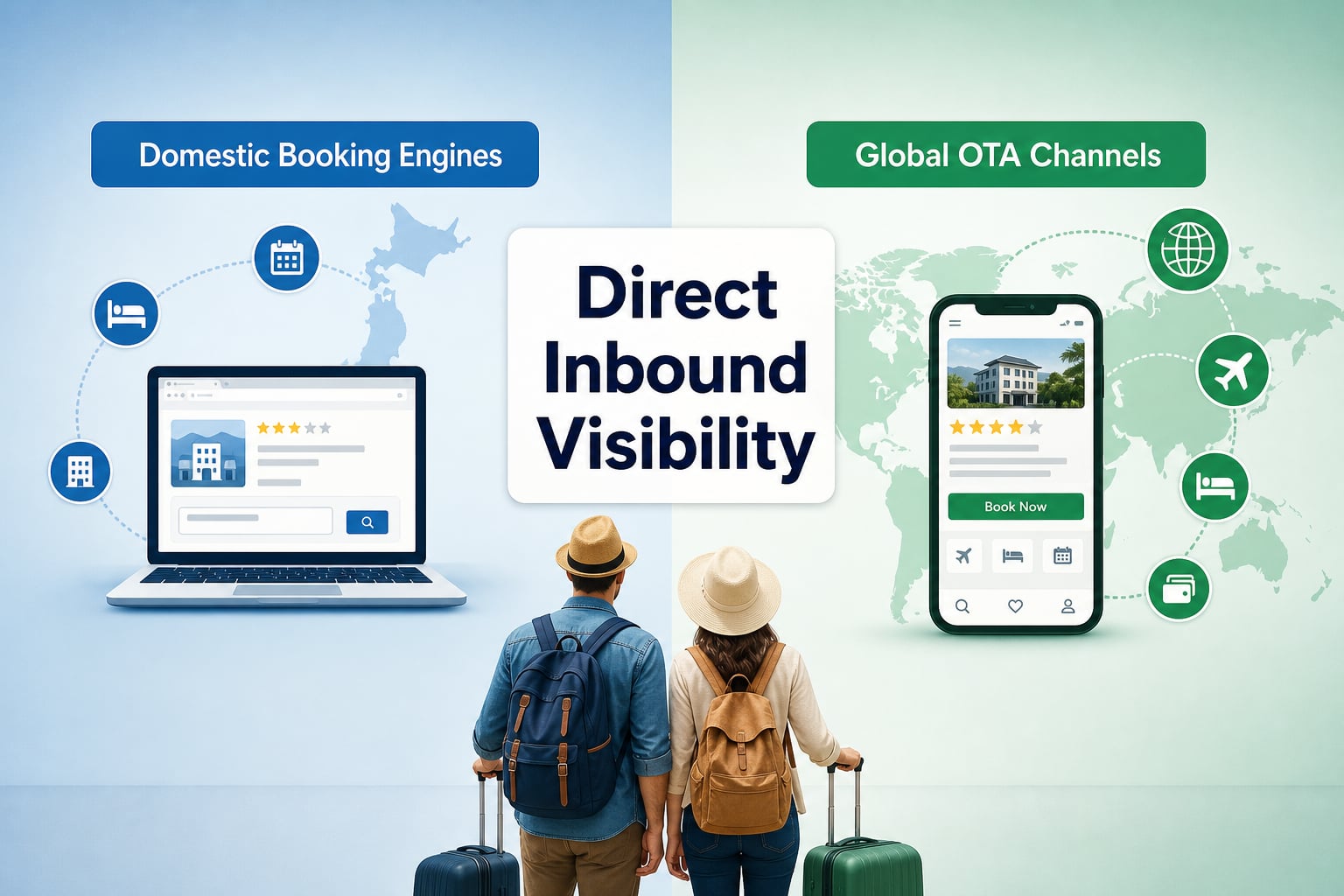
Relying strictly on domestic Japanese travel booking engines leaves regional accommodations virtually invisible to the vast majority of international visitors. Establishing optimized listings on global online travel agencies such as Booking.com, Airbnb, and TripAdvisor is essential for direct international reservation acquisition. Professional listings require native-quality English descriptions, accurate amenity tagging, high-resolution visual storytelling, and transparent arrival instructions.
Beyond online travel agencies, managing an active English-language Instagram account and optimizing your Google Business Profile are vital digital channels. Prospective travelers cross-reference social media platforms to evaluate property aesthetics, nearby dining options, and guest reviews before confirming reservations. Consistently publishing short-form video content and engaging photographs of regional life builds immediate credibility across global travel communities.
Essential Digital Touchpoints for Independent International Bookings
Independent foreign travelers rarely book through third-party agents in their home countries; they conduct direct research across mobile platforms. Ensuring your accommodation website offers frictionless mobile navigation, clear English descriptions, and direct booking engine integration captures guests who prefer booking directly after discovering your social channels.
How can regional Japanese accommodations overcome language barriers and resource constraints?
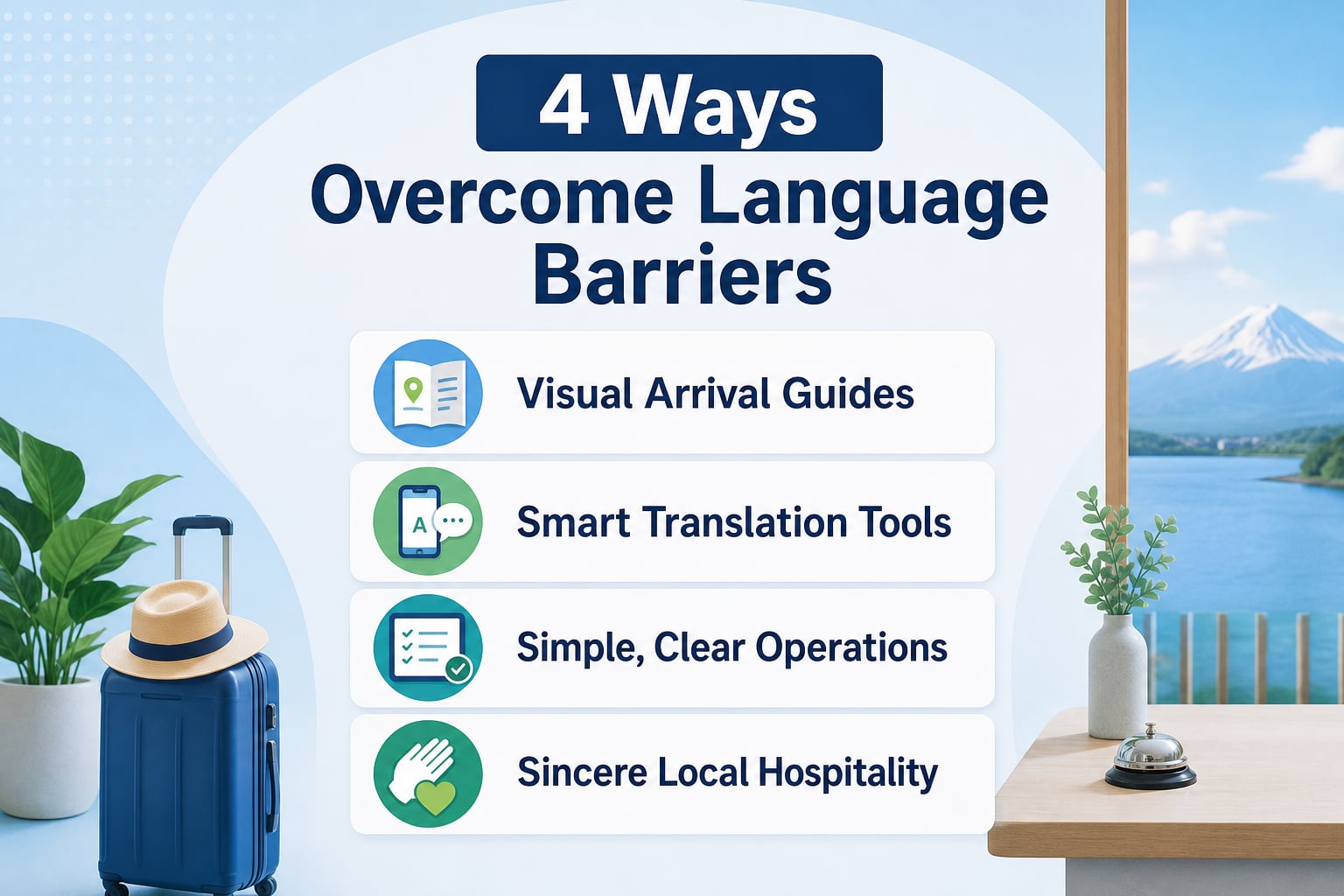
Small and medium-sized lodging operators frequently worry that accommodating foreign guests demands fluent English-speaking front desk staff on every shift. In reality, modern digital tools, visual arrival guides, and standardized multilingual communication templates eliminate the majority of on-site communication friction. International travelers prioritize warm, sincere hospitality and clarity over grammatically flawless spoken English.
Operators with small teams can achieve remarkable operational efficiency by outsourcing specialized digital marketing and listing management to experienced external partners. Delegating multilingual content creation, global OTA listing updates, and international guest messaging allows your on-site team to focus entirely on delivering outstanding customer service. Partnering with dedicated inbound marketing specialists bridges technical capability gaps while safeguarding daily operational bandwidth.
- Implement Visual Multilingual Check-in Cards: Create bilingual physical or tablet cards detailing bathhouse rules, breakfast times, Wi-Fi passwords, and emergency procedures to eliminate verbal misunderstandings during check-in.
- Pre-configure Automated Messaging Sequences: Set up automated pre-arrival emails on your booking platforms explaining train station pickup locations, luggage transfer options, and check-in steps before guests leave their previous city.
- Utilize Digital Translation Support Tools: Equip front desk personnel with voice-translation devices and mobile applications to quickly handle complex guest inquiries regarding dining restrictions or transportation schedules.
- Partner with a Regional Inbound Marketing Specialist: Collaborate with dedicated inbound tourism professionals who handle cross-border marketing, social media management, and online listing optimization on your behalf.
参考: multilingual communication tools、多言語通訳サービス「KOTOBAL」で快適な滞在を実現
What proven case studies demonstrate successful inbound guest acquisition in Shizuoka?
Real-world execution demonstrates that strategic inbound marketing produces tangible commercial outcomes for regional hospitality businesses. At our company, Glocal by Shinker, we helped a regional hotel expand its international visibility by overhauling its overseas OTA listings, developing English-language content, and implementing targeted social media marketing. This initiative resulted in a noticeable increase in overseas inquiries and established durable brand recognition among independent global travelers.
Similarly, our team supported a regional tourism business seeking to introduce local cultural experiences to global audiences. By producing authentic multilingual narratives and distributing digital promotions focused on destination branding, the business expanded international audience reach and boosted visitor engagement. Both results confirm that showcasing genuine regional stories through modern digital infrastructure converts passive viewers into active visitors.
Industry experience shows the value of practical, hands-on inbound support. Across regional accommodations, strategic digital marketing allows properties to reach international audiences they had never connected with previously, leading to a significant increase in overseas inquiries. For many lodging operators, having professional support for English website content and OTA optimization makes it dramatically easier for international guests to discover and book their property.
Regional Expertise Led by International Tourism Professionals
Based in Shizuoka City just a ten-minute walk from the North Exit of JR Shizuoka Station, Shinker Inc. operates Glocal under the leadership of CEO Hikaru Soneda. Having studied in the United States and worked overseas for a major travel corporation, our leadership combines local cultural roots with global marketing expertise to deliver measurable inbound growth.
What should accommodation operators check when evaluating an inbound marketing proposal?
Selecting the right inbound marketing agency requires careful scrutiny of contract terms rather than choosing blindly based on surface-level promises. Regional accommodation owners must ensure that every marketing engagement ties directly to verifiable booking performance and transparent operational scopes. Requesting clear documentation upfront safeguards your investment and establishes realistic growth expectations.
Because inbound marketing encompasses varied activities like platform management, photography, and multi-language copywriting, understanding cost structures is vital. Facilities should evaluate whether quotations include upfront setup fees, recurring management retainers, performance commissions, or additional hourly technical charges. Clarifying these terms prevents unexpected financial surprises and ensures smooth collaboration.
| Proposal Item | What to Check on the Quote | Why It Matters for Your Business |
|---|---|---|
| Initial Setup Fees | Verify whether fees cover account creation, copywriting, pro | Prevents unforeseen onboarding charges and confirms that dig |
| Commission Structure | Check the exact calculation basis for booking fees and wheth | Ensures commission charges align fairly with actual inbound |
| Payment Timing & Terms | Confirm deposit requirements, monthly invoice due dates, and | Maintains predictable cash flow for regional properties oper |
| Post-Launch Operational Support | Verify whether ongoing listing updates, review replies, and | Protects internal staff from being overwhelmed by internatio |
| Conditions for Extra Charges | Review hourly rates for custom campaign creation, ad managem | Eliminates invoice disputes by defining standard scope versu |
What step-by-step roadmap should Shizuoka properties follow to launch their inbound strategy?
Launching an effective inbound program requires a systematic approach rather than ad-hoc promotional efforts. By following a structured five-step progression, Shizuoka hotels and ryokans can transition smoothly from purely domestic operations to thriving international destinations. This phased execution protects staff capacity while building cumulative digital authority across major global travel platforms.
Sustainable growth depends on continuous data evaluation and operational refinement at each stage of the guest journey. Monitoring platform analytics, room pickup pace, and direct traveler feedback allows operators to adjust seasonal package pricing and marketing narratives proactively. Establishing this structured workflow empowers your business to capture high-value inbound travelers season after season.
- Step 1: Conduct an Inbound Asset and Accessibility Audit: Assess your property’s proximity to transit stations, catalog unique culinary and cultural assets, and identify common logistical hurdles that overseas guests might face.
- Step 2: Build Native English Listings on Major Global OTAs: Create optimized, high-converting property profiles on Booking.com, Airbnb, and TripAdvisor with professional photography and clear amenity lists.
- Step 3: Establish Multilingual Digital Touchpoints and Signage: Develop visual in-room guides, prepare standardized bilingual communication templates, and optimize your Google Business Profile with accurate English opening details.
- Step 4: Launch Targeted Social Storytelling Campaigns: Publish consistent English-language content on Instagram showcasing seasonal scenery, hot spring etiquette, local food culture, and scenic walking routes around Shizuoka.
- Step 5: Review Booking Data and Optimize Operations Continuously: Analyze guest feedback, reservation lead times, and nationality breakdowns each month to refine room packages, pricing strategies, and local experiential offerings.
Frequently Asked Questions
Q1. What is the Golden Route in Japanese tourism?
The Golden Route is the classic travel path between Tokyo, Mount Fuji, Kyoto, and Osaka. Most foreign tourists take bullet trains along this track, frequently passing straight through Shizuoka without stopping.
Q2. Why do international tourists bypass Shizuoka instead of staying overnight?
High-speed bullet trains make it fast and easy to travel between major hubs like Tokyo and Kyoto. Without compelling marketing for local attractions, tourists treat Shizuoka purely as a transit zone.
Q3. How can hotels promote Shizuoka’s local attractions to attract foreign guests?
Hotels should highlight unique local assets, such as green tea farms, coastal seafood, and quiet views of Mount Fuji, framing them as peaceful alternatives to crowded major cities.
Q4. Which online channels work best to attract international visitors?
Hotels should list rooms on major global travel booking websites, maintain multilingual property profiles, and share engaging visual content on popular social media networks to capture travelers planning itineraries.
Q5. How can small accommodations handle language barriers with limited staff?
Properties can use digital translation devices, create clear visual signage with English instructions, and implement mobile check-in systems to ensure smooth communication without needing fluent foreign-language speakers.