
Explore inbound payment solutions Shizuoka shops can use to serve tourists. Compare 4 cashless options, evaluate processing fees, and access local subsidies.
 執筆者:Hikaru SonedaCEO
Many hospitality and retail owners across Shizuoka want to welcome international tourists warmly but struggle when overseas visitors find their checkout counter unable to accept global cards or mobile wallets.
This guide details the top inbound payment solutions Shizuoka businesses can adopt to serve international travelers smoothly, reduce transaction friction, and access available regional support.
Why Are Inbound Payment Solutions Essential for Tourism Businesses in Shizuoka?
Adopting modern inbound payment solutions Shizuoka travelers expect is necessary because foreign visitors rarely carry large sums of Japanese paper currency. International guests visiting destinations such as Sunpu Castle Park, Nihondaira, or the tea plantations of Makinohara anticipate seamless digital transactions at every point of sale. When local shops maintain cash-only policies, overseas travelers frequently abandon planned purchases, leading directly to lost retail and dining revenue.
Offering digital checkout options dramatically speeds up counter transactions and lowers language friction between staff and guests. Frontline staff in regional hotels or izakayas do not need to exchange physical change or calculate currency rates manually when a customer taps a card or scans a dynamic QR code. A clear digital payment terminal establishes instant transaction trust, creating an inviting atmosphere for visitors exploring regional Shizuoka.
Bridging the Cultural Expectation Gap for Global Shoppers
参考: Shizuoka inbound tourism needs、インバウンド消費動向調査(観光庁) | nara-data
Which 4 Cashless Payment Options Best Support International Visitors in Shizuoka?
Implementing a balanced terminal setup requires addressing the distinct payment habits of diverse traveler demographics visiting Shizuoka Prefecture. Selecting the right combination of credit networks and mobile wallets ensures your counter accommodates independent travelers from Europe, tour groups from East Asia, and backpackers alike. Relying on a single domestic payment provider often leaves international visitors unable to complete their transactions.
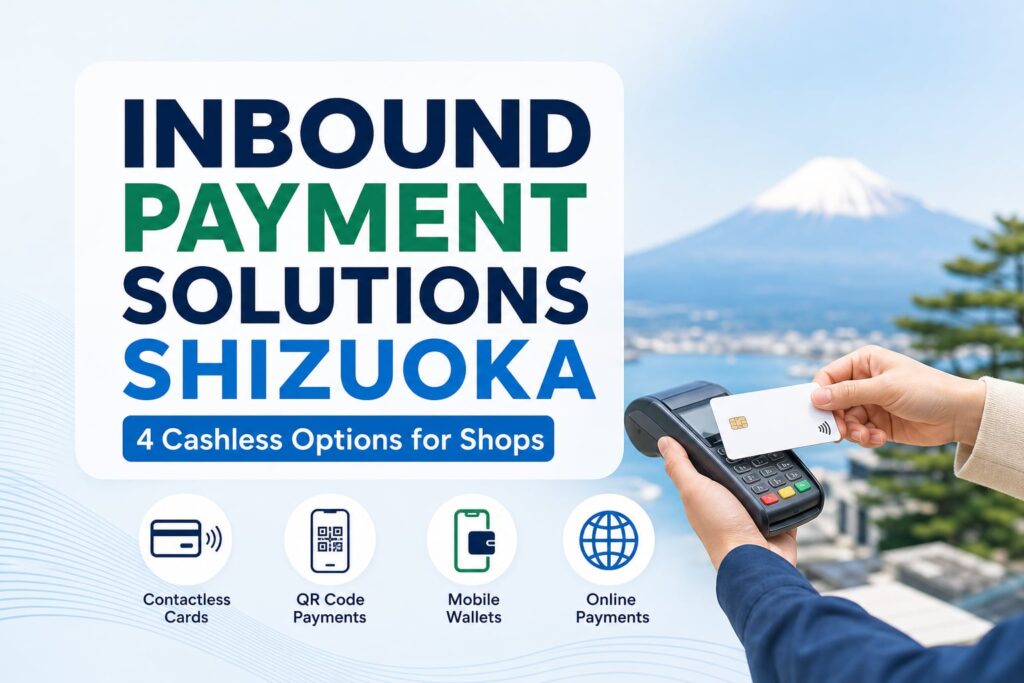
A comprehensive merchant counter should integrate four core payment options to capture maximum tourist spending. Equipping your storefront with these four mechanisms eliminates checkout obstacles whether you manage a cafe in Hamamatsu, a ryokan in Atami, or a souvenir boutique near JR Shizuoka Station.
- International Contactless Credit Cards (Visa, Mastercard, Amex, JCB): NFC tap-to-pay functionality on global credit cards is essential for Western and Oceanian tourists. It enables rapid checkout without physical card dipping or currency confusion.
- East Asian Mobile Wallets (Alipay and WeChat Pay): Essential for visitors from China, Hong Kong, and Southeast Asia. Dynamic and static QR code scanning allows tourists to pay instantly in their native account currency.
- Smartphone Tap Wallets (Apple Pay and Google Pay): Universal digital wallet integration lets global travelers pay securely using their smartphones or smartwatches, eliminating the need to take physical cards out of backpacks or wallets.
- Transit IC Card Integration (Suica, Pasmo, ICOCA): Many inbound tourists load funds onto transit cards for train travel between Tokyo and Shizuoka. Accepting transportation IC cards allows quick purchases for small-ticket items, drinks, and souvenirs.
What Regional Payment Preferences Exist Across Mt. Fuji, Izu, and Central Shizuoka?
Visitor profiles and payment preferences vary significantly across the distinct geographic sub-regions of Shizuoka Prefecture. In the eastern Fuji-Hakone-Izu zone, luxury ryokan guests and onsen visitors from North America, Europe, and Australia prioritize premium credit card networks with contactless tap options. Conversely, sightseeing bus corridors around Fujinomiya and Gotemba see heavy volumes of Asian group travelers who favor mobile barcode apps.
In central commercial hubs such as Shizuoka City and western hubs like Hamamatsu, independent travelers frequently explore local dining districts and craft workshops on self-guided itineraries. These travelers expect versatile mobile reader terminals at small boutique counters, izakayas, and green tea specialty stores. Matching your terminal configuration to your specific local visitor flow prevents unexpected payment declines and lost orders.
Adapting to Sightseeing Corridors and Free Independent Travelers
参考: Shizuoka tourism subsidies
How Should Shizuoka Businesses Evaluate Inbound Payment Costs and Prefectural Subsidies?
Evaluating merchant service providers requires examining recurring operational fees and hardware lease obligations rather than merely accepting promotional starter kits. When requesting quotations from payment gateway providers, store operators must carefully audit commission structures across card brands, fund settlement schedules, and potential currency conversion surcharges. Verifying these cost items prior to signing avoids unexpected cash-flow strain during slow tourism seasons.
Shizuoka Prefecture and local municipal chambers of commerce periodically offer digital transformation and inbound tourism enablement subsidies to support small merchants. Business operators should check official prefectural tourism agency notices and municipal commerce websites for current guidelines regarding terminal acquisition subsidies and software installation support.
| Checklist Item | What to Verify on the Quote | Why It Matters for Inbound Sales |
|---|---|---|
| Transaction Fees | Specific percentage breakdown across international credit ca | Overseas processing rates may differ from domestic cards, im |
| Hardware & Terminal Costs | Outright purchase price versus monthly terminal rental or le | Avoids long-term equipment rental lock-ins for seasonal or r |
| Payout Schedule | Number of automatic bank transfers per month and associated | Predictable settlement frequency maintains healthy working c |
| Multilingual Support | Availability of English or multilingual phone support and er | Frontline staff need prompt assistance if an international t |
| Tax-Free System Linkage | Compatibility with Japan consumption tax exemption record re | Reduces manual administrative paperwork when issuing tax-fre |
参考: choosing a partner for inbound solutions
What Hardware and Wi-Fi Connectivity Challenges Do Shizuoka Merchants Face?
Reliable telecommunication infrastructure is an operational prerequisite for running modern cloud-connected payment readers in regional Shizuoka. Historic ryokan buildings with thick timber frames, coastal fish market stalls in Yaizu, and mountainous tea terraces in Kawane often suffer from patchy indoor cellular reception. If an electronic terminal disconnects midway through an international card authorization, the resulting transaction delay frustrates guests and complicates sales tracking.
Merchants can resolve communication dead zones by selecting standalone terminals that feature dual SIM cellular connectivity alongside stable dual-band Wi-Fi. Installing an independent guest Wi-Fi access point also allows international shoppers to access their mobile banking apps or approve two-factor authentication prompts without cellular roaming issues.
Choosing Portable Handheld Readers for Tableside Service
How Can You Choose and Set Up the Right Inbound Payment Solution in Shizuoka?
Selecting the most effective payment solution requires matching your physical sales counter layout with the digital habits of your target visitors. A streamlined onboarding plan allows small business owners and busy facility managers to modernize checkout systems without interrupting daily customer service. Moving methodically from operational evaluation through staff onboarding protects store workflow and builds operational confidence.
Proper staff preparation is just as critical as selecting the technical hardware when introducing new cashless terminals. Placing multilingual payment decals prominently near your entrance and checkout registers signals to passing tourists that your establishment welcomes international customers. Once staff feel comfortable handling basic English prompts on screen, payment processing becomes effortless and fast.
- Audit Visitor Demographics and Store Layout: Examine whether your guests are primarily Western cardholders or East Asian mobile users, and determine whether you need counter-top or portable wireless terminals.
- Compare Gateway Terms and Submit Applications: Request comprehensive quotes reviewing card rates, settlement timelines, and terminal leasing options, then apply with your business registration documents.
- Configure Stable Network Connectivity: Test cellular signal and Wi-Fi stability at the exact register location to prevent connection timeouts during customer card verification.
- Display Clear Multilingual Signage: Affix official brand logos for Visa, Mastercard, Alipay, WeChat Pay, and IC cards at the front door and counter to invite foreign tourists inside.
- Conduct Frontline Staff Simulation Drills: Train employees using simple English phrases and step-by-step terminal cheat sheets so they can guide overseas guests through tap and QR scanning smoothly.
How Can Shizuoka Businesses Combine Cashless Checkout with Multilingual Inbound Marketing?
Having an advanced payment terminal delivers optimal business results only when international travelers actively discover and visit your establishment. Integrating your cashless checkout capabilities with English social media promotion, optimized Google Business Profile listings, and multilingual web content ensures foreign tourists know in advance that your venue is inbound-friendly. Overseas visitors actively search for welcoming venues that clearly display accepted payment methods online.
At Glocal by Shinker, operated by Shinker Inc. and located near JR Shizuoka Station in Gofuku-cho, our inbound marketing team helps regional businesses connect with global travelers through authentic storytelling and digital marketing. Led by CEO Hikaru Soneda, who studied in the United States and worked overseas for a major travel company, our specialists understand the real challenges faced by regional hotels, ryokans, and dining establishments.
Our company results demonstrate the power of comprehensive inbound support for local merchants across Shizuoka. In our restaurant digital marketing project, a local restaurant implemented our multilingual marketing strategy, including English Instagram management and Google Business Profile optimization. As a result, the restaurant became significantly easier for international tourists to discover online, increasing engagement from overseas visitors and strengthening its position as a favored dining destination. Similarly, in our hotel inbound marketing project, optimizing OTA listings and creating English-language content substantially expanded exposure to overseas audiences, helping the business establish a stronger online presence and receive more inquiries from international guests while enhancing its brand recognition.
Partnering with Glocal for End-to-End Inbound Growth
Frequently Asked Questions
Q1. What is an inbound payment solution?
An inbound payment solution is a checkout system that allows local shops to accept overseas credit cards, mobile wallets, and QR code payments commonly used by international tourists visiting Japan.
Q2. How long does it usually take to set up a new cashless payment system?
The setup process usually takes anywhere from two to six weeks. This timeframe includes applying with the service provider, completing the merchant identity screening, and receiving the card reader hardware at your shop.
Q3. Can small shops in Shizuoka get financial help to install these systems?
Yes, local and regional support programs often provide subsidies to help small shops buy card readers and cover initial setup costs, making cashless adoption more affordable for tourism-focused businesses.
Q4. Do business owners need separate terminals for each international payment brand?
No, most modern payment terminals are all-in-one devices. A single reader can process major international credit cards, mobile payments, and Asian QR code apps, keeping your checkout counter simple and clutter-free.
Q5. What fees should shop owners expect when using inbound payment systems?
Shop owners generally pay a small transaction fee on every sale, along with potential upfront hardware costs. Monthly software fees may also apply depending on the service provider and terminal selected.