
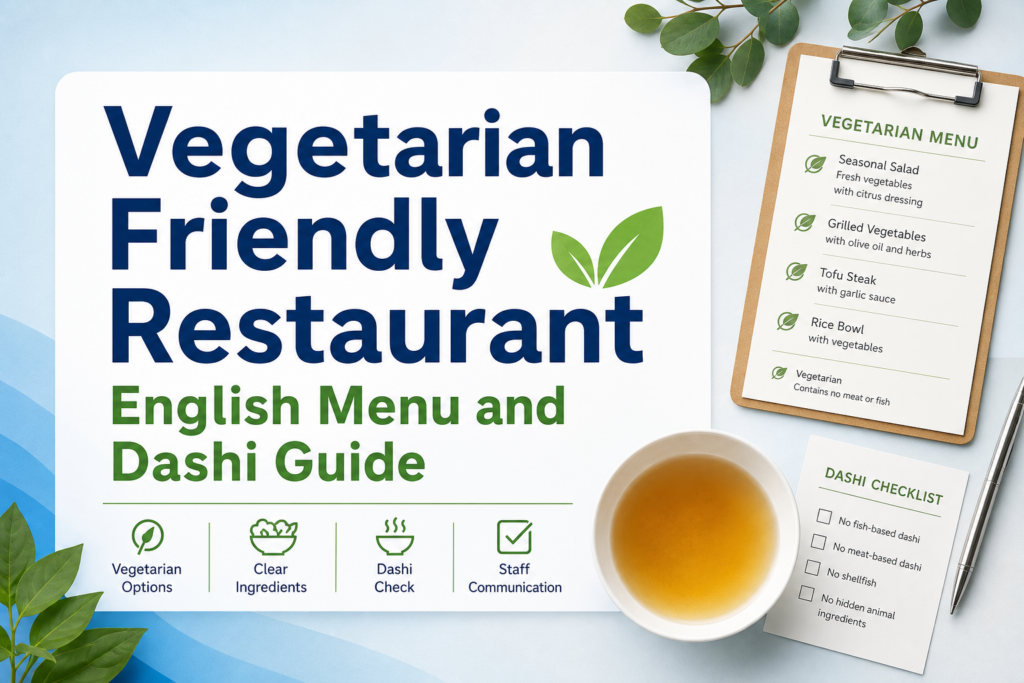
Master your vegetarian friendly restaurant English guide. Learn to create dashi checklists, design clear menus, and use key phrases for international guests.
 執筆者:Hikaru SonedaCEO
Many restaurant owners in Shizuoka find it challenging to communicate complex dietary restrictions like dashi ingredients to international guests in English.
This guide provides a comprehensive vegetarian friendly restaurant English guide including practical checklists and menu templates to help you serve global travelers confidently.
Why is a dashi and ingredient checklist essential for Japanese restaurants?
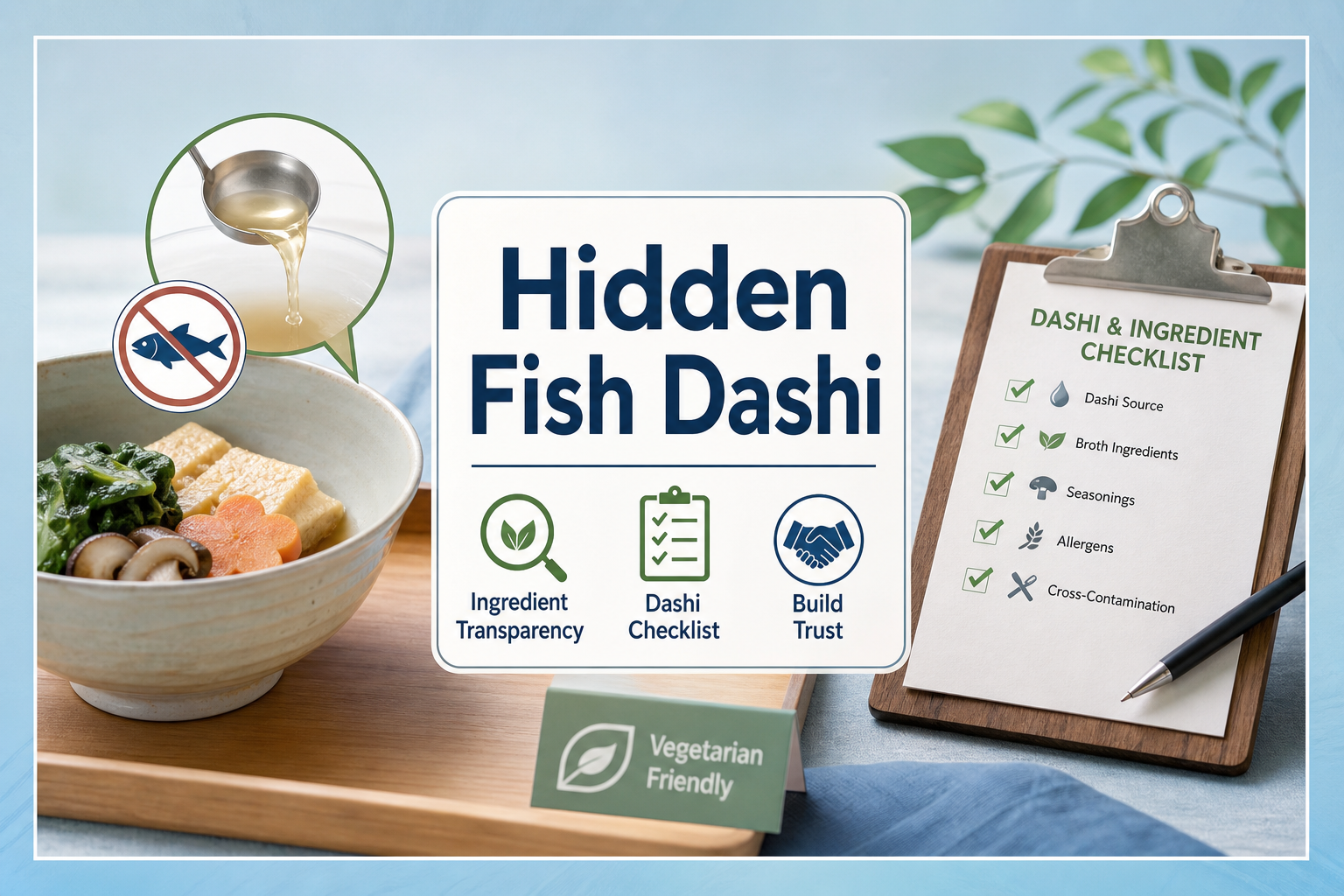
The most significant hurdle for international vegetarians visiting Japan is the prevalence of fish-based soup stock, known as dashi. While a dish may appear to be vegetable-focused, it often contains bonito flakes or sardine extracts that many vegetarians and vegans strictly avoid. Providing a clear ingredient checklist ensures transparency and builds immediate trust with your international clientele.
In regions like Shizuoka, where local specialties often rely on rich seafood broths, clarifying your ingredients is vital for safety and satisfaction. By identifying hidden animal products early, you prevent service errors that could lead to negative reviews or health concerns. A standardized checklist allows your staff to answer complex questions without hesitation, demonstrating professional hospitality and a deep understanding of global dietary needs.
- Katsuobushi (Bonito Flakes): The most common base for Japanese soups and sauces, which is non-vegetarian.
- Niboshi (Dried Sardines): Often used in ramen broths and traditional simmered dishes.
- Animal-derived Fats: Lard or tallow used for frying vegetables or flavoring sauces.
参考: attracting foreign tourists to restaurants
How do you design an effective vegetarian-friendly English menu?
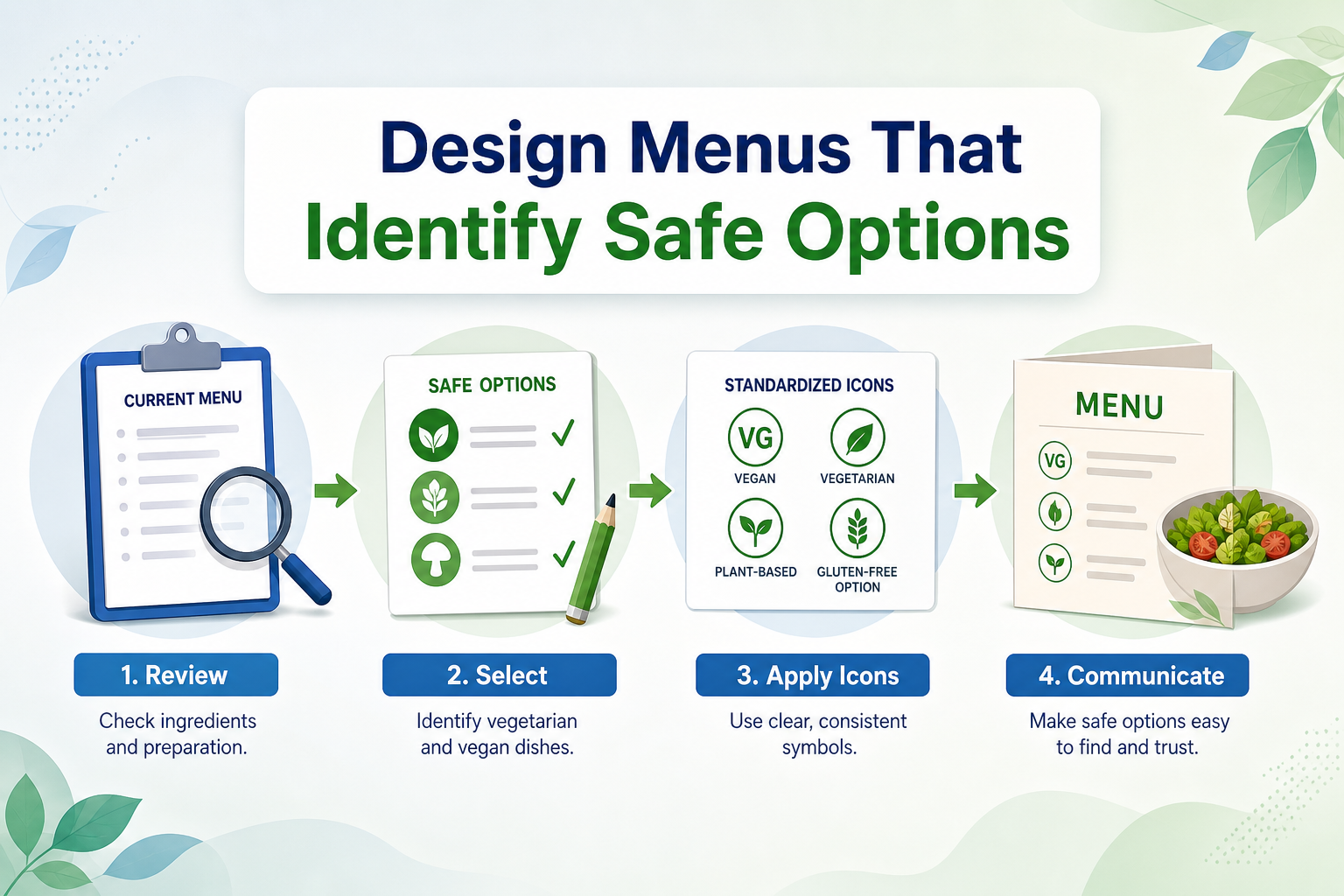
Designing an effective English menu requires more than just simple translation; it requires visual clarity that allows guests to identify safe options at a glance. Using standardized icons, such as a green leaf for vegetarian or a ‘VG’ for vegan, helps bridge the language gap instantly. This approach reduces the time staff spend explaining each dish, allowing for smoother operations during busy lunch or dinner rushes.
It is also beneficial to list specific modifications that can be made to standard dishes, such as ‘Can be made vegetarian by removing meat.’ This flexibility is highly appreciated by international travelers who want to experience local Shizuoka flavors but have dietary constraints. Clear descriptions of plant-based proteins like tofu, yuba, or local Shizuoka vegetables can turn a simple side dish into an attractive main course for a vegetarian guest.
Best Practices for Menu Iconography
When implementing icons, always include a legend at the bottom of the menu to define what each symbol means. For example, clarify if ‘Vegetarian’ includes eggs and dairy or if it is strictly plant-based. Consistency across your physical menu, website, and Google Business Profile is key to attracting inbound tourists searching for dining options online.
参考: effective English menu design
What are the key English phrases for serving vegetarian international visitors?
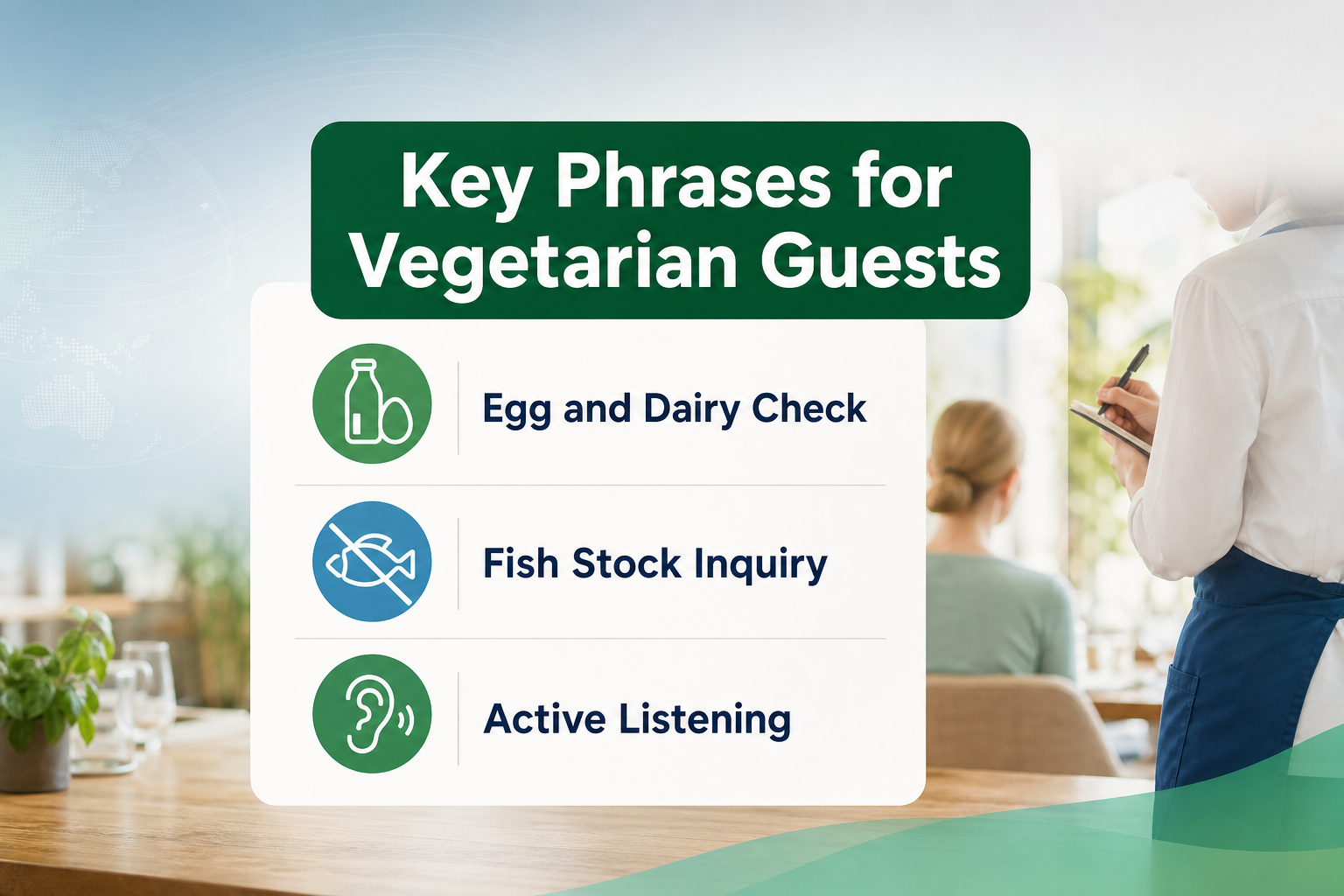
Effective communication starts with active listening and clarifying the guest’s specific needs. Since the term ‘vegetarian’ can vary in meaning globally, it is important to ask follow-up questions to ensure complete safety. Phrases like ‘Do you eat eggs or dairy products?’ or ‘Does this include fish stock?’ are essential tools for your front-of-house team to avoid any misunderstandings during the ordering process.
If your restaurant cannot accommodate a specific request, it is better to be honest and polite rather than risking an incorrect meal. Using phrases such as ‘I am sorry, but we currently do not have a vegan menu’ maintains your restaurant’s integrity and prevents a negative experience for the guest. Providing alternatives or suggesting a specific vegetarian-friendly dish on your menu shows that you are trying to be helpful despite the limitations.
- Confirming Restrictions: Ask: ‘To clarify, do you avoid all animal products, including fish stock and honey?’
- Explaining Ingredients: Say: ‘This dish is 100% plant-based and does not contain any meat or seafood.’
- Offering Customization: Say: ‘We can prepare this dish without the meat topping if you prefer.’
参考: English translation tools for restaurants
What common pitfalls should restaurants avoid when catering to vegetarians?

One of the most common mistakes in Japanese hospitality is assuming that ‘no meat’ also means ‘no fish.’ Many international vegetarians do not consume any seafood, so serving a dish with fish-based dashi or bonito flakes can lead to significant dissatisfaction. Another pitfall is cross-contamination in the kitchen, such as using the same fryer for chicken karaage and vegetable tempura without informing the guest.
Additionally, restaurants often overlook animal-derived ingredients in pre-packaged sauces, dressings, or even bread. Gelatin, lard, and honey are common ingredients that can disqualify a dish from being vegan or vegetarian. By conducting a thorough audit of your pantry and communicating these details clearly in your English guide, you demonstrate a level of professionalism that sets your establishment apart in the competitive tourism market.
参考: catering to vegetarian and vegan guests、ベジタリアン又はヴィーガン料理を提供する 飲食店等の管理方法
Practical Ingredient Checklist for Japanese Kitchens
To ensure your kitchen is truly vegetarian-friendly, you must examine every component of your recipes. This includes not only the main protein but also the seasonings and oils used during the cooking process. For instance, many soy sauces and miso pastes may contain added fish extracts for flavor, which must be identified and replaced with plant-based alternatives like kombu (kelp) dashi or shiitake mushroom stock.
In Shizuoka, where the use of local ingredients is a point of pride, you can highlight vegetarian options that feature high-quality local produce. Using a checklist helps your chefs maintain consistency and ensures that every member of the staff, from the head chef to the part-time server, is on the same page regarding dietary safety. This systematic approach is the foundation of a successful inbound strategy.
- Soup Stock Audit: Check if dashi contains bonito, sardines, or flying fish.
- Sauce and Dressing Review: Verify if Worcestershire sauce, Caesar dressing, or mayo contains fish or eggs.
- Cooking Oil Inspection: Ensure vegetable oils are not blended with animal fats or used for meat products.
- Garnish Verification: Remove bonito flakes or small dried shrimp from salad and tofu toppings.
Step-by-Step Implementation for International Tourist Readiness
Becoming a vegetarian-friendly destination involves a series of intentional steps that improve both your physical service and your digital presence. Start by auditing your current menu to see which items can be easily adapted without compromising the flavor profile of your cuisine. Once you have identified these options, the next step is to create professional English translations that use the correct terminology to describe ingredients accurately.
After the menu is ready, staff training is essential to ensure the information is conveyed correctly to guests. Role-playing common scenarios, such as a guest asking about dashi, can build staff confidence and improve the overall dining experience. Finally, promoting these options on platforms like Instagram and Google Maps will help international travelers find your restaurant when they search for vegetarian-friendly options in Shizuoka.
- Identify Adaptable Dishes: Select 3-5 existing menu items that can be made vegetarian with minor changes.
- Create an English Menu Insert: Design a clear, one-page guide specifically for guests with dietary restrictions.
- Train Your Team: Conduct a briefing on the difference between vegetarian and vegan requirements.
- Update Online Profiles: Add ‘Vegetarian Options’ to your Google Business Profile and TripAdvisor listing.
Understanding Global Dietary Trends: Why Your Restaurant Needs to Adapt
The demand for vegetarian and vegan options is not just a passing trend; it is a significant shift in global consumer behavior. For example, a portion of the population in countries like Australia identifies as vegetarian, meaning many potential guests may require a meat-free menu. By catering to this demographic, your restaurant opens itself up to a wider market of high-spending international tourists.
In the context of Shizuoka’s tourism growth, providing inclusive dining options makes the region more attractive as a whole. Travelers often choose destinations based on the ease of finding suitable food, and a restaurant that offers a clear English guide becomes a preferred choice. This proactive approach not only increases your individual sales but also contributes to the sustainable growth of regional tourism by making it more accessible to the world.
How Glocal by Shinker Empowers Shizuoka’s Dining Industry
At Glocal by Shinker, we specialize in bridging the gap between local Shizuoka businesses and the international travel market. Our inbound marketing team, led by CEO Hikaru Soneda, understands the unique challenges of regional hospitality. We provide practical solutions, including English translation tools for restaurants and OTA optimization, to help your restaurant become a top choice for inbound travelers.
Our results speak for themselves; for instance, restaurants that implement a multilingual marketing strategy can see a significant increase in engagement from overseas visitors and strengthened online visibility. Whether you need help with an English menu design or a comprehensive digital marketing plan, our team offers flexible packages with pricing based on your specific requirements to help you grow your business sustainably.
| Plan Name | Monthly Fee | Key Services |
|---|---|---|
| Economy | Please contact us for details | English Instagram management and basic support. |
| Standard | Please contact us for details | Instagram, YouTube Shorts, and TikTok management. |
| Premium | Please contact us for details | Full social media suite including X (Twitter) and strategy. |
Frequently Asked Questions
Q1. What is dashi and why is it a concern for vegetarians?
Dashi is a traditional Japanese soup stock. It often contains fish flakes, such as bonito, making it unsuitable for vegetarians. Since it is a hidden ingredient in many sauces and soups, a checklist helps clarify if a dish is truly plant-based.
Q2. How can a checklist improve service for international guests?
A checklist overcomes language barriers by using simple English to identify specific ingredients. It allows staff to quickly confirm dietary needs without long explanations, ensuring that international visitors feel safe and confident about the food they are ordering.
Q3. What should be included in an effective vegetarian-friendly English menu?
An effective menu should feature clear English descriptions, dietary icons, and a list of common allergens. It should specifically highlight whether dishes contain eggs, dairy, or hidden animal-derived stocks to help guests make informed choices without confusion.
Q4. What are some essential English phrases for staff to use?
Staff should learn simple phrases like ‘This dish contains no meat or fish’ or ‘We use vegetable-based stock for this soup.’ Using clear, direct language helps communicate dietary information accurately to visitors who may not speak Japanese.
Q5. What common mistakes should restaurants avoid when serving vegetarians?
Restaurants should avoid assuming that ‘no meat’ includes fish or seafood, which are common misconceptions. It is also important not to overlook small garnishes or soup bases that might contain animal products, as these can invalidate a vegetarian meal.