

Learn how to choose the best types of inbound media advertising for your Shizuoka business. Match ad formats to the traveler’s journey and maximize your ROI.
 執筆者:Hikaru SonedaCEO
Choosing the right types of inbound media advertising can feel overwhelming for business owners in Shizuoka who are eager to welcome international guests but unsure where to invest their limited marketing budget.
This guide provides a practical framework to help you select the most effective types of inbound media advertising based on your target region, traveler journey, and business goals.
What should you prepare before selecting types of inbound media advertising?
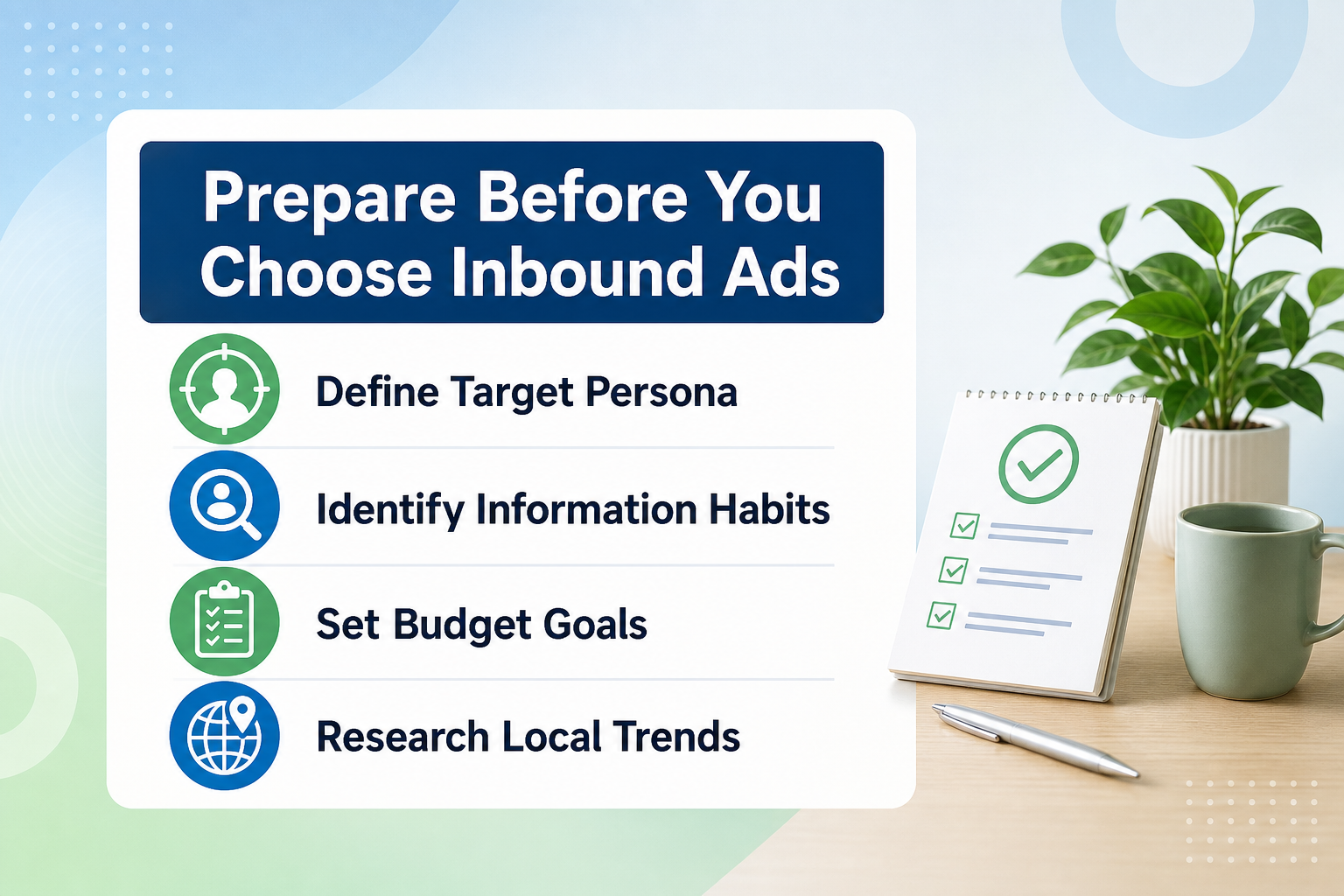
Success in attracting international travelers is rarely about luck; in fact, preparation accounts for the vast majority of your advertising results. Before spending a single yen on any types of inbound media advertising, you must clearly define your target persona. For instance, a 28-year-old traveler from Taipei looking for hidden cafes in Shizuoka has vastly different information-seeking habits than a retired couple from the United States interested in traditional green tea ceremonies.
Beyond identifying your audience, you must audit your own Unique Selling Proposition (USP) from a global perspective. What might be common to locals, such as a view of Mt. Fuji over a tea plantation or a 100-year-old family-run izakaya near Shizuoka Station, can be a world-class attraction for tourists. Ensure your business is ready to receive these guests by having multilingual menus or booking systems in place, as advertising to a market you cannot yet serve will lead to negative reviews.
- Define a specific target persona: Identify the age, nationality, interests, and travel budget of your ideal guest to narrow down which media platforms they actually use.
- Identify your unique regional strengths: List features like proximity to JR Shizuoka Station, English-speaking staff, or authentic local experiences that appeal to international tastes.
- Establish a multilingual landing page: Ensure that once a traveler clicks your ad, they land on a page in their native language where they can easily make a reservation.
- Set a clear marketing budget and ROI goal: Decide whether your priority is immediate bookings or long-term brand awareness to choose between high-conversion OTAs or reach-focused SNS ads.
How do you match different types of inbound media advertising to the traveler’s journey?
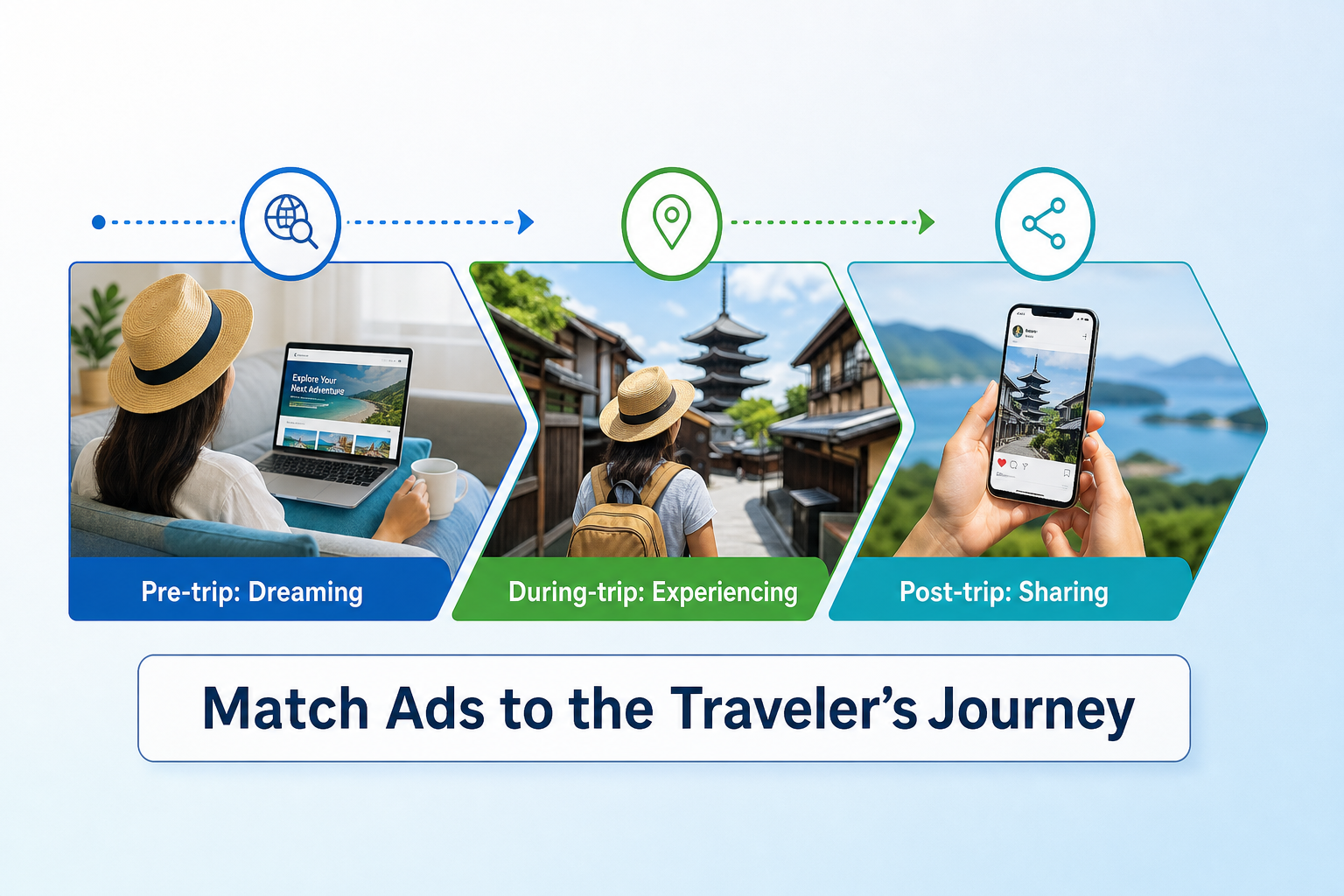
To maximize your impact, you must categorize types of inbound media advertising into three distinct phases: Pre-trip (Dreaming and Planning), During-trip (Experiencing), and Post-trip (Sharing). During the Pre-trip phase, travelers rely heavily on digital platforms like Online Travel Agencies (OTAs) and search engines to build their itineraries. If your Shizuoka hotel or restaurant isn’t visible on Booking.com or TripAdvisor months in advance, you likely won’t even be considered.
Once the traveler arrives in Japan, their needs shift toward real-time discovery and navigation. This is where ‘During-trip’ media, such as Google Maps (MEO), digital signage in major hubs like Shizuoka Station, and social media location tags, become essential. Travelers often search for ‘restaurants near me’ or ‘things to do today,’ making local SEO and physical advertising in high-traffic tourist areas highly effective for capturing spontaneous foot traffic.
Mapping Media to the Traveler Journey
| Phase | Objective | Recommended Media Types |
|---|---|---|
| Pre-trip | Awareness & Booking | OTAs (Airbnb, Booking.com), SNS Ads, SEO |
| During-trip | Foot Traffic & Sales | Google Maps, Digital Signage, Pamphlets |
| Post-trip | Loyalty & Referrals | Instagram Tags, Review Management |
Which types of inbound media advertising work best for your target region?
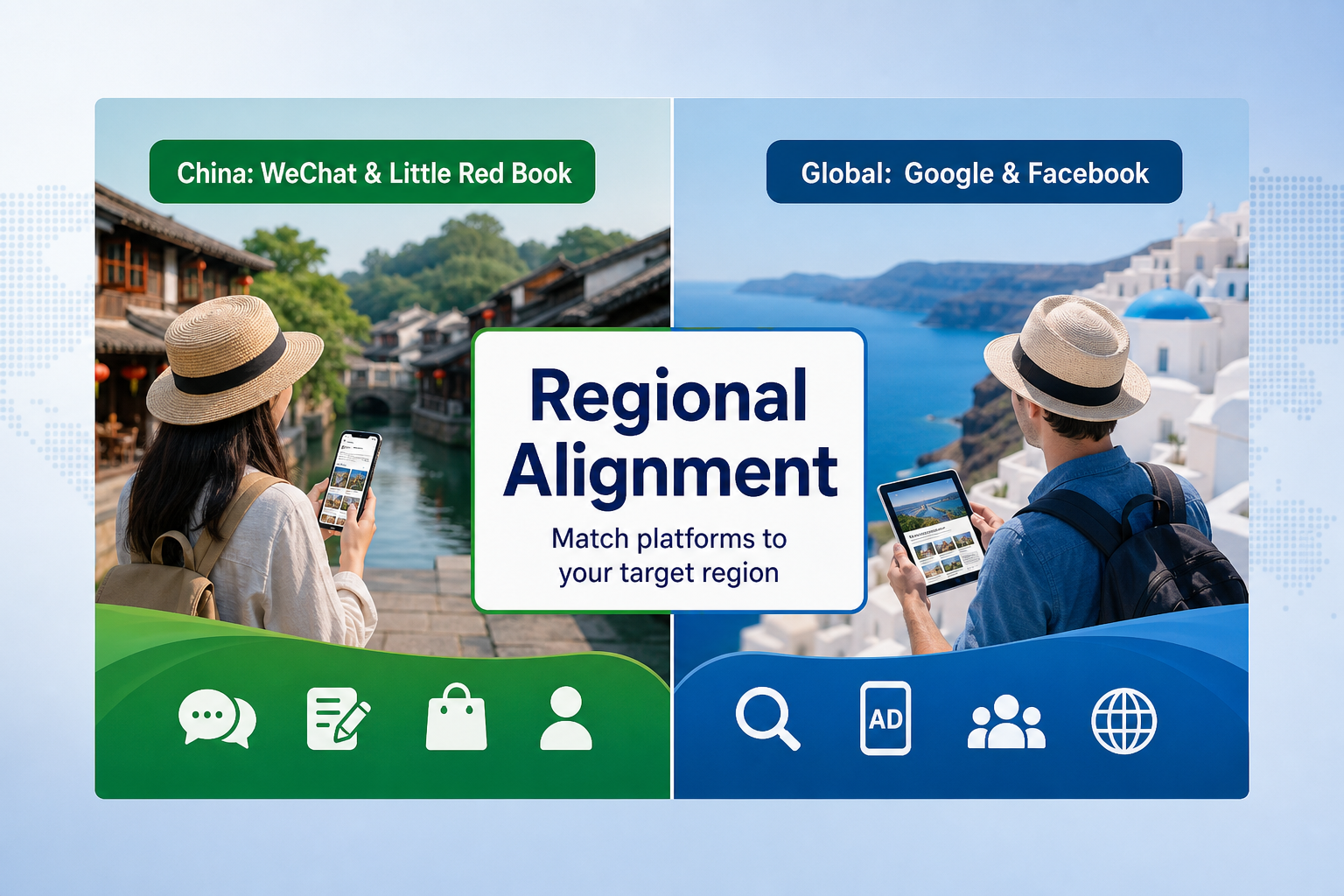
The digital ecosystem varies significantly by region, meaning the types of inbound media advertising you choose must align with the local habits of your target country. For example, if you are targeting travelers from mainland China, investing in Google or Facebook is largely ineffective. Instead, you must utilize platforms like Little Red Book (Xiaohongshu) or WeChat. General market data shows that while Chinese spending remains significant, the United States has emerged as a top spender in the Japanese inbound market, reaching significant figures in the second quarter alone.
For Western markets like the US, UK, and Australia, visual-centric platforms such as Instagram and YouTube are the gold standard for discovery. These travelers often seek authentic, ‘local’ experiences and are willing to pay a premium for them. In fact, travelers from the UK and Mexico have recently shown spending levels that far exceed the national average per person. To reach these high-value guests, Shizuoka businesses should focus on high-quality English content that tells a story rather than just listing prices.
- East Asian Markets (Taiwan, Hong Kong, Korea): Focus on Facebook, Instagram, and local platforms like NAVER for Korea. These travelers value detailed reviews and ease of access.
- Mainland China Market: Utilize Little Red Book (RED) for lifestyle inspiration and WeChat for information sharing. Mobile payment compatibility is a must for these ads.
- Western Markets (US, Europe, Oceania): Prioritize Instagram, YouTube, and TripAdvisor. Focus on ‘sustainability’ and ‘authenticity’ as key messaging themes.
- High-Spending Niche Markets: Target luxury travelers from the Middle East or Mexico who show significantly higher per-capita spending compared to short-haul travelers.
参考: Local SEO、日本の観光統計データ
How can you measure the ROI of different types of inbound media advertising?

One of the biggest challenges for regional businesses is knowing if their advertising spend is actually working. For digital types of inbound media advertising, tracking is relatively straightforward through Cost Per Click (CPC) and conversion rates on booking engines. In the current market, management fees for digital advertising typically represent a portion of the total ad spend. By monitoring these metrics, a Shizuoka ryokan can see exactly how many people clicked an ad and subsequently completed a reservation.
For physical or offline media, such as digital signage at Shizuoka Station or pamphlets in tourist information centers, measurement requires more creativity. Using unique QR codes for each advertising location allows you to track which physical touchpoint led to a website visit or a coupon download. This data-driven approach ensures that you are not just ‘spraying and praying’ but investing in the channels that deliver measurable growth for your business.
Key Metrics to Monitor
参考: tracking、Googleアナリティクスのコンバージョン設定まとめ
What common pitfalls should Shizuoka businesses avoid in inbound media advertising?
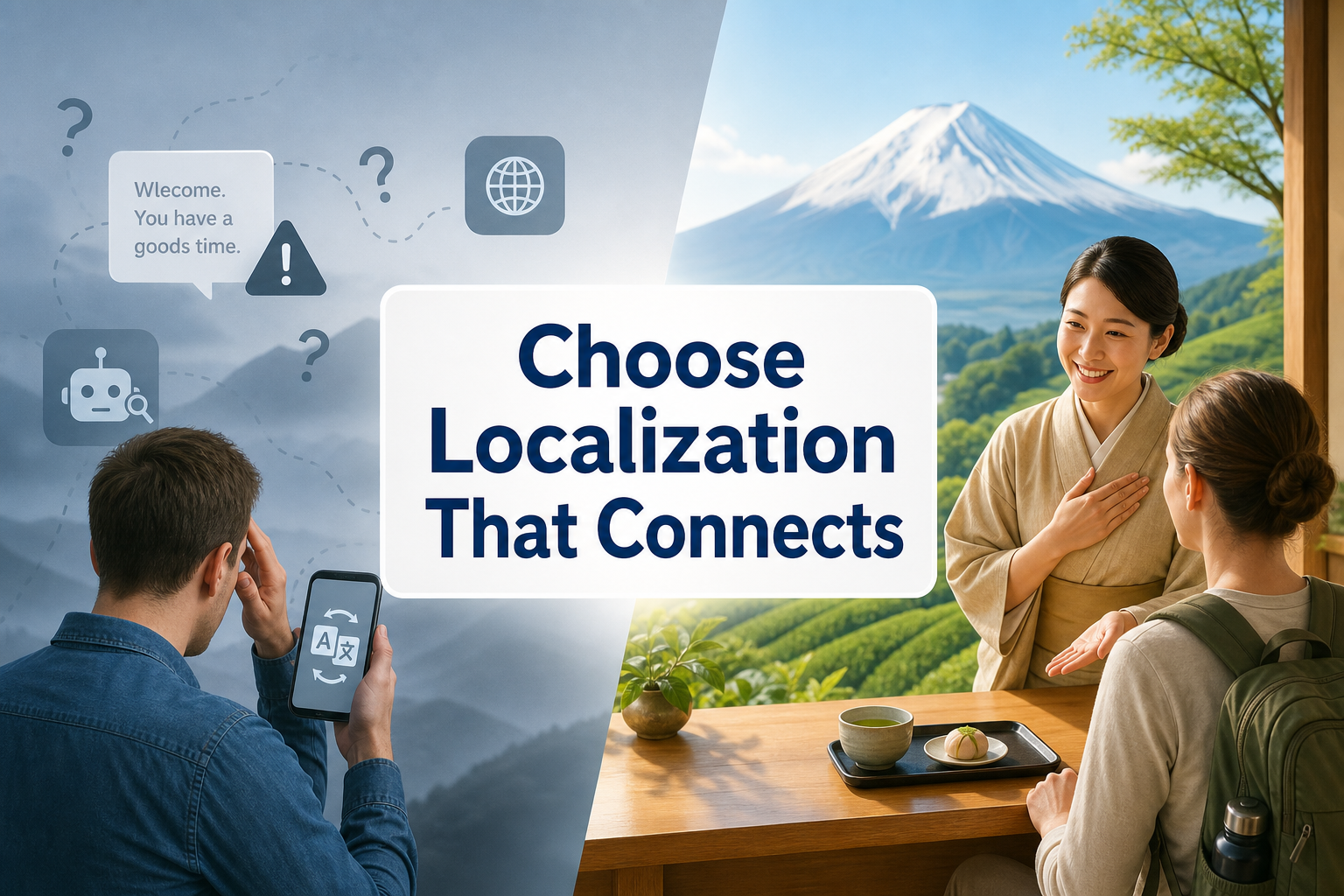
A frequent mistake is relying on ‘machine translation’ for high-stakes advertising content. While AI has improved, it often fails to capture the cultural nuances and hospitality (Omotenashi) that make Shizuoka businesses special. If an ad feels generic or contains linguistic errors, it can damage the trust of potential guests before they even visit. Professional localization—adapting the message to the culture—is far more effective than simple word-for-word translation.
Another pitfall is ignoring the importance of reviews and user-generated content (UGC). Many business owners focus solely on outbound ads while neglecting their Google Business Profile or TripAdvisor ratings. In the inbound market, a single negative review regarding ‘lack of English support’ can negate significant advertising spend. Ensuring your staff is trained and your online reputation is managed is a prerequisite for any successful advertising campaign.
- Avoid generic, stock-image heavy ads: Travelers want to see the real Shizuoka. Use authentic photos of your actual food, rooms, and staff to build immediate trust.
- Don’t ignore the mobile experience: A vast majority of inbound travelers plan and book via smartphone. If your website isn’t mobile-friendly, your ads are wasting money.
- Avoid over-promising and under-delivering: Be honest about your English levels and facilities. It is better to be a ‘charming local spot’ than a ‘luxury resort’ that fails to meet expectations.
- Don’t set and forget your ads: Inbound trends change seasonally. Review your ad performance monthly and adjust based on which nationalities are currently visiting Shizuoka.
参考: translation
Understanding the shift in the inbound market for smarter advertising
The Japanese inbound market has reached a historic milestone, with annual visitors exceeding record levels. This growth brings a shift in strategy: it is no longer just about attracting ‘more’ people, but attracting the ‘right’ people who stay longer and spend more in regional areas like Shizuoka. Recent data indicates that while certain visitors are the most numerous, their per-capita spending is among the lowest, whereas travelers from distant markets like the UK and Middle East are spending significant amounts per trip.
This shift suggests that Shizuoka businesses should diversify their types of inbound media advertising to include long-haul markets. By promoting ‘slow travel’ experiences—such as multi-day stays in a ryokan or deep-dive culinary tours—you can tap into the high-value segments that are currently driving the national inbound infrastructure expansion. Moving beyond the ‘Golden Route’ (Tokyo-Kyoto) and positioning Shizuoka as a premium destination is the key to sustainable growth.
Real-world success stories: Inbound advertising in Shizuoka
At a regional marketing consultancy, we have seen firsthand how targeted advertising transforms local businesses. For example, a local restaurant implemented a strategy focusing on English Instagram management and Google Business Profile optimization. By showcasing authentic local ingredients and providing clear English directions from the nearest station, the restaurant saw a significant increase in engagement and became a popular destination for international foodies who previously would have walked right past.
Similarly, a regional hotel partnered with experts to optimize their OTA listings and create English-language content. By strengthening their online presence and using data-driven digital advertising, they established a stronger brand among overseas audiences. These results prove that even small and medium-sized businesses in Shizuoka can achieve measurable success in the global market when they use the right types of inbound media advertising and expert support.
Start Your Inbound Journey Today
Frequently Asked Questions
Q1. What is inbound media advertising?
Inbound media advertising refers to promotional content placed on digital or physical platforms specifically designed to attract and engage international travelers. It aims to pull potential visitors toward your Shizuoka business by providing relevant information during their trip planning or travel phases.
Q2. Is it better to focus on one type of advertising or use multiple platforms?
A combined approach is usually best. You should match different media types to different stages of the traveler’s journey, such as using social media for initial inspiration and travel websites for the final booking phase to ensure consistent visibility.
Q3. How can a small business with a limited budget start advertising to international guests?
Start by identifying your most likely target region and focusing your budget on the specific platforms they use most. Prioritize high-impact, low-cost digital options that allow you to track results easily before scaling up to more expensive media types.
Q4. How do I know if my chosen advertising strategy is actually working?
You can measure success by tracking specific metrics like website traffic, booking inquiries, or coupon redemptions. Comparing the cost of the advertisement against the revenue generated from international visitors will help you determine your return on investment.
Q5. What is a common mistake Shizuoka businesses make with international ads?
A frequent pitfall is using the same content for every market. To be effective, you must tailor your message and media selection to the specific cultural preferences and language of the region you are trying to attract.