

Master your ryokan review response in English with 8 templates. Learn to convey Omotenashi, resolve cultural gaps, and boost international guest satisfaction.
 執筆者:Hikaru SonedaCEO
Many ryokan owners in Shizuoka find it challenging to craft the perfect ryokan review response english that balances traditional hospitality with clear communication for international guests.
This guide provides eight expert templates and practical strategies to help you turn reviews into powerful marketing tools while educating guests on Japanese customs.
Why is responding to English reviews essential for ryokan inbound marketing?
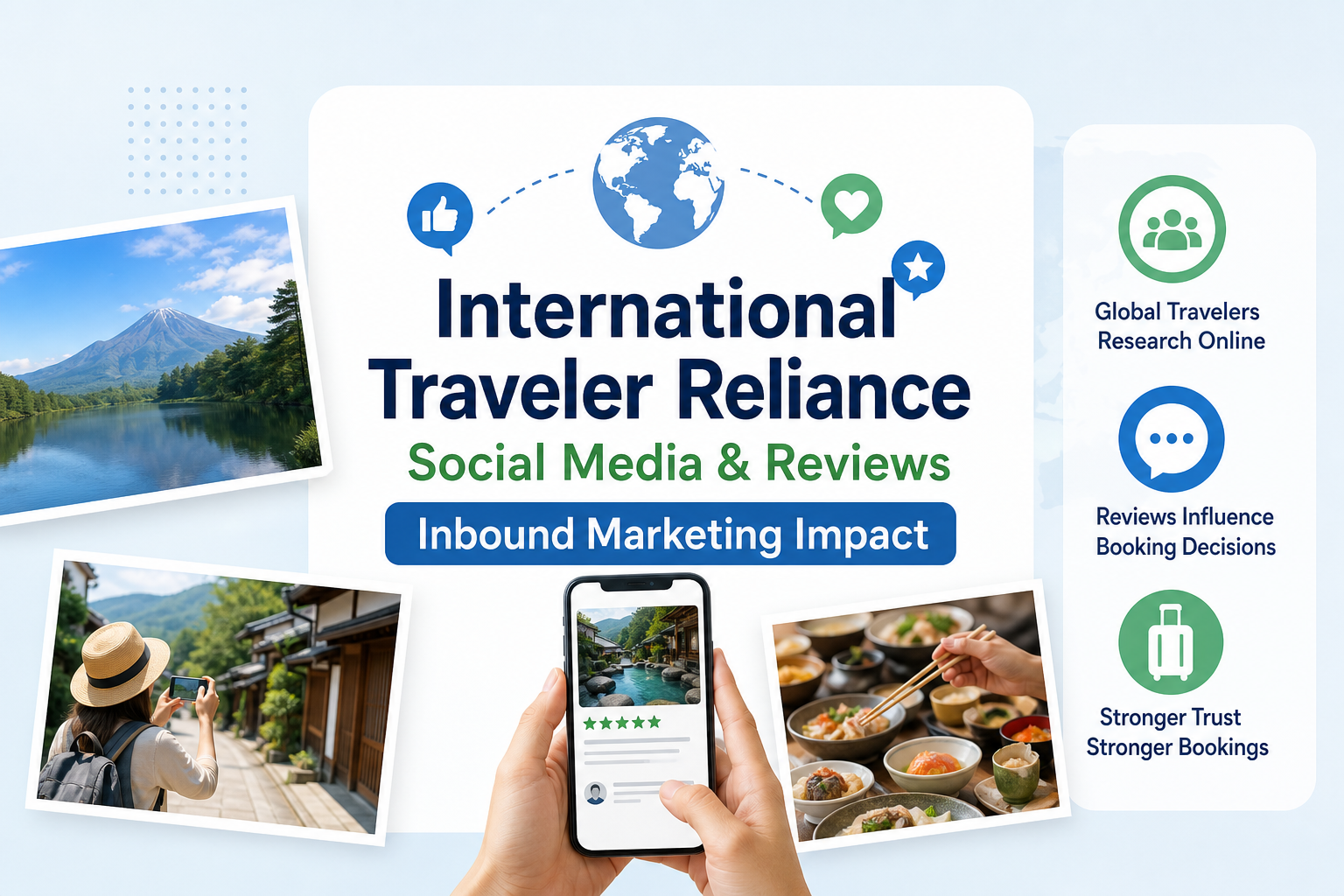
In the modern travel landscape, online reviews are the digital equivalent of word-of-mouth recommendations. For ryokans targeting international visitors, responding to English reviews is not just about politeness; it is a critical component of your inbound marketing strategy. According to data from the Japan Tourism Agency in 2024, approximately 38.9% of international travelers rely on social media and 24.9% on personal blogs to make travel decisions. When you respond to a review, you are not just talking to one guest; you are showcasing your hospitality to thousands of potential future visitors who are browsing platforms like Google Maps, Booking.com, or TripAdvisor.
Furthermore, active engagement with reviews has a measurable impact on your business performance. Research from marketing firms like Uberall suggests that replying to reviews can increase your conversion rate by as much as 80%. For a traditional ryokan in Shizuoka, this means that a well-crafted response can directly lead to more bookings. By addressing feedback in English, you bridge the communication gap, build trust with a global audience, and improve your search engine visibility, making it easier for travelers from the US, Europe, and Asia to discover your unique property.
| Metric Category | Impact Level | Primary Benefit |
|---|---|---|
| Conversion Rate | High (Up to 80% Increase) | Transforms casual browsers into confirmed bookings. |
| SEO Visibility | Medium-High | Improved rankings on Google Maps and OTA platforms. |
| Brand Trust | Very High | Demonstrates the spirit of Omotenashi to a global audience. |
| Customer Retention | Medium | Encourages repeat visits from satisfied international guests |
How can you convey traditional “Omotenashi” in English review response templates?
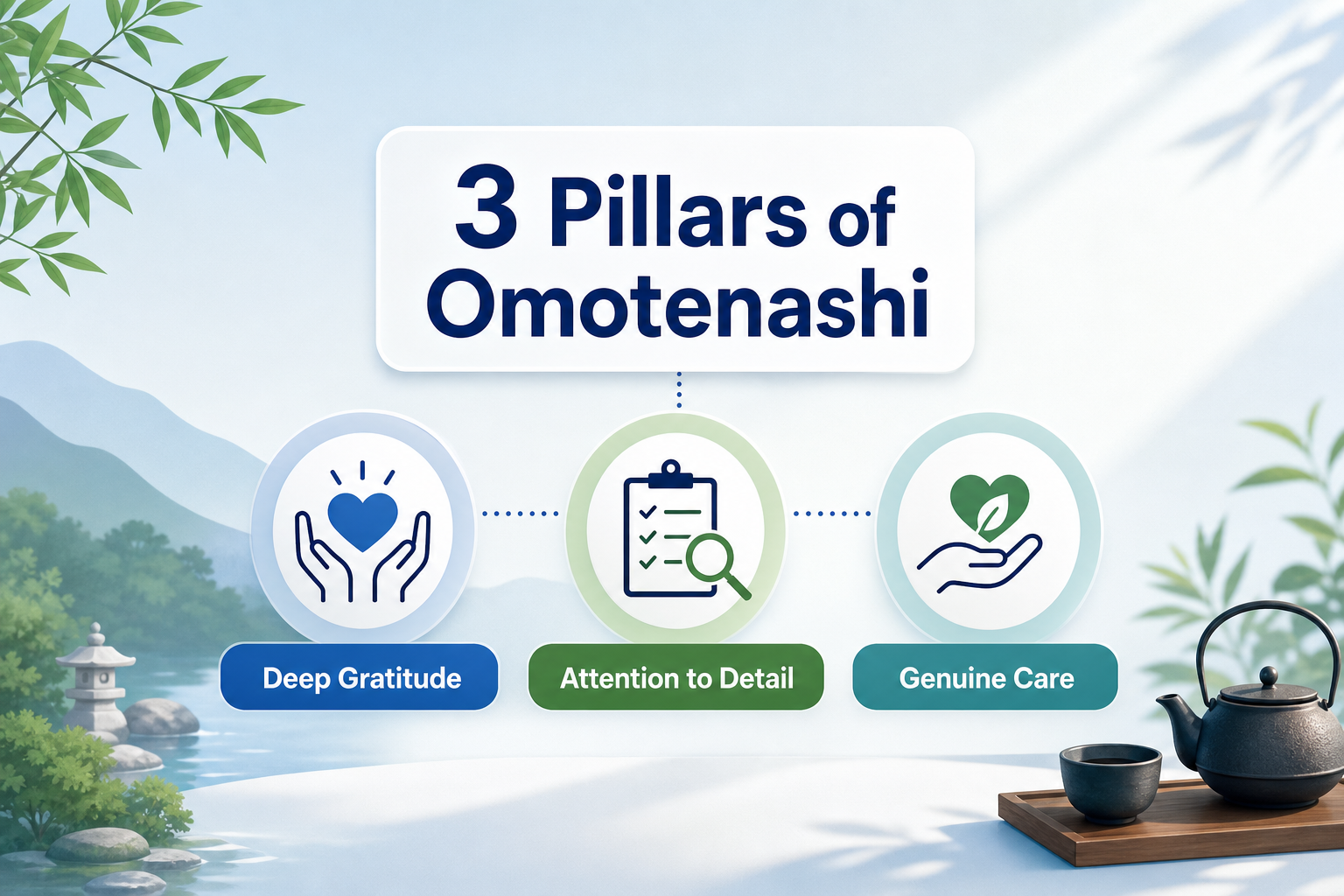
Conveying ‘Omotenashi’—the Japanese philosophy of selfless hospitality—requires more than just a direct translation of Japanese phrases. It involves expressing deep gratitude, acknowledging specific details mentioned by the guest, and showing a genuine desire for their well-being. When a guest praises your kaiseki meal or the view of Mt. Fuji from their room, your response should mirror that enthusiasm. Using phrases like ‘We are truly honored’ or ‘It was a pleasure to host you’ helps bridge the cultural gap and makes the guest feel valued. This personalized approach differentiates a traditional ryokan from a generic international hotel chain.
To effectively implement this, ryokan staff should use templates that are flexible enough to include personal touches. For instance, if a guest mentions they enjoyed the local Shizuoka green tea provided in their room, mentioning that specific item in the response shows that you actually read their feedback. This level of attention to detail is exactly what international travelers look for when booking a traditional Japanese experience. By combining professional English with the warmth of Japanese hospitality, you create a lasting positive impression that encourages guests to share their experiences with others online.
- The General Appreciation Template: Thank you very much for your kind words. We are delighted to hear you enjoyed your stay at [Ryokan Name]. It was an honor to share our traditions with you.
- The Culinary Excellence Template: We are thrilled that you enjoyed our seasonal kaiseki dinner. Our chef takes great pride in using fresh, local Shizuoka ingredients to create a memorable dining experience.
- The Scenic Beauty Template: Thank you for mentioning the view from your room. We are glad you could witness the beauty of [Mt. Fuji/Suruga Bay] during your time with us.
- The Exceptional Service Template: Our team is heartened by your compliments regarding our service. Providing a warm and welcoming environment is our top priority, and we hope to see you again.
| Feature | Standard Hotel Response | Omotenashi-Focused Ryokan Response |
|---|---|---|
| Tone | Professional and Transactional | Warm, Humble, and Deeply Grateful |
| Gratitude | Thanks for the review. | We are truly honored by your kind words. |
| Personalization | Generic ‘Dear Guest’ | Mentions specific experiences (e.g., the tea, the bath). |
| Closing | Hope to see you again. | We look forward to welcoming you back to your ‘home in Japan |
参考: English support for tourism
How should ryokans politely address cultural misunderstandings regarding Japanese customs?
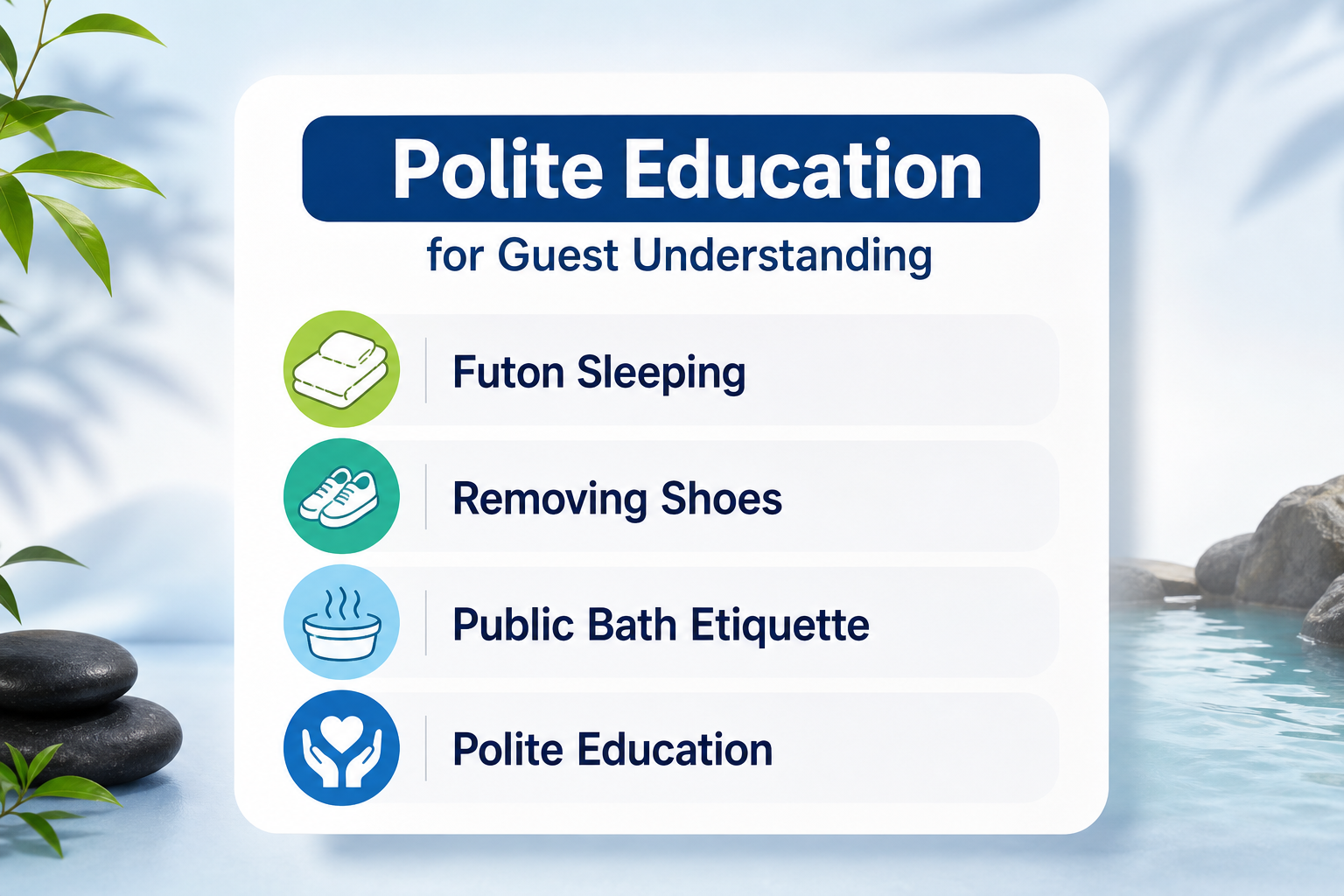
Many negative reviews from international guests stem from a lack of understanding of traditional Japanese customs, such as sleeping on futons, removing shoes, or public bath etiquette. Rather than being defensive, ryokans should view these reviews as an opportunity to politely educate both the past guest and future readers. For example, if a guest complains that the ‘bed was too hard,’ a professional response would explain the health benefits and tradition of the Japanese futon while expressing regret that they were uncomfortable. This approach shows that you care about their experience while maintaining the integrity of your cultural offerings.
Addressing issues like tattoo policies in onsens or the strict timing of kaiseki meals requires a delicate balance of firmness and empathy. Use clear, simple English to explain the ‘why’ behind the rules. For instance, explaining that dinner times are strict to ensure food is served at the peak of freshness helps guests understand it is a matter of quality, not just a rigid schedule. By providing these explanations publicly, you set the right expectations for future international guests, which ultimately leads to fewer misunderstandings and higher satisfaction scores over time.
- The Futon Comfort Template: We regret that the traditional futon bedding was not to your preference. While different from Western beds, many find them beneficial for posture. We appreciate your feedback.
- The Shoe Policy Template: Thank you for your feedback. In Japanese culture, removing shoes helps maintain the cleanliness and sacredness of the tatami mats. We appreciate your cooperation.
- The Onsen Etiquette Template: We apologize for any confusion regarding our public bath rules. These customs are in place to ensure a peaceful and hygienic experience for all our guests.
- The Dinner Timing Template: Our kaiseki meals are prepared to be served at a specific time to ensure the highest quality. We apologize if this felt restrictive during your stay.
| Guest Concern | The ‘Why’ (Education) | Polite Response Strategy |
|---|---|---|
| Hard Bed (Futon) | Traditional posture support | Acknowledge discomfort, explain the tradition. |
| No Shoes Indoors | Cleanliness of Tatami | Explain the cultural significance of the ritual. |
| Strict Dinner Time | Peak freshness of food | Emphasize the chef’s commitment to quality. |
| Public Bath Rules | Shared harmony/hygiene | Explain rules as a collective benefit for all. |
参考: ryokan digital concierge、日本政府観光局(JNTO) – Japan National Tourism .
How do different English review response styles compare for international guests?
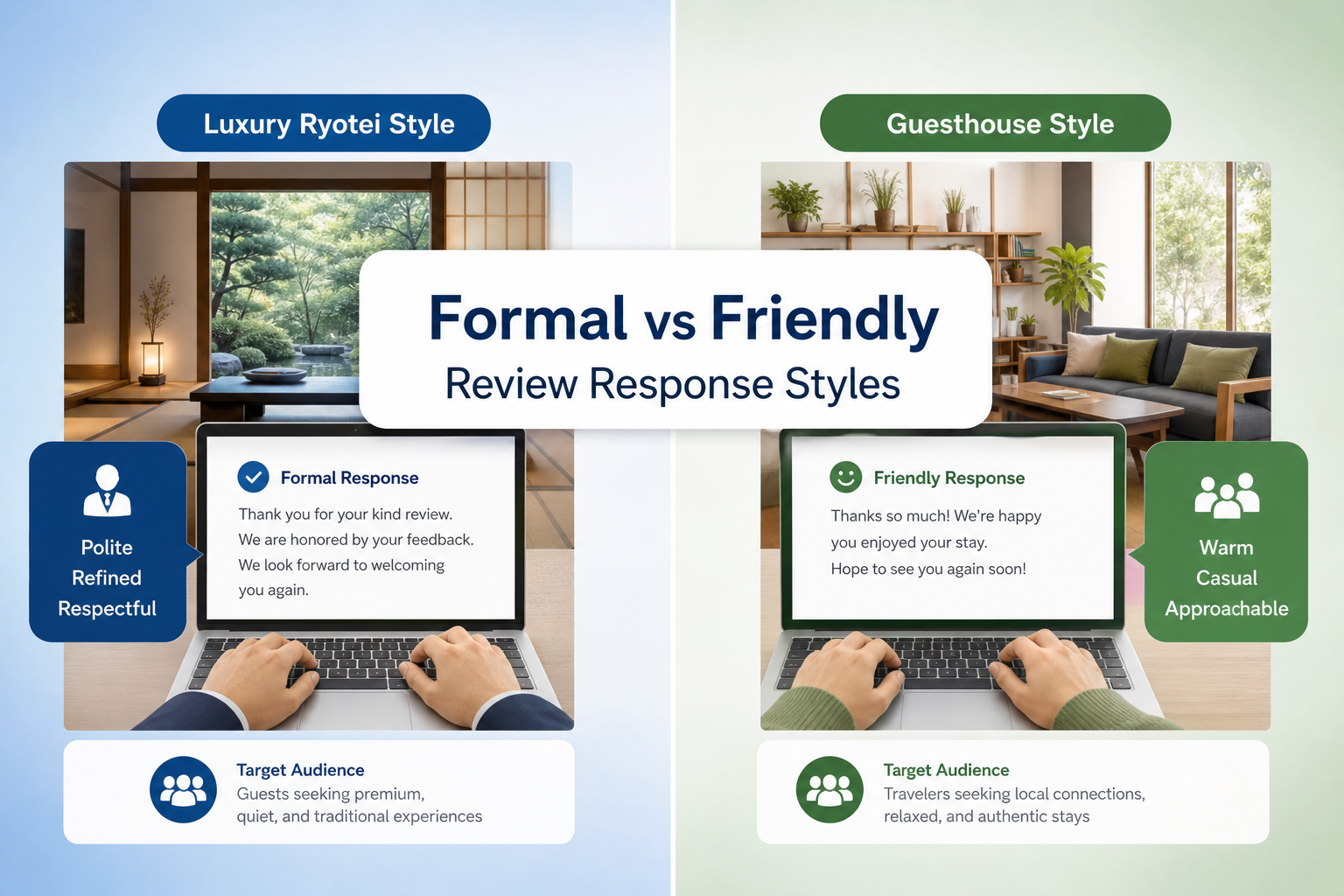
The style of your English response can significantly influence how your ryokan is perceived by a global audience. Some properties prefer a highly formal and traditional tone, which aligns with the image of a high-end ‘Ryotei’ or luxury inn. Others may opt for a more friendly and conversational style, which is often preferred by younger travelers or those staying at guesthouses and minshuku. Choosing the right style depends on your brand identity and the demographic of your guests. For a ryokan in Shizuoka, a blend of professional respect and local warmth often works best to attract a diverse range of international visitors.
It is also important to consider the platform where the review is posted. Responses on Booking.com might be more concise and focused on service facts, while responses on Instagram or TripAdvisor can be more storytelling-oriented. Regardless of the style, consistency is key. If your website promises a traditional experience, your review responses should reflect that same level of care and linguistic precision. Avoid using overly casual slang or automated-sounding ‘bot’ responses, as these can diminish the perceived value of your authentic Japanese hospitality.
| Response Style | Best For | Key Characteristics |
|---|---|---|
| Traditional/Formal | Luxury Ryokans | Polite, humble, uses sophisticated vocabulary. |
| Friendly/Warm | Family-run Inns | Approachable, uses ‘we’ and ‘you’ frequently. |
| Direct/Efficient | Business Ryokans | Concise, focuses on facts and resolutions. |
| Storytelling | Experience-focused | Mentions local history, seasons, or specific crafts. |
参考: Google Business Profile optimization
How can Shizuoka tourism businesses effectively manage their international online reputation?

For tourism businesses in Shizuoka Prefecture, managing an international reputation requires a proactive approach that combines local charm with global digital marketing standards. Many local operators struggle with limited time and English proficiency, which can lead to missed opportunities on global platforms. This is where professional support from specialists like Glocal by Shinker can make a difference. Based in Shizuoka City, our team understands the unique regional resources—from the tea plantations of Makinohara to the hot springs of Izu—and helps businesses translate these strengths into compelling English content and review responses.
Effective reputation management involves more than just replying to reviews; it includes optimizing your OTA listings and maintaining an active social media presence. By using data-driven strategies, Shizuoka businesses can identify which aspects of their service are most popular with international guests and highlight them in their marketing. Whether you are a hotel owner in Aoi-ku or a restaurant manager near Shizuoka Station, building a strong online presence ensures that you stay competitive in the growing inbound market. Glocal provides the expertise needed to navigate these digital platforms efficiently, allowing you to focus on providing great service.
| Aspect | Internal Management | Professional Support (Glocal) |
|---|---|---|
| English Quality | May contain errors or sound unnatural | Fluent, professional, and culturally nuanced |
| Response Speed | Often delayed due to busy operations | Consistent and timely monitoring |
| OTA Optimization | Basic registration only | Advanced SEO and conversion optimization |
| Strategy | Reactive (replying when possible) | Proactive (growth-focused marketing) |
参考: Shizuoka inbound tourism marketing
Step-by-Step Guide: Crafting the Perfect Response to Negative Reviews
Receiving a negative review can be disheartening, but it is also a valuable chance to demonstrate your commitment to guest satisfaction. The first step is to remain calm and avoid taking the criticism personally. A professional response should always begin with a sincere apology for the guest’s experience, regardless of whether you believe the complaint is fully justified. This shows empathy and immediately de-escalates the situation for anyone reading the exchange online. In the context of a ryokan, a humble apology is the cornerstone of maintaining your reputation for excellence.
After the apology, provide a brief explanation if necessary, but avoid making excuses. If there was a genuine error, state clearly how you plan to fix it or how you have already addressed the issue with your staff. Finally, invite the guest to contact you directly to discuss the matter further. This moves the conversation out of the public eye and shows that you are serious about making things right. Following this structured approach ensures that even a one-star review can be turned into a demonstration of your high standards and professional integrity.
- Acknowledge and Apologize: Start by thanking the guest for their feedback and expressing sincere regret that their stay did not meet expectations.
- Address Specific Concerns: Briefly mention the specific issues raised (e.g., room temperature, service speed) to show you have truly read the review.
- Provide a Solution or Action Plan: Explain the steps you are taking to prevent the issue from recurring, such as staff retraining or facility maintenance.
- Offer Direct Communication: Provide an email address or phone number and invite the guest to reach out for a more personal resolution.
| Response Element | Defensive (Avoid This) | Constructive (Recommended) |
|---|---|---|
| Initial Tone | Argumentative or dismissive | Empathetic and professional |
| Accountability | Blaming the guest or the weather | Taking ownership of the guest’s experience |
| Explanation | Long-winded excuses | Short, factual explanation of the situation |
| Public Goal | Winning the argument | Restoring trust with future guests |
Leveraging OTA Features to Boost Your Ryokan’s Global Visibility
Online Travel Agencies (OTAs) like Booking.com, Airbnb, and Expedia offer various features that can significantly boost your ryokan’s visibility if used correctly. One of the most underutilized features is the ‘Host Profile’ or ‘Property Description’ section, where you can use English keywords to attract the right audience. For instance, including terms like ‘authentic onsen,’ ‘kaiseki dining,’ or ‘near Shizuoka Station’ helps your property appear in specific searches. Additionally, maintaining a high response rate on these platforms is often a factor in how high your property appears in search results.
Another powerful tool is the ‘Review Highlights’ or ‘Guest Q&A’ section. By actively answering questions about your facilities in English, you provide immediate value to potential guests who might be on the fence about booking. At Glocal, we specialize in OTA optimization, ensuring that every part of your profile—from photos to review responses—is designed to convert international browsers into guests. This holistic approach to digital marketing ensures that your ryokan doesn’t just exist online but thrives in a competitive global marketplace.
| Platform | Key Strength | Best Strategy for Ryokans |
|---|---|---|
| Booking.com | Massive global reach | Focus on high-quality photos and fast review replies. |
| Airbnb | Experience-driven travelers | Highlight the ‘host story’ and unique cultural activities. |
| TripAdvisor | Influence on itinerary planning | Encourage detailed reviews and respond to every comment. |
| Expedia | Strong North American base | Offer package deals and maintain clear English descriptions. |
Case Studies: Success Stories from Shizuoka Ryokans and Restaurants
Real-world results demonstrate the power of a dedicated inbound marketing strategy. For example, a regional hotel in Shizuoka partnered with Glocal to improve its visibility among international travelers. By optimizing their OTA listings and implementing a professional English review response system, the hotel significantly increased its exposure to overseas audiences. This proactive engagement not only improved their online rating but also led to a measurable increase in direct inquiries from international guests who felt confident in the hotel’s ability to provide a high-quality, English-friendly experience.
Similarly, a local restaurant in Shizuoka City saw a dramatic rise in foot traffic from foreign tourists after implementing Glocal’s digital marketing strategy. By optimizing their Google Business Profile and managing an English-language Instagram account, the restaurant became a top recommendation for travelers searching for authentic local food. These success stories highlight that whether you are an accommodation provider or a dining establishment, the combination of local Shizuoka expertise and global marketing standards is the key to sustainable growth in the inbound tourism sector.
| Business Type | Action Taken | Key Result |
|---|---|---|
| Regional Hotel | OTA Optimization & English Responses | Increased international inquiries and brand recognition. |
| Local Restaurant | Instagram & Google Profile Management | Higher visibility and increased foot traffic from tourists. |
| Experience Provider | Multilingual Content Creation | Smoother booking process and higher guest satisfaction. |
| Tourism Association | Strategic Digital Advertising | Broadened reach to new international target markets. |
Frequently Asked Questions
Q1. What is Omotenashi in the context of a ryokan review response?
Omotenashi is the Japanese philosophy of selfless hospitality. In an English review response, it means going beyond a simple thank you by showing genuine care, anticipating guest needs, and demonstrating a warm, welcoming spirit through polite and thoughtful language.
Q2. How should a ryokan handle a negative review regarding Japanese customs?
You should politely explain the cultural significance behind the custom while acknowledging the guest’s confusion. Use clear, non-confrontational English to bridge the cultural gap and show that you value their feedback as an opportunity for better communication.
Q3. Why is it important to have different response styles for international guests?
International guests come from diverse backgrounds with varying expectations. Using different response styles allows a ryokan to match the guest’s tone, whether it be formal and traditional or friendly and modern, making the hospitality feel more personalized and accessible.
Q4. Can these templates be customized for specific local experiences in Shizuoka?
Yes. While the templates provide a professional foundation, you should add specific details about your local area or seasonal offerings. This helps promote Shizuoka’s unique charm and shows potential guests that you provide a personalized experience.
Q5. How does responding to English reviews help with inbound marketing?
Responding to English reviews builds trust with global travelers and improves your online reputation. It shows that your ryokan is foreigner-friendly and attentive, which encourages more international bookings and helps your business stand out in the global tourism market.