Learn inbound tourism marketing for activities with our 5-step roadmap. Automate bookings, optimize OTA listings, and overcome language barriers effectively.
Many local activity providers in Shizuoka struggle to reach international tourists because of language barriers and the complexity of managing multiple online booking platforms.
This guide provides a practical, 5-step roadmap for inbound tourism marketing for activities, showing you how to automate bookings and increase revenue effortlessly.
Why is the shift toward “experiences” vital for inbound tourism marketing for activities?
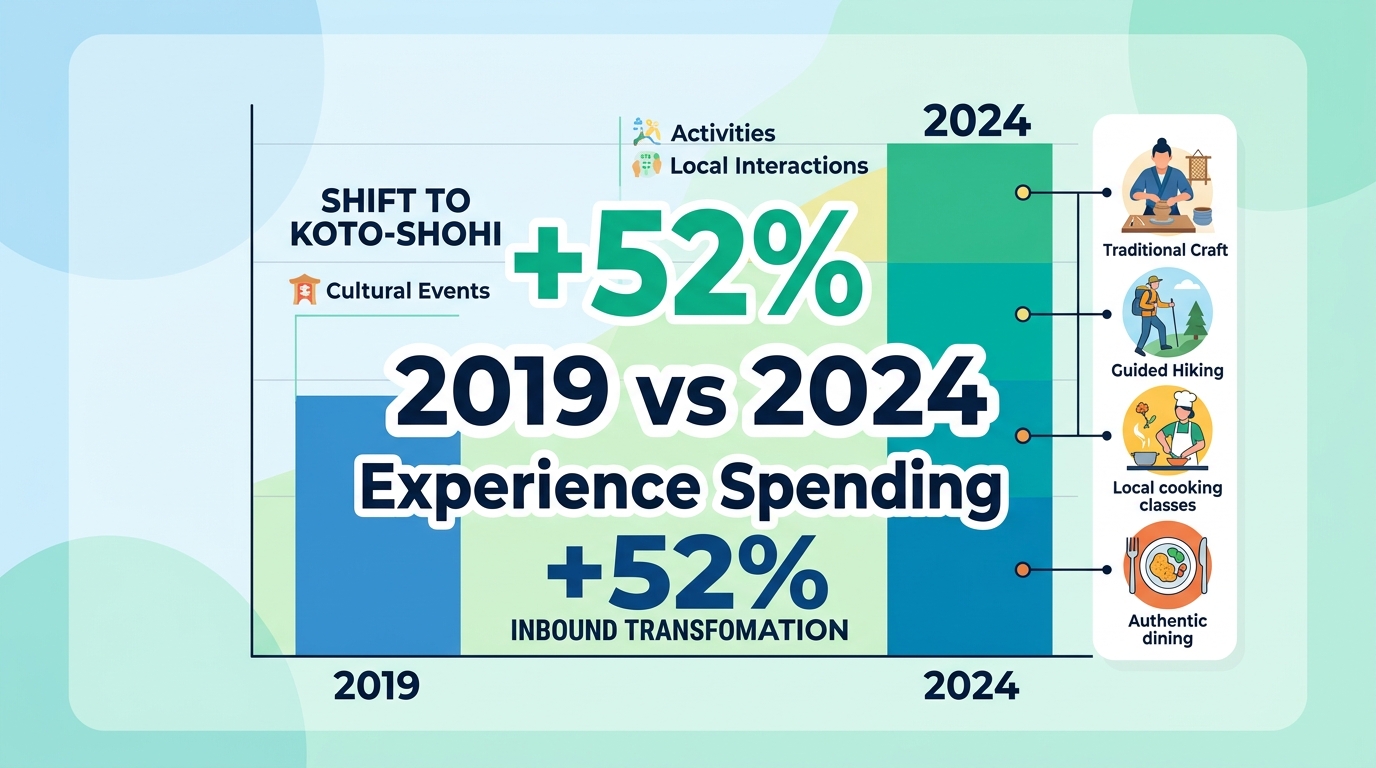
The Japanese inbound market has undergone a dramatic transformation, shifting from ‘mono-shohi’ (consumption of goods) to ‘koto-shohi’ (consumption of experiences). According to the 2024 Tourism White Paper by the Ministry of Land, Infrastructure, Transport and Tourism, spending on entertainment and services increased by 52% compared to 2019, while shopping expenditures saw a slight decline. This trend indicates that international travelers are increasingly seeking unique, local activities that they can only find in specific regions like Shizuoka.
In 2024, the number of international visitors reached approximately 33 million, surpassing pre-pandemic levels and setting a new record for the industry. For local business owners, this surge represents a massive opportunity to showcase Shizuoka’s rich culture, from tea ceremonies to outdoor adventures. However, simply offering an activity is no longer enough; you must position your offering as a ‘narrative’ experience that connects with the traveler’s personal motivations.
As repeat visitors to Japan increase, their preferences move away from generic sightseeing toward deep, specialized experiences. Data from 2025 shows that 1 in 4 travelers felt inconvenienced by language barriers, yet they are willing to spend an average of 210,000 yen per person if the experience is authentic and accessible. By focusing on inbound tourism marketing for activities, local providers can tap into this high-spending segment and ensure sustainable growth for their regional businesses.
参考: 観光白書
Which OTA platforms are most effective for inbound tourism marketing for activities?
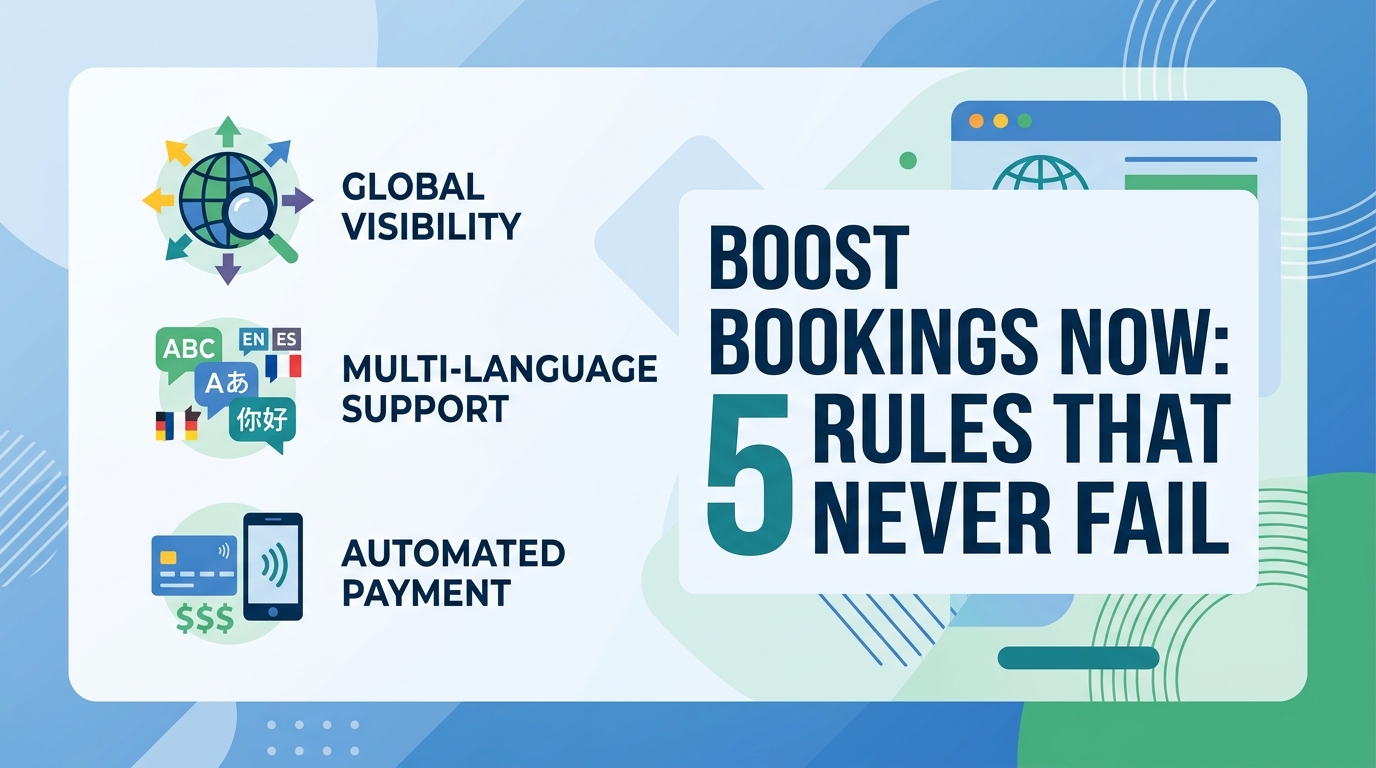
To successfully capture the international market, you must be visible where travelers are searching. Online Travel Agencies (OTAs) act as your global storefront, handling the heavy lifting of multi-language support and payment processing. For small-staffed businesses in Shizuoka, registering on even one major platform can significantly expand your reach to millions of potential guests without requiring a dedicated marketing department.
Choosing the right platform depends heavily on your target audience. Travelers from Western countries like the USA and Australia tend to favor Viator and Airbnb Experiences for their focus on storytelling and local interaction. Conversely, travelers from Asian markets such as South Korea, Taiwan, and China often prefer Klook or TripAdvisor, which prioritize ease of booking and mobile-friendly interfaces. Understanding these regional preferences is a cornerstone of effective inbound tourism marketing for activities.
- Viator (TripAdvisor): The world’s largest platform for tours and activities, essential for reaching the North American and European markets.
- Klook: Dominant in the Asian market, offering seamless mobile booking and high visibility among younger travelers from Hong Kong, Taiwan, and Singapore.
- Airbnb Experiences: Perfect for small-scale, ‘host-led’ activities that emphasize personal connection and authentic local culture.
参考: インバウンド消費動向調査(旧 訪日外国人消費動向調査)
How can you optimize listings to convert international travelers into automated bookings?
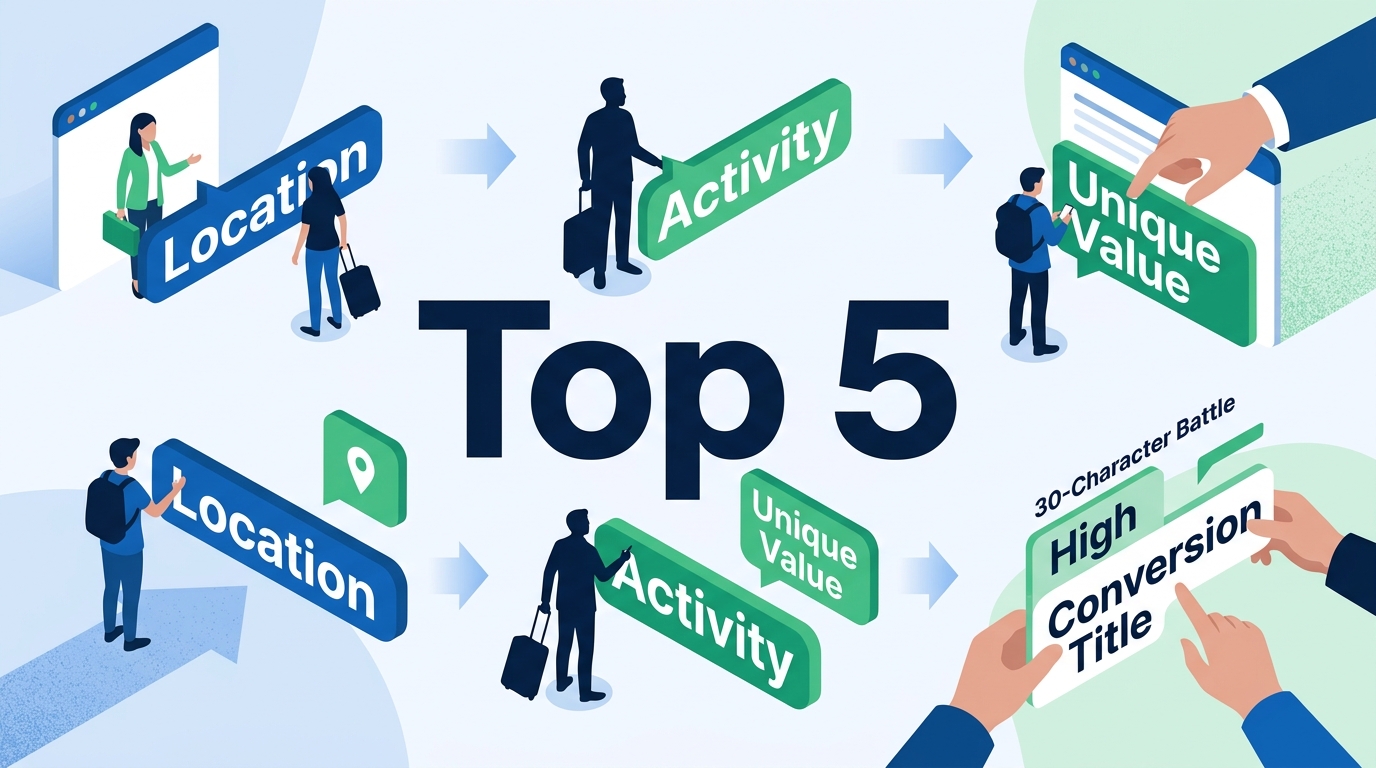
A listing is more than just a description; it is a psychological tool designed to convert interest into a confirmed booking. Your title should be a ’30-character battle’ that includes the location, the activity, and a unique value proposition. For example, instead of ‘Tea Ceremony,’ use ‘Authentic Shizuoka Tea Experience with a 5th-Generation Master.’ This clarity helps your activity stand out in a crowded search result page.
Visual content is the most critical factor for international guests who may not be fluent in the language of your description. We recommend including at least 10 high-quality photos that capture the ‘highlights’ of the experience, the host’s personality, and clear shots of the meeting point. Additionally, using a ‘flexible’ cancellation policy (up to 24 hours before) significantly lowers the psychological hurdle for travelers who are planning their trips months in advance.
- Keyword-Rich Titles: Incorporate ‘Shizuoka’ and specific activity names to improve search visibility within OTA platforms.
- Visual Storytelling: Upload a 15-second highlight video to show the atmosphere and ease of participation.
- Clear Meeting Instructions: Provide a Google Maps link and a photo of the exact meeting spot near JR Shizuoka Station to reduce guest anxiety.
- Strategic Pricing: Set prices based on value (e.g., private tours) rather than just competing on cost.
How do you overcome language barriers and streamline communication for local activities?
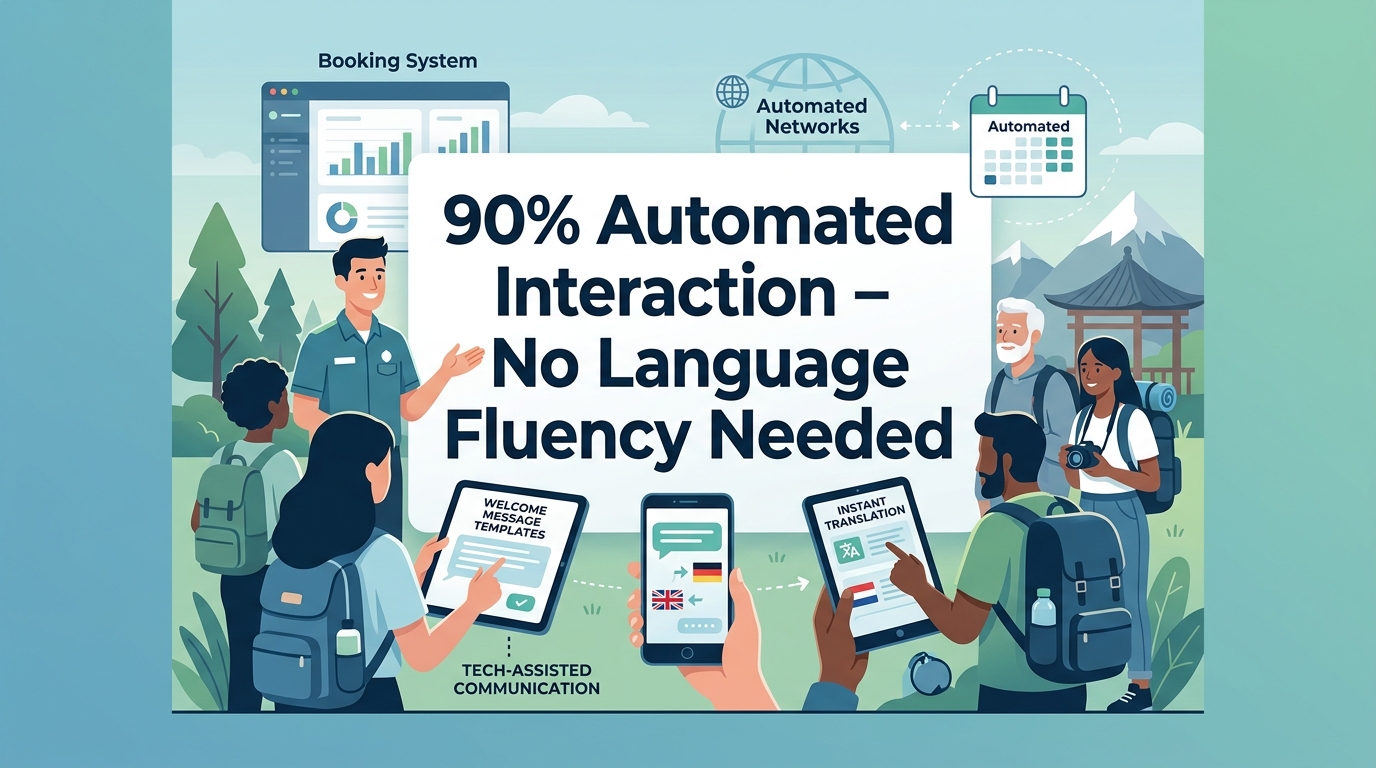
Language anxiety is the number one reason local providers hesitate to start inbound tourism marketing for activities. However, you do not need to be fluent in English to succeed. By using tech-assisted communication and pre-written templates, you can manage 90% of guest interactions automatically. Setting up an automated ‘Welcome Message’ immediately after booking can turn a guest’s uncertainty into excitement.
On the day of the activity, translation apps and visual aids (like flipcharts or tablets) can bridge the communication gap. Travelers often appreciate the effort to communicate and are more interested in the ‘spirit’ of the hospitality than perfect grammar. Our team at Glocal by Shinker helps businesses develop these multilingual workflows, ensuring that your staff can focus on providing a great experience rather than worrying about translation.
The Power of Templated Communication
undefined
参考: 観光地域における案内表示等の充実
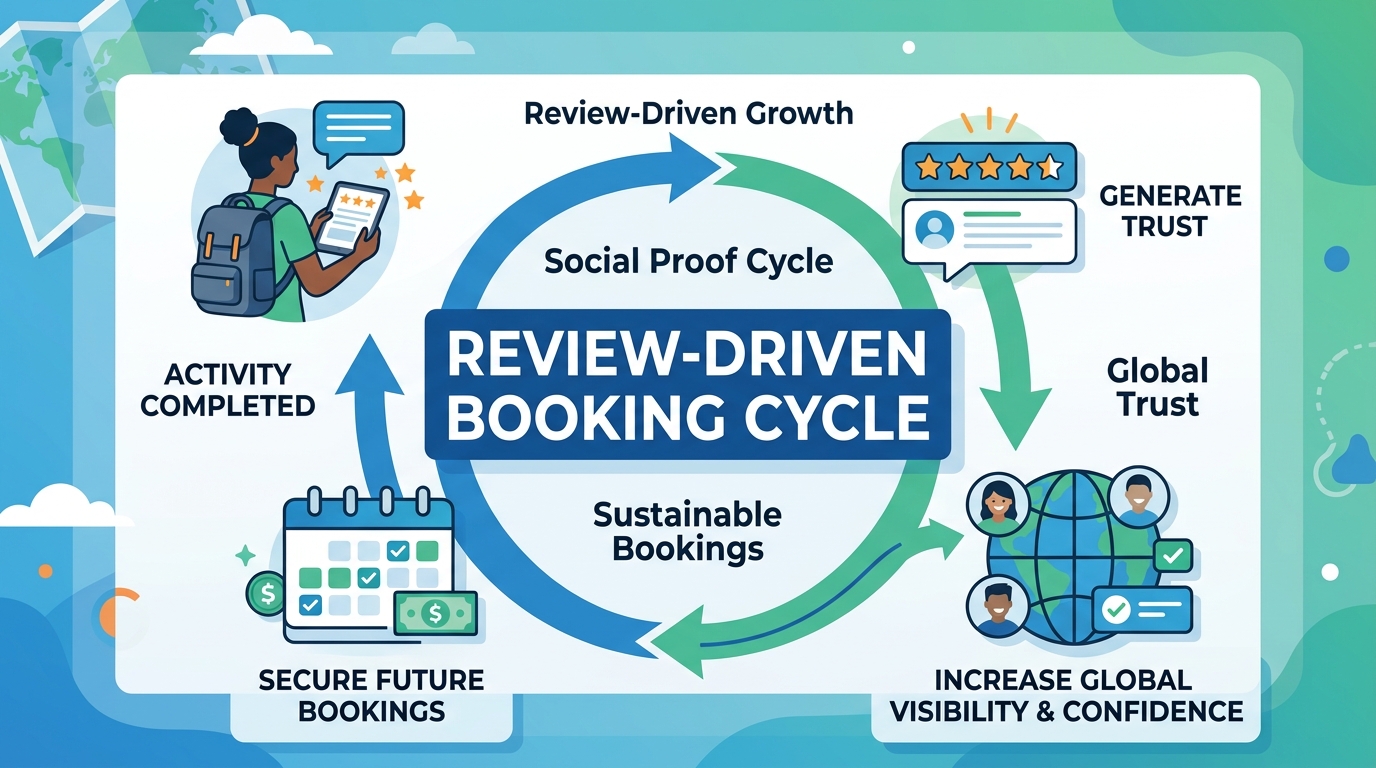
How does a review-driven ecosystem support sustainable growth for activity providers?
In the world of inbound tourism marketing for activities, reviews are your most valuable currency. International travelers rely heavily on ‘social proof‘ when booking experiences in a foreign country. A single positive review from a guest in the USA can influence hundreds of future bookings from that same region. Building a system that encourages guests to leave feedback is essential for long-term visibility on platforms like Google Maps and TripAdvisor.
To maximize your review count, make the request part of the experience itself. Mentioning how much you appreciate feedback at the end of the activity, or sending a follow-up link via the OTA’s messaging system, can increase your review rate by over 30%. Even negative feedback should be viewed as an opportunity; responding with a ‘God-like’ level of professionalism shows future guests that you are a trustworthy and responsive business owner.
Pricing strategies for inbound activities: Avoiding the “low-price” trap
Many local providers make the mistake of pricing their activities too low, fearing that international guests won’t pay premium rates. However, data from 2025 indicates that the average per-person expenditure for inbound travelers is rising, with many willing to pay for high-value, specialized content. For example, while a basic tea ceremony might be 3,000 yen, a private session with a master can easily be priced between 8,000 and 15,000 yen.
When setting your price, consider the added value you provide, such as high-quality digital photos, English-speaking guides, or exclusive access to areas not open to the general public. A profit margin of 40% to 60% is recommended to cover OTA commissions (usually 15% to 30%) and marketing costs. By positioning your activity as a premium ‘narrative’ experience, you can ensure your business remains profitable and sustainable in the competitive inbound market.
| Activity Type | Standard Price (JPY) | Premium/Private (JPY) | Duration |
|---|---|---|---|
| Tea Ceremony | 3,000 – 8,000 | 10,000 – 15,000 | 60-90 min |
| Martial Arts | 8,000 – 12,000 | 15,000 – 25,000 | 90-120 min |
| Cooking Class | 5,000 – 10,000 | 12,000 – 18,000 | 2-3 hours |
| Guided Trekking | 8,000 – 15,000 | 20,000 – 35,000 | Half/Full Day |
Case Studies: Real-world success in Shizuoka with Glocal by Shinker
At Shinker Inc., we have seen firsthand how a strategic approach to inbound tourism marketing for activities can transform a local business. Our ‘Glocal‘ service has helped numerous clients in Shizuoka Prefecture move from zero international bookings to a consistent stream of global visitors. By focusing on OTA optimization and social proof, we enable owners to focus on what they do best: providing world-class hospitality.
One regional hotel we supported saw a significant increase in exposure after we optimized their OTA listings and created English-language content. Similarly, a local restaurant in Shizuoka City improved its online visibility through Google Business Profile optimization and English Instagram management. These results demonstrate that even small changes in digital strategy can lead to measurable business outcomes and higher brand recognition among international travelers.
Tourism Experience Provider Success
undefined
Next Steps: Implementing your inbound marketing strategy today
Starting your journey in inbound tourism marketing for activities doesn’t have to be overwhelming. The key is to start small—perhaps by listing one product on an OTA—and scale as you gain confidence. By automating the booking process and using technology to handle communication, you can build a sustainable business that thrives on international tourism while preserving the local charm of Shizuoka.
Ready to attract more international visitors? Contact Glocal today for a free consultation and discover a customized inbound marketing strategy for your business. Whether you run a hotel, restaurant, or activity center, our team of experts is here to help you grow. Visit our office near JR Shizuoka Station or reach out via our website to start your global expansion today.
Frequently Asked Questions
Q1. What is inbound tourism marketing for activities?
It refers to the strategies used by local tour and activity providers to attract international travelers. The goal is to make it easy for foreign tourists to find, understand, and book experiences online through digital platforms before or during their trip.
Q2. How can automation help small activity providers with limited staff?
Automation handles repetitive tasks like processing payments, sending confirmation emails, and updating calendar availability across multiple websites. This allows small teams to focus on delivering high-quality experiences instead of spending hours on manual administrative work and guest communication.
Q3. Which OTA platforms should a local business prioritize first?
Providers should focus on major global platforms like TripAdvisor, Viator, or GetYourGuide. These sites already have high traffic from international tourists, meaning your activities will be visible to a global audience without needing a large marketing budget of your own.
Q4. How can I handle guest questions if I do not speak their language?
You can use automated messaging tools and translation software integrated into booking platforms. Providing a detailed FAQ section in English on your listing also helps answer common questions in advance, reducing the need for direct, real-time communication in foreign languages.
Q5. Why are reviews so important for sustainable growth?
International travelers rely heavily on reviews to trust local providers. Positive feedback creates a cycle where high ratings improve your search ranking on booking sites, leading to more visibility and consistent bookings over time without requiring extra advertising costs.