
Stop inbound tourist no-shows with our 3-step guide. Get English policy templates and pre-payment tips to protect your restaurant or hotel revenue in Japan.
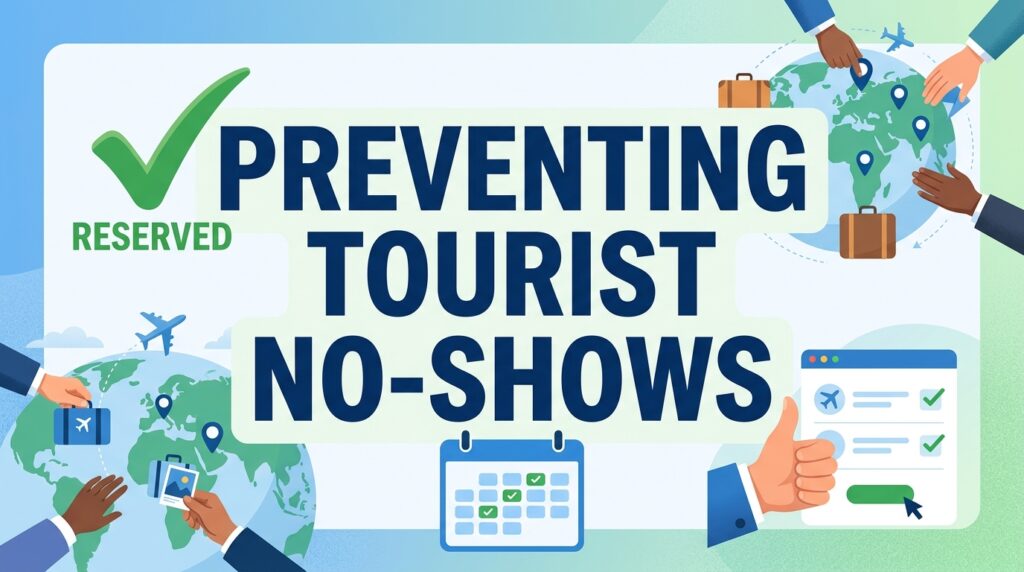
Operating a restaurant or hotel in Shizuoka is incredibly rewarding, yet the sudden silence of an empty table due to an inbound tourist no-show can be both financially draining and deeply discouraging for your hard-working team.
This expert guide offers a practical 3-step protection kit, including ready-to-use English policy templates and pre-payment strategies, specifically designed for preventing tourist no-shows and securing your business revenue in the growing international market.
Why are inbound tourist no-shows so frequent in the Japanese market?
The Japanese tourism industry is witnessing an unprecedented surge in international visitors, with the number of inbound travelers reaching a record high of 42.68 million in 2025. While this growth presents massive opportunities for local businesses in Shizuoka, it also brings the challenge of high no-show rates. Many international travelers engage in ‘placeholder bookings,’ where they reserve multiple restaurants or activities for the same time slot to keep their options open, eventually choosing only one without canceling the others. This behavior, often driven by a lack of awareness regarding Japanese business etiquette, leads to significant losses.
Another factor is the psychological distance between the traveler and the local business. For a tourist visiting from thousands of miles away, a reservation made weeks in advance via a digital platform can feel abstract. Without a direct connection or a financial commitment, the ‘guilt’ associated with a cancellation is significantly lower than that of a local customer. In 2026, the trend of high inbound demand is expected to continue, with forecasts predicting approximately 41.4 million visitors. This makes it essential for businesses near JR Shizuoka Station and surrounding areas to implement robust systems that transform these abstract digital bookings into firm commitments.
Cultural Nuances and Communication Barriers
undefined
The financial impact: Understanding the 200 billion yen loss in the tourism sector
The economic damage caused by no-shows is staggering. Research indicates that the annual loss for the Japanese food and beverage industry alone is estimated at approximately 200 billion yen. For a local restaurant in Shizuoka City, a single large group no-show can wipe out the entire day’s profit, especially when specialized ingredients have been ordered and prepared in advance. This loss is not just about the missed revenue; it includes the cost of wasted food, labor hours spent on preparation, and the opportunity cost of turning away other potential guests who could have occupied those seats.
In the accommodation sector, the impact is equally severe. Hotels and ryokans often face cases where up to 70% of certain inbound booking segments result in no-shows if no pre-payment or credit card authorization is required. This volatility makes it nearly impossible to manage staffing levels and inventory effectively. For businesses located in competitive areas like Gofuku-cho, protecting the bottom line requires moving away from the traditional ‘trust-based’ booking model toward a more secure, globally standard approach that ensures financial compensation for late cancellations.
How can a 3-step pre-payment system protect your business revenue?
Implementing a pre-payment system is widely recognized as the most effective method for preventing tourist no-shows. By requiring a financial commitment at the time of booking, you filter out ‘placeholder’ travelers and ensure that your revenue is protected even if the guest fails to arrive. This approach has become the global standard in high-demand tourism hubs and is now essential for Shizuoka businesses aiming to thrive in the inbound market.
- Select a Payment Gateway: Choose a reliable platform like Stripe or Square that allows you to send payment links via email or integrate directly into your booking form. These services typically charge a small transaction fee, such as 3.25%, which is a minor cost compared to the total loss of a no-show.
- Establish Clear Policy Deadlines: Define your non-refundable window clearly. For example, require a 100% pre-payment for course menus or a 50% deposit for large groups, stating that this amount is non-refundable if the cancellation occurs within 48 hours of the reservation.
- Automate Confirmation and Links: Once a reservation request is received via your website or social media, automatically send a professional English email containing the secure payment link. Explicitly state that the reservation is only ‘confirmed’ once the payment is processed.
参考: 不当な契約は
What are the key components of a legally valid English policy?
To ensure your cancellation fees are enforceable and understood by international guests, your English policy must be explicit and easy to find. Vague terms like ‘cancellation fee may apply’ are often ignored. Instead, use firm, direct language that leaves no room for misinterpretation. It is crucial to display this policy on your booking page, in confirmation emails, and even on your Google Business Profile to ensure maximum visibility.
A legally sound policy should include the specific percentage of the fee relative to the timing of the cancellation. For example, ‘100% charge for no-shows or cancellations on the day’ and ‘50% charge for cancellations within 24 hours.’ Additionally, specify how the fee will be collected, such as through a pre-authorized credit card. This transparency builds trust with professional travelers while deterring those who are not serious about their visit to Shizuoka.
Plug-and-Play English Policy Template
undefined
Which digital platforms simplify inbound reservation management and reminders?
Choosing the right digital tools can automate the labor-intensive process of managing international bookings. Platforms like TableCheck offer support in 23 languages, allowing guests to book in their native tongue while automatically presenting your cancellation policy. These systems often include ‘Credit Card Essentials,’ which holds the guest’s card information securely and allows you to charge a no-show fee with a single click, eliminating the need for manual invoicing.
In addition to specialized restaurant tools, major Online Travel Agencies (OTAs) like Airbnb, Booking.com, and TripAdvisor provide built-in protection for accommodation providers. These platforms handle the payment processing and enforce the cancellation policies you set. For Shizuoka businesses, optimizing your presence on these platforms with English content and clear rules is vital for attracting high-quality guests who are committed to their travel itineraries.
Effective re-confirmation strategies: Bridging cultural gaps through communication
Communication is a powerful tool for preventing tourist no-shows. Sending a personalized re-confirmation message 72 hours and 24 hours before the reservation can drastically reduce ‘forgotten’ bookings. Since many international travelers do not use traditional email frequently while on the move, reaching out via Instagram Direct Message or WhatsApp can be more effective. A friendly message like, ‘We are looking forward to seeing you in Shizuoka tomorrow!’ serves as a gentle reminder of the commitment they made.
During these communications, it is also helpful to provide clear access information. Mentioning that your shop is a ’10 minutes on foot from the North Exit of JR Shizuoka Station’ helps the guest visualize their arrival and reduces the chance of them getting lost and giving up on the reservation. By providing value—such as local weather tips or nearby attraction recommendations—you build a relationship that makes the guest feel more responsible for showing up.
Regional success: How Shizuoka businesses are mitigating cancellation risks
At Glocal by Shinker, we have seen firsthand how Shizuoka businesses can transform their inbound operations. One regional hotel we supported struggled with low visibility and high cancellation rates. By optimizing their OTA listings and implementing a clear, multilingual cancellation policy, they established a stronger online presence. This resulted in a significant increase in inquiries from committed international guests who appreciated the professional and transparent booking process.
Similarly, a local restaurant in Shizuoka City implemented our recommended digital marketing strategy, focusing on Google Business Profile optimization and English social media management. By making it easier for tourists to discover their menu and booking rules online, they saw higher engagement and a noticeable decrease in unverified reservations. These real-world results demonstrate that with the right strategy, local businesses can protect their revenue while welcoming the world.
Partnering for success: How Glocal by Shinker transforms inbound marketing
Glocal by Shinker, operated by Shinker Inc., is dedicated to connecting Shizuoka with the global travel market. Led by CEO Hikaru Soneda, our team combines international experience with deep local knowledge to provide practical, data-driven solutions for hotels, restaurants, and tourism providers. We understand the unique challenges of regional businesses and offer tailored plans to help you grow sustainably.
Whether you need help with OTA optimization, English social media management, or implementing a secure pre-payment system, Glocal is your trusted partner. Our mission is to showcase the unique charm of Shizuoka while ensuring your business is protected from the risks of the international market. We offer flexible pricing packages designed to fit the needs of both small cafes and large accommodation facilities.
Contact Us for a Free Consultation
undefined
| Plan Type | Target Business | Monthly Fee | Key Services |
|---|---|---|---|
| Accommodation Economy | Hotels/Ryokans | ¥50,000 | OTA registration & Instagram support |
| Accommodation Premium | Hotels/Ryokans | ¥200,000 | Full inbound strategy & multilingual SEO |
| Restaurant Economy | Cafes/Restaurants | ¥120,000 | English Instagram management |
| Restaurant Standard | Restaurants/Bars | ¥250,000 | Instagram, YouTube Shorts & TikTok |
Frequently Asked Questions
Q1. What is a no-show?
A no-show occurs when a customer makes a reservation but fails to arrive or cancel in advance. For businesses, this results in lost revenue, wasted ingredients, and empty seats that could have been sold to other paying guests.
Q2. How does a pre-payment system protect my business revenue?
A pre-payment system secures funds at the time of booking. If a guest fails to arrive, the business retains the payment to cover costs. This ensures you are compensated for your time and resources even if the customer does not show up.
Q3. What are the essential parts of a valid English cancellation policy?
A clear policy must include the specific cancellation deadlines, the percentage of the fee charged for late cancellations, and the time zone used. Using professional English templates ensures international guests fully understand their financial obligations before they finalize their booking.
Q4. Why should I use digital platforms for inbound reservations?
Digital platforms automate the booking process by sending multi-language reminders and processing international payments securely. These tools reduce human error, save your staff time, and make it easier for foreign tourists to commit to their reservations through a professional interface.
Q5. What is the first step I should take to reduce no-shows?
The first step is implementing a clear, legally valid English cancellation policy. By informing guests of the rules during the booking process, you set professional expectations and discourage casual bookings that are more likely to result in a no-show.