
Skip the lines with this Atami street food guide. Explore a zero-waste route from Atami Station featuring viral shops, local rules, and a helpful map.
![Atami Street Food Guide: A Zero-Wait & Zero-Waste Route [With Map]](https://glocal-world.jp/glocal-cms/wp-content/uploads/2026/07/atami-street-food-guide-map-eyecatch-1-1024x572.jpg)
Navigating the crowded shopping streets of Atami can be overwhelming for travelers who want to enjoy local delicacies without spending hours standing in long queues.
This guide provides a strategic ‘Zero-Wait & Zero-Waste’ route for Atami street food, ensuring you experience the best flavors efficiently while respecting local etiquette.
When is the best time to visit Atami for a zero-wait street food experience?
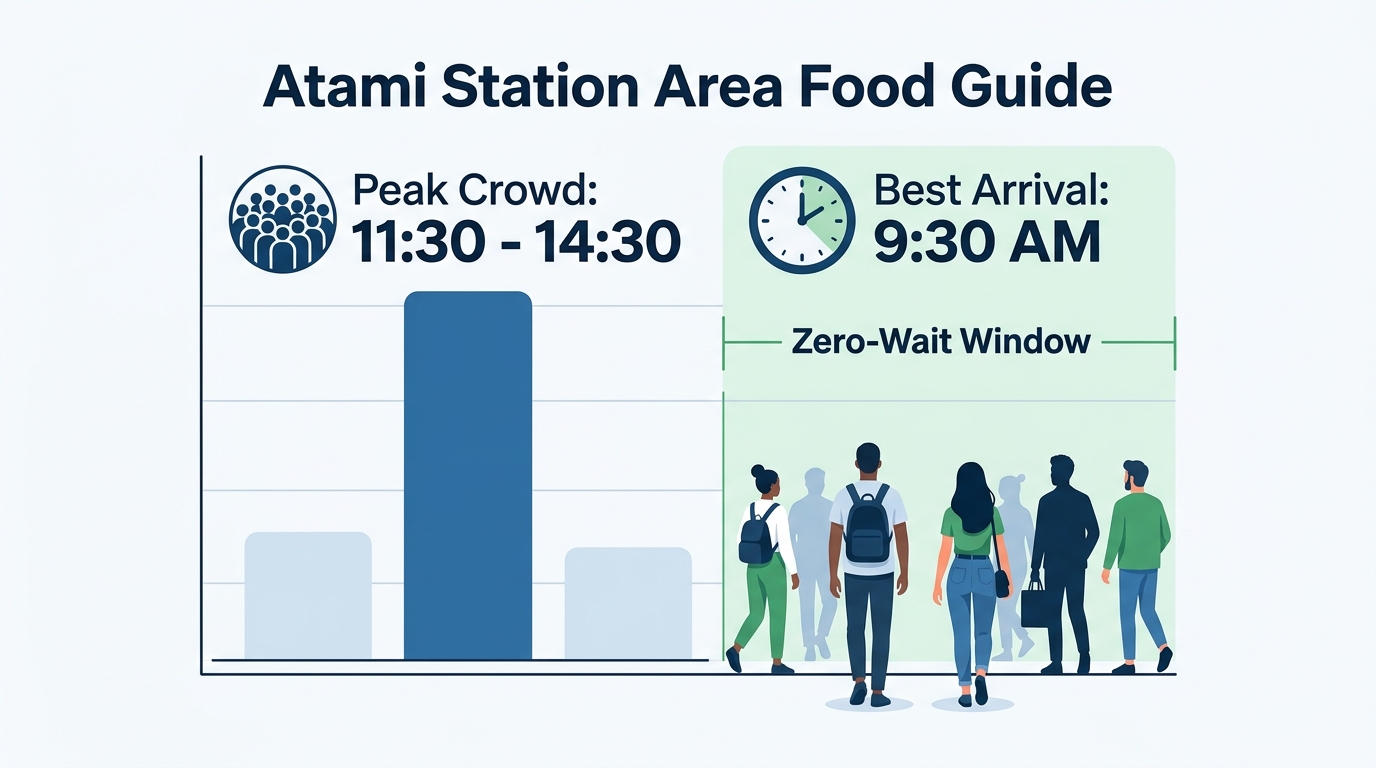
Timing is the most critical factor when planning a trip to enjoy Atami street food without the frustration of long lines. Most visitors arrive via the Shinkansen around noon, which causes a massive surge in foot traffic at the Heiwa Dori and Nakamise Dori shopping arcades between 11:30 AM and 2:30 PM. To avoid this, we recommend arriving at Atami Station by 9:30 AM. Many of the most popular shops, such as those selling fresh onsen manju and grilled seafood sticks, begin their preparations early, and being there at opening ensures you are first in line for the freshest batches.
Weekday visits are significantly more relaxed than weekends or public holidays. Data from local tourism associations suggests that Tuesday through Thursday see roughly 40% less foot traffic compared to Saturdays. If you must visit on a weekend, aim for the ‘golden hour’ of street food—the short window between 3:30 PM and 4:30 PM. While some items may sell out, the mid-day crowds usually begin heading toward their ryokans or hotels for check-in, leaving the streets momentarily quieter for late-afternoon snacking.
Strategic Morning Arrival for Early Birds
undefined
undefined
参考: 熱海市の観光
How can you navigate the zero-waste gourmet walking route from Atami Station?
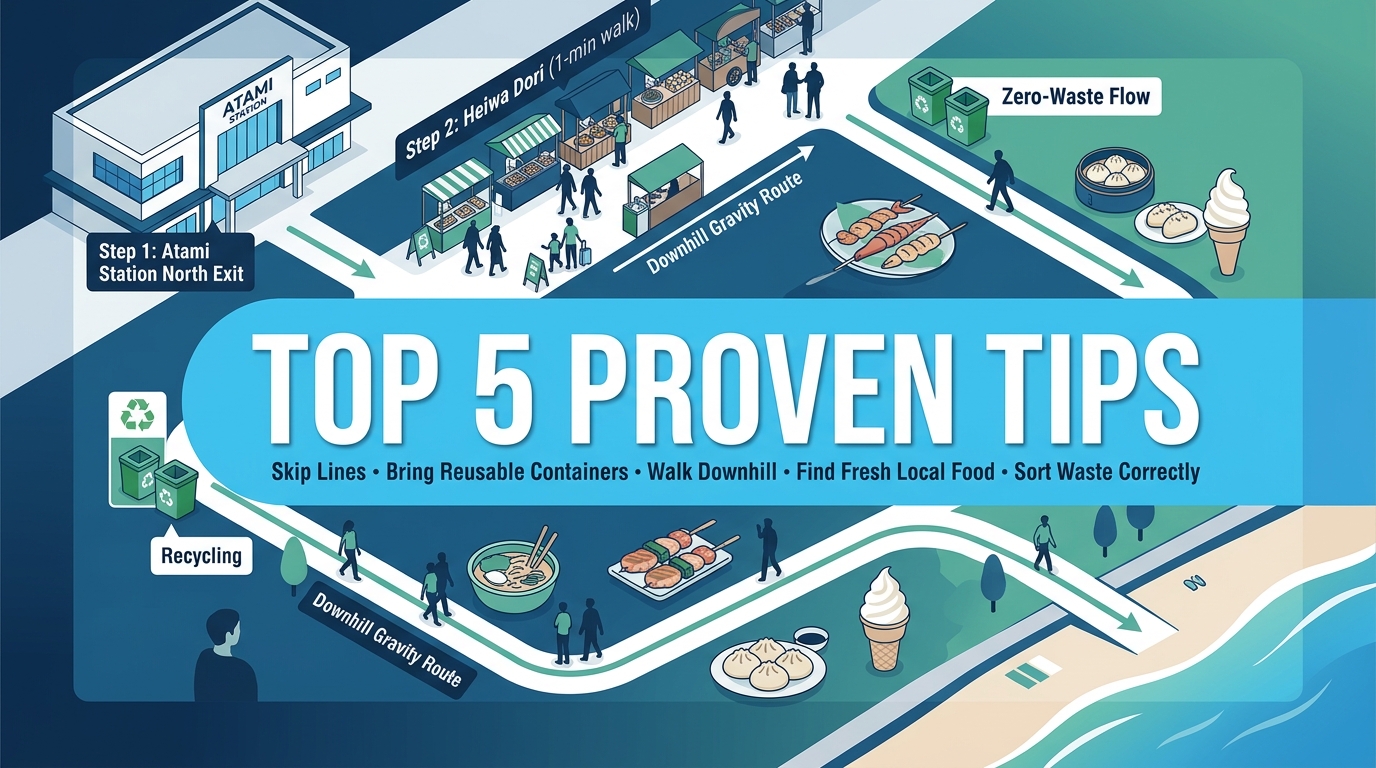
A successful Atami street food tour requires a logical path that flows from the station down toward the coast. Start at the ‘Heiwa Dori Shopping Street‘, located just a 1-minute walk from the Atami Station North Exit. This covered arcade is home to some of the city’s oldest establishments. Instead of zigzagging, follow the natural downhill slope. This ‘Gravity Route‘ minimizes physical exertion and leads you directly toward the scenic Sun Beach, where you can find public benches to enjoy your final purchases in a relaxed setting.
To achieve a zero-waste experience, it is essential to plan your consumption. In Japan, carrying trash is often necessary as public bins are rare. We suggest bringing a small, reusable bag specifically for food wrappers. By following our mapped route, you will pass designated ‘return points’ offered by specific vendors who allow customers to return skewers or cups. This prevents the accumulation of litter and keeps the beautiful seaside city clean for everyone.
- The Station Start: Exit Atami Station and head immediately to the right toward the covered arcades. Grab a hot onsen manju to fuel your walk.
- The Middle Descent: Move through Nakamise Dori, focusing on savory items like fried fish cakes (kamaboko) which are easy to eat while standing.
- The Beachfront Finale: End your walk at Sun Beach, approximately 15 minutes from the station. Use this open space to enjoy desserts like Atami Pudding while overlooking the ocean.
参考: 熱海市観光安心マップPDF
Which traditional and viral shops offer the best Atami street food?
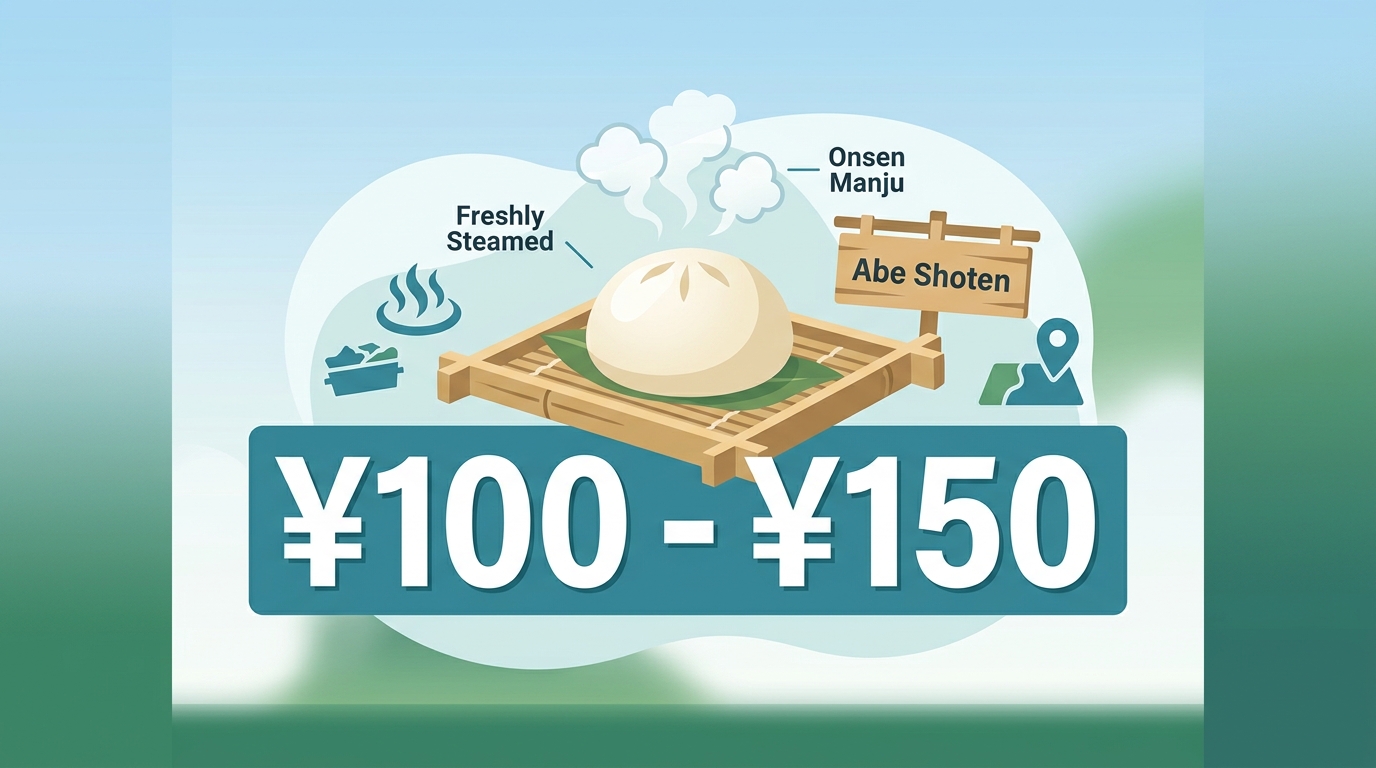
Atami street food is a unique blend of Showa-era tradition and modern Instagram-worthy trends. For a taste of history, Abe Shoten is a must-visit. They have been serving ‘Onsen Manju‘ for decades, steamed right in front of the shop using local spring water. The texture is incredibly soft, and the red bean filling is perfectly balanced. At only about ¥100 to ¥150 per piece, it is an affordable and authentic way to start your culinary journey.
On the modern side, Atami Purin (Atami Pudding) has become a viral sensation. Known for its iconic hippopotamus logo and retro milk-bottle packaging, this shop often sees the longest lines in the city. To avoid the wait, visit their second location near the Ginza district rather than the one directly at the station. Their ‘Kaba-sama’ caramel sauce is a fan favorite, and the creamy texture has made it a staple of the local food scene since its opening in recent years.
| Shop Name | Signature Item | Estimated Price | Vibe |
|---|---|---|---|
| Abe Shoten | Onsen Manju | ¥110 | Traditional/Historic |
| Atami Purin | Caramel Pudding | ¥400 | Trendy/Viral |
| Maruten | Seafood Skewers | ¥300 – ¥500 | Savory/Casual |
| Sakura-ya | Fried Hanpen | ¥250 | Local/Authentic |
What are the essential rules for seating and trash disposal in Atami?
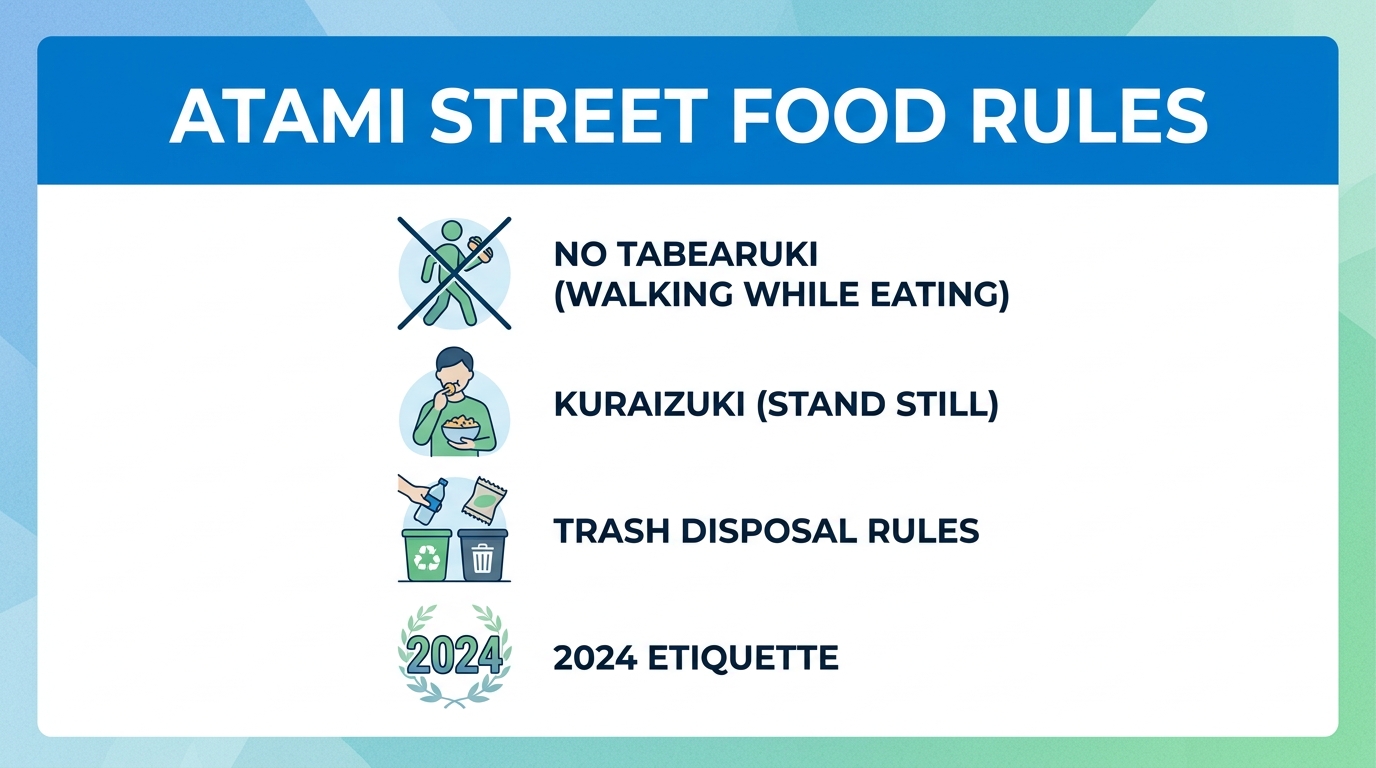
Understanding local etiquette is vital for a positive experience. In Japan, the concept of ‘tabearuki‘ (walking while eating) is often discouraged in crowded areas to prevent spills and accidental contact with others. Instead, the preferred method is ‘kuraizuki’—standing still near the shop where you purchased the item to finish it. Many Atami vendors provide small standing tables or benches inside their stalls for this exact purpose.
Trash disposal is the biggest challenge for international visitors. Most shops will take back the trash from the items they sold you, but they will not accept trash from other stores. Always look for the ‘Return Trays’ or ask the staff ‘Gomi bako wa arimasu ka?’ (Is there a trash bin?). If you cannot find one, keep your waste in your reusable bag until you return to the station or your accommodation. This practice, known as ‘mochikaeri‘, is a cornerstone of Japanese social responsibility.
参考: 別荘等所有者向け情報誌作成業務委託 <2024年度 … – 熱海市
How can local businesses leverage the street food boom for inbound marketing?
For owners of hotels, restaurants, and souvenir shops in Shizuoka, the popularity of Atami street food presents a massive opportunity to attract international visitors. International travelers are increasingly looking for authentic, walkable food experiences that they can share on social media platforms like Instagram and TikTok. By positioning your business as a ‘stop’ on a gourmet route, you can significantly increase foot traffic and brand awareness among the inbound market.
At Glocal by Shinker, we specialize in helping regional businesses bridge the gap between local charm and global visibility. Our experience shows that when a shop optimizes its digital presence—specifically through multilingual SEO and Google Business Profile management—it can see a substantial rise in foreign customers. For example, a local restaurant in Shizuoka that implemented our multilingual strategy saw increased engagement from overseas visitors who were looking for specific local flavors they had seen online.
Why is multilingual support critical for Atami’s street food vendors?
Communication is often the biggest barrier for international tourists wanting to try Atami street food. Many traditional shops only have menus in Japanese, which can lead to hesitation or missed sales opportunities. Providing even simple English menus or clear photographic displays of ingredients can make a shop much more approachable. This transparency builds trust with travelers who may have dietary restrictions or simply want to know what they are eating before they buy.
Beyond physical menus, a business’s online ‘language’ is equally important. Many travelers plan their routes using English-language blogs and OTA platforms like TripAdvisor or Google Maps. If your business information is only available in Japanese, you are invisible to a large portion of the inbound market. Glocal helps businesses by handling everything from English website content to OTA optimization, making it easier for overseas guests to discover and book local experiences.
Maximizing Visibility through Global Platforms
undefined
undefined
Case studies: How digital marketing transforms regional tourism in Shizuoka
Real-world results demonstrate the power of a dedicated inbound strategy. In one of our company’s results, a regional hotel partnered with Glocal to improve its visibility among international travelers. By optimizing OTA listings and creating English-language content, the hotel established a stronger online presence and received significantly more inquiries from international guests. This success shows that even traditional businesses can thrive by embracing digital transformation.
Another of our company’s results involved a local restaurant that implemented our multilingual marketing strategy, including English Instagram management. This led to the restaurant becoming a popular dining destination for inbound travelers who found them through targeted digital promotion. These case studies prove that with the right partner, local businesses in Shizuoka can successfully tap into the global tourism market and achieve measurable growth.
Getting started: How to enhance your shop’s visibility to international travelers
If you are a business owner in Atami or the wider Shizuoka area, the time to act is now. The inbound market is growing, and travelers are eager to discover the unique culture and food of our region. Start by evaluating your current online presence: Is your Google Business Profile up to date? Do you have an English menu? Are you active on social media? These small steps can make a significant difference in how international visitors perceive and interact with your brand.
Ready to attract more international visitors? Contact Glocal today for a free consultation and discover a customized inbound marketing strategy for your business. Whether you run a small street food stall, a traditional ryokan, or a modern café, our team of experts is here to help you navigate the complexities of global marketing. Let us help you share the unique charm of Shizuoka with the world and drive sustainable growth for your business.
Frequently Asked Questions
Q1. What is the Zero-Wait and Zero-Waste route in Atami?
It is a strategic walking path starting from Atami Station designed to help visitors enjoy local street food efficiently. The route focuses on visiting popular shops during off-peak times and following local rules for proper trash disposal to keep the shopping streets clean.
Q2. When is the best time to start the food tour to avoid long lines?
To ensure a zero-wait experience, it is best to visit on weekdays or arrive early in the morning before the peak lunch rush. Avoiding holiday weekends and major festival days will also help you navigate the popular shopping streets more quickly and comfortably.
Q3. How should I dispose of trash while eating street food in Atami?
Atami encourages a zero-waste environment, so you should return skewers, wrappers, and cups to the specific shop where you bought the food. If the shop does not have a bin, look for designated public recycling stations rather than carrying trash to other locations.
Q4. Are there specific rules for where I can sit and eat?
Yes, many shops have specific seating or standing areas for customers. To follow local etiquette, you should eat your food near the shop’s entrance or in designated rest areas. Avoid walking while eating to prevent accidents and keep the narrow sidewalks clear for others.
Q5. What is the difference between traditional and viral food shops in the area?
Traditional shops focus on long-standing local specialties like steamed buns or seafood, often using classic recipes. Viral spots are newer shops featuring trendy, visually appealing items designed for social media. This route includes a balance of both to give you a complete taste of Atami.