
Explore regional Japan nightlife tourism with ease. Get 5 essential tips on rural snack bars, last train logistics, and bridging the language barrier.
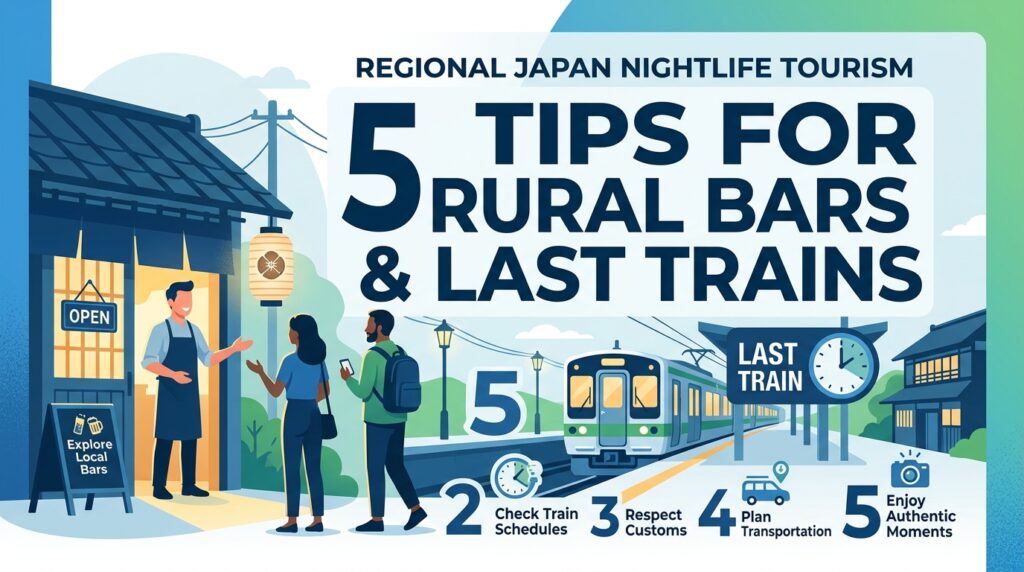
Many travelers visiting regional Japan feel a sense of ‘nightlife anxiety,’ fearing they will miss the last train or struggle to communicate in secluded rural bars.
This article provides an insider’s playbook for regional Japan nightlife tourism, offering practical logistics and cultural etiquette to help you unlock authentic social connections beyond the major cities.
Why is regional Japan nightlife tourism the key to authentic travel experiences?
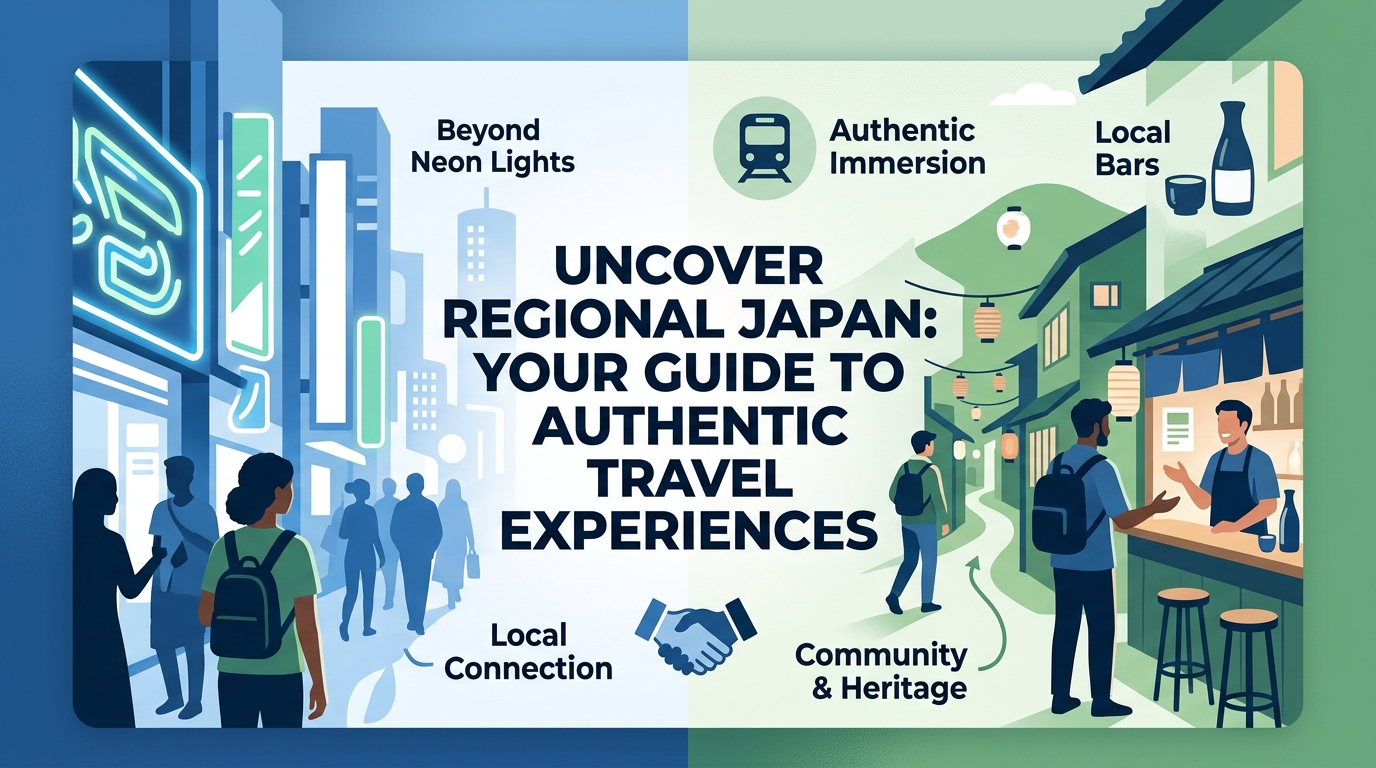
Regional Japan nightlife tourism is increasingly recognized as the final frontier for travelers seeking genuine immersion. While the neon lights of Shinjuku or Dotonbori offer high-energy entertainment, the quiet alleys of regional hubs like Shizuoka City reveal a more intimate side of Japanese culture. Here, ‘nightlife’ is not just about consumption; it is about community and the preservation of local traditions that have existed for decades. Engaging with the evening economy in these areas allows visitors to step away from curated tourist traps and enter the real, lived-in Japan.
The value of the evening economy in regional areas lies in the ‘Deep Japan’ encounters that only happen after sunset. In Shizuoka, for instance, a 10-minute walk from the North Exit of JR Shizuoka Station brings you to a network of izakayas and bars where locals gather to unwind. These interactions are often more profound than daytime sightseeing because the atmosphere is relaxed, and the social barriers are lower. By participating in regional Japan nightlife tourism, you support local small businesses and contribute to the sustainable growth of the regional economy, ensuring these unique cultural pockets thrive for future generations.
参考: インバウンド消費動向調査(旧 訪日外国人消費動向調査)
出典・参考: 内閣府によるナイトタイムエコノミー推進資料
How can travelers master the etiquette of rural snack bars and local pubs?
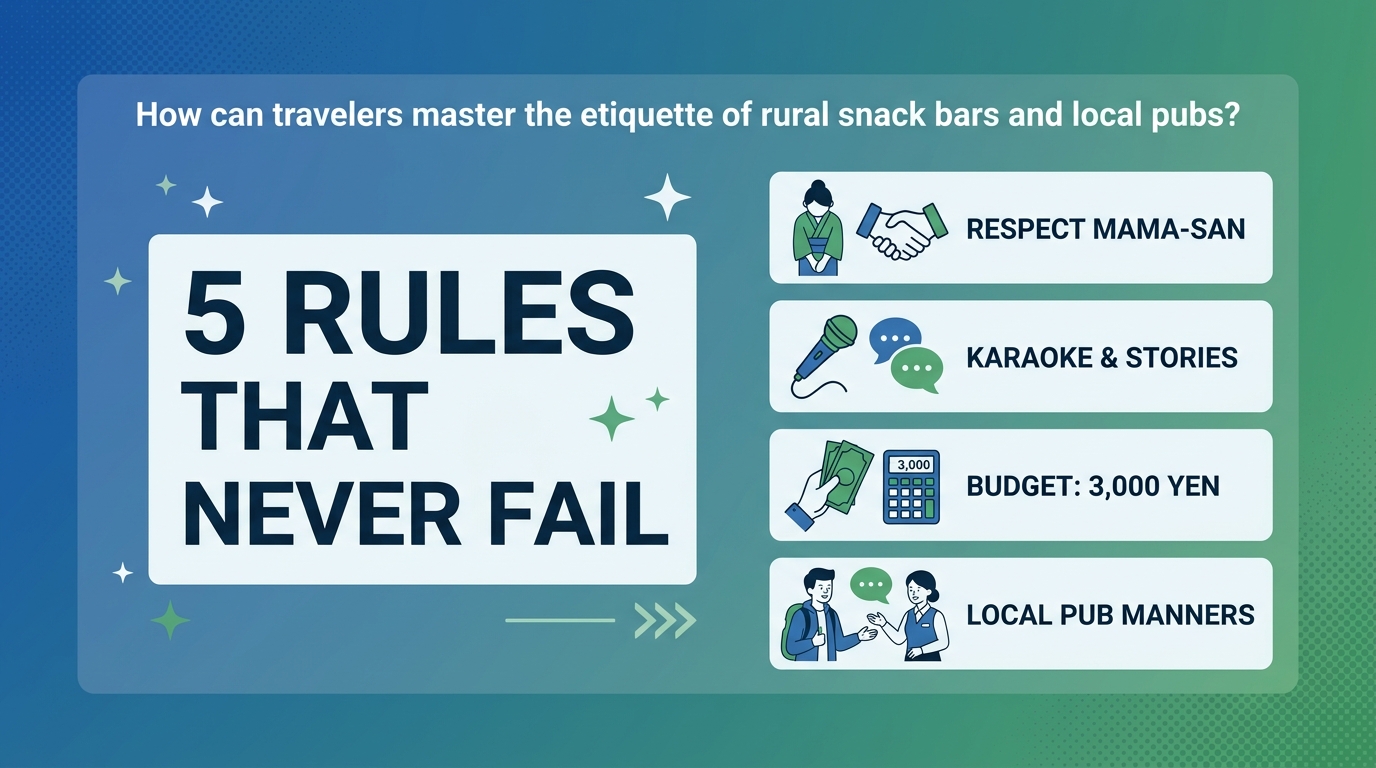
Mastering the etiquette of rural ‘Snack Bars’ (Sunakku) is essential for any traveler diving into regional Japan nightlife tourism. These establishments are unique to Japan, often managed by a charismatic ‘Mama-san’ or ‘Master’ who acts as the social glue of the neighborhood. Unlike standard bars, snack bars are community hubs where singing karaoke and sharing stories with strangers are encouraged. Understanding the ‘Otoshi’ (compulsory appetizer and cover charge) system is the first step; this fee is a standard part of the experience and covers your seat and a small dish of food.
Respecting the local rhythm is vital when entering a small establishment with only five or six seats. It is polite to peek in and ask ‘Aite imasu ka?’ (Is there space?) before entering. Once inside, following the lead of the regulars will help you blend in. In regional areas, being a ‘good guest’ means being open to conversation, even if your Japanese is limited. The goal of regional Japan nightlife tourism is mutual respect; showing appreciation for the local food and the host’s hospitality will often lead to the most memorable nights of your trip.
The Unwritten Rules of the ‘Sunakku’ (Snack Bar)
undefined
- Check for the ‘Otoshi’: Always expect a cover charge ranging from 500 to 3,000 yen, which includes a small appetizer and your seat.
- Greet the Master or Mama-san: A polite ‘Konbanwa’ (Good evening) goes a long way in establishing a positive rapport immediately.
- Accept Karaoke Invitations: Even if you are not a great singer, participating in karaoke is a key social lubricant in rural bars.
- Mind the Space: Rural bars are often tiny. Keep your belongings tucked away and be mindful of other patrons’ personal space.
- Order the ‘O-susume’: Ask for the ‘O-susume’ (recommendation) to try local seasonal delicacies and show respect for the chef’s expertise.
参考: Entertainment and Nightlife in Japan | G
What are the practical solutions for managing last trains and rural transport?
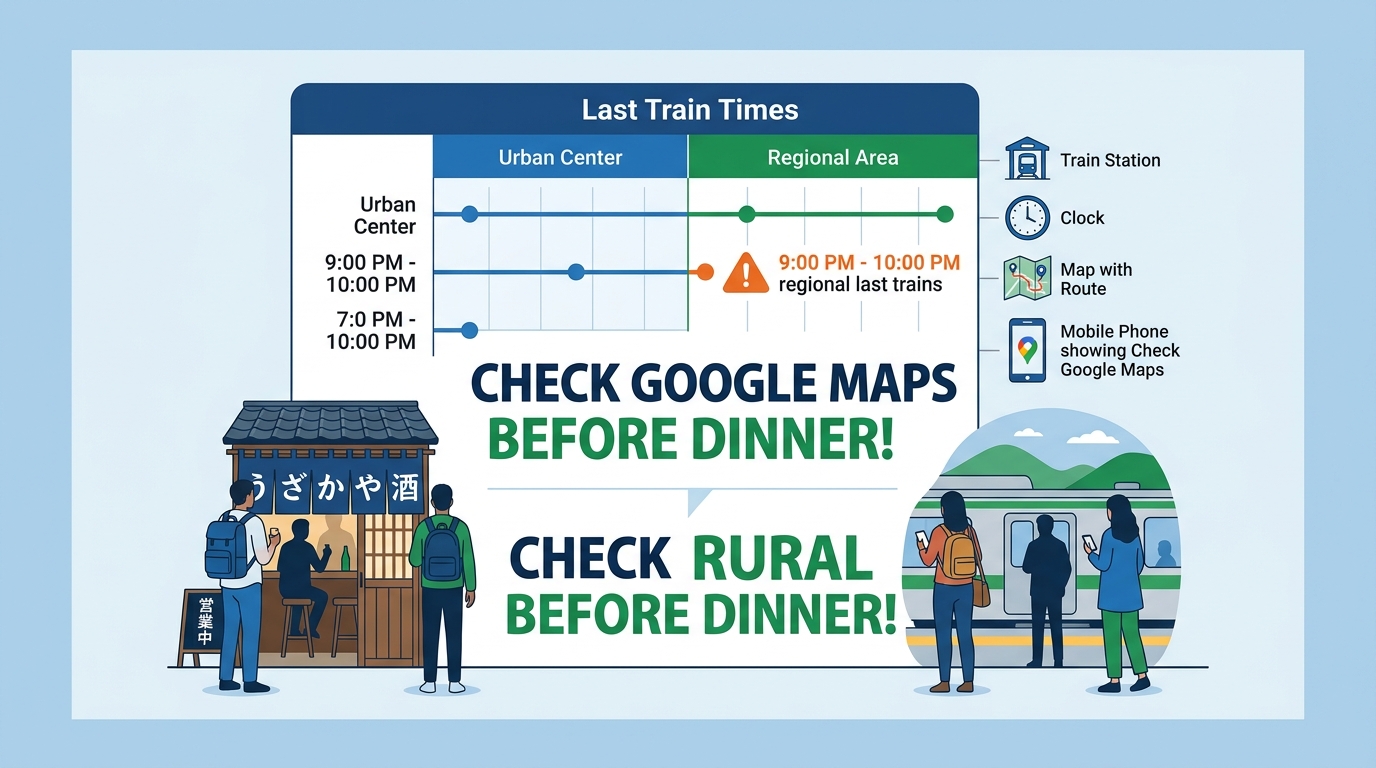
Logistics are the biggest challenge for regional Japan nightlife tourism, specifically the ‘last train’ anxiety that plagues many visitors. Unlike Tokyo, where trains run until midnight, rural lines may stop as early as 9:00 PM or 10:00 PM. To enjoy your evening without stress, always check the schedule on apps like Google Maps or Jorudan beforehand. If you are staying at a ryokan or hotel in a remote area, ask the front desk about the typical taxi availability during late hours, as some rural taxi companies stop operating after a certain time.
For those who have rented a car, the ‘Daiko’ (proxy driver) service is a lifesaver unique to Japanese culture. If you have been drinking, you can call a Daiko service; two drivers will arrive, one to drive you home in your own car and another to follow in their vehicle. This service is widely available in Shizuoka and other regional hubs, making regional Japan nightlife tourism accessible even for those staying far from the station. It is a safe, reliable, and surprisingly affordable way to ensure you get back to your accommodation without risking a DUI.
Mastering the ‘Daiko’ Proxy Driving System
undefined
How do you bridge the language barrier in regional Japan nightlife hubs?
The language barrier is often cited as the primary reason travelers avoid regional Japan nightlife tourism. However, in the age of digital transformation, this is no longer an insurmountable obstacle. Tools like Google Lens allow you to translate handwritten menus in real-time, while voice-to-text apps can facilitate basic conversations with bar staff. Most locals in regional areas like Shizuoka are incredibly patient and appreciative of any effort to speak Japanese, even if it is just a few basic phrases. Carrying a business card from your hotel can also help if you need to show a taxi driver where you are going.
Beyond apps, the ‘Point and Smile’ method remains a powerful tool for regional Japan nightlife tourism. Many local menus have photos, and if they don’t, you can look at what other patrons are eating and politely ask ‘Onaji mono o kudasai’ (The same thing, please). This not only solves the ordering problem but often serves as a conversation starter with nearby locals. Remember, the goal of nightlife in regional Japan is connection; your effort to communicate is often seen as a sign of respect for the local culture.
How can regional businesses attract international visitors to their local nightlife scenes?
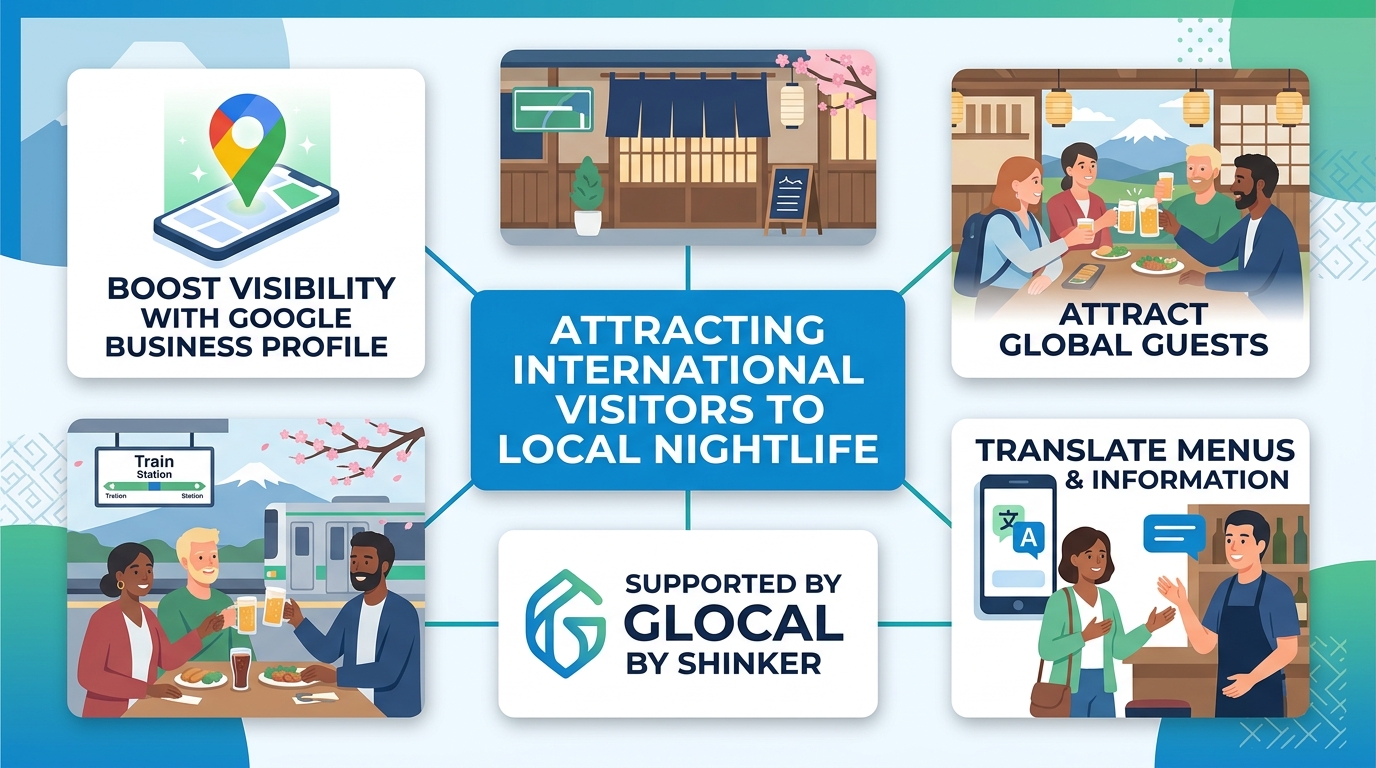
For local business owners in Shizuoka, the key to succeeding in regional Japan nightlife tourism is visibility. International travelers are looking for you, but they often cannot find you because your business is not listed on global platforms. At Glocal by Shinker, we specialize in helping regional hotels, restaurants, and bars optimize their online presence. By claiming your Google Business Profile and ensuring your information is available in English, you significantly increase the chances of a traveler walking through your door after a day of sightseeing.
Creating an ‘inbound-friendly’ atmosphere doesn’t mean changing your menu or your style; it means making your existing charm accessible. Simple additions like an English menu or a ‘Welcome’ sign in multiple languages can lower the barrier for entry. Glocal’s multilingual marketing strategies, including English Instagram management and OTA optimization, have helped numerous Shizuoka businesses tap into the growing inbound market. We believe that by showcasing the authentic charm of regional Japan, local businesses can achieve sustainable growth while providing visitors with the ‘real’ Japan experience they crave.
Case Studies: Successful Inbound Strategies in Shizuoka
Our company’s results demonstrate the power of targeted inbound marketing for the evening economy. For example, a regional hotel partnered with Glocal to improve its visibility among international travelers. By optimizing OTA listings and creating English-language content that highlighted local nightlife options, the hotel significantly increased its exposure. This led to a higher volume of inquiries and bookings from overseas guests who were specifically looking for a base to explore the region’s nighttime charms. The business established a stronger online presence and enhanced its brand recognition globally.
In another instance, a local restaurant implemented Glocal’s multilingual marketing strategy, focusing on English Instagram management and Google Business Profile optimization. This made it much easier for international tourists to discover the restaurant online. As a result, the establishment saw a marked increase in engagement from overseas visitors, strengthening its position as a popular dining destination. These results prove that with the right digital tools, even small regional businesses can become major attractions for inbound travelers.
Maximizing Inbound Revenue through Glocal’s Marketing Plans
To support the growth of regional Japan nightlife tourism, Glocal by Shinker offers structured marketing plans tailored for accommodation providers and restaurants. Our goal is to provide measurable business outcomes by combining data-driven strategies with local insights. Whether you are a small ryokan or a bustling izakaya, our plans are designed to increase your international visibility and drive bookings. Based in Shizuoka City, just 10 minutes from JR Shizuoka Station, our team is ready to help you connect with the world.
| Plan Type | Target Business | Monthly Fee | Key Services |
|---|---|---|---|
| Accommodation Economy | Hotels/Ryokans | ¥50,000 | OTA Optimization, Basic English Support |
| Accommodation Standard | Hotels/Ryokans | ¥150,000 | English Instagram, OTA Management |
| Restaurant Economy | Cafes/Izakayas | ¥120,000 | English Instagram Management |
| Restaurant Standard | Restaurants/Bars | ¥250,000 | Instagram, YouTube Shorts, TikTok |
Frequently Asked Questions
Q1. What is a Japanese snack bar?
A snack bar is a small, local pub typically run by a female owner known as a ‘Mama.’ These spots focus on drinks, light snacks, and conversation. They are central to rural social life and offer a cozy, welcoming atmosphere for visitors.
Q2. What is the best way to handle transportation after a night out in a rural area?
Since trains stop early in regional Japan, it is best to check the last train time beforehand. If you stay later, you can ask the bar staff to call a local taxi for you or use a taxi-hailing app if the service is available.
Q3. How should I behave when entering a quiet local bar for the first time?
Be respectful by greeting the staff and waiting to be seated. It is helpful to learn basic Japanese phrases and avoid being too loud. Following the ‘one drink’ rule and being open to conversation with locals will help you fit in.
Q4. What can I do if there is no English menu available?
You can use a translation app to scan the menu or ask for the ‘osusume,’ which means ‘recommendation.’ Most owners are happy to suggest their best local drinks or seasonal snacks, even if they do not speak much English.
Q5. Why is regional nightlife considered more authentic than city nightlife?
Regional nightlife allows for direct interaction with local residents in a more intimate setting. Instead of crowded tourist spots, you experience the genuine hospitality, local dialects, and unique regional flavors that define the true character of rural Japanese communities.