
Learn strategies for attracting international guests to ryokan. Overcome cultural barriers, optimize your site, and boost direct bookings without high OTA fees.
 執筆者:Hikaru SonedaCEO
Many traditional Japanese inn operators struggle with attracting international guests to ryokan while avoiding hefty online travel agency commissions and managing complex cultural misunderstandings.
Discover practical, field-tested strategies for attracting international guests to ryokan through transparent cultural guidance, optimized multilingual direct booking engines, and targeted regional marketing.
Why Do International Travelers Hesitate to Book a Traditional Ryokan Stay?
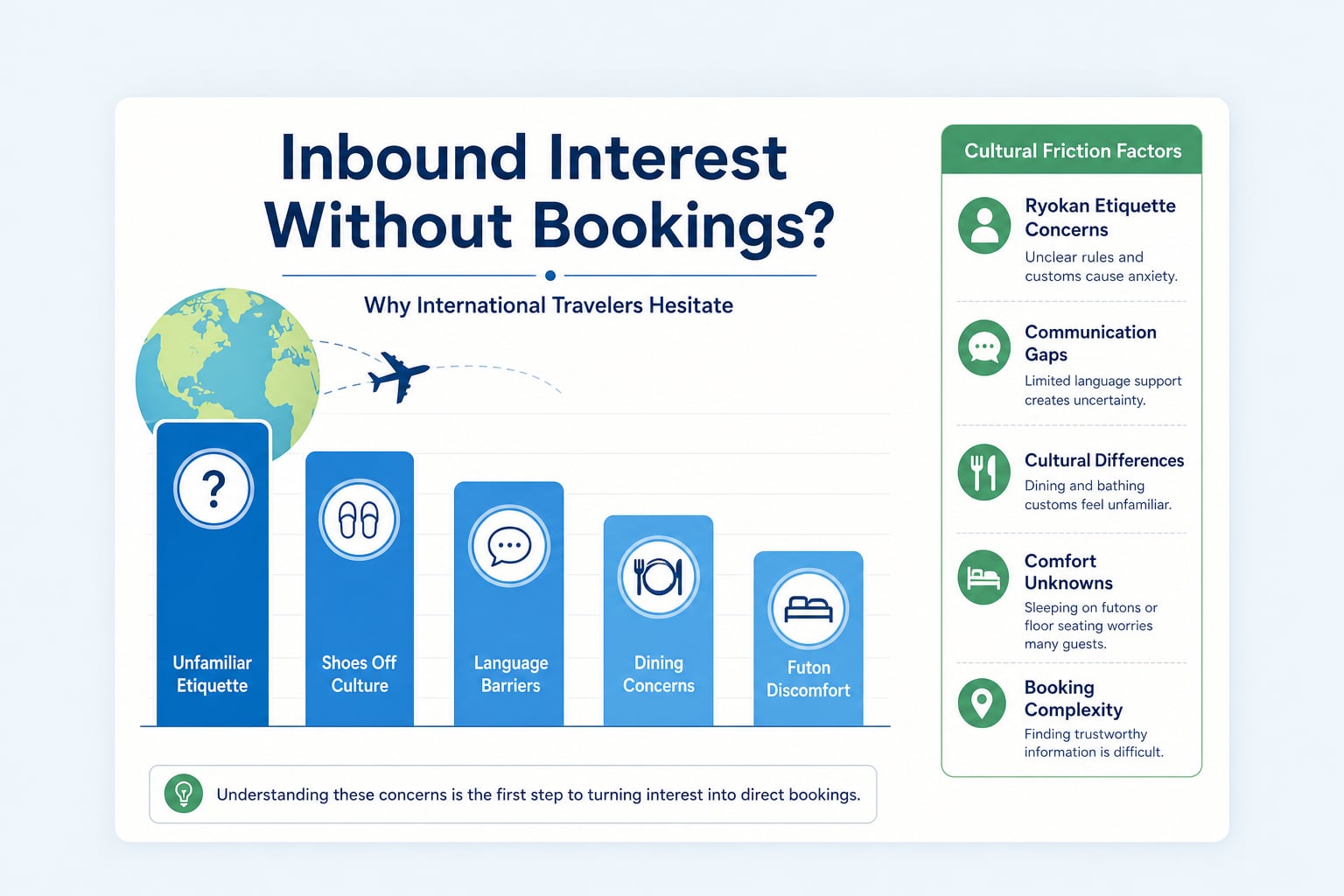
According to survey data from JTB Tourism Research, 52% of inbound travelers express a strong interest in staying at a traditional Japanese inn but report significant anxiety regarding unfamiliar rules. Overseas visitors actively look for authentic cultural hospitality, yet the prospect of navigating communal bathing etiquette, rigid dining schedules, and strict room customs creates friction during the booking stage. When these operational rules remain unclarified, potential guests abandon direct booking engines and gravitate back to standardized Western hotels.
Ryokan operators often fear that language barriers and dietary restrictions will disrupt their traditional service standards, reinforcing mutual hesitation. Furthermore, tourism agency statistics indicate that international guests accounted for 15.3% of total ryokan stays in 2025, demonstrating substantial room for growth in international market share. Addressing visitor concerns proactively through clear communication transforms cultural anxiety into anticipation, clearing the primary barrier to direct online reservations.
- Communal Bathing and Tattoo Policies: Many Western and Asian visitors feel uncomfortable with public nudity or worry whether visible body art will result in refusal at communal onsen baths.
- Strict Kaiseki Dining Schedules: Traditional inns usually require check-in by 17:00 to prepare multi-course meals, conflicting with overseas travelers who prefer flexible transit schedules and spontaneous evening activities.
- Dietary Restrictions and Ingredient Disclosures: Travelers with food allergies, vegetarian preferences, or religious requirements worry about hidden dashi fish broth, shellfish, or meat extracts in set banquets.
- Complex Architectural and Etiquette Customs: Guests worry about damaging tatami mats with rolling luggage, wearing footwear incorrectly inside guest quarters, or navigating intricate futon-bedding routines without assistance.
参考: unfamiliar rules
How Can Transparent Etiquette Guides Turn Cultural Anxieties into Direct Bookings?
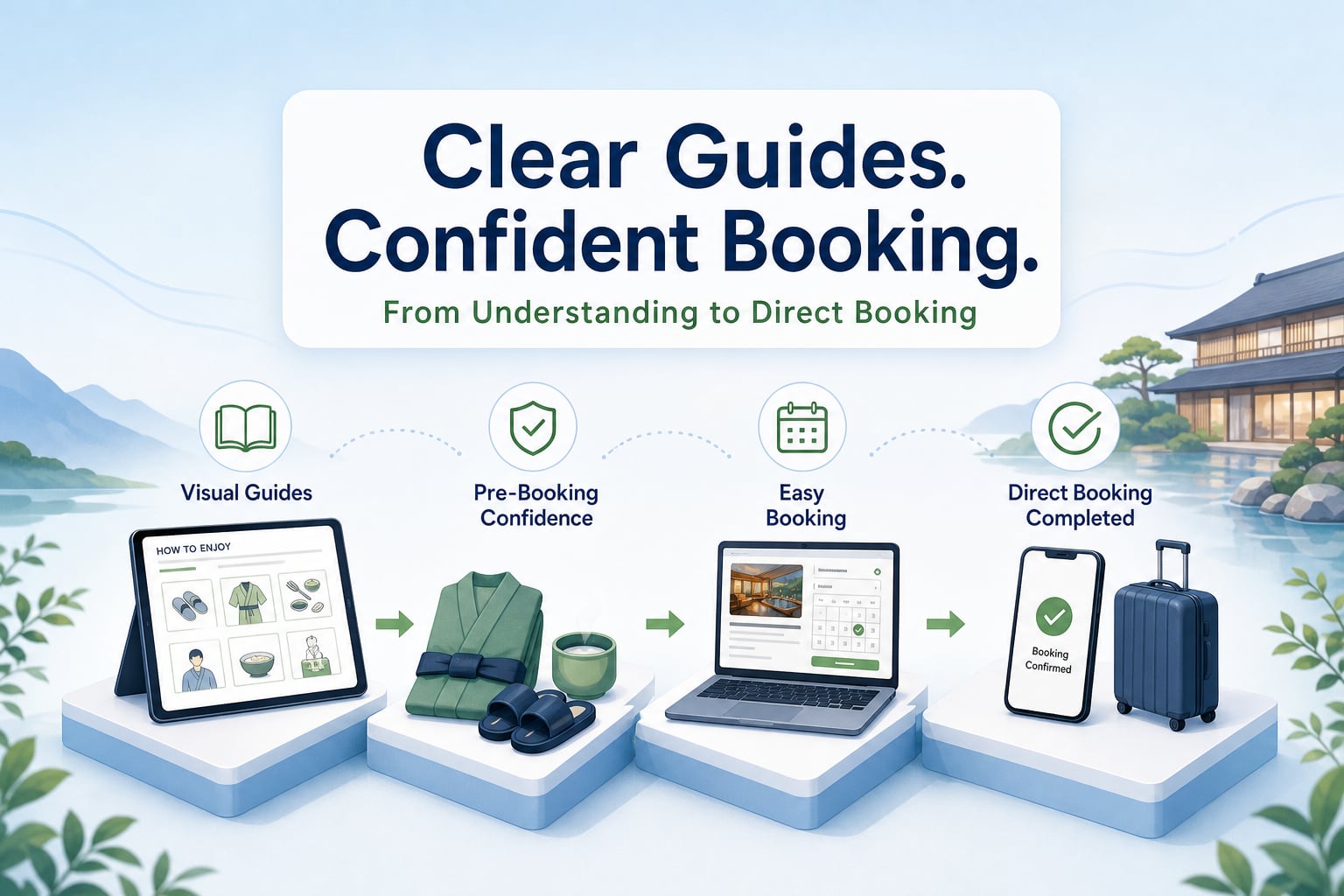
Transparent etiquette guidelines reassure anxious travelers and build immediate brand credibility on your official website. Providing step-by-step visual guides covering hot spring bathing customs, yukata dress codes, and dinner arrival times removes pre-booking hesitation before visitors look elsewhere. When international guests clearly understand what to expect, they perceive your property as welcoming and culturally accessible rather than intimidating.
Clear policies regarding dietary options and private bathing facilities directly accelerate booking confirmation rates. For instance, offering private reservable baths (kashikiri-buro) or rooms with private open-air tubs provides an immediate, stress-free alternative for tattooed or modesty-conscious guests. Highlighting these options alongside multilingual pre-arrival inquiry forms converts curious website visitors into confident, high-yield direct bookers.
Structuring Multi-Language Pre-Arrival Communication
参考: hot spring bathing customs
What Website and Multilingual Features Drive Direct Reservations for Ryokan?
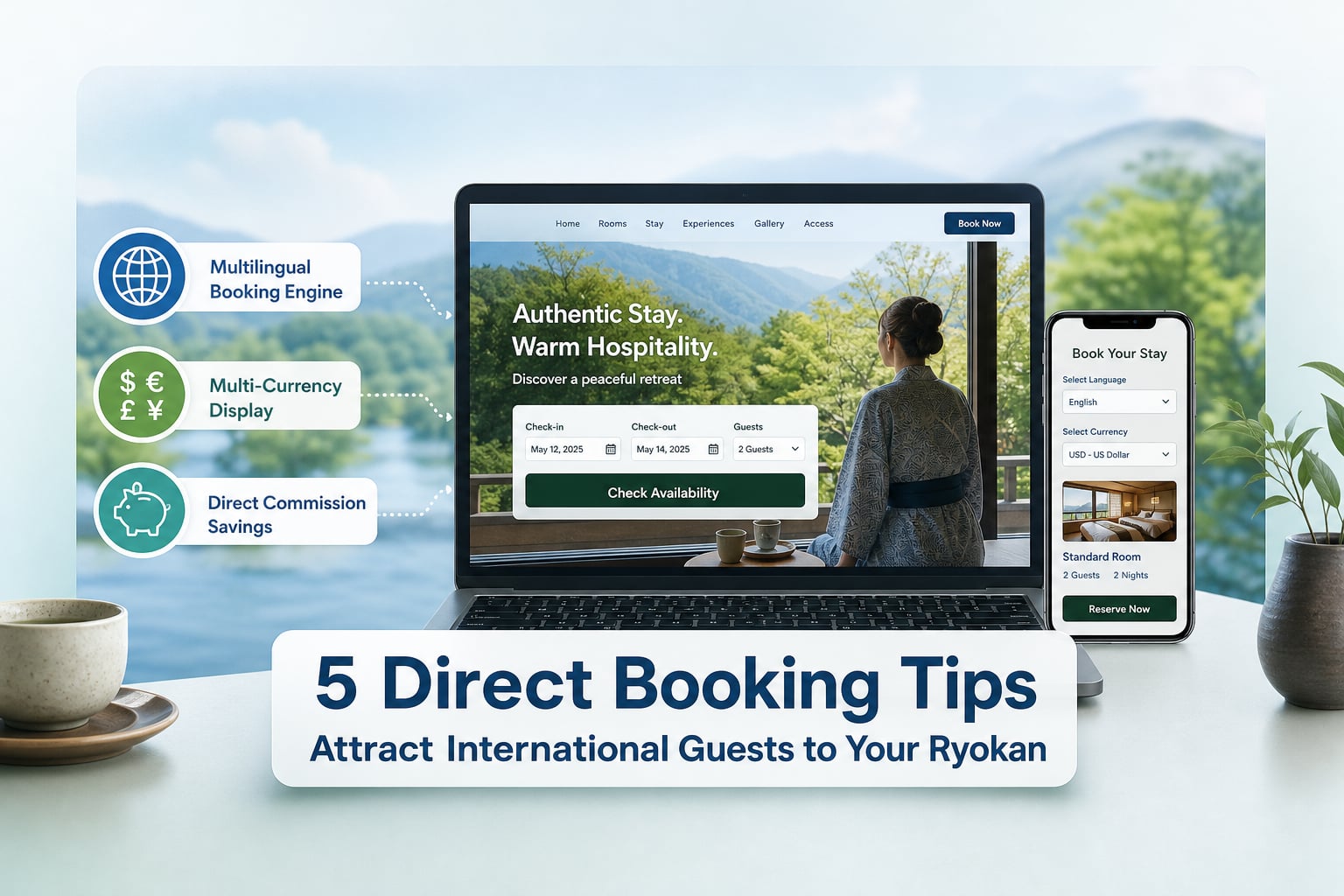
A seamless multilingual booking engine is essential for capturing direct revenue and avoiding hefty a substantial portion online travel agency commissions. International travelers abandon booking funnels when pricing displays solely in Japanese yen or when room descriptions rely on confusing machine translations. Integrating modern booking widgets with multi-currency displays, international credit card payment gateways, and transparent tax calculations substantially improves booking engine checkout completions.
Implementing structured FAQ pages marked up with FAQPage JSON-LD schema enhances visibility in global AI search engines and conversational travel queries. Research indicates that maintaining accurate multilingual FAQs covering dinner times, shuttle services, and child policies increases direct quoting and digital search impressions. When global travelers receive instantaneous, authoritative answers directly on your official site, they have no reason to return to third-party intermediaries.
- Localized Mobile-First Design: Ensure responsive page speeds and natural English navigation tailored for international travelers planning multi-city itineraries on mobile devices during transit.
- Comprehensive Meal Plan Selectors: Allow visitors to choose room-only, breakfast-included, or traditional two-meal kaiseki plans while detailing specific ingredient accommodations directly on the reservation form.
- Multi-Currency and Global Payment Processing: Support major international credit card networks and digital payment systems to minimize checkout abandonment caused by domestic merchant gateway rejections.
- Visual Room and Bedding Guides: Display high-resolution photos comparing traditional futon layouts with Western bedding to prevent spatial misunderstandings before guests finalize reservations.
- Official Direct Booking Perks: Offer exclusive incentives on your official website, such as complimentary private bath reservations, early check-in, or welcome matcha tea, to reward direct reservations.
参考: multilingual booking engine
How Can Regional Ryokan Boost Global Visibility to Attract International Guests?

Repeat visitors to Japan consistently seek authentic regional destinations beyond the standard Golden Route of Tokyo, Kyoto, and Osaka. In regions such as Shizuoka Prefecture, combining hot spring culture with views of Mount Fuji, coastal seafood, and lush tea farm landscapes creates an irresistible story for discerning travelers. Independent ryokans can capture this high-spending audience by crafting localized digital content that positions their property as an authentic gateway to local culture.
Optimizing Google Business Profiles and localized map listings in English guarantees that travelers exploring regional train routes can easily discover your property. Consistently publishing short-form video content on Instagram, TikTok, and YouTube showcasing seasonal scenery, hot spring steam, and artisan cuisine builds organic global awareness. Regional ryokan operators who actively promote local heritage establish lasting emotional connections that inspire high-value direct stays.
Highlighting Unique Regional Stories and Local Assets
How Can Ryokan Optimize OTA Channels to Funnel Repeat Traffic to Direct Booking Engines?
While maximizing direct reservations is the ultimate goal, global online travel agencies remain critical tools for initial international discovery. Platforms like Booking.com, Airbnb, and TripAdvisor expose regional accommodations to prospective travelers who may never encounter an independent Japanese website during initial trip research. Ryokan managers should utilize high-traffic OTA platforms as discovery billboards while engineering frictionless pathways for direct rebooking.
Optimizing OTA room listings requires high-resolution imagery, accurate English room classifications, and transparent disclosures regarding traditional floor plans. Once international guests arrive on-site, providing exceptional hospitality paired with exclusive direct-booking incentives for future visits encourages repeat patronage outside high-commission platforms. This balanced distribution strategy protects profit margins while maintaining steady year-round international occupancy.
Real Success Stories: How Japanese Hospitality Businesses Drive Inbound Direct Bookings
Our company’s inbound marketing partnerships prove that regional Japanese accommodations and tourism providers can rapidly scale global visibility and direct inquiries. In one of our company’s results, a regional hotel partnered with Glocal to overhaul its international digital footprint. By optimizing global OTA listings, creating high-converting English content, and executing targeted social media marketing, the property significantly expanded overseas reach, established stronger brand recognition, and attracted a steady influx of international inquiries.
Similarly, a regional tourism business collaborated with our team to introduce local cultural attractions and traditional activities to worldwide travelers. Through multilingual digital storytelling, destination branding, and focused online promotion, the business expanded its international footprint and captured sustainable inbound demand. These tangible outcomes demonstrate that authentic regional heritage, when communicated with cultural precision, consistently wins international traveler trust.
What to Check on a Marketing Quote When Partnering for Ryokan Inbound Growth
Selecting an inbound marketing partner requires careful evaluation of contract deliverables, ongoing support terms, and pricing clarity. Busy ryokan operators frequently receive vague marketing estimates that hide technical maintenance fees, translation surcharges, or commission add-ons behind low upfront quotes. Demanding transparent line items ensures your marketing budget translates into measurable reservation growth rather than unexpected overhead costs.
Before committing to any inbound agency agreement, review the specific scope of post-launch optimization, OTA management, and multi-language content creation. Inbound marketing requires consistent adjustments based on international travel seasons, search behavior changes, and booking conversion tracking over six to twelve months. Verifying performance metrics and clear scope definitions prior to signing protects your operational capital and guarantees dedicated strategic support.
| Quote Item | What to Check | Why It Matters |
|---|---|---|
| Initial Setup Fees and Refund Policies | Check exact setup inclusions and whether refunds apply if de | Prevents unrecoverable capital expenditure before any market |
| Success Fees and Booking Commissions | Verify the calculation basis and confirm whether commissions | Ensures variable fees do not erode accommodation profit marg |
| Payment Timing and Milestone Schedules | Confirm whether payments are billed monthly, quarterly, or u | Protects cash flow and aligns marketing investments with act |
| Post-Launch Ongoing Support | Clarify if routine content updates, technical maintenance, a | Avoids dormant websites and neglected marketing accounts aft |
| Conditions for Extra Charges | Identify hourly rates or surcharges for emergency translatio | Eliminates billing surprises when operational policies, menu |
Frequently Asked Questions
Q1. What is a ryokan?
A ryokan is a traditional Japanese-style inn. It typically features tatami-matted rooms, communal hot spring baths, traditional futon bedding, and seasonal multi-course meals served to guests during their stay.
Q2. Why do international travelers hesitate to book a ryokan?
Foreign visitors often worry about unfamiliar rules, language barriers, and dining customs. They fear making cultural mistakes regarding footwear, bathing etiquette, or sleeping arrangements if clear guidance is not provided beforehand.
Q3. How do etiquette guides help increase direct bookings?
Clear guides explain traditional customs before arrival using simple visuals and friendly language. This eases cultural anxiety, builds trust with potential travelers, and encourages them to reserve directly on your website with confidence.
Q4. What key website features encourage foreign guests to book directly?
A ryokan website should offer accurate multilingual descriptions, clear pricing, and an easy checkout process. High-quality photos of rooms, baths, and meals also help eliminate confusion and reduce dependence on third-party agencies.
Q5. How can rural ryokans attract overseas visitors without large marketing budgets?
Regional inns can share easy access guides, highlight local nature spots, and post genuine stories online. Partnering with nearby attractions helps foreign travelers feel comfortable traveling outside major metropolitan cities.