

Explore hotel OTA management services. Learn about service scopes, pricing structures, and vendor selection criteria to boost inbound bookings and revenue.
 執筆者:Hikaru SonedaCEO
Managing room distribution across multiple booking channels leaves regional accommodation owners overwhelmed and struggling to capture high-spending international travelers.
This guide details operational scopes, fee structures, and vendor evaluation benchmarks for hotel OTA management services to increase bookings sustainably.
What Is the Scope of Hotel OTA Management Services?
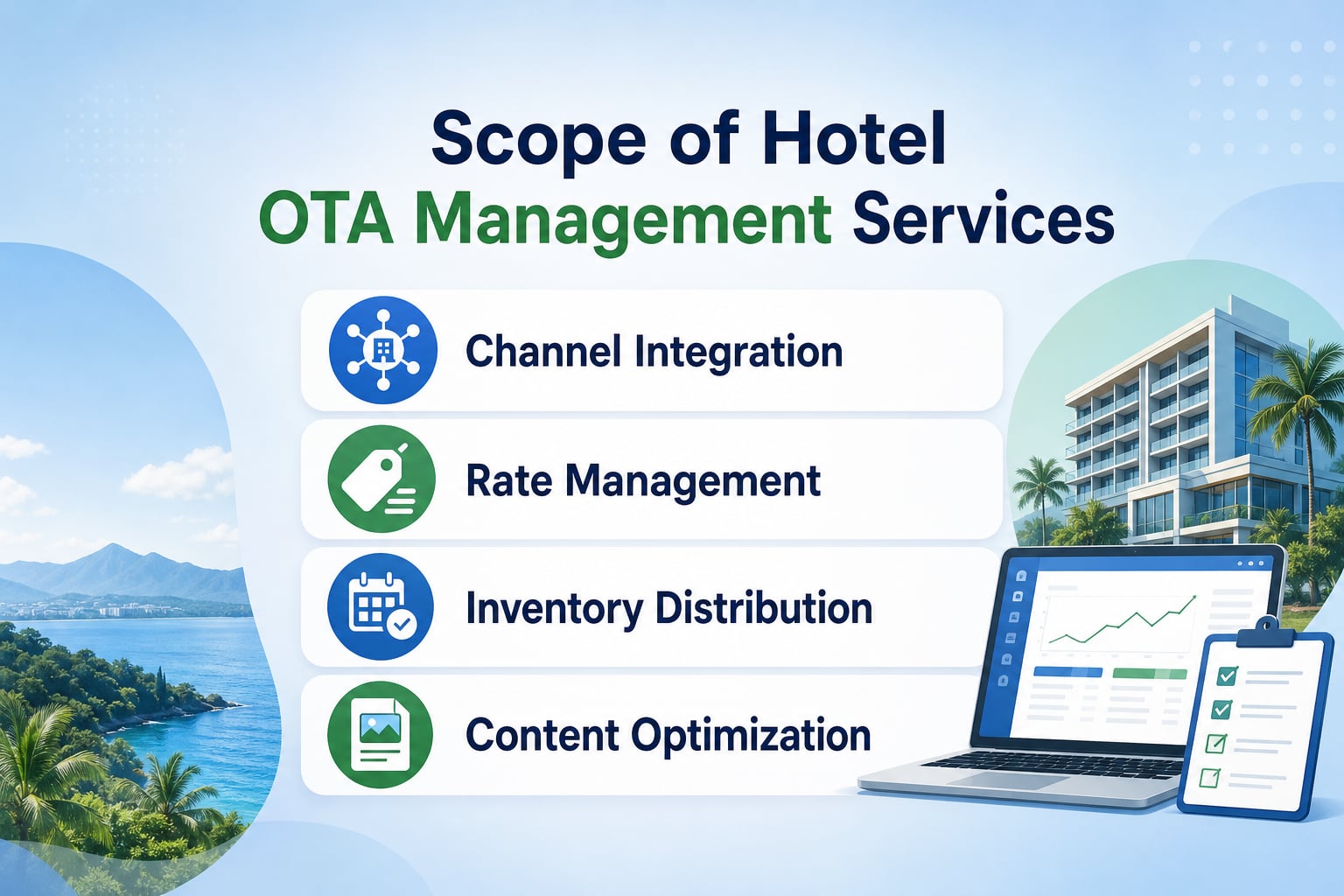
Professional hotel OTA management services cover the complete operational lifecycle of online sales channels to maximize property revenue. According to a fiscal year 2023 survey by the Japan Ryokan & Hotel Association, online travel agencies account for an average of 43.3% of total reservations, with 97.9% of properties selling rooms through both official websites and OTAs. Delegating these channels to external specialists eliminates daily administrative burdens while keeping your room availability synchronized across platforms.
A comprehensive operational service encompasses listing creation, photography updates, inventory allocation, dynamic price adjustments, and guest review management. When listings display outdated descriptions or uncompetitive room rates compared to nearby properties, visibility drops sharply on search result pages. Expert operators implement real-time inventory adjustments and plan updates to maintain high search rankings and healthy occupancy rates throughout peak and off-peak travel seasons.
Core Responsibilities Included in End-to-End OTA Operations
Full-service management agencies execute daily routine tasks including room rate parity monitoring, promotion setup, and guest communication. For properties in regional destinations like Shizuoka Prefecture, specialized operators also handle multilingual customer support, ensuring overseas guests receive clear directions and prompt check-in guidance.
- Channel Manager Configuration & Inventory Control: Centralizing room allotments across domestic platforms like Rakuten Travel and Jalan alongside global platforms like Booking.com to prevent double bookings and optimize occupancy.
- Content Optimization & Visual Enhancement: Updating facility descriptions, amenity details, and high-resolution photo galleries to ensure accurate property presentation and drive user conversion rates.
- Dynamic Rate Strategies & Promotional Campaigns: Adjusting room rates based on market demand trends, competitor movements, and local event calendars while setting seasonal sale campaigns.
- Reputation Management & Review Responses: Delivering prompt, professional replies to online reviews across multiple languages, improving platform algorithmic ranking factors and traveler trust.
Why Are Hotel OTA Management Services Critical for Capturing Inbound Bookings?
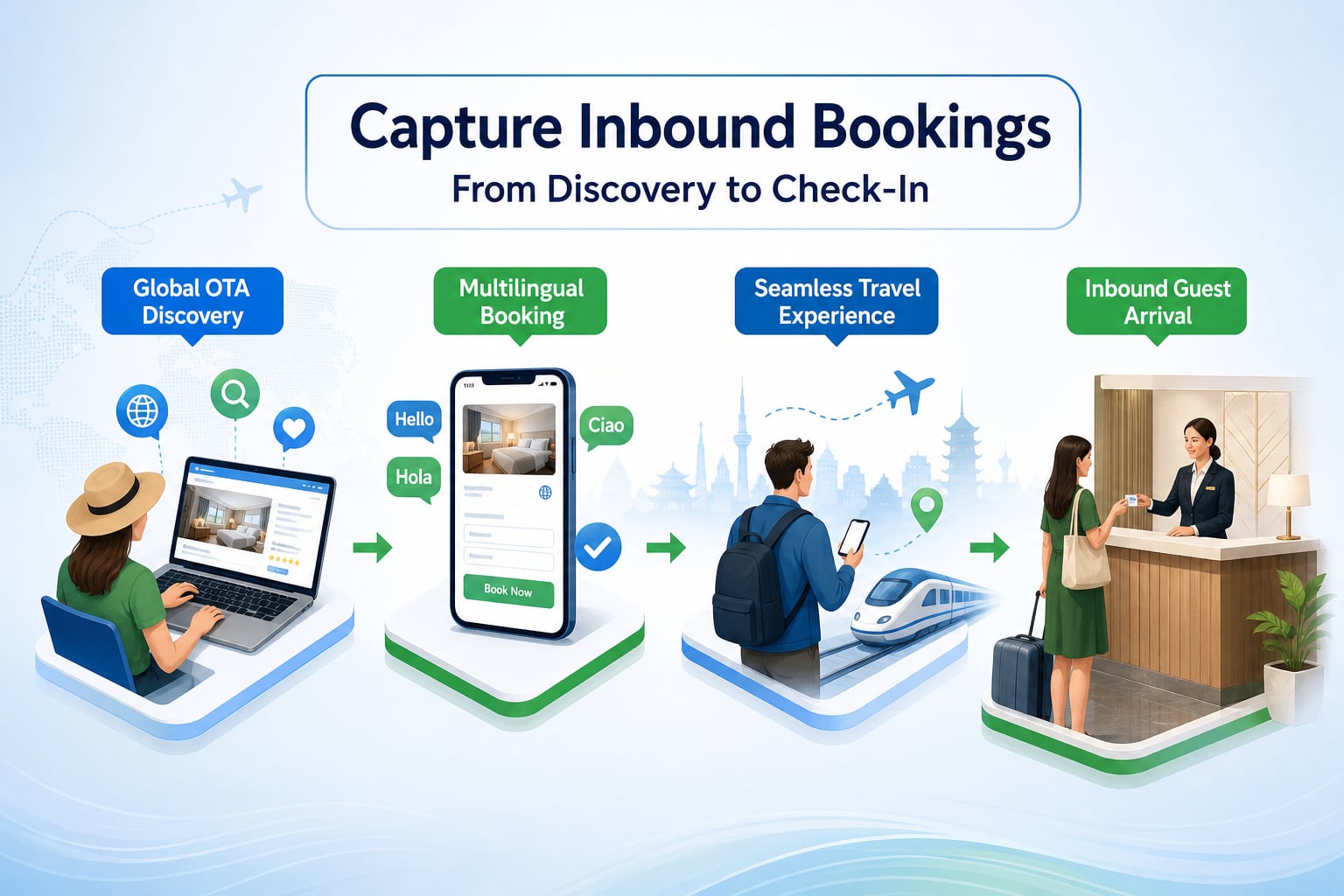
Capturing overseas visitors requires specialized channel positioning that traditional domestic marketing practices cannot fulfill alone. Japan National Tourism Organization data showed that 78.0% of international travelers to Japan made travel bookings online in 2023. Regional accommodations that rely solely on Japanese booking engines miss high-yield opportunities from global travelers seeking authentic local experiences in areas like Shizuoka.
International guests utilize different discovery habits, booking lead times, and platform preferences than domestic travelers. For example, inbound travelers rely heavily on Booking.com, Agoda, Airbnb, and Google Maps to evaluate rural destinations. When listings lack accurate English descriptions or local transportation guidance, potential guests abandon their reservations in favor of competitors.
Our Company Results: Regional Inbound Turnaround
In our company’s results, a regional hotel partnered with Glocal by Shinker to improve its visibility among international travelers. By optimizing OTA listings, creating English-language content, and strengthening social media marketing, the hotel significantly increased its exposure to overseas audiences, established a stronger online presence, and received more inquiries from international guests while enhancing its brand recognition.
参考: inbound bookings
How Do Domestic Platforms Compare with Global OTAs in Operational Management?
Balancing domestic booking engines with international platforms requires distinct operational workflows and content strategies. Domestic platforms such as Rakuten Travel and Jalan prioritize detailed meal plan descriptions, point campaigns, and seasonal domestic holiday calendars. In contrast, global platforms like Booking.com, Agoda, and Expedia prioritize simplified rate structures, instant confirmation policies, and multilingual facility tags.
Operational agencies bridge this gap by maintaining unified inventory controls while customizing marketing messaging for each platform ecosystem. An experienced operator tailors visual assets, highlighting cultural amenities for international tourists while showcasing regional culinary specialties for domestic travelers. This dual approach protects your baseline domestic revenue while unlocking profitable overseas room demand.
| Operational Element | Domestic OTAs (Rakuten, Jalan) | Global OTAs (Booking.com, Agoda) |
|---|---|---|
| Primary Target Audience | Domestic leisure travelers, domestic business guests | International inbound tourists, expatriates |
| Listing Architecture | Complex plan structures (meal plans, room types) | Standardized room types with flexible rate options |
| Promotional Mechanics | Platform point events, regional coupon distributions | Genius loyalty tiers, country rates, mobile discounts |
| Lead Booking Window | Short to medium (1 to 6 weeks in advance) | Medium to long (1 to 6 months in advance) |
参考: operational workflows and content strategies
How Are Fees Structured and Evaluated for Hotel OTA Management Services?
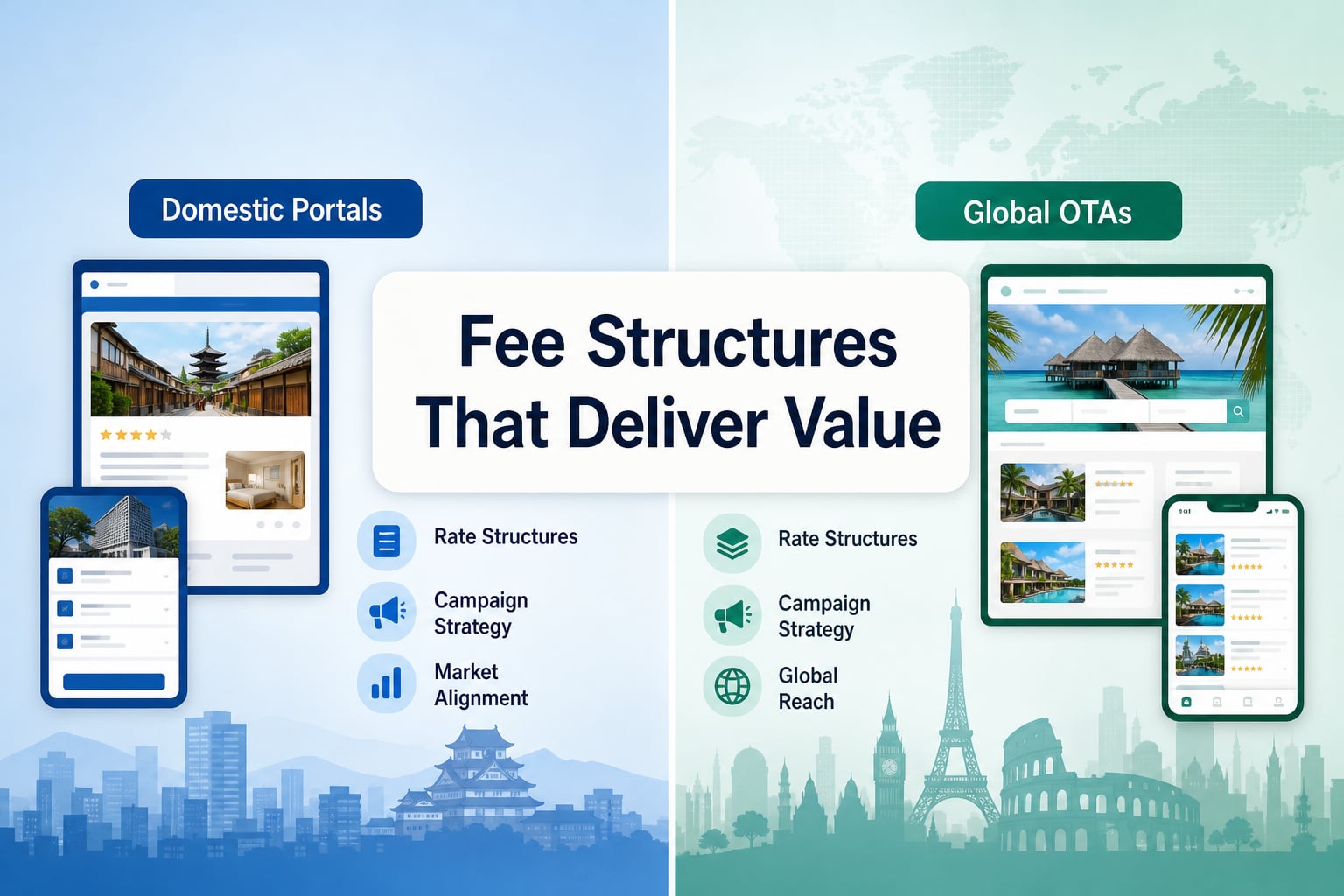
Evaluating management fees requires analyzing how an agency balances upfront investment against performance-driven compensation. Standard OTA commission fees charged by booking platforms generally range from 8% to 15% per booking. When partnering with an outsourcing agency, operators typically choose between fixed monthly retainer agreements, revenue-share performance models, or hybrid fee structures.
Understanding every cost item protects your operating margins and prevents unexpected budget overruns over the contract lifecycle. Facility owners should request itemized breakdowns specifying whether content setup, photography, channel manager integration, and after-hours guest messaging carry supplementary costs. A clear contract aligns the agency incentives directly with your net room revenue growth.
| Quote Checklist Item | What to Verify in the Agreement | Why It Matters for Your Bottom Line |
|---|---|---|
| Initial Setup Fee | Verify whether page setup, copywriting, and channel integrat | Prevents unforeseen upfront fees before rooms generate new b |
| Commission Calculation Base | Confirm if commissions apply to gross bookings, net of cance | Ensures you never pay management fees on canceled reservatio |
| Payment Schedule & Terms | Check monthly billing dates, payment milestones, and currenc | Maintains predictable cash flow for ongoing hotel operating |
| Post-Launch Technical Support | Verify whether ongoing review handling and regular report me | Ensures active optimization rather than passive listing main |
| Additional Service Conditions | Check hourly rates or fees for emergency updates, translatio | Eliminates billing surprises during seasonal campaign rollou |
参考: choose the right hotel OTA management service provider、Living History促進事業
Why Does OTA Listing Optimization Directly Influence Search Ranking and Bookings?
Search visibility on booking platforms is dictated by platform algorithms that prioritize conversion performance and customer satisfaction. When a hotel lets review responses lapse or maintains outdated photography, algorithms push the property down the search results. In one documented recovery case, a 25-room hot spring hotel saw its ranking drop from around 5th place to below 20th after leaving 7 reviews unanswered for 4 months, leading to a 40% decline in monthly bookings from 50 to 30 reservations.
Systematic optimization restores platform trust and elevates your placement above regional competitors. By updating outdated room photography, correcting inaccurate bath descriptions, and promptly addressing unanswered reviews, properties reverse downward traffic spirals within weeks. Continuous algorithmic refinement ensures your listing maintains high visual appeal and competitive pricing on travel search engines.
- Audit Review Backlogs and Reputation Metrics: Respond comprehensively to all unanswered reviews, treating online reputation management as an essential search algorithm ranking factor.
- Refresh Visual Assets and Room Photography: Replace outdated photographs with modern, professional imagery that accurately highlights refurbished interiors, scenic views, and local breakfast offerings.
- Rectify Inaccurate Listing Copy and Plan Details: Align descriptions precisely with physical facilities, preventing traveler misunderstandings regarding private open-air baths versus public communal hot springs.
- Benchmark Competitive Pricing Against Local Comps: Adjust pricing to match real-time area demand, ensuring room rates look attractive when displayed alongside neighboring facilities.
How Do Hotel OTA Management Services Balance Third-Party Channels with Direct Bookings?
Relying entirely on online travel agencies creates high commission overhead that squeezes regional hotel profitability. Because standard OTA commissions claim between 8% and 15% of reservation revenue, properties must cultivate direct booking channels alongside third-party platforms. Hotel OTA management services use platforms as high-visibility showcases to introduce properties to travelers, who then discover official booking channels for repeat visits.
Strengthening direct digital channels converts one-time OTA guests into loyal brand advocates. Integrating multilingual social media marketing, Google Business Profile enhancements, and exclusive direct-booking incentives allows properties to retain their guest relationships. In our company’s results, a local restaurant implemented Glocal’s multilingual marketing strategy, including English Instagram management and Google Business Profile optimization, making it easier for international tourists to discover the business and boosting inbound engagement.
How Do You Choose the Right Hotel OTA Management Service Provider?
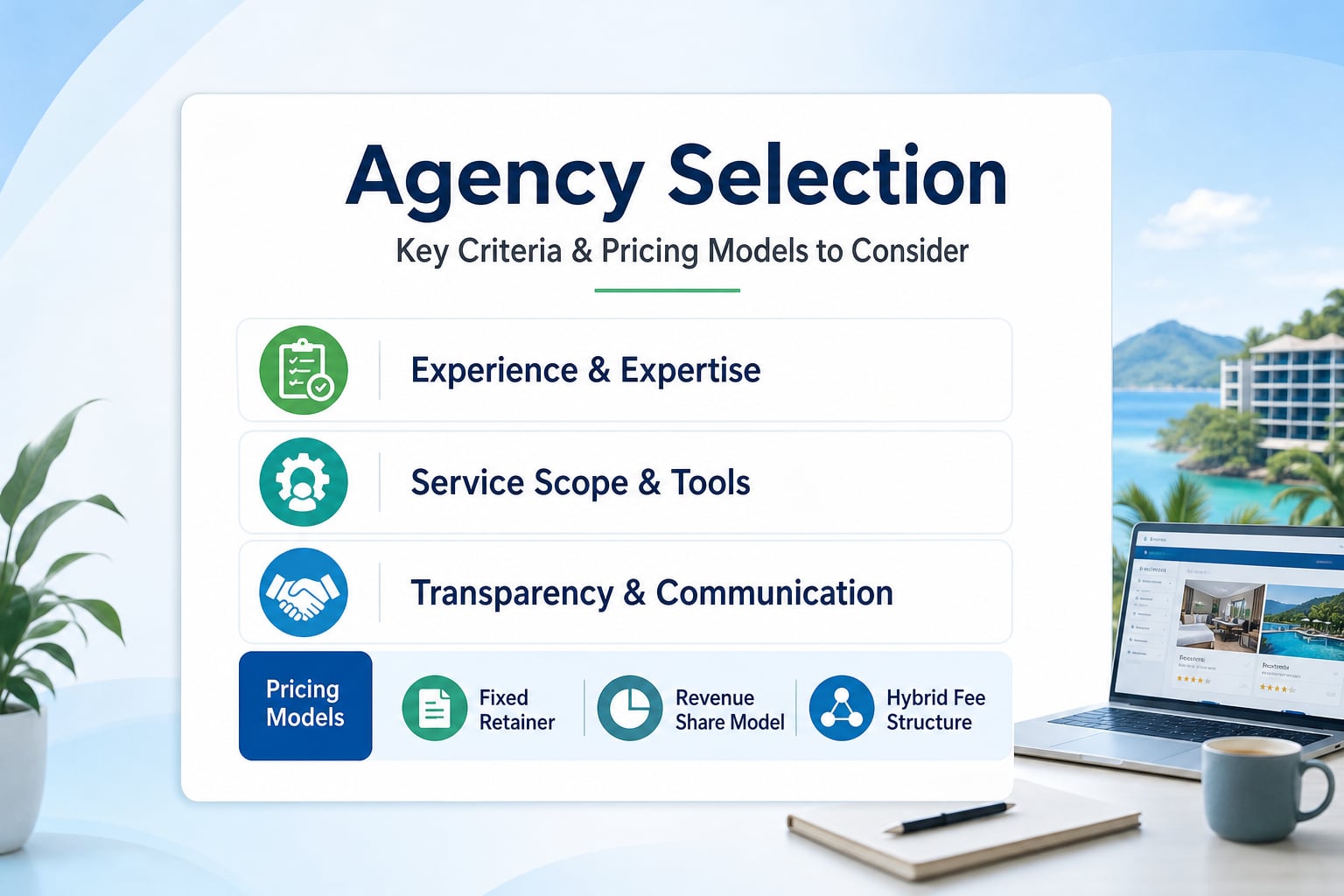
Selecting the right agency requires evaluating practical industry background, inbound communication capabilities, and operational transparency. A qualified partner must demonstrate a deep understanding of hospitality dynamics rather than offering generic digital marketing consulting. Regional operators should look for partners who appreciate local cultural assets and understand how to present regional destinations like Shizuoka to global travelers.
Clear communication structures and verifiable client track records differentiate dependable agencies from passive vendors. Prospective partners should provide detailed monthly performance reporting, ongoing revenue strategy meetings, and transparent channel manager coordination. Partnering with a dedicated team relieves your internal staff from technical complexity, empowering your hospitality team to focus on delivering memorable guest experiences.
- Evaluate Real Hospitality and Tourism Experience: Choose providers led by industry veterans with international travel backgrounds who understand hotel room distribution nuances.
- Verify Native Multilingual Capabilities: Ensure the agency employs staff fluent in global communication who can draft culturally compelling English listings and guest messages.
- Examine Reporting Cadence and Performance Metrics: Require transparent monthly reporting on average daily rates, occupancy metrics, review sentiment scores, and channel production shares.
- Confirm Comprehensive Onboarding and Consultation Workflows: Follow a structured intake process involving an initial inquiry, consultation, customized proposal, and clear contractual deliverables.
Frequently Asked Questions
Q1. What is a hotel OTA management service?
A hotel OTA management service is a professional service that handles your listings on online travel agencies. They update room availability, adjust prices, and optimize content to help attract more guests and increase direct revenue.
Q2. How do management services help attract international travelers?
These services optimize your property listings with high-quality multilingual descriptions and localized pricing. They also place your rooms on global booking platforms popular in key traveler markets, making your hotel easier for foreign guests to discover.
Q3. How are fees typically charged for these management services?
Providers usually charge through fixed monthly retainers, a percentage-based commission on confirmed bookings, or a hybrid model. The right pricing model depends on your property size, typical booking volume, and predictable monthly budget requirements.
Q4. Do hotel owners lose control over room pricing when using a provider?
No, owners retain ultimate control over their property. You agree on pricing guidelines, minimum rates, and sales targets with the provider, who then executes day-to-day dynamic adjustments within your pre-approved parameters.
Q5. How long does it take to set up an OTA management service?
Onboarding generally takes a few weeks. The provider reviews your current listings, connects channel management software, updates room photography and text, and aligns daily operating strategies with your front desk team before launching.