

Learn how to succeed in attracting tourists to Shizuoka experiential tourism. Discover 5 practical steps covering digital marketing, DMOs, and local assets.
 執筆者:Hikaru SonedaCEO
Many Shizuoka tourism providers struggle to reach international visitors due to language barriers, limited marketing staff, and reliance on traditional domestic sightseeing models.
This guide outlines five proven steps for attracting tourists to Shizuoka experiential tourism, turning authentic regional assets into high-value bookings through targeted digital marketing and partnerships.
Why is experiential tourism vital for attracting international visitors to Shizuoka?
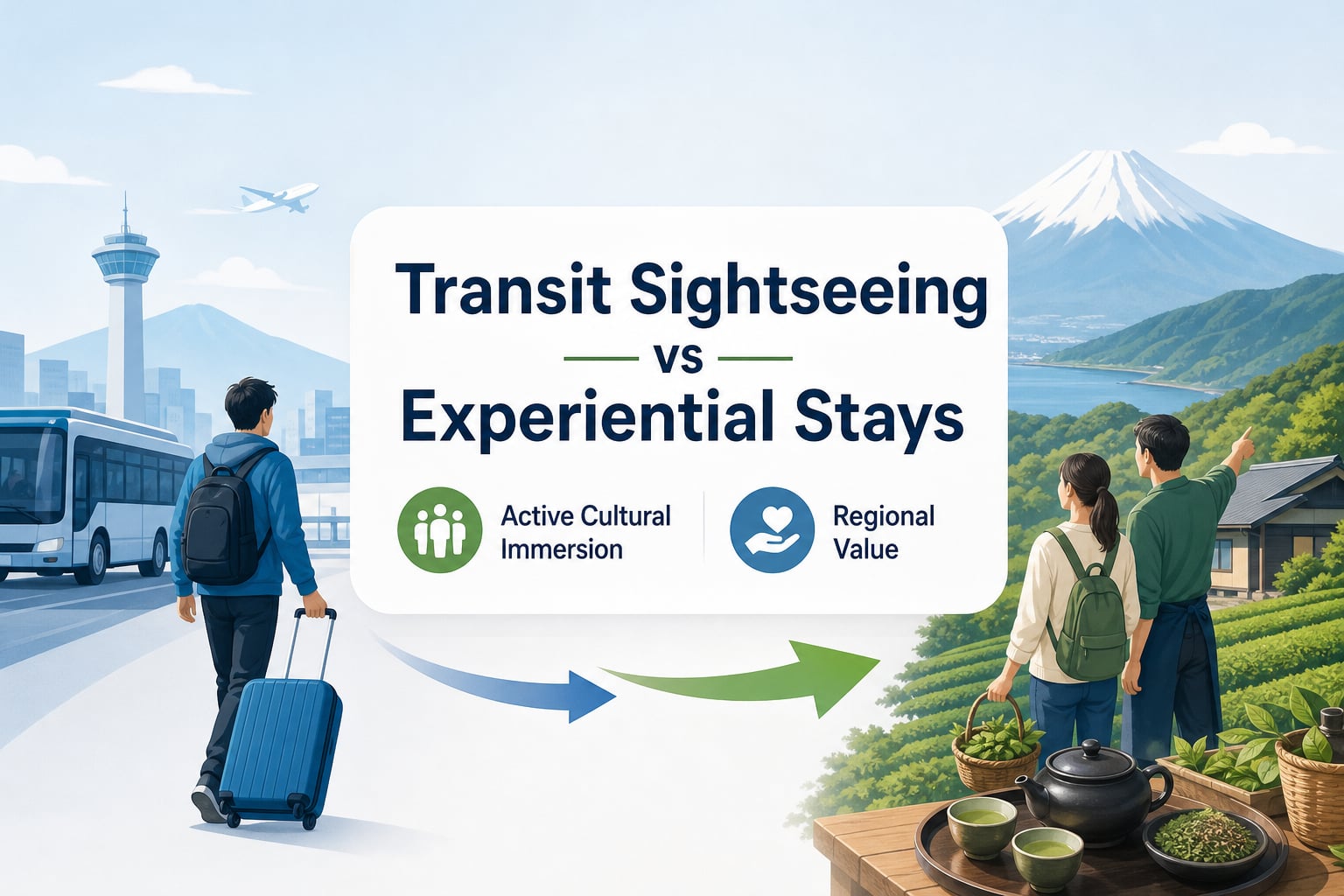
Shizuoka Prefecture occupies a prime position along the golden route between Tokyo and Kyoto, yet traditional transit sightseeing often fails to capture extended overnight stays. Modern international travelers seek immersive activities rather than passive bus tours, making experiential programs essential for regional economic growth. Shifting focus toward active cultural participation allows local businesses to capture direct tourism spending across accommodation, dining, and outdoor activities.
Authentic regional assets such as green tea plantations in Makinohara, wasabi farming in Izu, and cycling around Lake Hamana provide compelling narratives that global travelers cannot find elsewhere. By packaging these everyday cultural traditions into well-structured tours, local operators differentiate themselves from crowded metropolitan attractions. This strategy converts day-trip transit visitors into long-term overnight guests who invest deeply in regional heritage.
Moving Beyond Sightseeing to Hands-On Cultural Engagement
Global travelers actively prioritize hands-on encounters, such as tea harvesting, culinary workshops, and outdoor wellness retreats, over standard photo stops. When regional operators design hands-on experiences, visitors build emotional attachments that generate enthusiastic word-of-mouth recommendations and recurring bookings.
参考: Shizuoka inbound tourism needs
How can operators turn authentic local assets into high-value Shizuoka travel experiences?
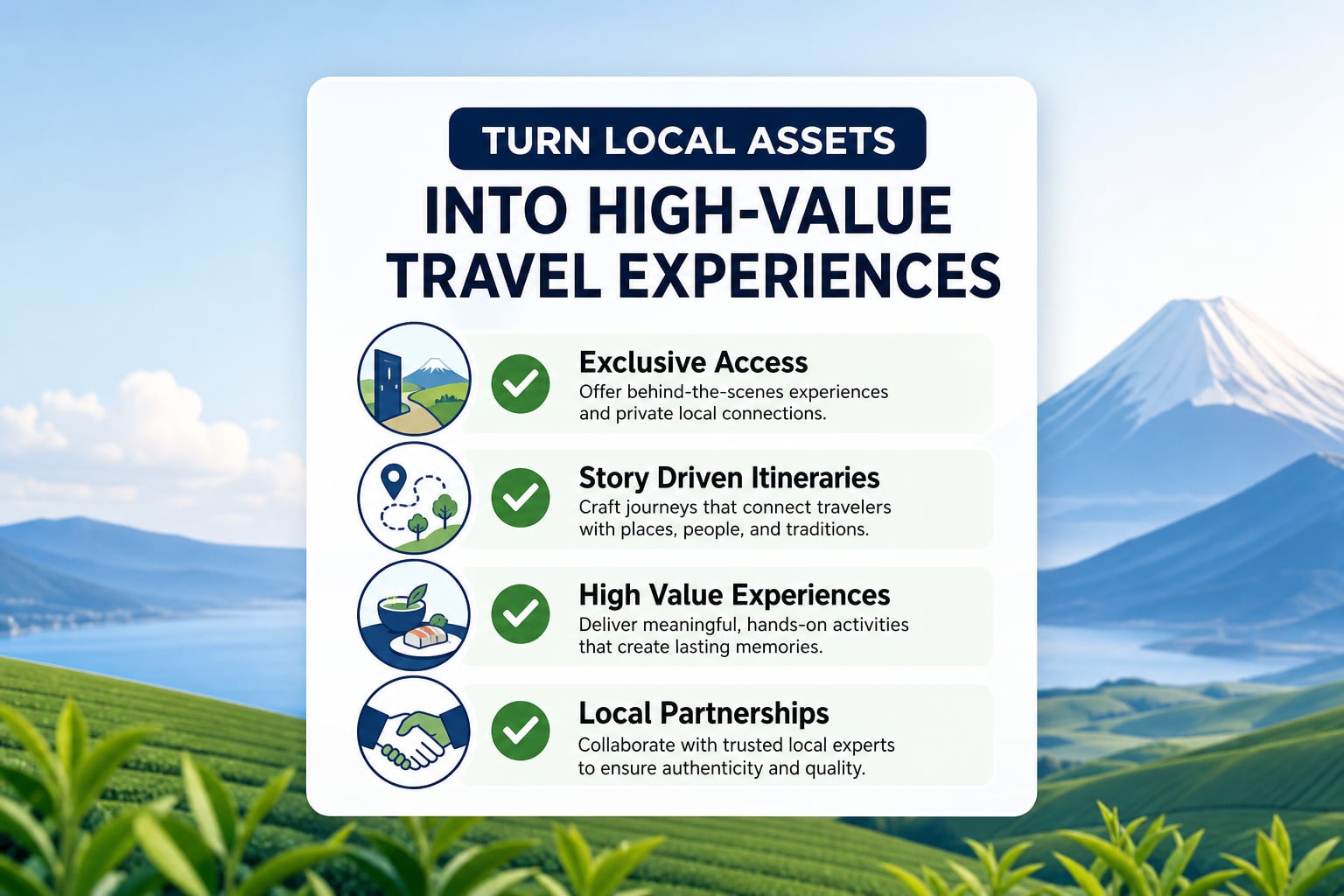
Creating high-value travel programs requires transforming raw geographical or agricultural assets into cohesive, bookable story-driven itineraries. In Shizuoka, the prefectural tourism association has demonstrated this potential by designing luxury Mount Fuji circuit tours priced at over one million yen per guest. Operators can adapt this philosophy on any scale by highlighting exclusive access, personal interaction with local craftspeople, and premium hospitality.
High-value experiences must resolve common operational friction points for foreign guests, such as language barriers, transportation between rural stations, and dietary preferences. Packaging guided transfers with private tastings or hands-on craftsmanship workshops justifies premium pricing while delivering unforgettable customer satisfaction. Ensuring every detail feels seamless allows boutique providers to thrive alongside major destination resorts.
- Identify Unrivaled Regional Micro-Narratives: Focus on distinct local traditions, such as authentic Suruga bamboo basket weaving or deep-sea fishing along Suruga Bay, that showcase authentic heritage.
- Package Exclusive Access and Master-Led Activities: Grant behind-the-scenes access to private tea factories or historic sake breweries guided directly by licensed artisans or bilingual local experts.
- Incorporate Seamless Multilingual Hospitality: Provide clear English instructions, transparent safety guidelines, and tailored dietary accommodations to guarantee a stress-free environment for overseas guests.
- Deliver High-Resolution Visual Takeaways: Incorporate professional photo opportunities or physical craft souvenirs that travelers can share on their personal social media accounts.
参考: high-value travel experiences
Which digital marketing strategies succeed in attracting tourists to Shizuoka experiential tourism?
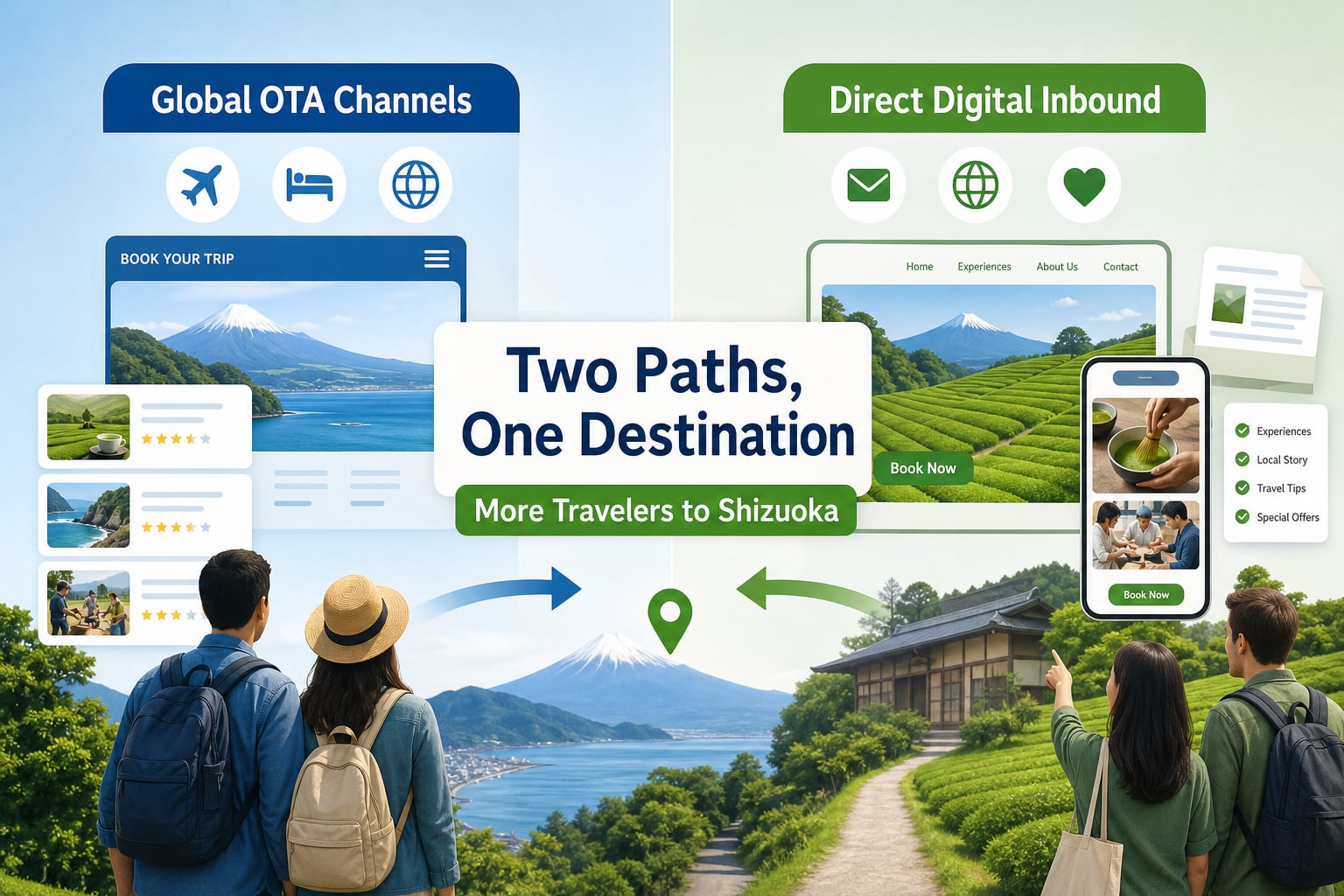
A strong digital presence is fundamental for attracting tourists to Shizuoka experiential tourism because overseas travelers conduct intensive online research before booking. Optimizing global Online Travel Agencies such as Airbnb Experiences, Booking.com, and TripAdvisor ensures immediate discoverability among high-intent travelers. In our company’s results, a regional hotel partnered with Glocal to improve international exposure by optimizing OTA listings and creating English content, which significantly increased inquiries from overseas guests.
Beyond OTA listings, local facilities must optimize their Google Business Profiles and maintain visual social media marketing on platforms like Instagram and TikTok. Multilingual SEO and dynamic short-form videos overcome linguistic barriers by showing the physical excitement of the activity. In our company’s results, a local restaurant achieved prominent visibility among foreign diners after implementing English Instagram management and Google Business Profile optimization with Glocal.
- Global OTA Optimization: Maintain updated, professional English profiles with real-time calendars on platforms like TripAdvisor, Airbnb, and regional Asian channels.
- Short-Form Video and Visual Storytelling: Produce engaging Instagram Reels and TikTok videos highlighting sensory aspects like tea aroma, outdoor sounds, and authentic smiles.
- Multilingual Local SEO and Google Maps: Register bilingual operational hours, detailed transit directions from JR Shizuoka Station, and clear English descriptions on Google Maps.
- Frictionless Mobile Booking Flow: Install mobile-friendly booking interfaces that require only essential dates, party numbers, and instant digital payment confirmation.
参考: digital marketing strategies、インバウンド観光客はSEO対策で圧倒的に集客!多言語
How can regional DMO partnerships and cross-industry collaborations expand visitor reach?
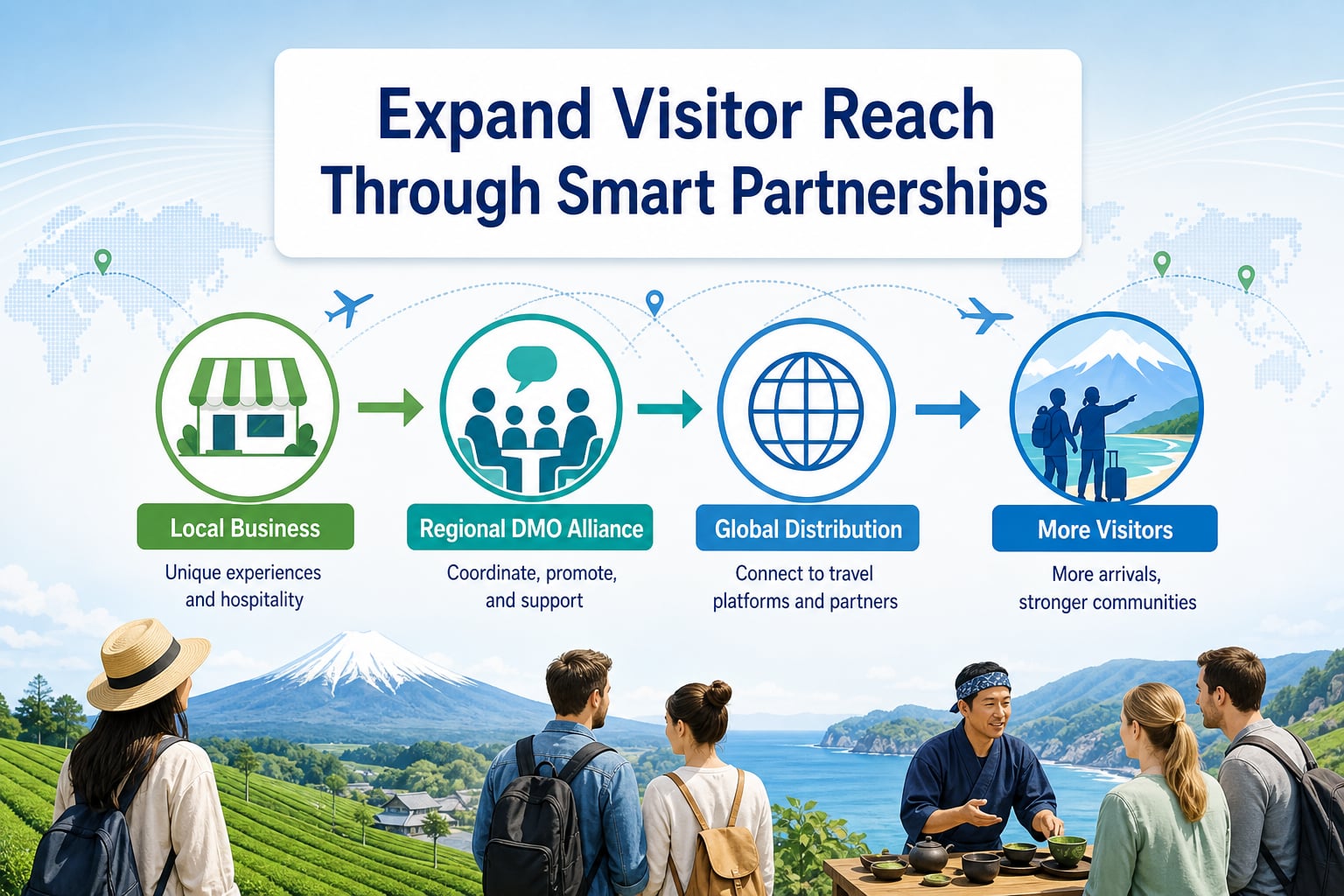
Independent tourism businesses often lack the massive marketing budgets required to reach competitive global travel sectors on their own. Aligning with regional destination management organizations such as the Beautiful Izu Creation Center enables smaller operators to join broader distribution deals, such as overseas travel platform alliances with KKday. Cross-jurisdictional collaboration combines individual activities into comprehensive regional travel passes that attract high-yield international travelers.
Cross-sector initiatives, including corporate workation alliances and regional hotel partnerships in East Izu and Shimoda, demonstrate the effectiveness of shared infrastructure. Accommodation providers can cross-promote nearby farming tours, cycling centers, and traditional workshops to extend overall guest stay lengths. By establishing a unified hospitality network across towns, regional stakeholders retain visitor spending within local communities.
Building Stronger Networks with Local Chambers and DMOs
Participating in municipal tourism association meetings and chamber of commerce initiatives allows operators to bundle specialized programs with regional transit passes, ensuring sustained year-round visitor traffic.
参考: regional destination management organizations
What should local businesses evaluate when choosing an inbound tourism marketing partner?
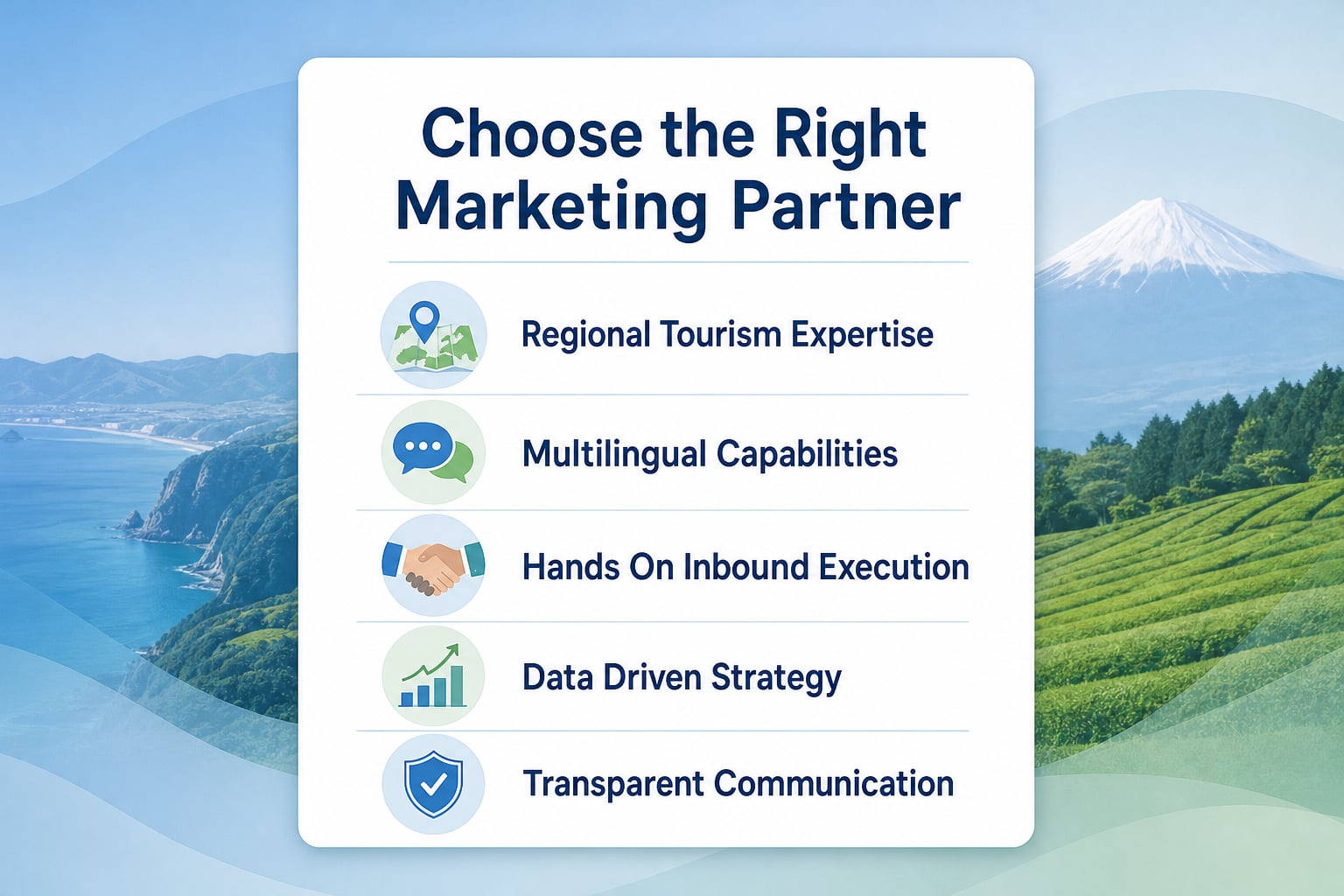
Choosing the right inbound marketing agency is a strategic decision that directly influences booking volumes and operational profitability. Business owners should look beyond generic digital marketing promises and verify whether the partner has verified regional expertise, multilingual capability, and hands-on tourism industry knowledge. At Shinker Inc., our Glocal inbound team is led by CEO Hikaru Soneda, who studied in the United States and worked overseas for a major travel firm, providing data-driven regional marketing solutions.
Operators must evaluate written contracts carefully to ensure fee transparency, deliverable clarity, and operational alignment before signing agreements. A reputable partner should offer transparent initial scoping, clear communication cadences, and holistic management across social media, OTA listings, and multilingual web copy. Working with an experienced Shizuoka-based specialist ensures that marketing campaigns authentically communicate your distinctive hospitality to global travelers.
How can front-line staff overcome multilingual barriers without dedicated foreign language teams?
Many small ryokans, cafes, and outdoor outfitters worry that lacking fluent English speakers on staff prevents them from hosting international guests successfully. In practice, international travelers seeking authentic local experiences value genuine hospitality and clear visual guidance far more than flawless spoken English. Implementing illustrated digital guides, bilingual instruction cards, and straightforward smartphone translation tools allows local teams to deliver exceptional guest service confidently.
Standardizing routine interaction touchpoints drastically reduces stress for front-line hospitality workers during daily operations. Clear English signage for check-in rules, equipment handling, payment methods, and dietary labeling ensures smooth communication across diverse international visitor backgrounds. By establishing standardized multilingual reference materials, regional businesses can confidently expand into global markets without increasing full-time administrative overhead.
- Visual Bilingual Check-In Sheets: Use laminated or tablet-based visual checklists covering key guidelines, emergency exits, and facility usage policies.
- Dietary and Allergy Icon Cards: Provide straightforward visual cards identifying ingredients, vegetarian preferences, and common allergens for hassle-free culinary orders.
- Pre-Translated Automated Guest Messages: Configure automated messaging templates on OTA platforms to deliver transport maps and arrival directions prior to check-in.
What are the immediate action steps to start welcoming international tourists in Shizuoka?
Launching an effective inbound tourism program does not require completely overhauling current business operations overnight. Regional owners can achieve immediate traction by auditing existing digital profiles, creating accurate English booking descriptions, and inviting international customer reviews. Taking steady, measurable steps allows operators to cultivate valuable inbound revenue while preserving the authentic local culture that makes Shizuoka an extraordinary destination.
If your business seeks professional guidance to expand its global visibility, Shinker Inc. provides comprehensive inbound marketing support tailored for regional companies. Located just a ten-minute walk from the North Exit of JR Shizuoka Station at Oak Shizuoka Building in Gofuku-cho, our dedicated team assists with OTA optimization, English social media management, and multilingual digital growth. Contact our consultation desk today to discover how your experiential travel offerings can captivate travelers worldwide.
- Submit an Initial Consultation Inquiry: Reach out through our online contact form, phone, or email to schedule an introductory consultation regarding your inbound goals.
- Complete a Regional Asset & Channel Audit: Review current OTA presence, Google Maps listings, and multilingual web assets to pinpoint high-potential marketing opportunities.
- Receive a Tailored Inbound Action Plan: Evaluate a customized proposal outlining service deliverables, timeline benchmarks, and transparent quotation terms suited to your team.
- Launch Multilingual Promotion & Track Bookings: Initiate optimized listings and targeted promotional campaigns to generate steady reservations from international visitors.
Frequently Asked Questions
Q1. What is experiential tourism?
Experiential tourism is travel focused on actively engaging with a destination’s culture, food, and people. Instead of just viewing famous sights, visitors participate in hands-on local activities to create meaningful, memorable personal connections.
Q2. How can small Shizuoka operators overcome foreign language barriers?
Operators can use multilingual translation apps, offer visual step-by-step guides, and design hands-on activities that rely more on physical demonstration than complex spoken words. Partnering with bilingual local guides is another practical solution.
Q3. What local assets in Shizuoka can become tourist experiences?
Everyday cultural traditions, local farming, fishing, and regional craft-making can become high-value experiences. Tea harvesting, wasabi preparation, and coastal community activities are great examples that turn authentic daily life into engaging tours.
Q4. Why should local businesses partner with regional DMOs?
Regional destination management organizations connect individual providers with broader promotional campaigns and travel agencies. Partnering with a DMO helps small operators pool resources, gain international exposure, and attract more overseas travelers.
Q5. What should providers look for in a marketing partner?
Providers should choose marketing partners with genuine inbound tourism experience, clear cross-cultural communication skills, and a strong understanding of international booking channels, rather than agencies that only handle domestic tourism.