

Looking for the right inbound marketing agency? Discover 5 essential comparison criteria, cost factors, and tourism tips to grow your international reach.
 執筆者:Hikaru SonedaCEO
Operating a local hotel, ryokan, or restaurant in regional Japan while struggling to reach international visitors can leave your team overwhelmed and uncertain about digital expansion.
This guide breaks down five essential evaluation criteria to help you choose the ideal inbound marketing agency to boost your international visibility and sustainable bookings.
How do inbound tourism agencies differ from digital inbound marketing agencies?
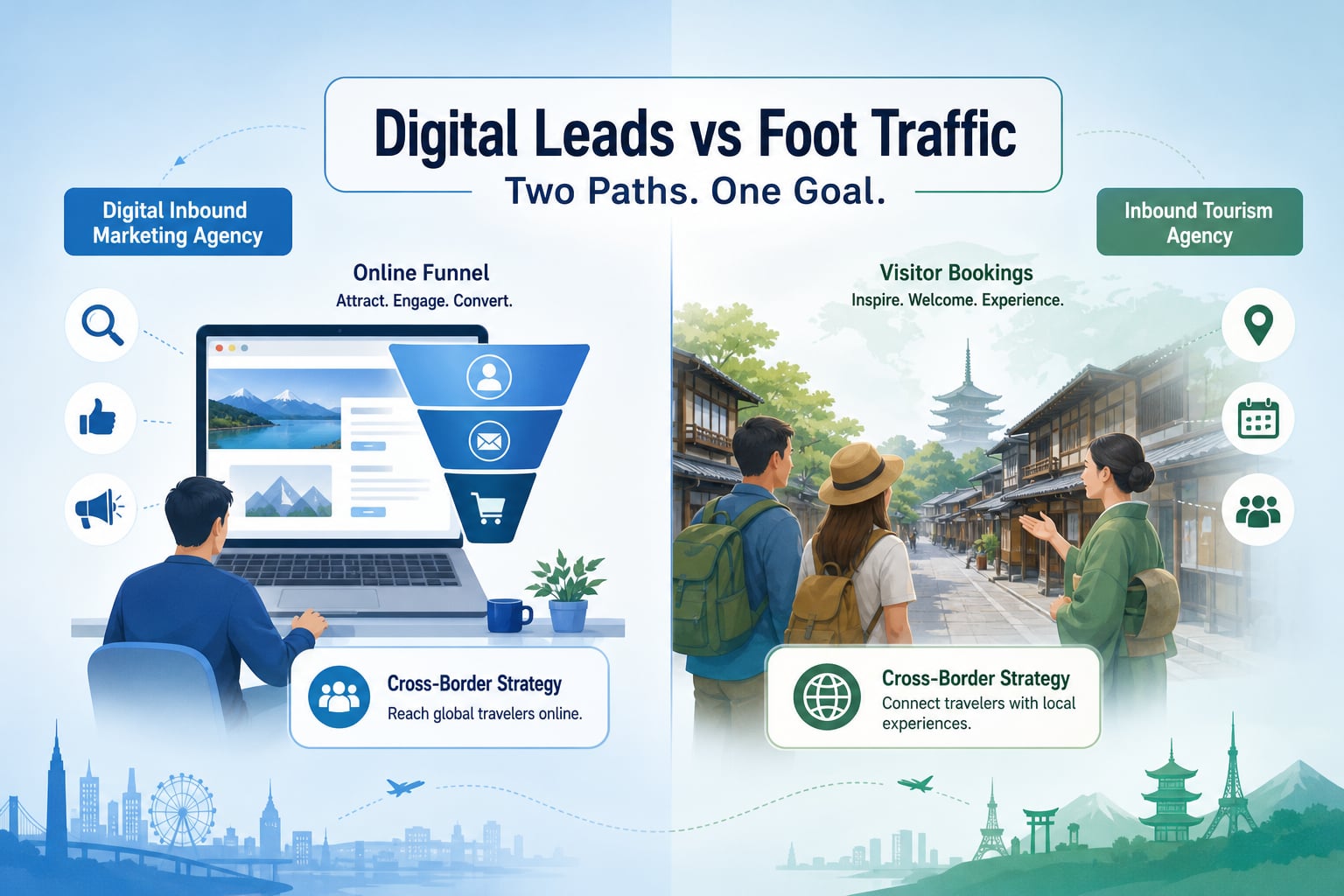
Selecting the right partner requires understanding the fundamental distinction between classic inbound tourism promotion and pull-based digital marketing. A general digital agency focuses on generating qualified online leads through search engines and conversion funnels, whereas a specialized inbound marketing agency for tourism drives physical foot traffic and overnight reservations from foreign travelers navigating overseas platforms.
Traditional inbound tourism promotion often relies on broad public relations, trade shows, and generalized travel brochures that lack measurable booking tracking. In contrast, modern inbound marketing applies data-driven content marketing, targeted multilingual social media, and localized search optimization to attract global travelers directly during their trip planning phases.
Regional hospitality operators in areas such as Shizuoka Prefecture benefit most from an agency that unites both disciplines under one roof. Combining global traveler insights with hands-on digital execution ensures your cultural assets, culinary traditions, and scenic viewpoints reach high-intent overseas visitors ready to book.
Clarifying Inbound Tourism Marketing Versus Traditional B2B Lead Generation
Corporate B2B inbound marketing targets enterprise procurement cycles using downloadable whitepapers and automated email nurturing across business software platforms. Inbound tourism marketing targets leisure travelers and international adventurers using visual storytelling, localized maps, real-time reviews, and multilingual reservation engines.
| Dimension | General Digital Agency | Specialized Inbound Tourism Agency |
|---|---|---|
| Primary Audience | Domestic enterprise leads and consumers | Independent global travelers and foreign visitors |
| Core Channels | Search ads, whitepapers, enterprise email | Global OTAs, Instagram, TikTok, Google Maps |
| Language Capabilities | Single-language domestic execution | Native multilingual copywriting and cultural nuances |
| Success Metrics | Form inquiries and marketing qualified leads | Direct room bookings, seat reservations, and foot traffic |
参考: inbound tourism consulting
What are the 5 key criteria for choosing an inbound marketing agency?
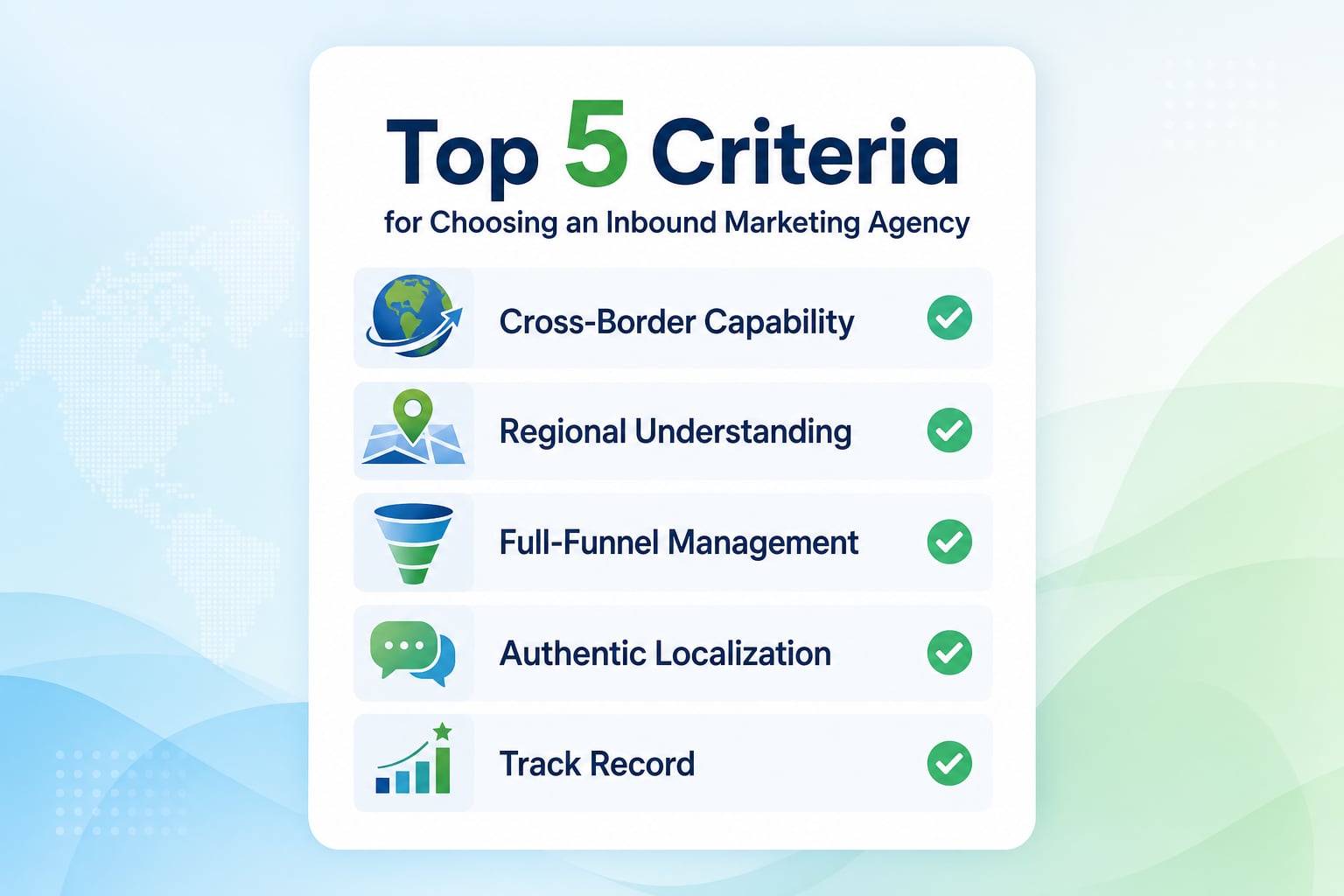
Evaluating an external agency requires objective criteria tailored to international hospitality and regional destination marketing. Rather than relying on superficial presentation decks, business owners must evaluate real-world cross-border capabilities, regional understanding, and full-funnel channel management.
Many regional facilities discover too late that an agency merely runs machine translation across Japanese copy without adapting imagery or cultural tone. Choosing an inbound marketing agency equipped with native global perspectives and proven platform mastery protects your brand reputation and maximizes marketing investment.
- Native Multilingual Content and Cultural Adaptation: Ensure the agency provides native-level English and multilingual copywriting rather than literal automated translation. Authentic cultural messaging connects directly with overseas values, dietary preferences, and travel expectations.
- Comprehensive OTA and Review Platform Optimization: Verify experience managing major global platforms including Booking.com, Airbnb, TripAdvisor, and Google Maps. Optimizing profile listings, photos, and review replies drives high-intent reservations.
- Cross-Border Social Media Storytelling: Review their capabilities in managing international Instagram, YouTube Shorts, and TikTok channels. Compelling visual short-form video introduces regional culinary experiences and scenic landscapes to travelers before arrival.
- Demonstrated Regional Hospitality Experience: Select a partner with verified track records supporting hotels, ryokans, dining venues, and tourism attractions. Deep familiarity with front-line hospitality operations ensures practical, actionable promotional recommendations.
- Transparent Reporting and Business Outcome Alignment: Demand clear measurement frameworks tied to foot traffic, inquiry increases, and direct bookings rather than empty vanity metrics. Regular strategic meetings ensure marketing activities adapt to real revenue goals.
参考: regional destination marketing
What cost factors should you check in an inbound marketing agency quote?

Scrutinizing price quotations carefully prevents unexpected expenses and misaligned project scopes down the road. Inbound marketing contracts frequently combine base management retainers with setup expenditures, creative asset fees, and optional performance commissions.
Hospitality and tourism operators should systematically review fee components to verify what deliverables are guaranteed each month. Clarifying operational boundaries early ensures that multilingual content updates, photography sessions, and advertising management do not trigger surprise surcharges.
| Quotation Item | What to Check | Why It Matters |
|---|---|---|
| Initial Setup Fee | Whether account creation, OTA audits, and photography are in | Prevents unbudgeted onboarding costs before active campaigns |
| Monthly Retainer Scope | Exact volume of social media posts, translations, and report | Ensures regular execution without ambiguous service limits |
| Success & Commission Terms | The precise baseline calculation and attribution window for | Eliminates disputes regarding whether direct guests originat |
| Payment Schedule & Timing | Due dates, invoicing milestones, and minimum contract length | Protects operating cash flow and maintains financial flexibi |
| Additional Surcharge Conditions | Hourly rates for out-of-scope copywriting, emergency edits, | Guarantees cost predictability when updating seasonal menus |
How do you select the right inbound marketing agency for your tourism business?
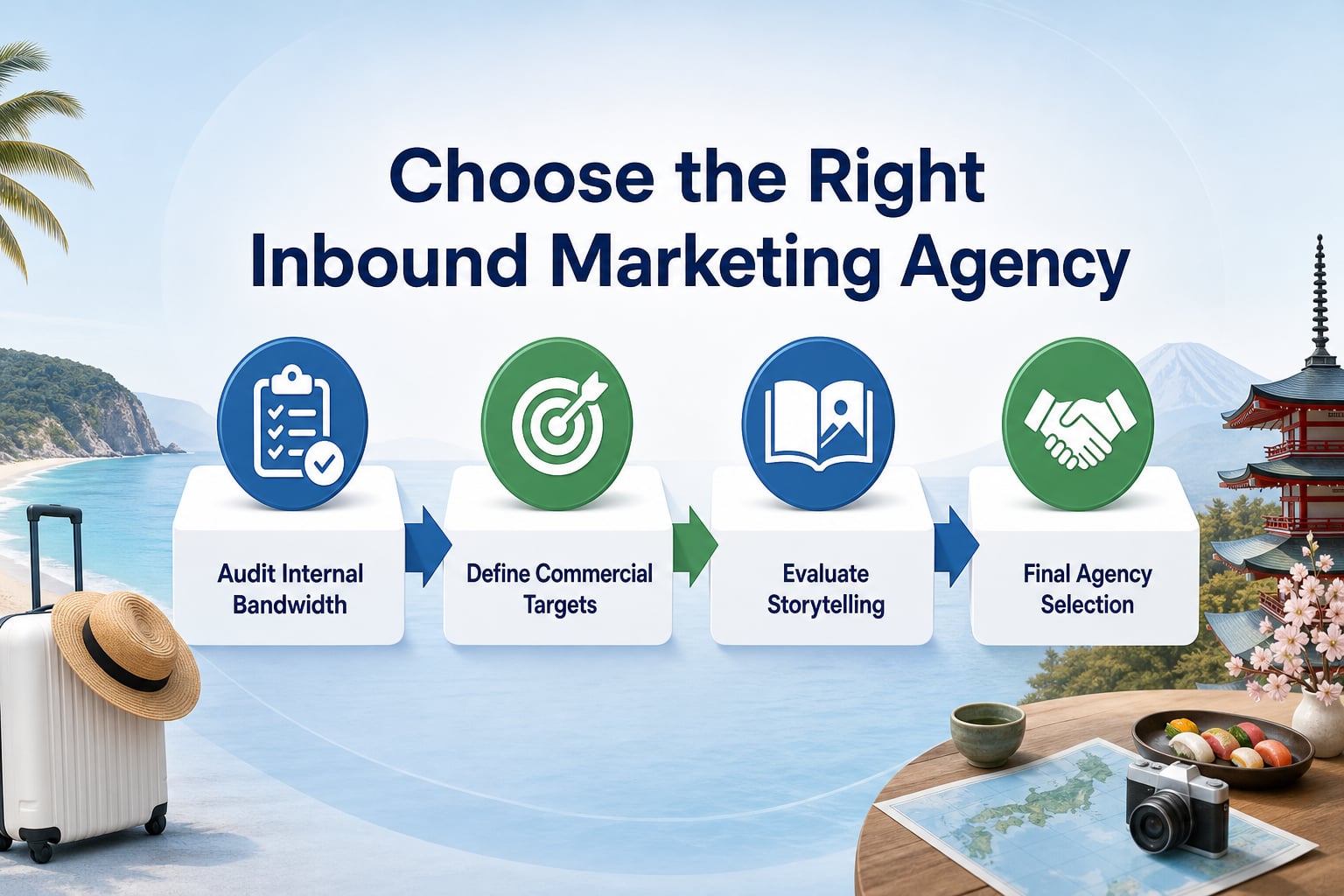
Selecting the right partner begins with auditing your internal operational bandwidth and defining primary commercial targets. A family-run ryokan seeking direct international bookings requires a very different execution strategy than a regional tourism board promoting a multi-city travel corridor.
Prioritize an agency that values authentic local storytelling over generic tourism formulas. By showcasing your authentic regional culture, craft traditions, and warm hospitality, an experienced partner establishes lasting emotional resonance with travelers who actively seek genuine regional experiences across Japan.
- Define Your Priority Target Markets: Identify whether your guests arrive primarily from East Asia, North America, Europe, or Australia. Different nationalities exhibit distinct booking lead times, platform preferences, and dining considerations.
- Audit Internal Multilingual Capabilities: Assess your on-site team’s comfort handling English check-ins, telephone calls, and dietary questions. Choose an agency that can bridge customer communication gaps with clear digital collateral.
- Verify Hands-On Tourism Familiarity: Confirm that agency strategists understand seasonal travel rhythms, accommodation sales cycles, and local tourism regulations. Practical hospitality experience ensures immediate alignment with daily operational realities.
- Confirm Dedicated Account Support: Clarify who handles daily execution, content writing, and community interactions. Having direct access to experienced cross-cultural marketers ensures prompt responses when urgent booking inquiries arise.
参考: auditing your internal operational bandwidth
What digital channels deliver measurable results for inbound travelers?
Maximizing foreign guest acquisition requires synchronizing multiple high-impact digital touchpoints along the traveler journey. Modern international tourists conduct extensive online research months prior to departure and continue exploring on mobile devices while traveling through Japan.
An integrated inbound marketing strategy connects discovery channels like Instagram and TikTok with conversion channels like Google Maps and global travel portals. Aligning consistent English photography, accurate directions, and seamless online booking buttons removes friction and captures high-spending overseas visitors.
Connecting Visual Inspiration to Direct Reservation Funnels
Captivating photography on social media sparks the initial dream of visiting regional destinations, but travelers immediately search Google Maps or major booking platforms to verify open hours and reservation availability. Ensuring accurate multilingual business information and direct reservation links turns casual social browsing into confirmed room nights and dining visits.
- Google Business Profile and Maps Optimization: Maintain accurate English business names, operating hours, localized menu highlights, and high-resolution venue photos. Foreign visitors rely heavily on map navigation to discover nearby dining and lodging options.
- Global Online Travel Agent (OTA) Listings: Optimize listings across Airbnb, Booking.com, and TripAdvisor with compelling room descriptions and localized amenity guides. Professional presentation boosts organic search placement within competitive travel portals.
- English Visual Social Media Channels: Deploy reels, short videos, and photo carousels on Instagram, TikTok, and YouTube Shorts. Authentic behind-the-scenes glimpses of culinary preparation and scenic vistas attract global travel enthusiasts.
- Multilingual Website and Direct Booking Engine: Build responsive, fast-loading web pages presenting regional experiences and direct reservation software. Clear multilingual descriptions give international travelers confidence to book directly without third-party commission markups.
How real regional businesses achieved measurable growth with inbound marketing
Tangible case studies demonstrate how targeted digital marketing transforms regional tourism enterprises facing international visibility hurdles. By replacing fragmented marketing efforts with coherent multilingual strategies, local establishments successfully capture lucrative international demand.
Our company’s results prove that regional culinary and tourism operators can expand international customer acquisition without overburdening on-site teams. Structured digital optimization builds sustained visibility that continuously attracts global travelers seeking authentic Japanese hospitality.
- Restaurant Digital Marketing and Foot Traffic Expansion: A local dining venue implemented our company’s multilingual marketing strategy, focusing on active English Instagram management and comprehensive Google Business Profile optimization. The restaurant became effortless for inbound tourists to discover online, generating noticeable engagement increases from overseas visitors and cementing its reputation as a preferred regional culinary stop.
- Regional Tourism Destination Promotion and Cultural Awareness: A regional tourism provider partnered with our company to introduce local attractions and cultural heritage experiences to worldwide audiences. Through specialized multilingual content creation, digital promotion, and destination branding, the initiative widened global reach, deepened traveler awareness, and reinforced sustainable economic growth across the area.
What makes Glocal by Shinker the dedicated inbound partner in Shizuoka?
Glocal by Shinker operates as the dedicated inbound tourism marketing division of Shinker Inc., centrally headquartered in Shizuoka City. Our mission focuses on connecting Shizuoka Prefecture with global travelers by empowering hotels, ryokans, restaurants, and tourism facilities through practical, data-driven multilingual marketing solutions.
Under the leadership of CEO Hikaru Soneda, who studied in the United States and spent years working overseas for a prominent travel enterprise, our team combines international living experience with regional roots. We deliver end-to-end support spanning English social media creation, OTA optimization, multilingual web development, and inbound advertising strategies.
Conveniently situated just 10 minutes on foot from the North Exit of JR Shizuoka Station, our bilingual specialists are readily accessible for in-person consultations. We take pride in helping regional business owners overcome staffing constraints and language obstacles to build sustainable, rewarding international visitor revenue.
Simple Step-by-Step Consultation and Onboarding Process
Partnering with our team follows a straightforward five-step consultation framework designed around your schedule. From initial inquiry to campaign rollout, we craft customized proposals that align with your unique regional hospitality offerings.
- Submit Your Initial Inquiry: Reach out through our online contact form, phone, or email to outline your primary business goals, current booking challenges, and facility overview.
- Schedule a Strategic Consultation: Meet with our inbound marketing specialists at our Shizuoka office or via online video call to discuss target guest demographics and seasonal needs.
- Receive a Tailored Action Proposal: Review a detailed marketing proposal and itemized quote outlining concrete multilingual channels, content plans, and implementation milestones.
- Finalize Agreement and Launch Onboarding: Sign the partnership agreement, establish administrative platform access, and begin photo asset curation alongside account audits.
- Execute Campaigns and Review Outcomes: Launch multilingual campaigns, optimize OTA listings, and hold regular progress reviews to continuously drive international traveler bookings.
Frequently Asked Questions
Q1. What is an inbound marketing agency?
An inbound marketing agency is a company that helps businesses attract foreign travelers and customers by creating helpful online content, managing foreign-language social media, and improving search visibility to draw interest naturally.
Q2. How long does it usually take to see results from inbound marketing?
Inbound marketing focuses on organic growth, so it typically takes several months to see noticeable results. Building online content and gaining search visibility requires steady effort before international travelers begin finding your business consistently.
Q3. Can a small ryokan or restaurant manage inbound marketing without an agency?
Yes, but it requires significant time and staff fluent in foreign languages. Hiring an agency allows your team to focus on daily hospitality while professionals handle multi-language content creation, technical website setup, and international digital promotions.
Q4. Are ongoing agency fees fixed or based on performance?
Most agencies charge a fixed monthly retainer for ongoing content and strategy work, while others use project-based pricing. Some may offer performance-based models, but you should carefully clarify these terms before signing any contract.
Q5. What should our business prepare before contacting an agency?
Prepare your current business goals, your available budget, your target traveler nationalities, and any existing marketing materials. Clear goals will help the agency provide a more accurate proposal and cost estimate during your initial consultation.