

Planning your Tokyo to Shizuoka travel? Compare the Shinkansen, highway buses, and local trains by speed and cost to find the best route for your budget.
 執筆者:Hikaru SonedaCEO
Navigating transportation options between Tokyo and Shizuoka often feels confusing when faced with competing transit choices, fragmented booking instructions, and conflicting route suggestions.
This comprehensive guide compares the Shinkansen, highway buses, and local trains to help you select the ideal route for your schedule, luggage, and budget.
What Are the Best Transit Options for Tokyo to Shizuoka Travel?
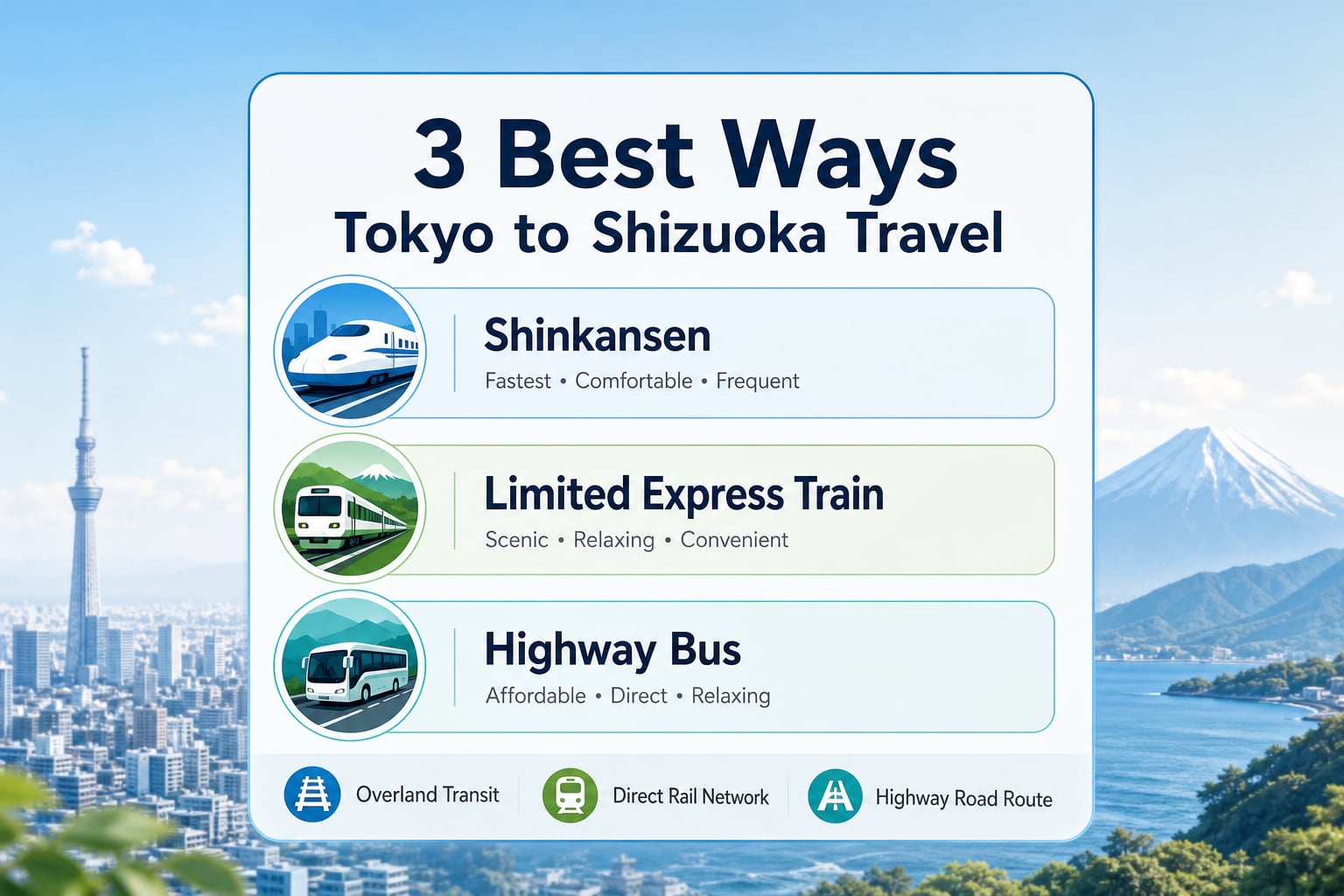
Overland rail and road transit represent the standard choices for Tokyo to Shizuoka travel because the geographic distance is relatively short. Although flight booking aggregators sometimes display domestic air routes, flying between Tokyo Narita and Shizuoka Airport requires indirect connections that take far longer than surface travel. Rail networks connect central Tokyo directly to Shizuoka City and surrounding Mt. Fuji gateways in under an hour on high-speed lines.
Selecting the right transportation mode depends entirely on your balance of speed, convenience, and travel spending. The Tokaido Shinkansen delivers unmatched velocity for travelers prioritizing schedule efficiency, while express highway buses serve cost-conscious visitors willing to trade transit time for lower fares. Local JR train lines provide an intermediate alternative that permits flexible stopovers in scenic coastal towns along the historic Tokaido route.
Travelers should understand how each transit corridor operates before arriving at the station to avoid unnecessary transfers and delays. Direct departures leave frequently from major Tokyo hubs like Tokyo Station and Shinagawa Station throughout the morning and evening. Evaluating transit times alongside luggage guidelines ensures a smooth connection to your final hotel or sightseeing destination in Shizuoka Prefecture.
- Tokaido Shinkansen Bullet Train: The fastest transit mode, reaching Shizuoka Station in as little as 58 minutes with frequent departures throughout the day.
- Highway Express Bus: The most economical direct transit option, running from Tokyo hubs to regional stops like Tomei Fuji in roughly two hours.
- Local JR Tokaido Line: A flexible overland rail alternative taking just over two hours, ideal for regional passes and relaxed sightseeing journeys.
How Fast Is the Tokaido Shinkansen from Tokyo to Shizuoka?
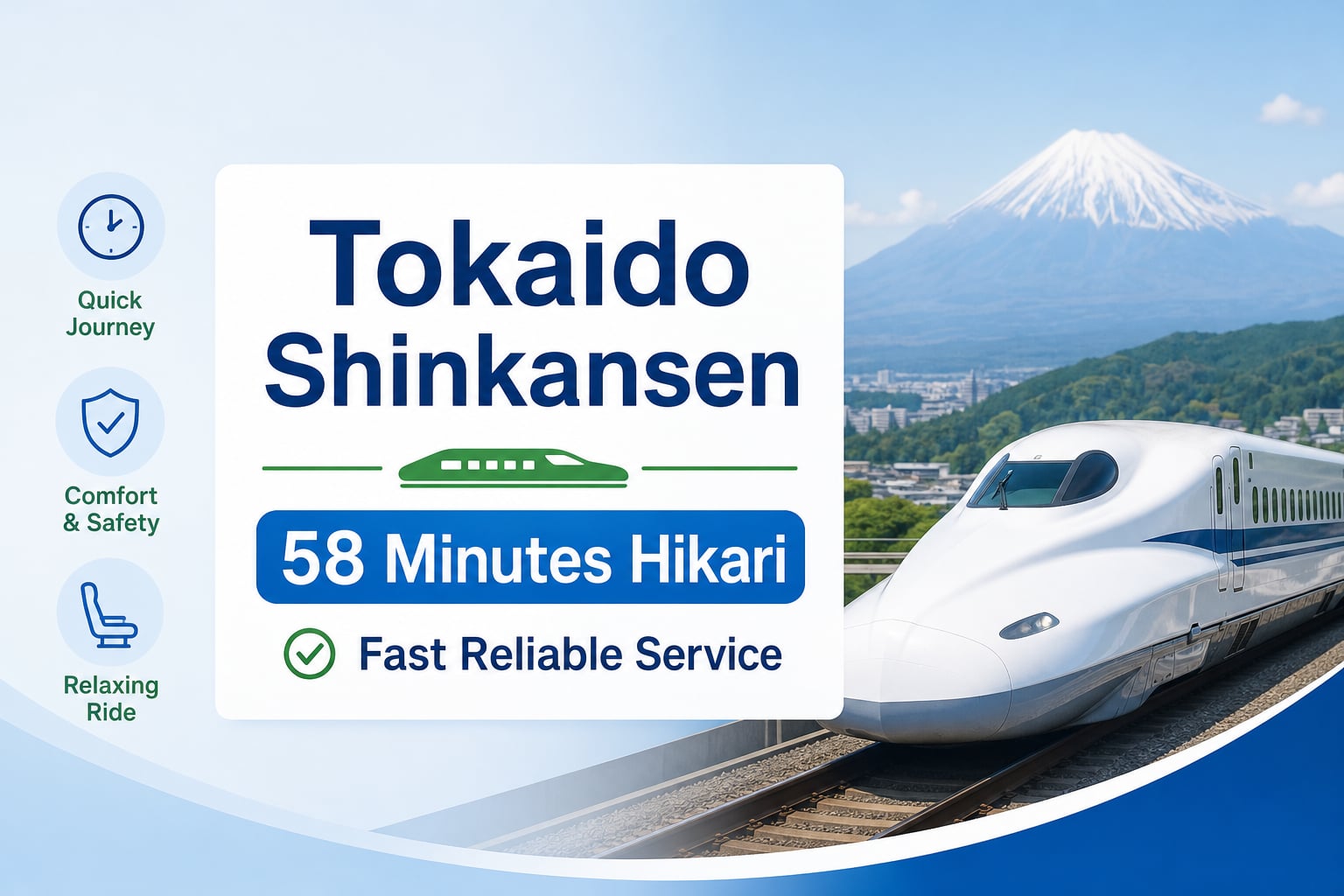
The Tokaido Shinkansen is the fastest and most reliable way to complete your journey between Tokyo and Shizuoka. High-speed Hikari bullet trains reach Shizuoka Station from Tokyo in approximately 58 minutes, stopping at fewer stations than the all-stop Kodama service. Hikari services offer five unreserved cars alongside reserved seating, allowing travelers without prior reservations to board flexible departure times.
Kodama bullet trains stop at all stations along the corridor and complete the journey in a relatively short trip. A Kodama service stops sequentially at Shin-Yokohama, Odawara, Mishima, Shin-Fuji, and Shizuoka before continuing west toward Nagoya. This makes the Kodama service the primary bullet train connection for visitors targeting Mt. Fuji viewpoints at Shin-Fuji or hot spring gateways at Mishima.
Departures run multiple times per hour from both Tokyo Station and Shinagawa Station, giving passengers consistent scheduling flexibility throughout the day. Travelers holding ordinary tickets should arrive at the station at least 30 minutes before departure to collect physical tickets or verify digital ticket bindings. The high frequency of bullet train departures means that missing a planned departure rarely disrupts an entire day itinerary.
Understanding Hikari and Kodama Stopping Patterns
How Do Highway Buses and Local Trains Compare for Budget Travelers?
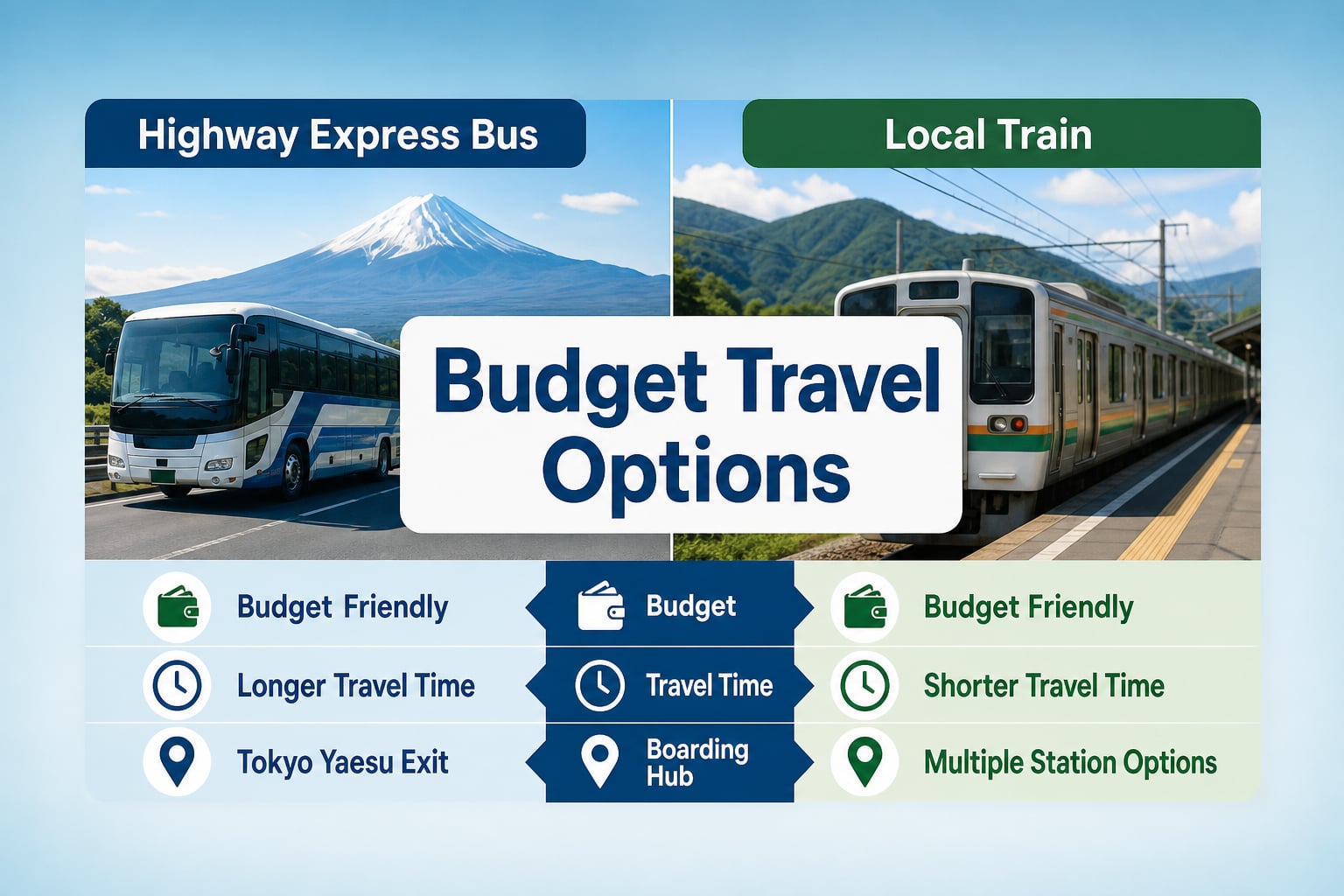
Highway express buses offer significant cost savings for budget-minded visitors traveling from Tokyo into Shizuoka Prefecture. Direct highway buses depart from Tokyo Station Yaesu South Exit and arrive at regional hubs such as Tomei Fuji in approximately 2 hours and 16 minutes. These road services cover an overland distance of roughly 130 kilometers, providing comfortable seating, air conditioning, and scenic highway views.
Local JR commuter trains on the Tokaido Main Line provide a dependable rail alternative without high-speed bullet train surcharges. Traveling by local train between Tokyo and destinations near Fuji City takes approximately 2 hours and 15 minutes, requiring one or two seamless transfers along the route. This local transit option is especially popular with regional rail pass holders who wish to stop at coastal towns without paying premium seat fees.
Choosing between highway buses and local trains comes down to luggage convenience and personal travel tempo. Highway buses store larger suitcases in dedicated cargo compartments under the coach, while local trains require passengers to keep bags near their seats. Both options take roughly double the time of the Shinkansen but reduce overall transit expenditure substantially.
What Luggage Rules and Seating Options Apply on the Tokaido Shinkansen?
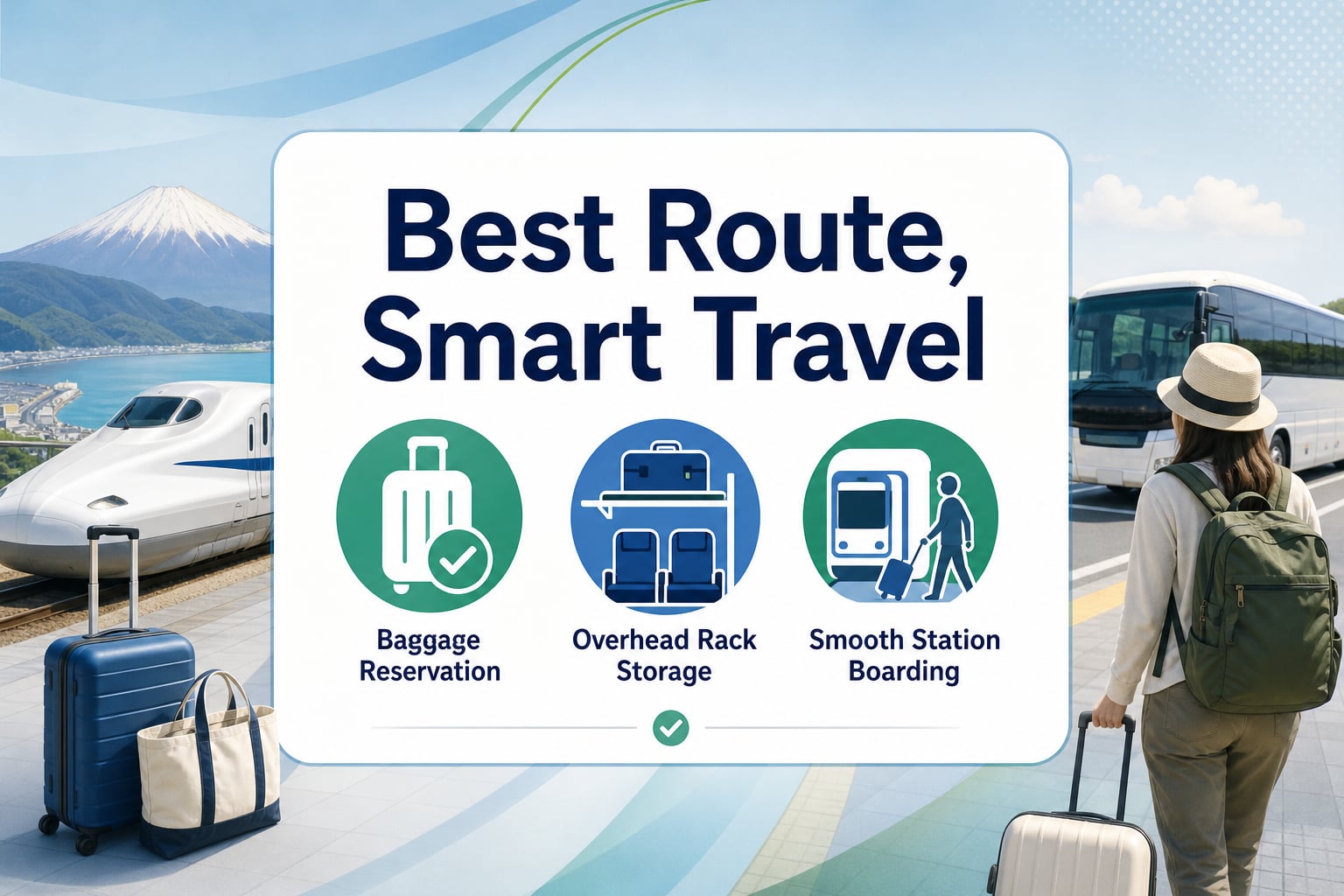
Understanding Shinkansen baggage regulations prevents unexpected boarding fees and boarding delays at bullet train ticket gates. Luggage with total dimensions measuring 160 centimeters or less can be brought onboard without any advance reservation and placed on overhead racks. However, luggage measuring between 161 centimeters and 250 centimeters requires an oversized baggage reservation, which pairs your ticket with designated rear-row luggage space.
Items exceeding 250 centimeters in total combined dimensions cannot be brought onboard the Shinkansen under any circumstances. Travelers transporting oversized sporting gear or massive trunks must arrange door-to-door luggage courier delivery across Japan instead. Standard rolling suitcases generally fall within the permitted 160-centimeter threshold and fit comfortably in overhead luggage shelving.
Seat configurations on Tokaido bullet trains vary based on whether you select ordinary cars or premium Green Cars. Ordinary reserved and unreserved cars utilize a 3-by-2 seat layout, where seats D and E form the popular two-seat pairs on the Mt. Fuji side. Green Cars feature a wider 2-by-2 seating design where C and D seats form pairs, providing extra legroom, quieter carriages, and personal reading lights.
How Do Major Shizuoka Destinations Differ by Transit Route?
Shizuoka Prefecture spans an expansive coastal territory, meaning that the ideal transit route changes depending on your final stop. Travelers heading to Shizuoka City should take the direct Hikari Shinkansen, which delivers passengers straight to the urban core in less than an hour. From JR Shizuoka Station, visitors can easily explore Sunpu Castle Park, Nihondaira Plateau, and local dining districts on foot or by local transit.
Visitors seeking close-up Mt. Fuji panoramas should aim for Shin-Fuji Station or Fuji City rather than central Shizuoka City. Driving between Tokyo and Fuji City covers an overland road distance of 130 kilometers in roughly 1 hour and 47 minutes. Alternatively, direct highway buses take approximately 2 hours and 16 minutes from Tokyo Station to Tomei Fuji, delivering sightseers right to viewing areas and regional bus connections.
Travelers bound for eastern Shizuoka destinations like Mishima and the Izu Peninsula benefit most from Kodama Shinkansen departures or direct express lines. Mishima serves as the transit interchange for the Mishima Skywalk and Hakone access routes, reachable in roughly a brief journey from Tokyo. Selecting your train stop carefully prevents unnecessary backtrack travel across Shizuoka extensive east-to-west transit corridor.
Which Tokyo to Shizuoka Travel Route Best Matches Your Itinerary and Budget?
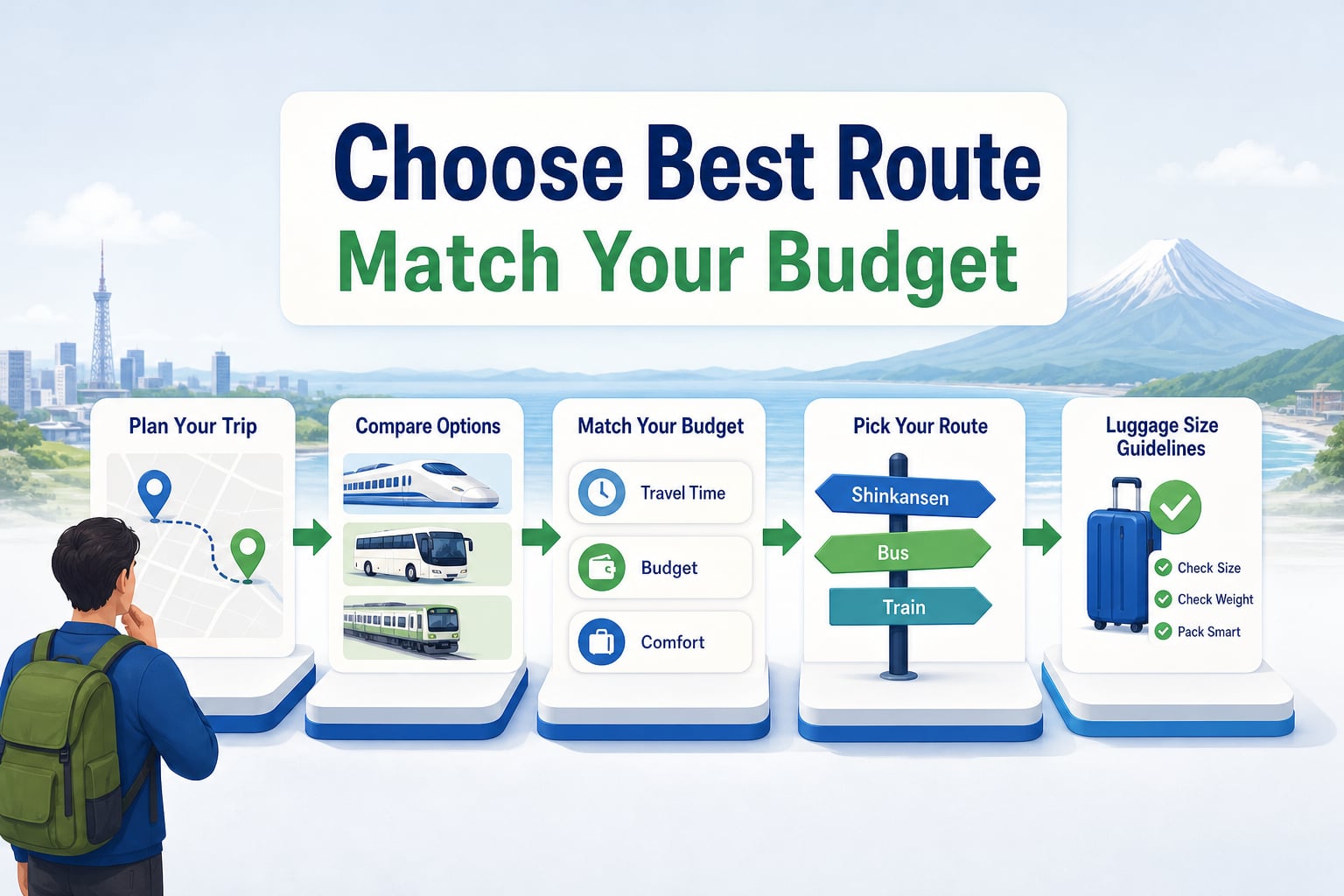
Matching your transportation mode to your personal travel priorities ensures maximum enjoyment and minimal travel friction throughout Japan. If your goal is maximizing vacation hours, booking a reserved seat on the Hikari Shinkansen remains the most efficient overland decision. Travelers who value low spending above transit duration find highway express buses and local commuter lines to be thoroughly practical options.
Evaluating transit quotes or tour packages requires inspecting several practical terms before confirming your itinerary. Review whether cancellation policies provide partial refunds, verify luggage allowances match your bag dimensions, and confirm departure stations align with your hotel neighborhood. Clear cost comparisons prevent surprise surcharges when booking overland transportation, rental vehicles, or private transfers.
| Transit Mode | Approximate Duration | Primary Departure Point | Luggage Considerations |
|---|---|---|---|
| Shinkansen Hikari | 58 minutes | Tokyo / Shinagawa Station | Free up to 160 cm; reservation required for 161-250 cm |
| Shinkansen Kodama | a short ride | Tokyo / Shinagawa Station | Stops at Shin-Fuji and Mishima; same luggage rules apply |
| Highway Express Bus | 2 hours 16 minutes (to Fuji area) | Tokyo Station Yaesu Exit | Stored under carriage; subject to operator suitcase limits |
| Local JR Tokaido Line | 2 hours 15 minutes (with transfers) | Tokyo Station | Kept near passenger seats; best for light daypacks |
How Shizuoka Hospitality and Tourism Operators Support Overseas Visitors
Shizuoka hospitality providers are actively expanding multilingual services to make international visits seamless from arrival to checkout. Regional ryokans, hotels, and activity operators work closely with inbound marketing specialists to ensure English booking portals and transit guidance are straightforward. Glocal by Shinker, operated by Shinker Inc. in Shizuoka City, assists regional hospitality businesses in building global visibility and welcoming international guests.
Regional businesses that partner with local inbound specialists achieve noticeable improvements in overseas guest communications. Our company results in tourism promotion demonstrated that targeted multilingual content creation and digital destination marketing expand global reach and improve international awareness. Similarly, our company results in restaurant digital marketing showed that English profile management made a local dining venue simple for foreign visitors to discover and enjoy.
International travelers visiting Shizuoka can expect dedicated local hospitality backed by professional destination knowledge. Led by CEO Hikaru Soneda, our team combines overseas travel industry experience with deep local connections across Shizuoka Prefecture. Located 10 minutes on foot from the North Exit of JR Shizuoka Station, Glocal by Shinker continues helping regional operators share authentic Shizuoka culture with travelers worldwide.
Frequently Asked Questions
Q1. What is the Tokaido Shinkansen?
The Tokaido Shinkansen is Japan’s high-speed bullet train line connecting Tokyo to major cities to the west, including Shizuoka. It offers the fastest and most convenient rail journey between these destinations.
Q2. Can I use the Japan Rail Pass for this route?
Yes, you can use the standard Japan Rail Pass on regular Tokaido Shinkansen services like the Hikari and Kodama trains, as well as on local JR trains between Tokyo and Shizuoka.
Q3. Do I need to reserve seats on the bullet train in advance?
Advance reservations are not strictly necessary because trains offer non-reserved seating cars. However, booking reserved seats is recommended if you travel during peak holiday seasons or carry oversized luggage.
Q4. How do highway buses compare to local trains for budget travelers?
Highway buses provide direct, seat-guaranteed travel without train transfers, but traffic can cause delays. Local trains offer predictable schedules, though the journey requires more time and occasional line changes along the way.
Q5. Where do highway buses depart from in Tokyo?
Most highway buses heading to Shizuoka depart from major transit hubs in central Tokyo, particularly the large bus terminals located at Tokyo Station and Shinjuku Station.