
Plan the ultimate Shizuoka tea tour with our guide to top farm visits by train from Tokyo. Discover the best seasons, English tours, and travel styles.

 執筆者:Hikaru SonedaCEO
Finding reliable information for a Shizuoka tea tour can feel overwhelming when navigating fragmented booking websites, rural train schedules, and limited English details.
This guide provides a side-by-side comparison of Shizuoka tea farm visits by season, travel style, and direct rail access from Tokyo to simplify your booking.
When is the best season to take a Shizuoka tea tour?
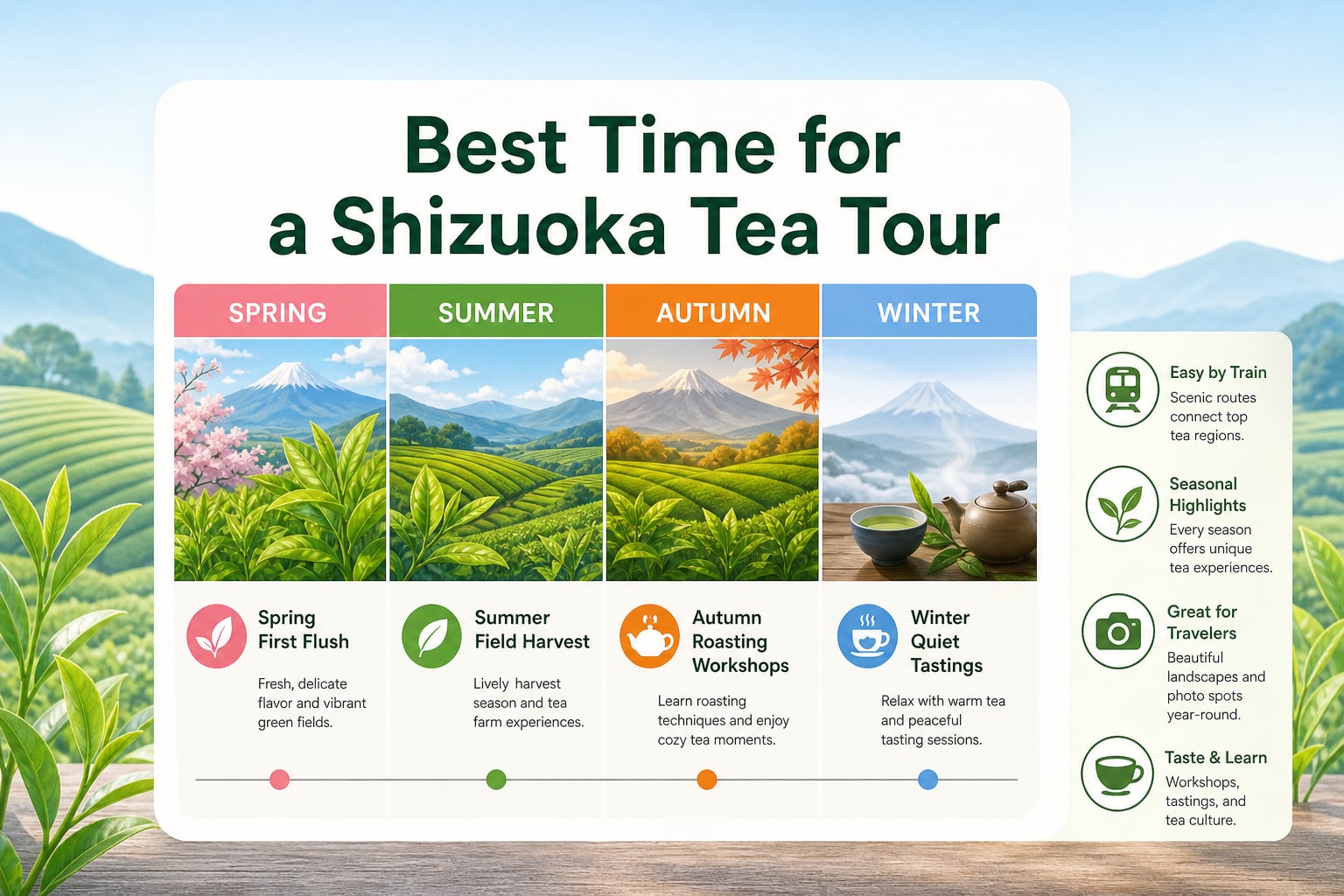
Timing your trip around the agricultural calendar determines whether you can pick fresh leaves or participate in post-harvest processing. Shizuoka produces over 40% of Japan’s green tea, and the primary harvest window shapes farm activities throughout the year. Visiting during the active picking months offers hands-on field access, while autumn and winter highlight peaceful tastings, roasting workshops, and tranquil hillside scenery.
The legendary first harvest, known as shincha or first-flush green tea, takes place from late April through late May across regional plantations. During these spring weeks, plantation hillsides turn vibrant emerald, and growers work long hours hand-picking tender young buds. Because this is the busiest window on the farm, booking a guided tea tour several months in advance is essential to secure an open slot.
Summer brings second and third flushes from June to August, while autumn shifts the farm focus toward specialty sencha aging and hojicha roasting. Even during late autumn and winter when the tea bushes rest under cool skies, terraced farms provide crisp views of Mount Fuji alongside indoor tea ceremonies. Each season offers a distinct cultural perspective for international travelers seeking authentic local experiences.
Seasonal Calendar for Shizuoka Tea Plantations
Spring from April to May delivers hands-on picking of first-grade shincha leaves alongside lively factory steam processing. Summer through August features lush green fields and iced brew tastings, whereas autumn and winter focus on intimate fireside brewing, hojicha roasting, and uncrowded countryside walks.
- Spring Shincha Harvest (Late April to Late May): Experience hand-picking tender first-flush tea leaves in the field and watch freshly harvested leaves undergo immediate steaming in village processing facilities.
- Summer Growth and Secondary Picking (June to August): Walk through vibrant deep-green bush rows, learn organic farming techniques, and enjoy cold-brewed sencha on shaded farmhouse verandas during warmer afternoons.
- Autumn Maturation and Roasting (September to November): Taste cured autumn sencha, participate in hojicha pan-roasting workshops, and admire clear views of Mount Fuji across scenic mountain plantations.
- Winter Resting Period (December to March): Enjoy quiet private tea ceremonies, indoor museum exhibitions, and deep conversations with multigenerational tea masters without high-season crowds.
How do you choose the right Shizuoka tea tour for your travel style?

Selecting the right excursion depends on whether your priority is active agricultural fieldwork, deep culinary education, or peaceful countryside relaxation. Shizuoka tea tour options range from fast half-day city walking tours to immersive multi-day farm stays in remote river valleys. Matching your itinerary to your personal physical comfort and curiosity guarantees a rewarding cultural journey.
Active travelers often prefer hands-on agricultural visits where guides hand you traditional woven baskets to harvest leaves directly from steep hillside terraces. These walking itineraries typically combine field treks with operational factory visits where you smell the intense sweetness of freshly steamed tea leaves. Travelers seeking in-depth knowledge may gravitate toward comparative cupping workshops that explain water temperature, cultivar differences, and steaming styles.
Culinary enthusiasts and families often find that combining tea experiences with local dining or farm stays creates the deepest memories. Experiencing home-cooked seasonal meals paired with local green tea allows visitors to connect authentically with host families. Many regional providers offer curated small-group visits that include regional dishes, sweet pairings, and guided tastings led by seasoned local experts.
Comparing Popular Tour Formats and Focus Areas
Choosing the format that best fits your schedule prevents travel fatigue while maximizing cultural exposure. Day trips focus on concise tastings and historic walking circuits, whereas full-day mountain journeys immerse you in rural village life away from busy tourist corridors.
| Tour Type | Ideal Traveler | Typical Activities | Time Commitment |
|---|---|---|---|
| Historic Town Walking Tour | First-time visitors & casual walkers | Urban tea merchant visits, guided tasting flights, historic | 2 to 3 hours |
| Hillside Plantation & Factory Tour | Active explorers & photography lovers | Terraced farm walks, seasonal leaf picking, operational fact | 4 to 6 hours |
| Deep Tea Tasting & Study | Tea connoisseurs & gastronomy enthusiasts | Single-cultivar cupping, water temperature brewing methods, | 2 to 4 hours |
| Rural Farm Stay & Homestay | Slow travelers & culture seekers | Harvesting, home-cooked regional meals with tea growers, ove | 1 to 2 days |
Which Shizuoka tea farm tours are easily accessible by train from Tokyo?
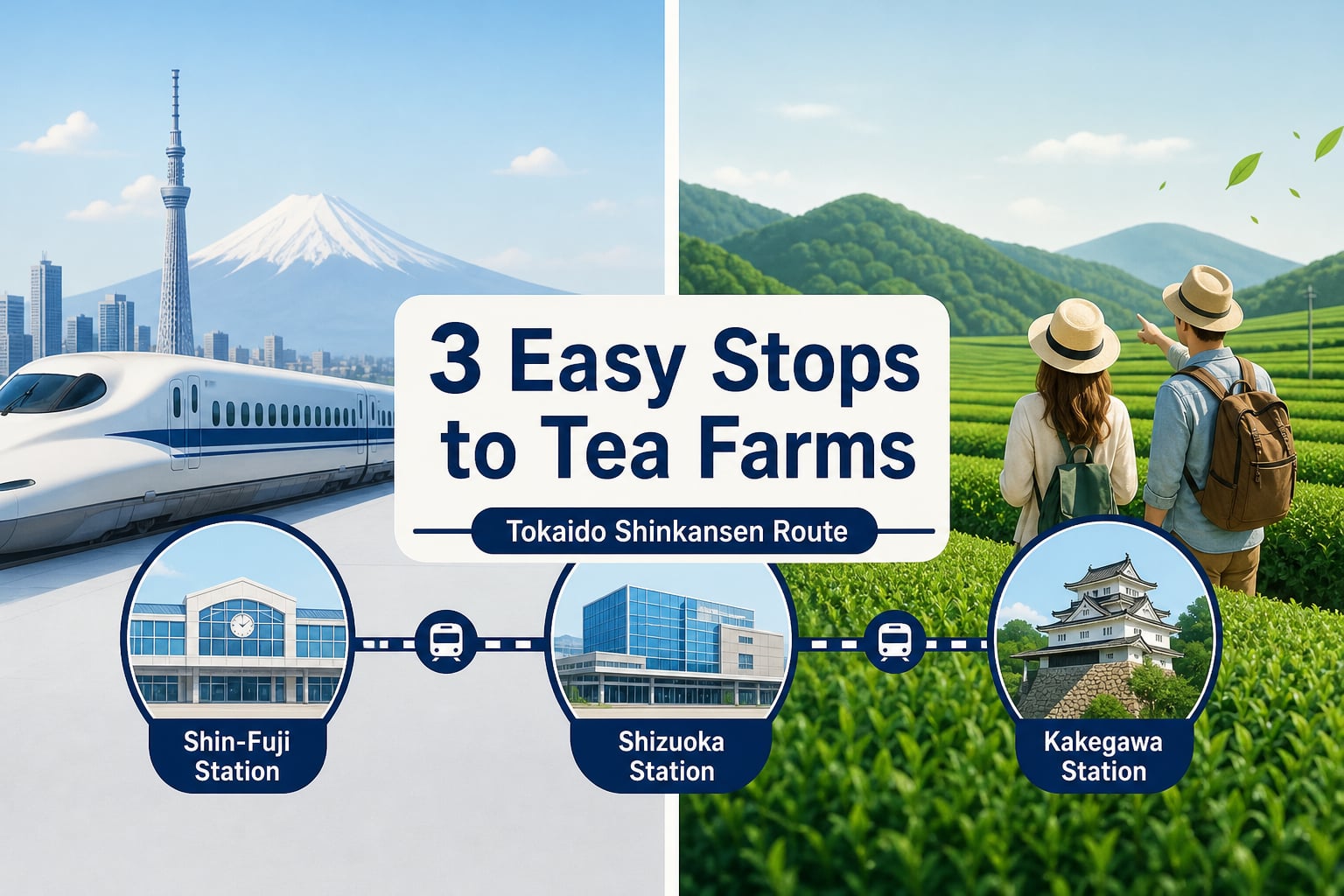
Reaching regional tea plantations without a private rental car is straightforward if you plan along the Tokaido Shinkansen bullet train corridor. Shizuoka Prefecture spans several major stations, including Mishima, Shin-Fuji, Shizuoka, Kakegawa, and Hamamatsu, all directly served by high-speed trains from Tokyo Station. Travelers relying on public transit can easily access world-class tea plantations in under an hour or two of transit time.
For rapid morning day trips, departing Tokyo on the Hikari or Kodama bullet train brings you to JR Shizuoka Station in approximately a short ride. From the station, city-based walking tours through historic merchant districts like Chamachi require only a brief bus ride or pleasant walk. Alternatively, plantation visits nestled in nearby valleys like the Moriuchi Tea farm or Nihondaira plateau are reachable via short local taxi or municipal bus connections.
Venturing further west toward Shimada and Kakegawa opens up expansive plateaus famous for deep-steamed fukamushicha. The scenic Makinohara Upland sits right beside Kanaya Station, where the vintage Oigawa Railway begins its winding journey up into the misty Kawane river valley. These rail-accessible hubs make combining tea tours with panoramic mountain landscapes seamless for international rail pass holders.
- Chamachi Historic Tea District (Shizuoka City): Travel 60 minutes from Tokyo to JR Shizuoka Station, followed by a short a short bus ride or walk into the historic wholesale quarter for specialized merchant tastings.
- Nihondaira Plateau and Terraced Fields (Shimizu Area): Take the Shinkansen to Shizuoka Station, followed by a direct local bus to the scenic plateau overlooking Mount Fuji and Suruga Bay.
- Makinohara Tea Upland & Tea Museum (Shimada City): Ride the train to JR Kanaya Station via Shizuoka Station, then walk or take a a brief bus ride up the plateau to explore historic tea gardens and extensive museum grounds.
- Kawane Mountain River Plantations (Oi River Valley): Connect from JR Kanaya Station onto the Oigawa Railway vintage train line into Kawane for full-day immersion among steep, misty mountain river tea farms.
- Kakegawa Traditional Tea Grassland Terraces (Kakegawa City): Take the Kodama Shinkansen directly to JR Kakegawa Station in a short journey, connecting to local buses serving eco-friendly Chagusaba farming sites.
参考: Tokaido Shinkansen、Fact Sheets 2026 – JR Central – JR東海
What should you check before booking an English-guided Shizuoka tea tour?
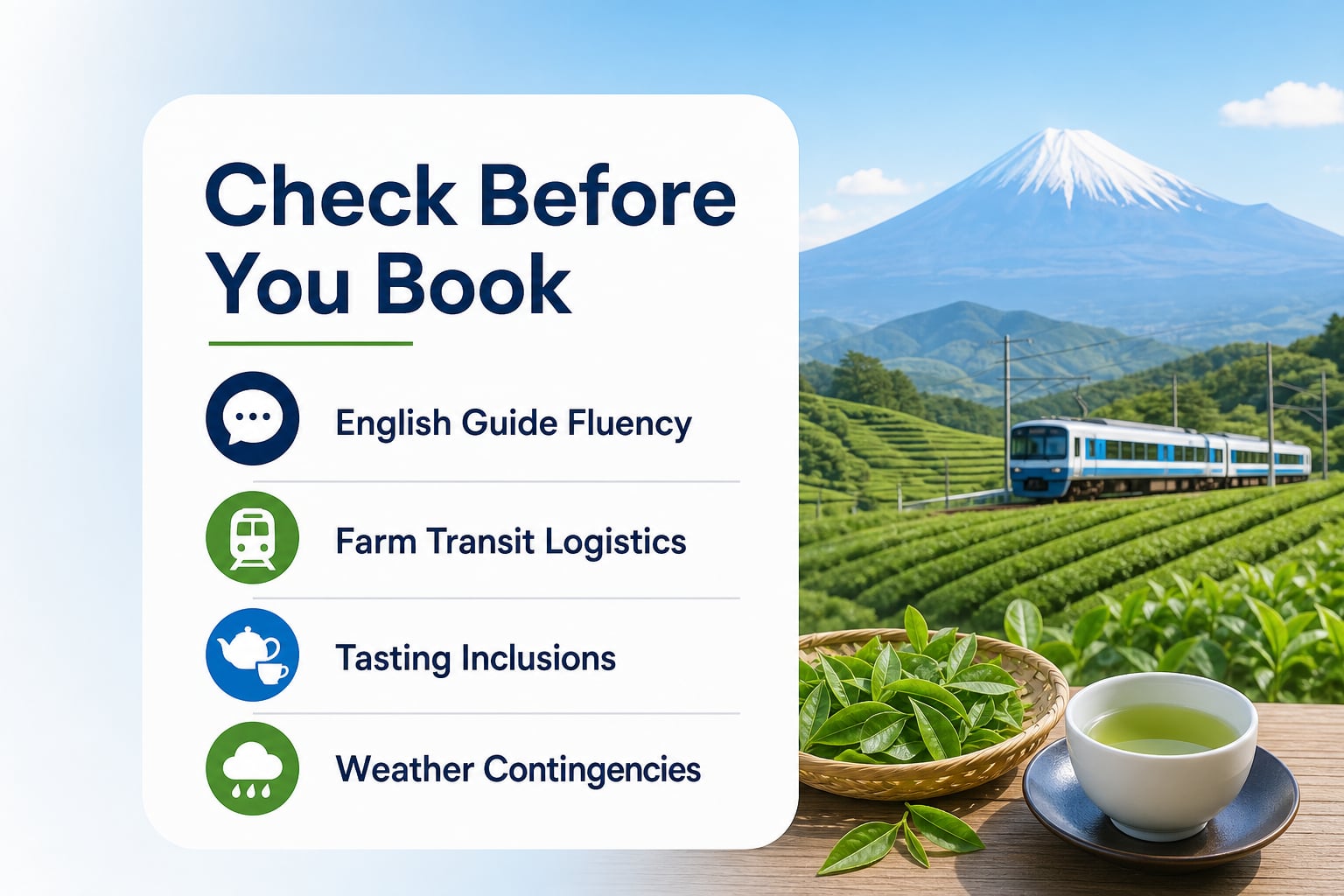
Evaluating an English-guided tour requires reviewing practical inclusions beyond surface-level brochure descriptions to prevent travel misunderstandings. Because many tea farms are working agricultural properties situated outside central tourist districts, verifying language proficiency and transport logistics is vital. Clarifying these operational details ahead of time ensures a smooth, stress-free cultural experience on the day of your visit.
Language barriers can significantly impact how much you understand about complex farming and brewing philosophies. Look for experiences led by certified bilingual guides, licensed travel professionals, or tea masters who have verified international communication backgrounds. Reading recent verified reviews from foreign travelers provides objective evidence that the tour host communicates technical tea concepts clearly in English.
Pricing structures also vary significantly across online travel agencies and independent reservation platforms. Transparent pricing policies clearly outline whether factory admission, leaf-tasting flights, traditional attire rentals, and station pickups are covered in the stated quote. Understanding exactly what your booking payment includes protects you from unexpected cash charges while traveling through rural Shizuoka.
Essential Verification Checklist for International Visitors
Checking every operational item before completing an online booking eliminates unexpected friction during your transit day. Confirming local station pickup points, rainy-day indoor alternatives, and exact dietary considerations guarantees your party enjoys every moment.
| Item to Check | What to Verify in the Quote | Why It Matters for Your Trip |
|---|---|---|
| Guide Language Skill | Whether the guide is fluent in English or uses machine trans | Ensures deep understanding of tea history, tasting notes, an |
| Station Transit & Taxi | If pickup from the nearest JR train station is included or r | Rural farms often lack frequent buses, making unplanned taxi |
| Tasting & Material Fees | Whether tea leaf tastings, treats, and take-home samples are | Prevents surprise on-site fees when transitioning between fi |
| Weather Contingency Plan | Indoor factory, museum, or tea room options if rain stops fi | Protects your travel schedule since mountain tea picking is |
| Cancellation & Refund Terms | Cutoff dates for full refunds and weather-related cancellati | Provides financial protection if Shinkansen travel is disrup |
How can you explore Shizuoka’s tea heritage at the Tea Museum and historic districts?
Visiting cultural landmarks allows travelers to understand the profound historical roots that made Shizuoka the green tea capital of Japan. During the Kamakura Period from 1185 to 1333, the monk Shoichi Kokushi brought tea seeds from China to his native Shizuoka, establishing hillside cultivation. Centering your tour around authentic heritage centers provides rich historical context that enriches every cup you taste on the farms.
A premier destination is the Tea Museum, Shizuoka, located on the sweeping Makinohara Plateau in Shimada City. Established on grounds formerly known as the Shimada City Ochanosato Museum and completely renovated by Shizuoka Prefecture, the facility showcases exhibits on world tea history, Japanese Zen connections, and traditional Japanese architecture. Visitors can stroll through a reconstructed historic garden, participate in tea ceremonies, and grind tencha leaves into vibrant matcha on stone mills.
In downtown Shizuoka City, the Chamachi merchant district offers a living look into centuries of commercial blending craftsmanship. Historically, surrounding mountain valleys delivered raw aracha leaves to Chamachi, where master blenders perfected finishing, drying, and sorting techniques. Guided walking tours through Chamachi allow visitors to enter historic warehouses, meet multigenerational tea merchants, and sample rare single-origin cultivars.
- The Tea Museum, Shizuoka (Shimada City): Explore comprehensive bilingual exhibits covering 1,200 years of tea culture, authentic Japanese garden courtyards, and hands-on matcha stone-grinding workshops.
- Chamachi Wholesale Quarter (Aoi Ward, Shizuoka City): Walk historic tea processing streets where wholesale houses have sorted, fired, and distributed premium green tea to nationwide consumers for generations.
- Kissa Yojo-ki Historical Connection: Discover how Eisai Zenji’s famous 800-year-old health treatise helped transform green tea from an elite monastic medicine into a beloved daily beverage.
What authentic tea varieties can you taste during a Shizuoka tea plantation visit?
Tasting a diverse spectrum of local tea styles reveals the complex interplay between Shizuoka’s geography, soil, and steaming techniques. Rather than offering one uniform taste, regional producers craft distinct profiles ranging from delicate floral mountain teas to deep, savory shaded brews. Understanding these primary varieties enables you to appreciate the subtle aroma and taste differences during farm tastings.
The signature regional style is fukamushicha, a deep-steamed sencha perfected across the sunny Makinohara plateau and Kakegawa plains. By steaming harvested leaves two to three times longer than traditional methods, farmers break down leaf cellular structures, creating a rich jade-green liquor with low astringency and sweet vegetal sweetness. In contrast, mountain valleys like Kawane and Honyama specialize in lightly steamed asamushicha, celebrated for its clear golden color and refreshing floral aroma.
Specialty varieties like shaded gyokuro and roasted hojicha provide additional depth to your tasting palate. Shizuoka produces elite gyokuro, notably in the Asahina district of Fujieda, where bushes are covered with dark straw nets for weeks before harvest to concentrate umami amino acids. Meanwhile, roasted hojicha and roasted stem teas provide nutty, comforting flavors that make wonderful pairings with traditional wagashi confections.
- Fukamushicha (Deep-Steamed Sencha): Characterized by its intense emerald cup color, cloudy body, and rounded, velvety sweetness produced by extended steam heat processing.
- Asamushicha (Light-Steamed Mountain Sencha): Delivers an elegant golden-yellow infusion with lingering floral fragrance, cultivated in misty mountain river valleys with cool morning air.
- Asahina Gyokuro (Shaded Green Tea): Grown under dense canopy shade for three weeks, yielding an extraordinary burst of savory umami that tastes rich like concentrated broth.
- Hojicha and Regional Bancha: Sencha or bancha leaves carefully roasted over high heat to remove bitterness, resulting in an aromatic, low-caffeine tea suitable for any hour.
How do local businesses and farms partner to welcome international tea enthusiasts?
Bridging the gap between rural tea growers and global travelers requires dedicated regional collaboration and multilingual marketing expertise. Many multigenerational tea masters, family-run ryokans, and boutique café operators possess world-class hospitality but face language barriers and limited time to manage international booking channels. When regional businesses connect with professional digital marketing partners, international visitors can easily discover authentic countryside treasures that were previously difficult to book.
At Glocal by Shinker, an inbound tourism marketing agency based in Shizuoka City, our mission is to showcase the genuine charm of regional businesses to international travelers. Led by CEO Hikaru Soneda, our specialized team assists regional hotels, restaurants, tourist attractions, and experience providers in establishing clear online visibility. Through English-language website development, social media management, Google Business Profile optimization, and overseas OTA coordination, regional operators can welcome guests from around the globe seamlessly.
Our company’s results demonstrate how strategic inbound support transforms local tourism operations across Shizuoka Prefecture. In our hotel inbound marketing support project, a regional hotel optimized its overseas OTA channels and English social media, achieving increased international inquiries and stronger global brand recognition. Similarly, in our restaurant digital marketing project, introducing English social media management and Google Maps optimization allowed foreign visitors to discover authentic local dining, establishing the business as a favorite inbound destination.
Whether you are a traveler looking forward to an unforgettable Shizuoka tea tour or a local hospitality owner seeking to attract overseas visitors, authentic local collaboration creates lasting value. For tourism operators, ryokan managers, and experience providers ready to expand their global reach, reaching out to an experienced inbound marketing partner is the first step toward sustainable business growth.
- Initial Consultation & Needs Assessment: Submit an inquiry to discuss your business goals, target visitor demographics, and current marketing obstacles with our inbound team.
- Customized Inbound Strategy Formulation: Receive a tailored proposal covering multilingual website design, OTA listings, social media curation, or Google Maps optimization.
- Agreement & Global Launch: Finalize your agreement to begin launching English content and digital marketing campaigns that attract travelers worldwide.
Frequently Asked Questions
Q1. What is a Shizuoka tea tour?
A Shizuoka tea tour is a travel experience where visitors explore local green tea plantations, learn about traditional cultivation and processing, and sample freshly brewed teas in Japan’s premier tea-growing region.
Q2. What should you wear when visiting a tea farm?
Wear comfortable walking shoes with good grip and clothes you do not mind getting dirty. Outdoor tea fields often have uneven, sloping ground, so practical footwear and weather-appropriate layers are essential.
Q3. How far in advance should you book an English-guided tour?
You should reserve at least several weeks in advance, especially during the spring harvest season. Farms have limited English-speaking guides and small group capacities, so spots fill up quickly.
Q4. Can you visit Shizuoka tea farms without renting a car?
Yes, several farms are accessible by train and short taxi rides from Tokyo. However, local train and bus schedules can be infrequent, so you should check return transit times before your trip.
Q5. Do tea tours still operate if it rains?
Most tours continue during light rain, though outdoor picking might be replaced by indoor tastings or factory workshops. Always confirm the farm’s severe weather cancellation policy before your visit.