
Discover the best places to visit in Shizuoka for iconic Mt. Fuji views and unique travel styles. Our local guide helps you choose the perfect Shizuoka destination.

 執筆者:Hikaru SonedaCEO
Many travelers struggle to decide which of the best places to visit in Shizuoka are truly worth their limited time when moving between Tokyo and Kyoto.
This guide provides a professional breakdown of the best places to visit in Shizuoka, categorized by travel style to help you build a high-impact itinerary.
Which Shizuoka region best matches your personal travel style?
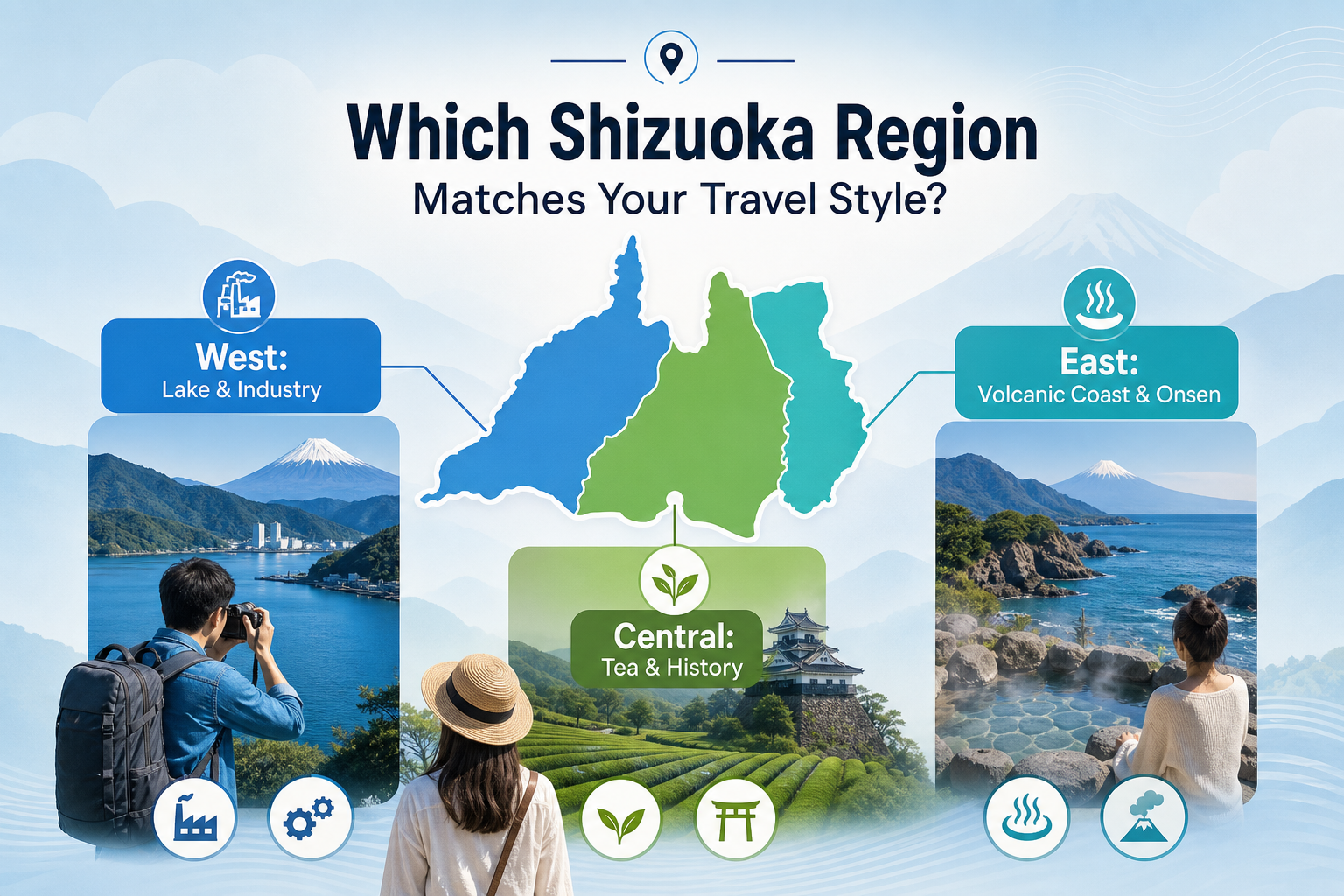
Shizuoka is a sprawling prefecture that offers vastly different experiences depending on whether you head east, central, or west. To maximize your trip, you must first identify your primary travel persona, as the distance between major hubs like the Izu Peninsula and Hamamatsu can exceed two hours by train. The eastern region is a paradise for those seeking volcanic coastlines and hot springs, while the central area serves as the historical heart of the prefecture with deep ties to the Tokugawa Shogunate.
For the modern traveler or the adventurer, the western region near Hamamatsu offers a mix of industrial innovation and scenic lake activities. Understanding these geographic distinctions ensures you do not waste time in transit and instead focus on the specific landscapes that match your interests. Whether you are a Mt. Fuji photographer or a green tea foodie, Shizuoka has a dedicated zone tailored to your specific needs.
| Region | Travel Persona | Key Landscape | Primary Activity | Main Transport Hub |
|---|---|---|---|---|
| East (Izu Peninsula) | The Hot Spring Enthusiast | Volcanic coasts and mountains | Onsen hopping and hiking | Atami or Mishima Station |
| Central (Shizuoka City) | The History & Tea Foodie | Tea plantations and shrines | Cultural tours and Mt. Fuji views | JR Shizuoka Station |
| West (Hamamatsu) | The Modern Adventurer | Large lakes and urban skylines | Lake sports and industrial tours | JR Hamamatsu Station |
| North (Fuji/Gotemba) | The Mt. Fuji Photographer | Highland plateaus and mountain base | Photography and outlet shopping | Gotemba or Shin-Fuji Station |

参考: Shizuoka region、「観光客の消費少ない」弱点、県観光アプリで挽回へ
How do the best places to visit in Shizuoka compare?
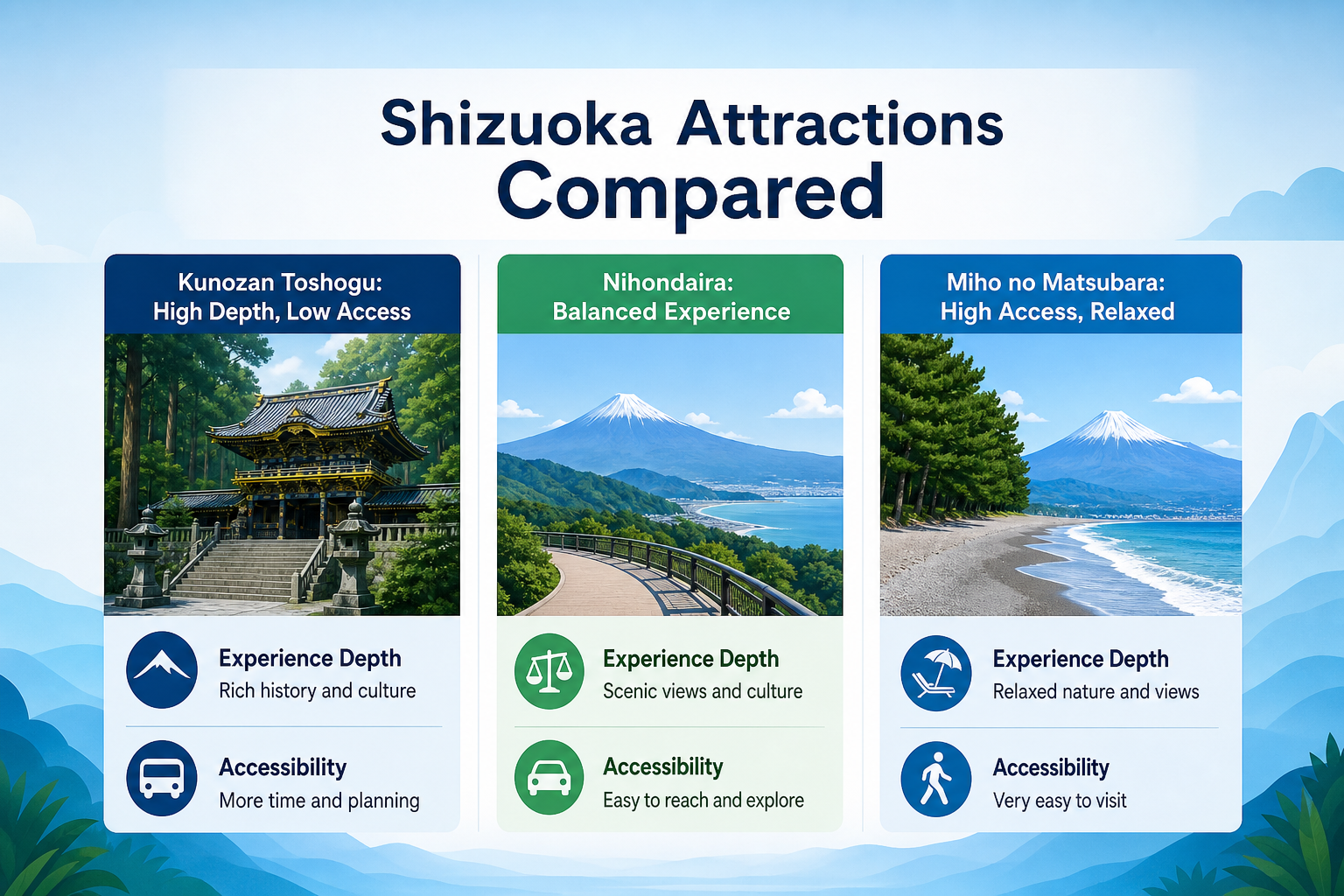
When evaluating the best places to visit in Shizuoka, it is essential to compare them based on accessibility and the depth of the experience provided. For instance, Kunozan Toshogu Shrine offers a profound historical narrative as the original burial place of Tokugawa Ieyasu, but it requires a climb of 1,159 stone steps or a ropeway ride. In contrast, Miho no Matsubara offers a more relaxed outdoor experience with its famous pine grove and views of Mt. Fuji across the water, making it ideal for those who prefer scenic walks over steep climbs.
For those interested in commercial attractions, Gotemba Premium Outlets stands as one of Japan’s most popular shopping destinations with over 290 shops and restaurants. Comparing these spots helps you balance cultural immersion with modern leisure. General observations show that international visitors often prefer a mix of these high-energy shopping spots and quiet, traditional locations to feel they have experienced the ‘real’ Japan.
| Attraction | Category | Physical Effort | Crowd Level | Estimated Visit Time |
|---|---|---|---|---|
| Kunozan Toshogu | History/Religion | High (1,159 steps) | Moderate | 2-3 Hours |
| Miho no Matsubara | Nature/Scenic | Low (Flat beach) | High | 1-1.5 Hours |
| Gotemba Outlets | Shopping/Leisure | Moderate (Walking) | Very High | 3-5 Hours |
| Mishima Skywalk | Adventure/View | Low (Paved bridge) | High | 1.5-2 Hours |
参考: best places to visit in Shizuoka
What are the best places to visit in Shizuoka for iconic Mt. Fuji views?
Seeing Mt. Fuji is the top priority for most travelers, but the quality of the view depends heavily on your location and the time of day. Nihondaira is widely considered one of the best places to visit in Shizuoka because it provides a panoramic observation area, offering a stunning perspective of the mountain alongside Suruga Bay. For a more thrilling experience, the Mishima Skywalk allows you to view the peak from Japan’s longest pedestrian suspension bridge, which stretches 400 meters across a valley.
If you prefer a traditional ‘postcard’ view, a popular shopping street in the city offers a unique urban perspective where the mountain appears to loom directly over the end of the road. Each of these spots offers a different ‘frame’ for the mountain, so choosing the right one depends on whether you want a natural, architectural, or urban backdrop for your photography.
| Viewpoint | Style of View | Key Feature | Best Photography Time | Accessibility |
|---|---|---|---|---|
| Nihondaira | Panoramic/Nature | Observation deck; 360-degree views | Early morning | Bus from JR Shizuoka |
| Mishima Skywalk | Thrilling/Aerial | 400m long bridge; 70.6m high | Mid-morning | Bus from JR Mishima |
| Miho no Matsubara | Classic/Coastal | Pine grove and ocean foreground | Sunset | Bus from JR Shimizu |
| Fuji City Viewpoint | Urban/Street | Symmetrical street view of peak | Daylight | Walk from JR Fuji |

参考: Mt. Fuji views、ライブカメラ富士山ビュー|静岡県公式ホームページ
How should you choose the right Shizuoka destination for your trip?
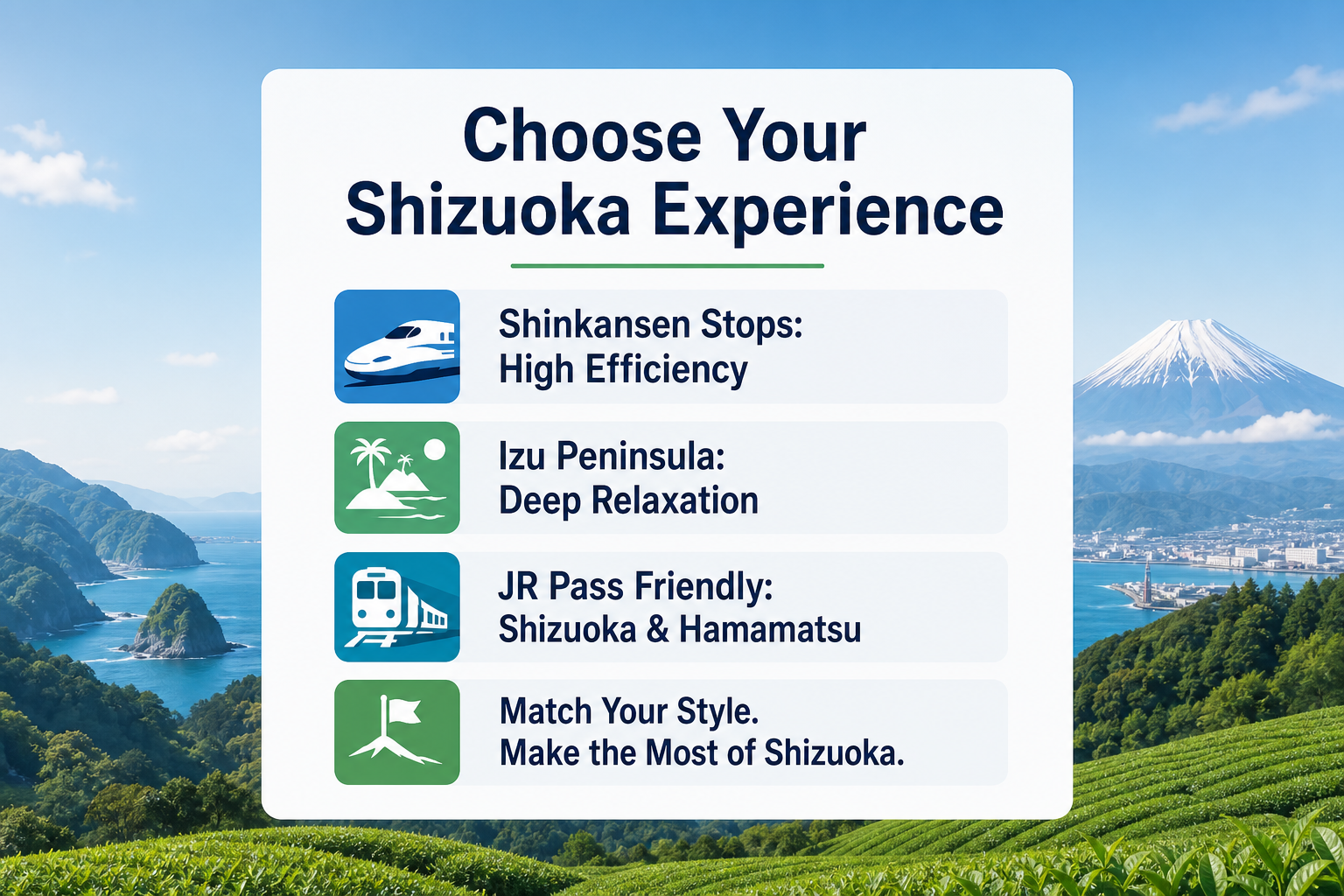
Choosing the right destination requires a strategic look at your overall Japan itinerary. If you are using the JR Pass and traveling between Tokyo and Osaka, stopping at JR Shizuoka Station or JR Hamamatsu Station is the most efficient choice as both are major Shinkansen stops. However, if your goal is deep relaxation, you should commit to the Izu Peninsula, which requires a transfer to local lines but offers a much slower, more immersive pace of life.
Consider the duration of your stay as well; a day trip is best spent in Shizuoka City or Mishima, whereas a two-night stay allows for a complete circuit of the Izu coast. Reaching out to local experts can help travelers easily find these spots during their short stops. By checking the official transit times and local schedules, you can ensure a seamless transition between the bustling cities and Shizuoka’s serene landscapes.
| Trip Duration | Recommended Base | Primary Destinations | Transport Mode | Travel Goal |
|---|---|---|---|---|
| Half-Day / Day Trip | Shizuoka City | Kunozan Toshogu, Nihondaira | Shinkansen + Local Bus | Efficient Sightseeing |
| Full Day Trip | Mishima / Gotemba | Skywalk, Premium Outlets | Shinkansen + Shuttle | Shopping & Views |
| 2-3 Days | Izu (Atami/Shimoda) | Jogasaki Coast, Shuzenji | Limited Express Train | Relaxation & Onsen |
| 2-3 Days | Hamamatsu | Lake Hamana, Act City Tower | Shinkansen + Rental Car | Food & Adventure |
参考: Golden Route
Best Places to Visit in Shizuoka for Coastal Relaxation and Onsen (Izu Peninsula)
The Izu Peninsula is widely regarded as one of the best places to visit in Shizuoka for those who want to escape the urban grind. Shuzenji Temple and its surrounding hot spring town offer a glimpse into the ‘Little Kyoto’ of Izu, with bamboo forests and historic ryokans. For nature lovers, the Jogasaki Coast provides a dramatic 9-kilometer hiking trail along volcanic cliffs formed by the eruption of Mt. Omuro thousands of years ago.
Further south, Shimoda offers some of mainland Japan’s most beautiful white-sand beaches, such as Shirahama. This area is perfect for travelers who want to combine historical exploration—Shimoda was the site of the arrival of Commodore Perry’s Black Ships—with coastal relaxation. The variety of experiences in Izu makes it a versatile choice for families and couples alike.
| Spot Name | Best For | Key Highlight | Vibe | Access from Tokyo |
|---|---|---|---|---|
| Shuzenji Onsen | Cultural Relaxation | Bamboo Forest Path & Temple | Traditional/Quiet | 2 hrs (Limited Express) |
| Jogasaki Coast | Active Nature | Kadowaki Suspension Bridge | Rugged/Scenic | 2.5 hrs (Train + Bus) |
| Mt. Omuro | Geological Interest | Lush 300m volcanic crater | Majestic/Open | 2.5 hrs (Train + Bus) |
| Shirahama Beach | Summer Leisure | Clear water and white sand | Energetic/Beach | 3 hrs (Train) |
Best Places to Visit in Shizuoka for Green Tea and History (Shizuoka City & Central Area)
Shizuoka City is the epicenter of Japan’s green tea production, accounting for a significant portion of the nation’s total output. Visiting the Nihondaira tea fields allows you to see the iconic rows of tea bushes with Mt. Fuji in the background, a view that has defined the region’s identity for centuries. General tourism data has shown that international visitors are increasingly seeking these authentic agricultural experiences over standard tourist traps.
In addition to tea, the central area is rich in history related to the Edo period. Sumpu Castle Park, the retirement home of Ieyasu Tokugawa, offers reconstructed gates and beautiful gardens. For a deeper dive, Kunozan Toshogu Shrine features intricate carvings and vibrant lacquer work that rivals the famous shrines of Nikko. This blend of agriculture and history makes central Shizuoka a must-visit for cultural enthusiasts.
| Site | Focus | Must-See Feature | Historical Significance | Suggested Activity |
|---|---|---|---|---|
| Kunozan Toshogu | Shogunate History | Main Hall (National Treasure) | Original burial site of Ieyasu | Guided historical tour |
| Sumpu Castle Park | Edo Period | Tatsumi Yagura Gate | Ieyasu’s retirement castle | Strolling & Tea house |
| Nihondaira | Tea Culture | Terraced tea plantations | Heart of tea production | Tea tasting & Photos |
| Shimizu Port | Trade & Food | Kashi-no-Ichi Fish Market | Historic trade gateway | Fresh tuna lunch |
Best Places to Visit in Shizuoka for Adventure and Modern Attractions (Western Shizuoka & Hamamatsu)
Western Shizuoka, centered around Hamamatsu, is the best place to visit for those who enjoy modern architecture and industrial heritage. The Act City Tower, Hamamatsu’s only skyscraper, offers an observatory on the 45th floor with views that stretch from the Southern Alps to the Pacific Ocean. This region is also famous for its musical instrument history, being the home of Yamaha and Kawai, which adds a unique cultural layer to the urban exploration.
For families, the Fuji Safari Park in Susono (near the border of central and west) is Japan’s largest safari park, allowing visitors to see animals in a semi-natural habitat with the mountain as a backdrop. Additionally, Lake Hamana offers various water sports and the unique experience of ‘unagi’ (eel) dining, which is a local specialty. Marketing efforts for local businesses in this area have shown that highlighting these unique food experiences significantly increased engagement from international foodies.
| Attraction | Type | Unique Selling Point | Best For | Key Specialty |
|---|---|---|---|---|
| Act City Tower | Urban/Observation | 45F view of the Pacific | Photography/City views | Modern architecture |
| Lake Hamana | Nature/Leisure | Large brackish lake | Families/Sports | Unagi (Eel) cuisine |
| Fuji Safari Park | Wildlife | Safari drive with Mt. Fuji view | Families/Kids | Close-up animal encounters |
| Hamamatsu Castle | History | The ‘Castle of Success’ | History buffs | Tokugawa Ieyasu’s early years |
Maximizing Your Visit: Practical Logistics and Travel Tips for Shizuoka
To truly enjoy the best places to visit in Shizuoka, understanding the transport logistics is vital. The prefecture is served by three major Shinkansen stations: Mishima, Shizuoka, and Hamamatsu. While the Kodama and Hikari trains stop here regularly, the Nozomi does not, so travelers should plan their departures from Tokyo or Osaka accordingly to avoid long waits. Utilizing local buses and regional transport passes can also save significant costs for those exploring the Fuji and Izu areas.
Finally, remember that Shizuoka’s charm lies in its seasonal changes. Spring brings cherry blossoms at Sumpu Castle, while autumn offers vibrant maples in Shuzenji. Our mission is to help you connect with these authentic local stories. By choosing the right season and transport method, you can transform a simple stopover into the highlight of your Japanese journey. Always check the official weather and visibility forecasts for Mt. Fuji to ensure you pick the best day for your visit.
| Travel Element | Recommendation | Key Tip | Estimated Cost | Booking Advice |
|---|---|---|---|---|
| Shinkansen | Hikari or Kodama | Check stops at Shizuoka Station | Details are available upon request | Use JR Pass or SmartEX |
| Local Transport | Rental Car | Essential for Izu and Lake Hamana | 7,000 JPY/day | International permit required |
| Best Season | Late Autumn (Nov) | Highest Fuji visibility and foliage | N/A | Book hotels 3 months early |
| Food Focus | Green Tea & Seafood | Try ‘Sakura Shrimp’ in Shimizu | 1,500 – 3,000 JPY | Visit fish markets by 11 AM |
Frequently Asked Questions
Q1. What is Shizuoka?
Shizuoka is a Japanese prefecture located between Tokyo and Nagoya. It is famous for being the home of Mt. Fuji, producing high-quality green tea, and offering diverse landscapes ranging from coastal peninsulas to mountainous highlands.
Q2. Is it possible to visit Shizuoka as a day trip from Tokyo?
Yes, many areas in Shizuoka are accessible via the Shinkansen bullet train in about one hour. This makes it a convenient stop for travelers moving between Tokyo and Kyoto who want to see Mt. Fuji or coastal scenery.
Q3. How do I choose between the different regions in Shizuoka?
Selection depends on your travel style. The eastern side is ideal for hot springs and coastal views, the central area is great for tea culture and history, while the western side offers unique lakes and industrial heritage.
Q4. Where can I get the best views of Mt. Fuji within the prefecture?
The best views are typically found in the eastern and northern parts of the prefecture. Locations near the coast or elevated plateaus offer iconic perspectives of the mountain, especially on clear days during the cooler months.
Q5. What is the best way to get around Shizuoka once I arrive?
While major cities are connected by trains, reaching scenic viewpoints and rural tea farms often requires using local buses or renting a car. Public transport is reliable, but some remote areas have less frequent service.