
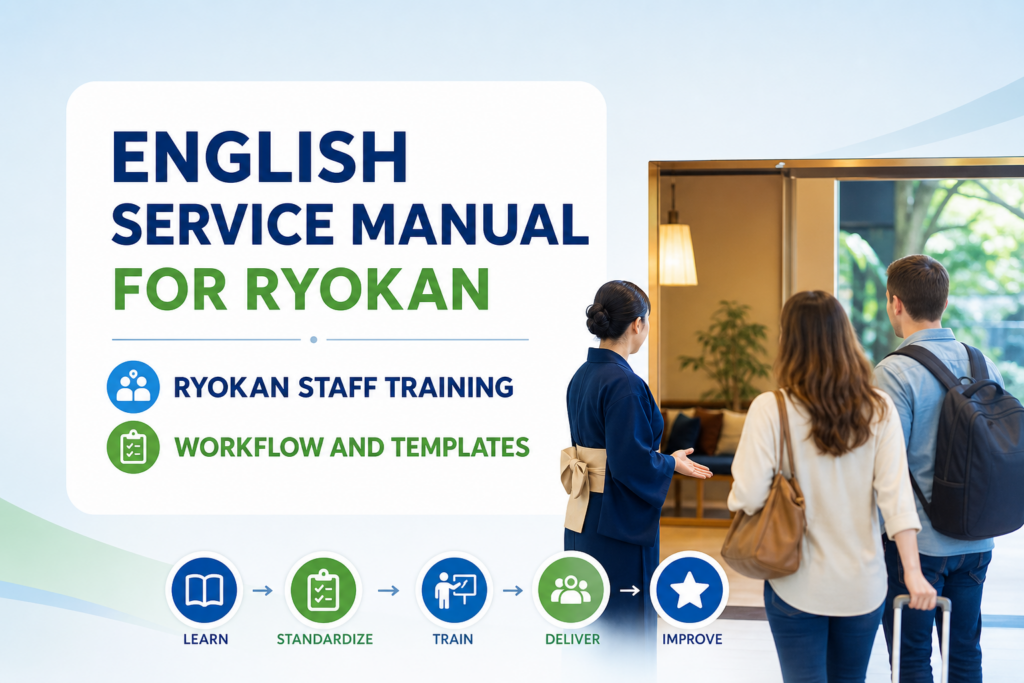
Improve hospitality with an English service manual for ryokan. Learn essential workflows, guest templates, and tips for explaining traditions like onsen and yukata.
 執筆者:Hikaru SonedaCEO
Managing a traditional ryokan while welcoming international guests can feel overwhelming when language barriers prevent your team from sharing the true spirit of Japanese hospitality.
This guide provides a structured English service manual for ryokan to standardize staff training, improve guest satisfaction, and streamline your inbound operations effectively.
Why is a specialized English service manual for ryokan essential?
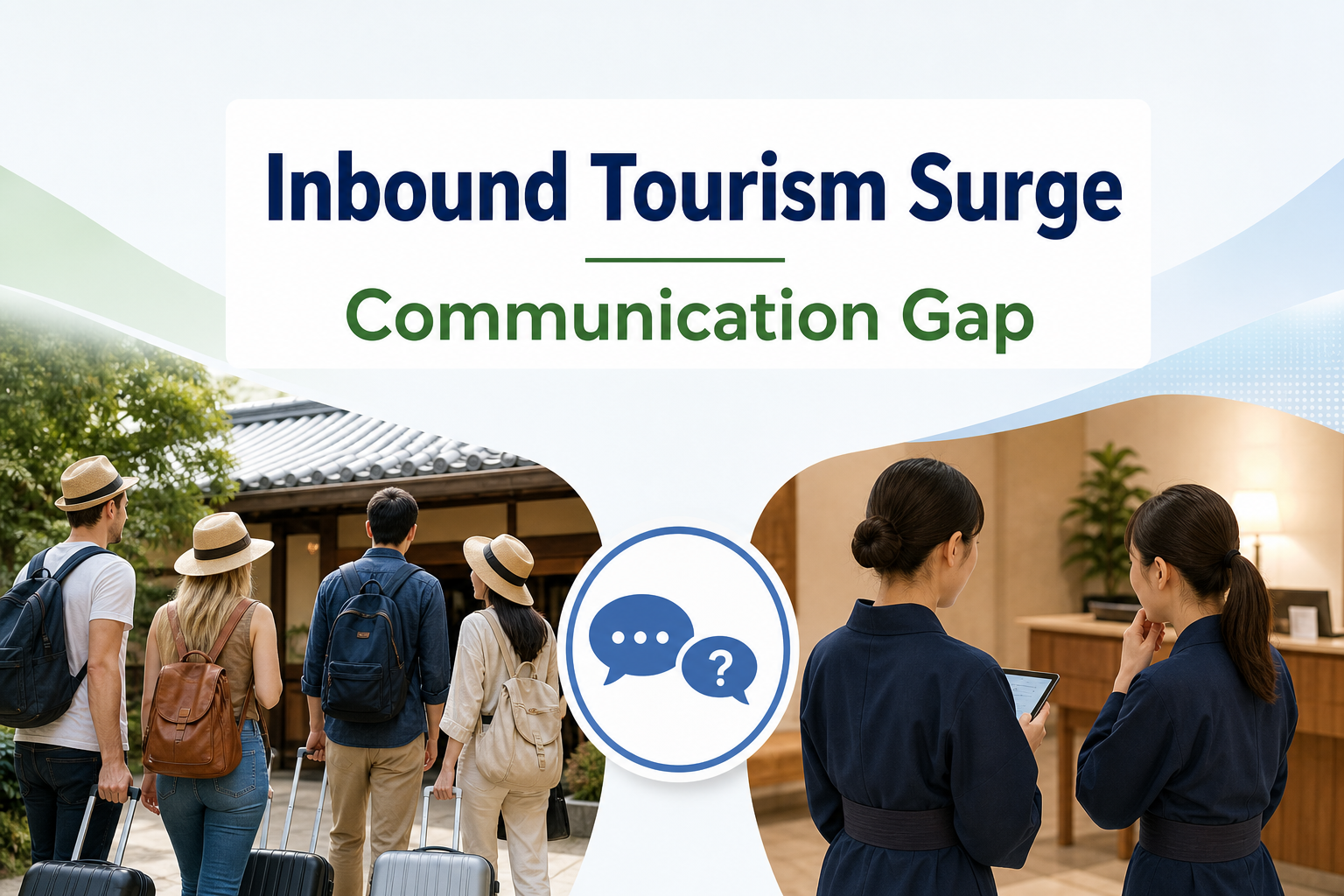
The demand for authentic Japanese experiences is reaching record highs, with tourism data showing that visitor numbers in early 2025 exceeded pre-pandemic levels, reaching a significant number of monthly travelers. For ryokan owners in Shizuoka and across Japan, this surge represents a massive opportunity to grow revenue, but it also highlights a critical gap in communication. Unlike standard hotels, ryokan offer a deeply cultural experience that requires specific explanations for customs like sleeping on futons, wearing yukata, and navigating communal baths. A specialized English service manual for ryokan is the only way to ensure these traditions are respected and understood by international guests.
Relying on generic hotel English phrases often leads to confusion because they lack the cultural nuance necessary for a ryokan stay. When staff members are unsure of how to explain complex rules or schedules, it can lead to negative reviews and operational friction. By implementing a standardized manual, you provide your staff with the confidence to handle any situation, from check-in to check-out, while maintaining the high standards of omotenashi. This professional approach not only improves the guest experience but also reduces the stress on managers who otherwise have to intervene in every English-speaking interaction.
参考: Shizuoka inbound tourism needs
What are the essential steps in a ryokan English service workflow?
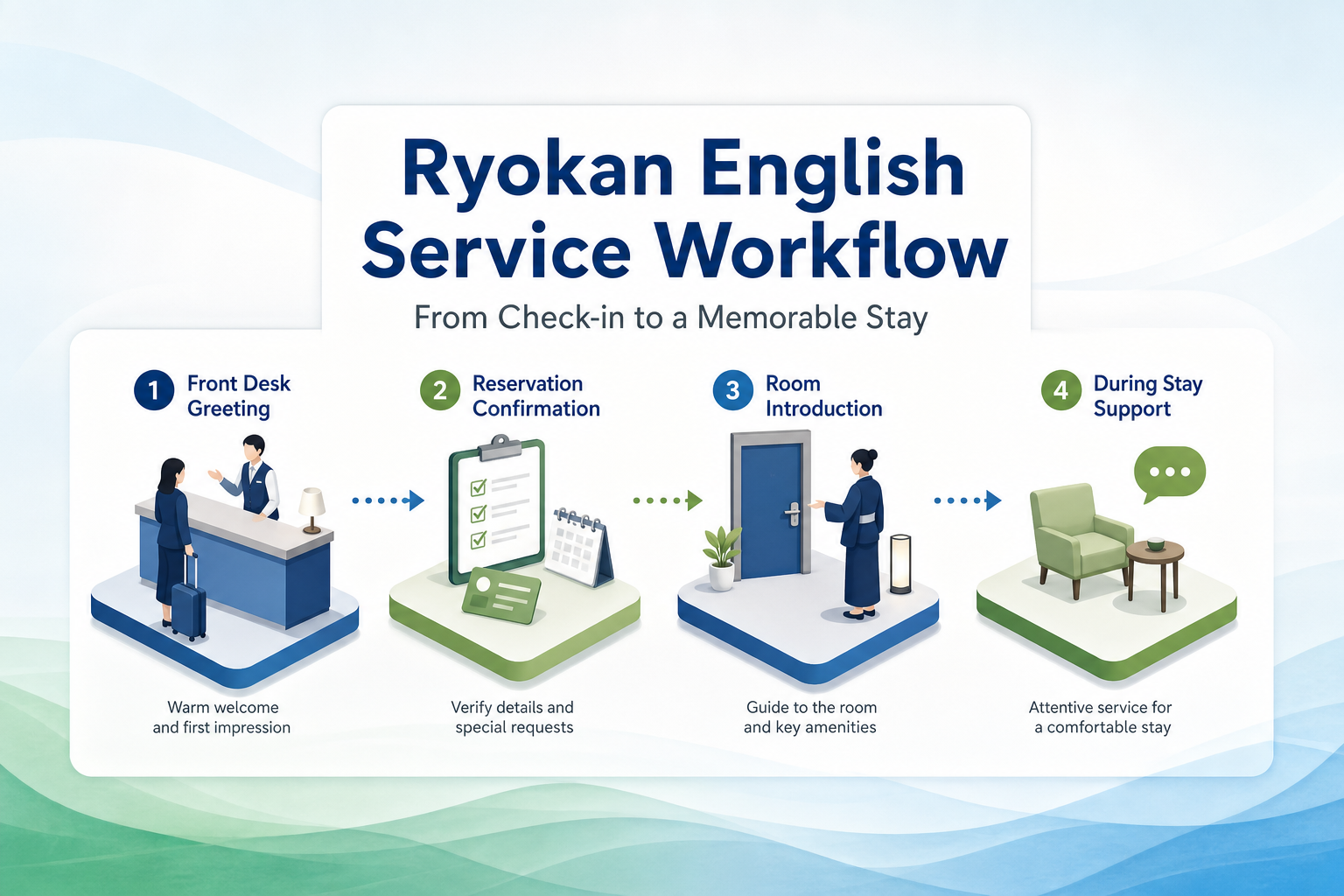
A successful English service manual for ryokan must follow a logical workflow that mirrors the guest’s journey through your facility. The process begins at the front desk with a warm greeting and a clear confirmation of the reservation details to prevent any billing or room-type errors. Using structured phrases like ‘May I have your name?’ and ‘You will stay with us for two nights’ helps establish a professional tone immediately. This initial interaction is the foundation of the guest’s trust in your staff’s ability to provide a high-quality stay.
Once the check-in is complete, the workflow transitions to the room orientation, which is arguably the most important part of the ryokan experience. Staff must be trained to guide guests through the unique features of the room, such as the tokonoma (alcove) and the proper use of the slippers. Explaining the schedule for dinner and breakfast clearly is vital, as many international guests are not accustomed to the strict dining times typical of traditional inns. A well-organized manual ensures that no detail is missed, providing a consistent experience for every visitor.
- Greeting and Identification: Welcome the guest warmly and confirm their identity using their passport and reservation name to ensure accuracy from the start.
- Reservation Confirmation: Clearly state the duration of the stay, the number of guests, and the specific room type booked to avoid misunderstandings during billing.
- Facility and Schedule Briefing: Explain the locations of the dining room and baths, along with the specific times for meals and check-out.
- Room Escort and Orientation: Lead the guest to their room and explain how to use the facilities, including the air conditioning, Wi-Fi, and tea set.
How can you explain unique ryokan traditions like yukata and onsen?
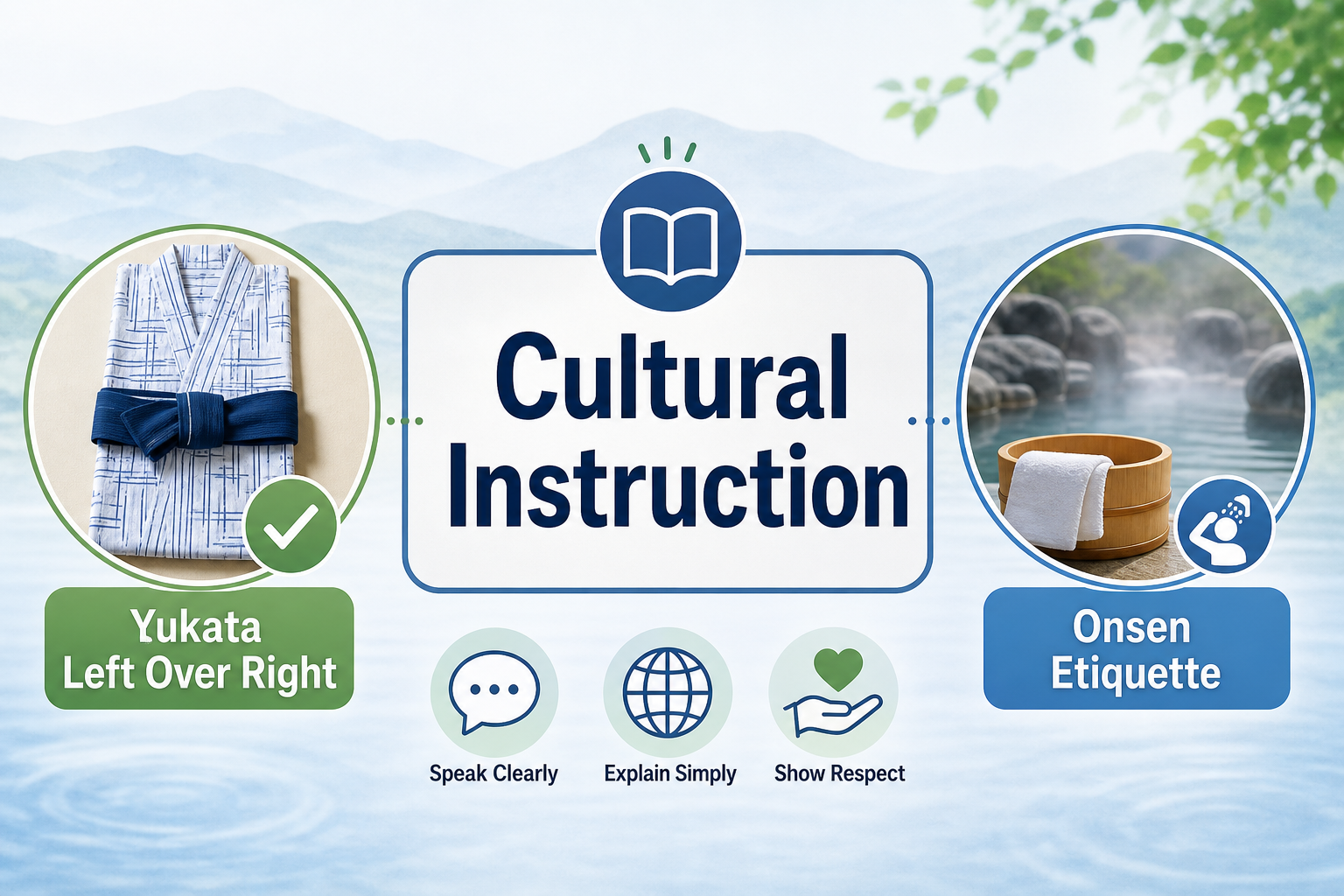
Explaining Japanese traditions requires a balance of politeness and clear instruction to ensure guests feel comfortable while following local etiquette. For example, when introducing the yukata, staff should demonstrate the ‘left over right’ rule to avoid the style associated with funerals, which can be an embarrassing mistake for guests. Using a phrase like ‘Please wrap the left side over the right side’ is a simple way to provide this guidance without being overbearing. Including visual aids in your manual can further reinforce these instructions for staff and guests alike.
The onsen, or hot spring bath, is often the highlight of a ryokan stay but can also be the biggest source of anxiety for first-time international visitors. Your English service manual for ryokan should include a step-by-step guide on bathing etiquette, emphasizing the importance of washing before entering the pool and the ‘no swimsuits’ policy. Phrases like ‘Please rinse your body before entering the bath’ and ‘Swimsuits are not allowed in the communal area’ provide clear boundaries that help guests relax and enjoy the experience safely and respectfully.
参考: onsen etiquette
Dealing with Dietary Requirements and Dining Etiquette in English
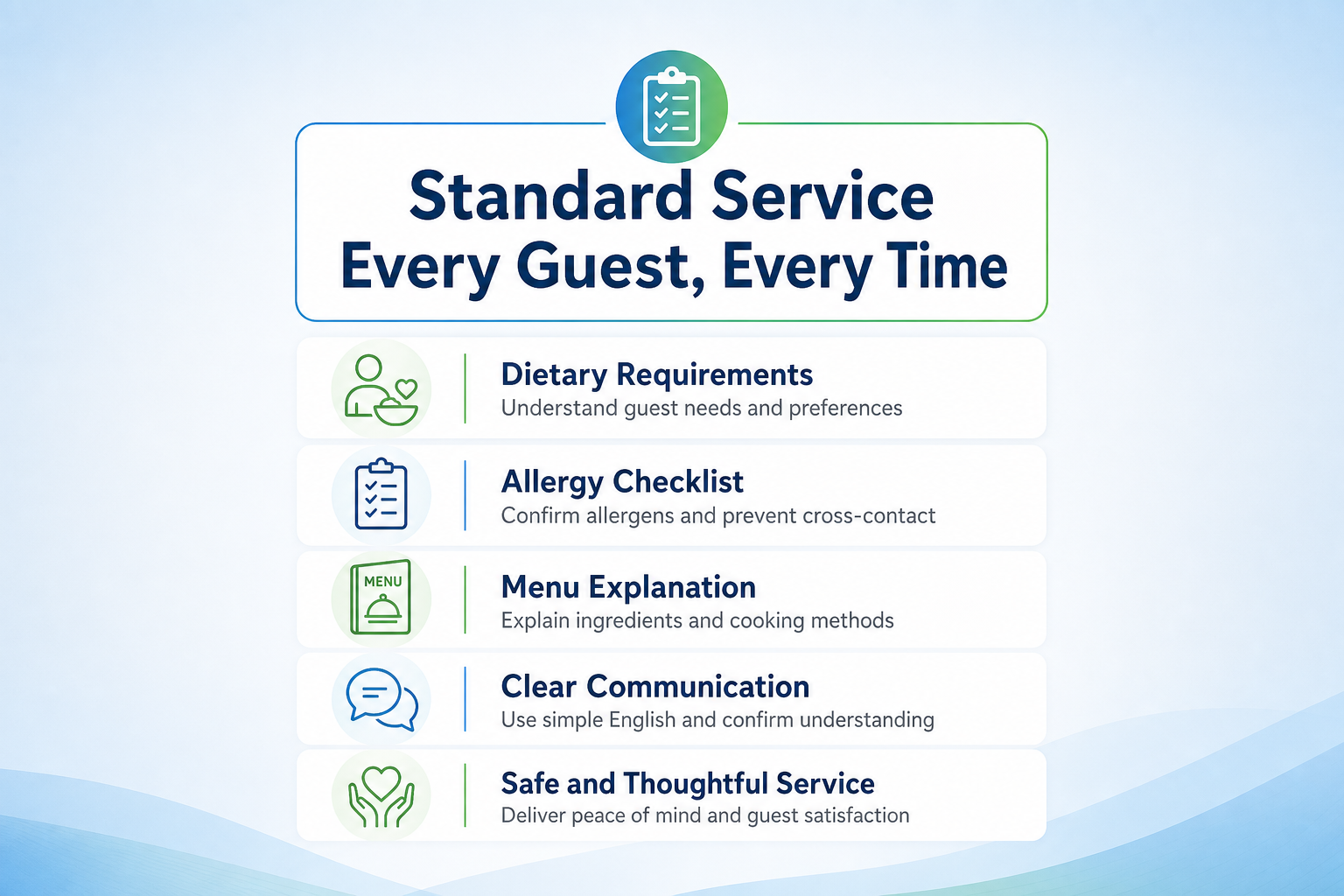
Dining is a central pillar of the ryokan experience, yet it is often where the most complex communication challenges arise. With the rise of diverse dietary needs such as vegetarianism, gluten-free diets, and religious restrictions, it is essential that your staff can discuss ingredients accurately in English. A manual should include a checklist for confirming allergies upon arrival, using phrases like ‘Do you have any food allergies or dietary restrictions?’ This proactive approach prevents medical emergencies and ensures that the kitchen can make necessary adjustments in a timely manner.
Beyond dietary needs, explaining the kaiseki (traditional multi-course) meal adds a layer of sophistication to the service. Staff should be able to briefly describe the seasonal nature of the dishes, using simple terms like ‘This dish features local seasonal vegetables from Shizuoka.’ Highlighting local ingredients not only educates the guest but also increases the perceived value of the meal. By standardizing these descriptions in your English service manual for ryokan, you ensure that every guest receives the same high-level storytelling regardless of which staff member is serving them.
参考: dietary needs
Handling Emergencies and Guest Inquiries with Confidence

While daily hospitality is the focus, your English service manual for ryokan must also prepare staff for unexpected situations and common guest inquiries. International travelers often rely on the front desk for local logistics, such as finding the nearest convenience store or understanding bus schedules. For example, if a guest asks for directions to a local attraction, staff should be trained to provide specific details like, ‘The nearest station is about a 5-minute walk from here,’ or ‘You can take bus 51 from the stop in front of the hotel.’ Providing clear, actionable information reduces guest frustration and builds the reputation of your ryokan as a helpful and welcoming destination.
Emergency procedures are equally critical, especially in a country prone to natural disasters like earthquakes. Your manual must include simple, direct English instructions for evacuation and safety. Phrases such as ‘Please stay calm and follow me to the exit’ or ‘This is a drill’ are essential for maintaining order during a crisis. By training your staff with these phrases regularly, you ensure that they can act decisively under pressure, protecting both the guests and the business. This level of preparedness is a hallmark of professional inbound management.
How can templates help standardize your English service manual for ryokan?
Creating an English service manual for ryokan from scratch can be a daunting task for busy owners, which is why using a template-based approach is highly effective. Templates provide a proven structure that covers the most common scenarios, allowing you to simply fill in the details specific to your property, such as meal times and bath locations. This standardization ensures that even new or part-time staff can deliver a high level of service from their first day. It also creates a cohesive brand voice for your ryokan, as every guest hears the same polite and professional phrasing.
Furthermore, a standardized manual serves as a permanent training asset that reduces the need for one-on-one coaching by the manager. Instead of repeating instructions, you can provide the staff with a printed or digital copy of the manual to study. This efficiency is crucial for small teams where time is a limited resource. Over time, these templates can be updated based on actual guest feedback, creating a living document that constantly improves your inbound marketing and service quality. Investing in a professional manual is an investment in the long-term sustainability of your business.
Why choose a Shizuoka-based partner for your ryokan’s inbound marketing?
For ryokan owners in Shizuoka, partnering with a local expert offers a unique advantage in reaching the international market. We understand the specific charm of the Shizuoka region—from the views of Mt. Fuji to the local tea culture—and we know how to translate that value into English marketing that resonates with global travelers. Our team combines international experience with a deep commitment to regional growth. We don’t just provide translations; we provide a comprehensive inbound strategy that includes OTA optimization, social media management, and staff training support.
Our office is conveniently located just a short walk from the North Exit of JR Shizuoka Station, making us an accessible partner for local businesses. We believe that every ryokan has a story worth sharing with the world, and our mission is to help you tell it effectively through digital innovation and professional communication. By choosing a local partner, you benefit from someone who can visit your facility, understand your unique challenges, and provide data-driven solutions that lead to measurable increases in bookings and guest satisfaction.
Taking the Next Step: Customizing Your Inbound Strategy with Glocal
Ready to transform your ryokan into a global destination? Glocal offers flexible service plans designed to meet the needs of any accommodation provider, whether you are a small traditional inn or a larger facility. Our Economy plan provides essential OTA registration and optimization to get your property noticed. For those seeking more comprehensive support, our Standard and Premium plans include English Instagram management and multilingual marketing strategies that drive direct bookings and enhance your online presence across Booking.com, Airbnb, and TripAdvisor. Detailed pricing, including commissions and monthly fees, will be provided based on your specific requirements.
The process is simple: submit an inquiry through our website, and we will schedule an initial consultation to discuss your specific goals. We will provide a customized proposal and quotation tailored to your ryokan’s unique needs. Don’t let language barriers hold your business back from the growing inbound market. Contact Glocal by Shinker today to start building your professional English service manual and marketing strategy, and let’s show the world the incredible hospitality Shizuoka has to offer.
| Plan | Monthly Fee | Initial Fee | Key Services |
|---|---|---|---|
| Economy | Please contact us for details | Please contact us for details | OTA registration & optimization |
| Standard | Please contact us for details | Please contact us for details | OTA + English Instagram management |
| Premium | Please contact us for details | Please contact us for details | Full inbound marketing strategy |
Frequently Asked Questions
Q1. What is an English service manual for ryokan?
It is a specialized guidebook designed to help staff provide traditional Japanese hospitality to international guests. It standardizes English phrases and workflows for unique services like check-in, serving kaiseki meals, and explaining cultural customs like using public baths.
Q2. Why is it important to use templates in a service manual?
Templates help standardize the level of service across different staff members. They provide clear, repeatable scripts and procedures, ensuring that every guest receives the same high-quality hospitality regardless of which staff member is on duty.
Q3. How should staff explain unique traditions like yukata or onsen?
Staff should use the service manual to offer simple, step-by-step instructions. By following a structured workflow, they can clearly explain how to wear a yukata or the proper etiquette for bathing, making international guests feel comfortable and respected.
Q4. What are the key steps in a ryokan service workflow?
The workflow typically includes greeting guests upon arrival, conducting a room orientation, explaining meal times and menus, and managing the checkout process. Each step focuses on clear communication to bridge language barriers and share Japanese culture.
Q5. How does a specialized manual improve guest satisfaction?
A manual reduces misunderstandings and allows staff to communicate the ‘spirit’ of hospitality more effectively. When guests understand the traditions and feel well-cared for in their own language, their overall experience and satisfaction levels increase.