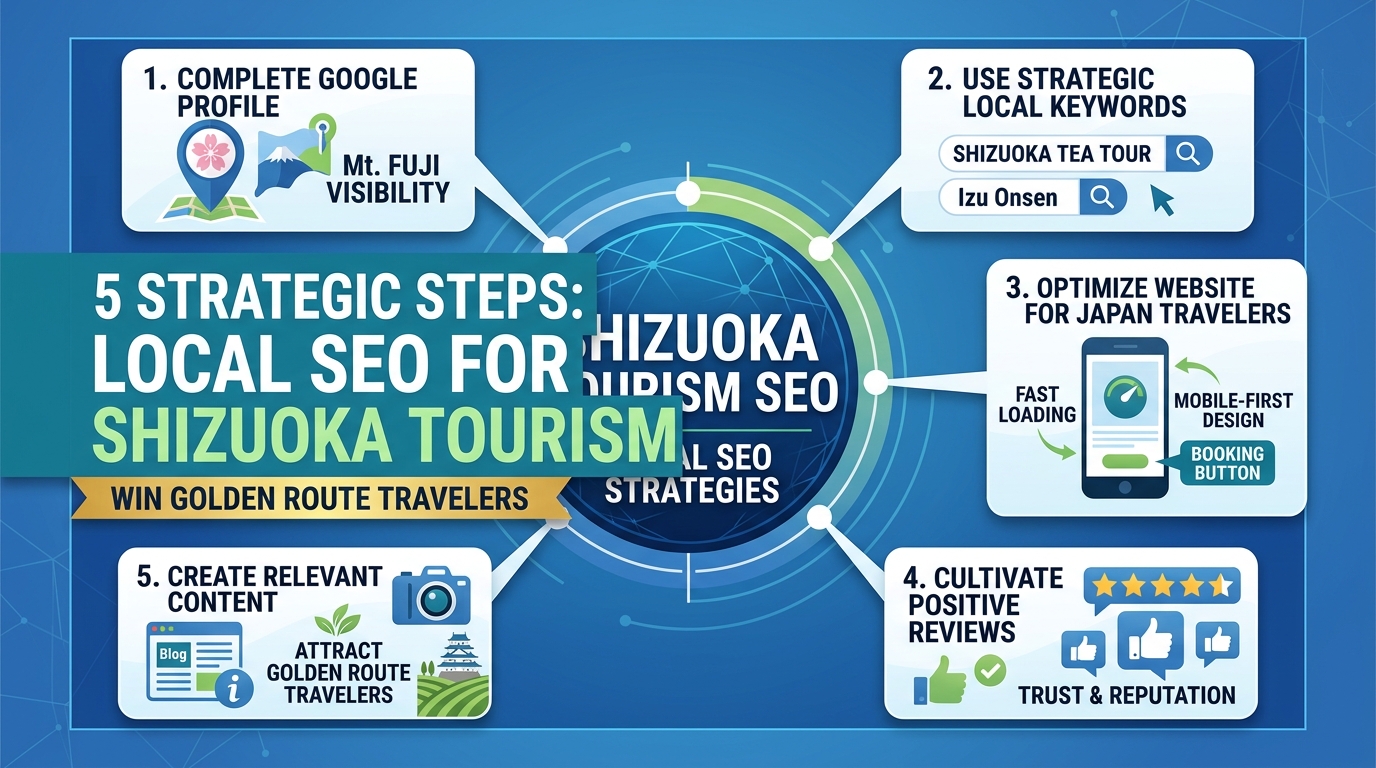
Boost your business with Local SEO for Shizuoka tourism. Learn 5 strategies to capture Golden Route travelers, manage reviews, and increase direct bookings.
Many Shizuoka business owners feel frustrated as thousands of international travelers pass through on the Shinkansen daily without stopping to experience local hospitality.
This guide provides a hyper-local strategy for Local SEO for Shizuoka tourism, helping you capture ‘transit demand’ and turn Golden Route travelers into your loyal guests.
How can Shizuoka businesses capture “transit demand” from Golden Route travelers?
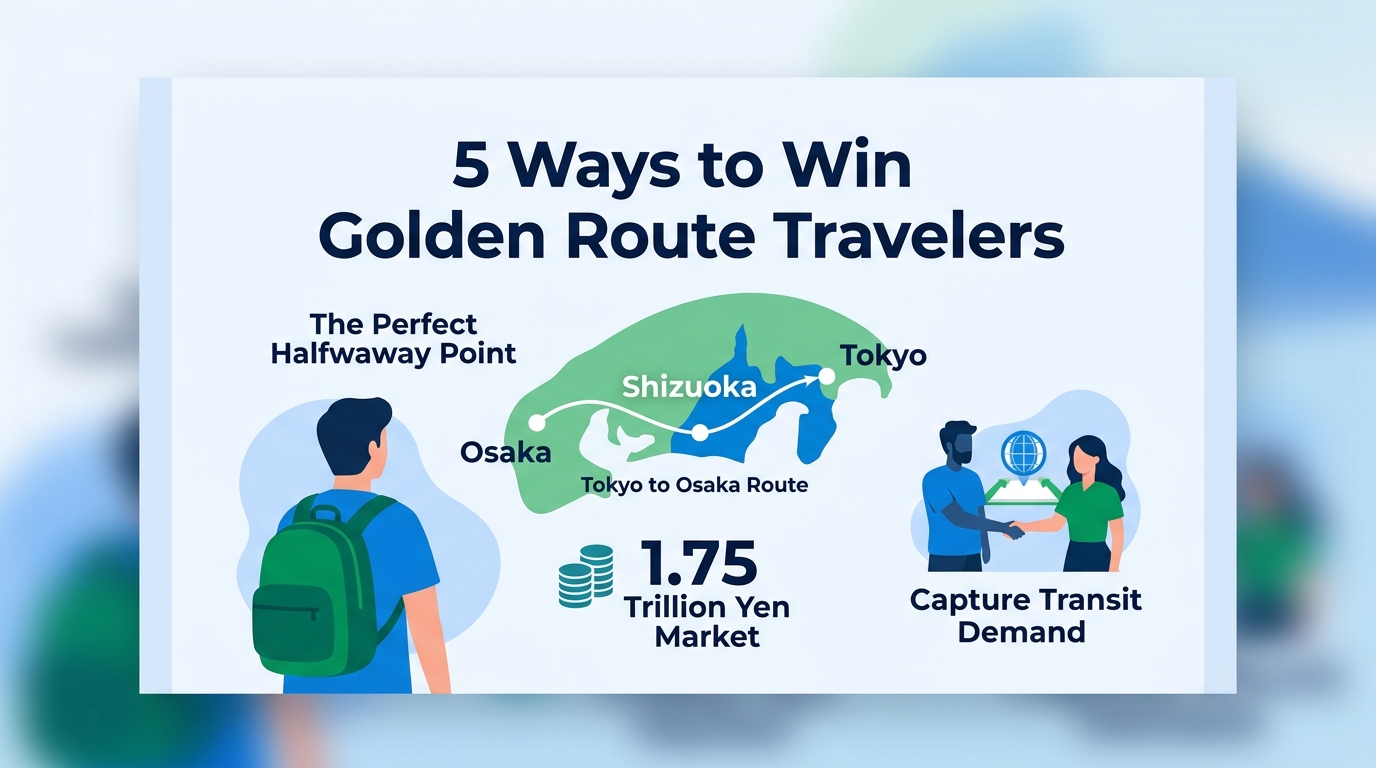
Capturing ‘transit demand’ requires a strategic presence on Google Maps that highlights Shizuoka’s unique position as the perfect halfway point between Tokyo and Osaka. As of 2024, inbound tourism spending in Japan has reached record highs, with 1.75 trillion yen recorded in the first quarter alone, yet many regional businesses miss out because they lack visibility on global platforms. To win these travelers, your Google Business Profile must emphasize convenience, such as being a ‘10-minute walk from JR Shizuoka Station‘ or offering a ‘scenic lunch stop near the Fuji-Kawaguchiko route.’
The Golden Route—the traditional path from Tokyo to Kyoto—is Shizuoka’s greatest opportunity if you position your business as an essential stop-over rather than just a pass-through point. Travelers searching for ‘best green tea near Shinkansen’ or ‘Mt. Fuji view restaurant’ are looking for immediate, accessible experiences that fit into a tight travel schedule. By optimizing for these specific ‘stop-over’ keywords, Shizuoka businesses can tap into the massive flow of international visitors who are eager to see the ‘real Japan’ beyond the major metropolitan hubs.
Data from 2024 shows that international visitors are increasingly seeking high-quality, authentic experiences, with average per-person spending rising to 209,000 yen. For Shizuoka, this means that your Local SEO strategy must go beyond simple location data to showcase the depth of your cultural offerings, such as traditional ryokan hospitality or local seafood specialties. Providing clear, English-language information about your proximity to major transit hubs is the first step in converting a passing traveler into a paying customer.
How should you tailor Local SEO for the Fuji, Shizuoka City, and Hamamatsu regions?
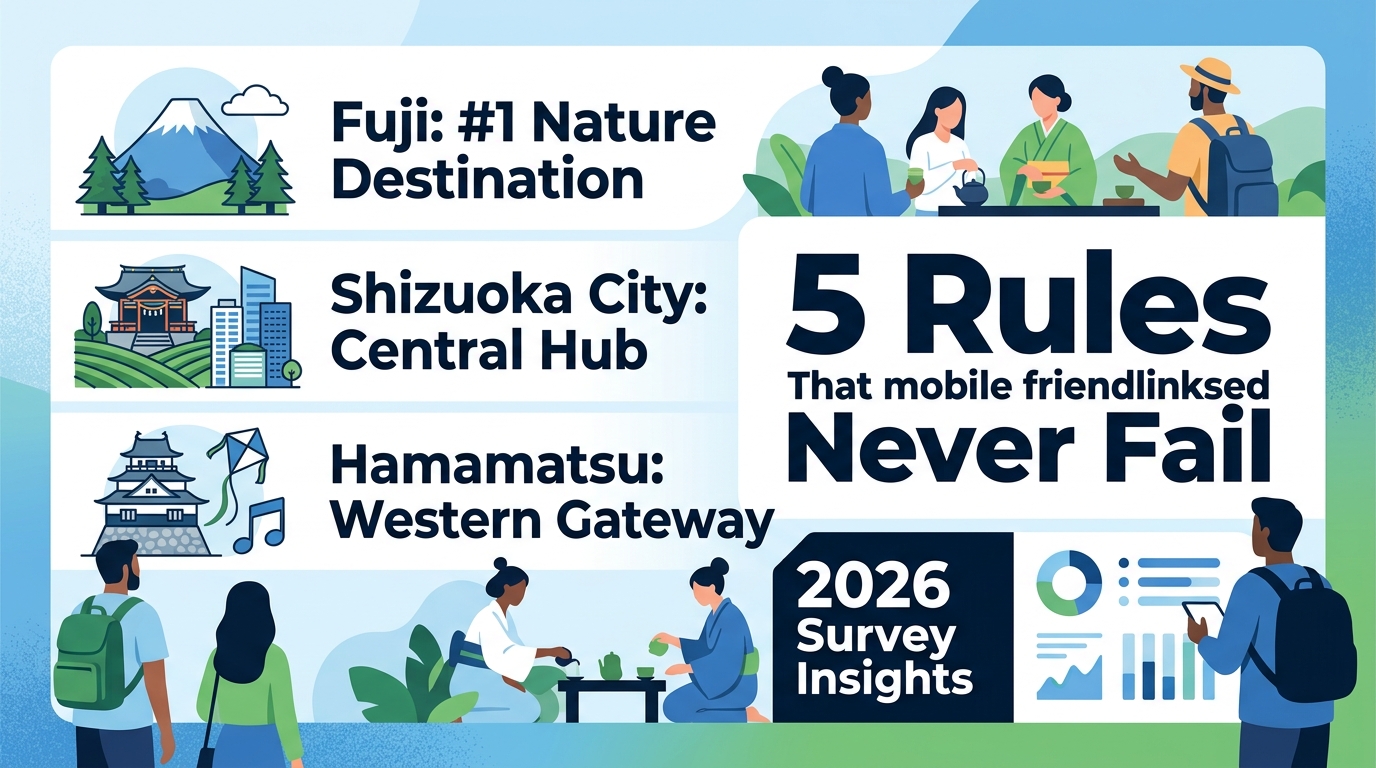
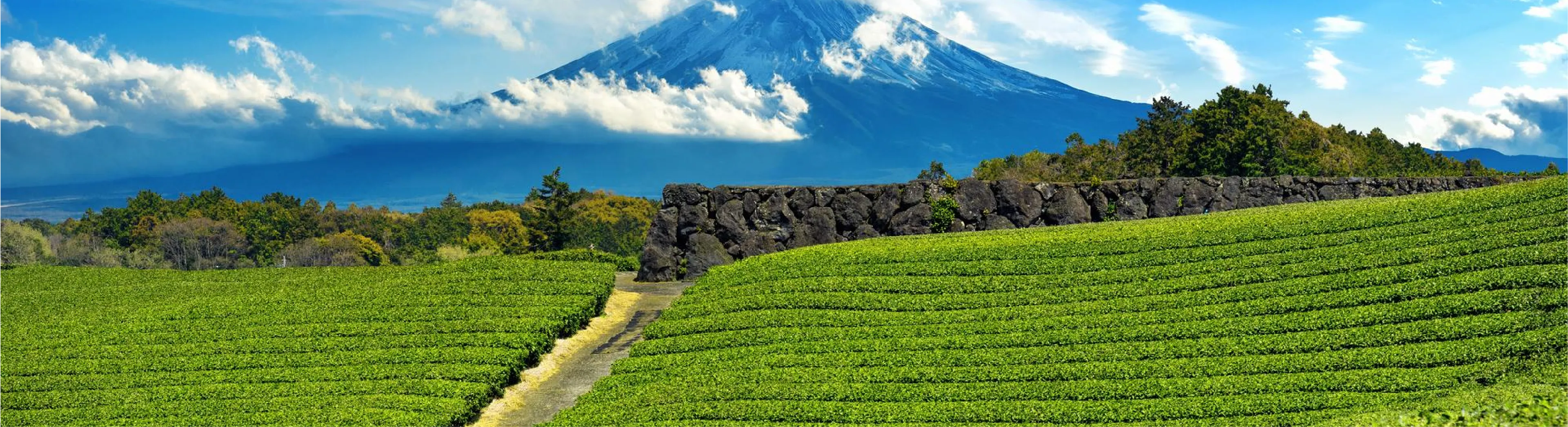
A successful Local SEO strategy in Shizuoka must account for the distinct traveler personas visiting the Eastern, Central, and Western regions of the prefecture. In the Fuji and Izu areas, the focus should be on nature and leisure, as Mt. Fuji remains the number one ranked destination for international tourists in Shizuoka according to 2026 surveys. Businesses here should optimize for keywords like ‘Mt. Fuji viewing spot‘ or ‘Izu hot springs’ while ensuring high-quality photos of the landscape are uploaded to their Google Business Profiles.
In Central Shizuoka, specifically around Shizuoka City, the strategy shifts toward urban convenience, history, and culinary excellence. Since the area serves as a major transit hub, Local SEO should highlight proximity to the North Exit of JR Shizuoka Station and specific local delicacies like Oden or green tea. For businesses in this region, appearing in the ‘Map Pack‘ for searches related to ‘dinner near Shizuoka Station’ is critical for capturing the evening transit crowd that stays overnight before continuing their journey.
Western Shizuoka, centered around Hamamatsu, attracts a different demographic interested in industrial heritage, Lake Hamana, and musical history. SEO efforts here should target travelers looking for ‘Hamamatsu eel‘ or ‘Lake Hamana activities’ to differentiate the region from the more mountain-centric East. By tailoring your content to these regional identities, you ensure that your business appears in front of the right audience at the right time, maximizing the relevance of your digital footprint across the prefecture.
- Fuji/Izu Region: Focus on visual SEO with high-resolution photos of Mt. Fuji and nature-related keywords to attract sightseers and outdoor enthusiasts.
- Shizuoka City (Central): Prioritize ‘near station’ keywords and evening dining options to capture business travelers and Golden Route stop-overs.
- Hamamatsu (Western): Highlight unique regional food like Unagi and cultural experiences related to the city’s musical and industrial history.
参考: 令和4年度 静岡県における観光の流動実態と満足度調査 …
What are the best practices for managing multilingual reviews and Google Business Profiles?
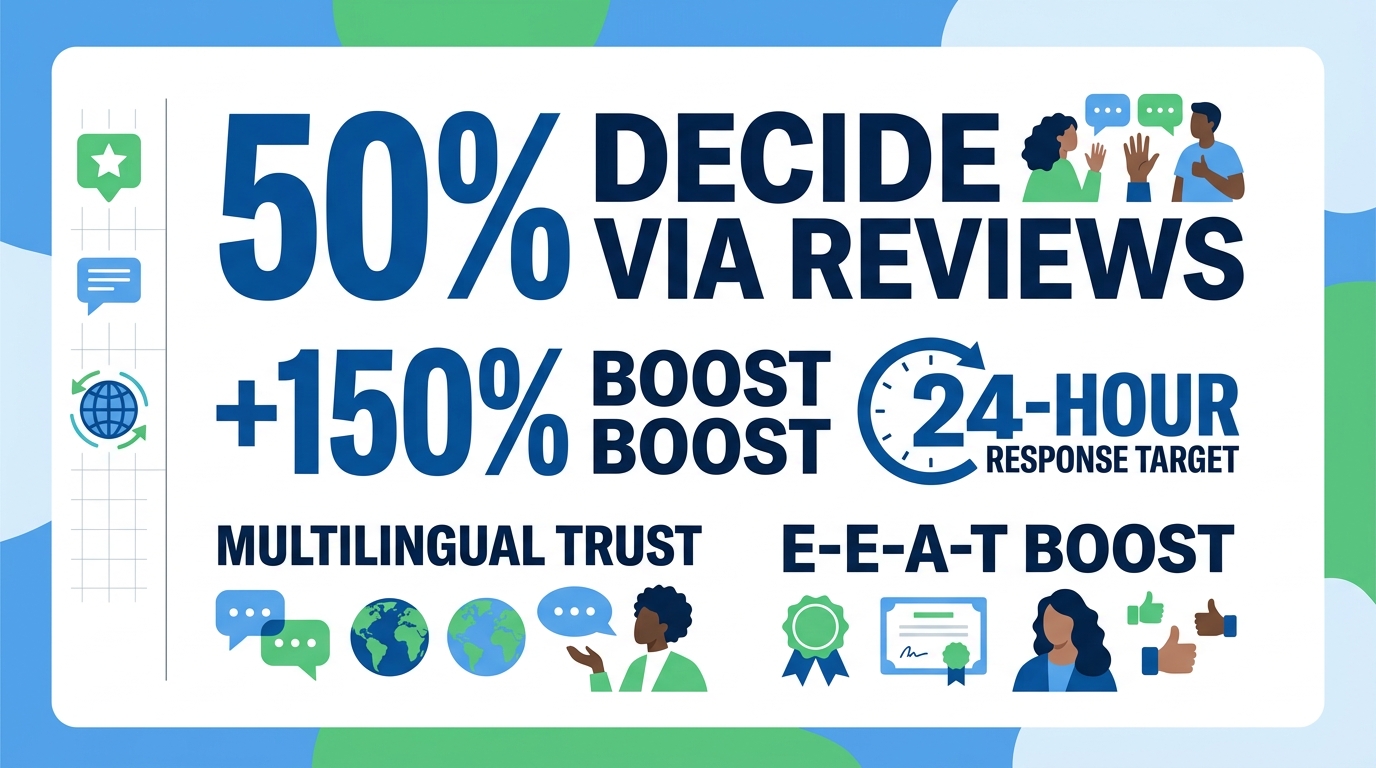
Managing multilingual reviews is no longer optional; it is a core component of E-E-A-T and local trust for Shizuoka’s tourism businesses. Research indicates that over 50% of travelers decide on a business based on reviews, and for international visitors, seeing responses in their own language—or at least in English—builds immense confidence. For hotels in Shizuoka City, the ideal standard is to respond to all reviews within 24 hours, addressing specific feedback about cleanliness, service, and hospitality to maintain a high ranking.
Utilizing AI-driven tools can help Shizuoka businesses manage the volume of reviews without overwhelming their staff. Tools like MapBoost offer automated response generation that can handle various topics from ‘room cleanliness’ to ‘meal quality’ in multiple languages. This ensures that every guest feels heard, which in turn improves your business’s ‘prominence’ in Google’s local ranking algorithm, a key factor in Local SEO for Shizuoka tourism.
Beyond reviews, your Google Business Profile must be fully translated and updated with ‘Attributes’ that appeal to international visitors, such as ‘English-speaking staff‘ or ‘Free Wi-Fi.’ In 2024, Google Maps supports over 74 languages, meaning your profile can automatically adapt to the user’s settings if you provide the necessary data. High-quality photos of menus with English translations and clear signage can significantly reduce the ‘barrier to entry’ for a foreign tourist standing outside your shop in Gofuku-cho.
How does a strong local presence reduce OTA dependency and increase direct bookings?
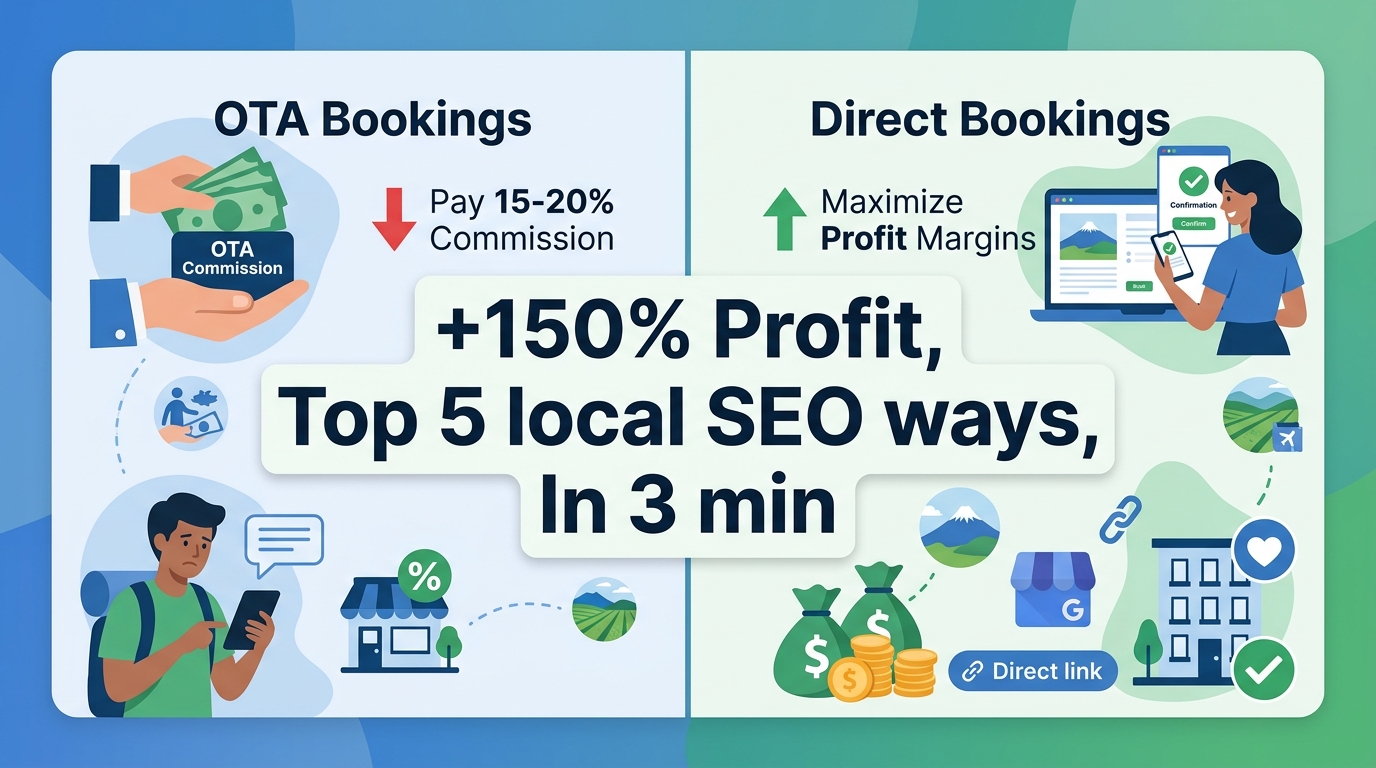
A robust Local SEO strategy allows Shizuoka hotels and ryokans to reclaim their profit margins by driving traffic directly to their own websites rather than relying solely on high-commission Online Travel Agencies (OTAs). While OTAs are useful for initial discovery, a well-optimized Google Business Profile provides a direct ‘Book’ button or website link that bypasses the 15-20% fees typically charged by platforms like Booking.com. By offering ‘best price guarantees’ on your local listing, you encourage travelers to book directly with you.
For restaurants and smaller attractions, Local SEO acts as a digital storefront that converts searchers into walk-ins without any intermediary costs. When a traveler in Shizuoka searches for ‘sushi near me,’ appearing in the top three results (the Local Pack) provides a level of trust that paid advertisements cannot match. This organic visibility is a sustainable way to grow a business, especially for those with limited marketing budgets who need to maximize every yen spent on digital promotion.
参考: 宿泊施設のための IT活用事例集
Why is integrating English social media with your Google Business Profile essential for growth?
Integrating English-language social media, particularly Instagram, with your Google Business Profile creates a powerful ‘visual search‘ ecosystem that is highly effective for Shizuoka’s scenic tourism. Modern travelers use Instagram as a search engine to verify the atmosphere of a restaurant or the view from a hotel window. By linking your English account to your Google listing, you provide a continuous stream of fresh, authentic content that proves your business is active and welcoming to international guests.
Social media also allows you to bypass the limitations of Google’s static information by using hashtags and location tags to increase discoverability. While Instagram limits users to 30 hashtags, strategic use of tags like #ShizuokaTourism or #VisitFuji can draw users into your profile, where they then find the link to your Google Maps location. This multi-channel approach ensures that your Local SEO for Shizuoka tourism is supported by high-engagement social proof, which is vital for building trust with first-time visitors.
Leveraging Data: Shizuoka’s Inbound Trends and Traveler Preferences
Understanding the data behind Shizuoka’s inbound market is essential for refining your Local SEO strategy to target the most profitable demographics. In May 2024, Japan saw over 3 million monthly visitors for the third consecutive month, with significant spending coming from markets like the United States, Taiwan, and South Korea. For Shizuoka, this means that your digital content should not only be in English but should also consider the specific preferences of these top-spending groups, such as a high demand for ‘authentic cultural experiences.’
Recent surveys from 2026 highlight that while Mt. Fuji is the primary draw, secondary locations like the Gotemba Premium Outlets and Mishima Skywalk are surging in popularity. This shift suggests that travelers are looking for ‘day-trip clusters’ where they can visit multiple high-value sites in one area. If your business is located near these popular spots, your Local SEO should include ‘neighboring attraction’ keywords to capture the spillover traffic from these major landmarks.
Practical Steps for Implementing a Shizuoka-Specific MEO Strategy
To implement an effective MEO (Map Engine Optimization) strategy in Shizuoka, you must first ensure total NAP (Name, Address, Phone) consistency across all digital platforms. If your business is located in the Oak Shizuoka Building in Gofuku-cho, that exact address must appear identically on your website, Google Maps, and social media. This consistency is a primary ranking signal that tells Google your business is a reliable and legitimate destination for travelers searching for services in Aoi-ku.
Next, focus on ‘Local Keyword Injection‘ by naturally including regional landmarks and station names in your business description. Instead of just ‘Sushi Restaurant,’ use ‘Authentic Sushi Restaurant near JR Shizuoka Station North Exit.’ This specific phrasing targets the exact search intent of a traveler who has just stepped off the Shinkansen and is looking for a meal within walking distance. Combining these practical steps with high-quality, professional photography will drastically increase your click-through rate from the search results.
- Claim and Verify Your Profile: Ensure you have full ownership of your Google Business Profile to manage information and respond to reviews immediately.
- Optimize for Multilingual Search: Add English descriptions and attributes like ‘Credit Cards Accepted’ to cater to international traveler needs.
- Upload High-Quality Visuals: Include photos of your storefront, interior, and English menus to reduce anxiety for foreign visitors.
- Encourage and Answer Reviews: Ask satisfied international guests for reviews and respond in English to demonstrate active hospitality.
- Monitor Insights Regularly: Use Google Business Profile insights to see how many people are requesting directions or calling your business.
出典・参考: 東京観光財団によるMEO対策の効果検証データ
The Role of Glocal by Shinker in Your Regional Growth
Glocal by Shinker, operated by Shinker Inc., serves as a bridge between Shizuoka’s local gems and the global travel market. Led by CEO Hikaru Soneda, who brings extensive international experience from the travel industry, our team specializes in transforming regional businesses into global destinations. We understand that local owners are often too busy with daily operations to manage complex digital marketing, which is why we provide end-to-end support from OTA optimization to multilingual social media management.
Our philosophy is centered on measurable business outcomes, not just ‘likes’ or ‘views.’ We have helped hotels and restaurants in Shizuoka significantly increase their international inquiries and bookings by implementing the very strategies outlined in this guide. Whether you are a small cafe in a quiet neighborhood or a large ryokan in Izu, our customized inbound marketing plans are designed to deliver sustainable growth while preserving the authentic culture of your region.
Success Stories: How Local Shizuoka Businesses Transformed Their Visibility
Our company’s results demonstrate the power of a dedicated inbound strategy; for instance, a regional hotel saw a significant surge in international exposure after optimizing their OTA listings and English content with Glocal. By moving away from generic marketing and focusing on the specific needs of overseas guests, the hotel established a brand that resonates with the global ‘Golden Route’ traveler. This success was not just about visibility, but about creating a seamless booking experience that built trust before the guest even arrived.
In another of our results, a local restaurant became a top dining destination for inbound travelers by focusing on Google Business Profile optimization and English Instagram management. The restaurant went from being a ‘hidden local spot’ to a highly-visible venue that international tourists could easily discover and navigate to. This transformation highlights how Local SEO for Shizuoka tourism can turn a small business into a must-visit location for the thousands of foreigners exploring the prefecture each month.
FAQ: Navigating Local SEO Challenges in Shizuoka
Common Questions About Inbound Marketing Costs and Time
undefined
undefined
Frequently Asked Questions
Q1. What is Local SEO?
Local SEO is a digital strategy that helps businesses appear in search results when people look for services nearby. For Shizuoka tourism, it ensures that international travelers searching on Google Maps can easily find your business while they are moving through the area.
Q2. How can I specifically attract ‘transit demand’ travelers?
To capture travelers passing through on the Shinkansen, optimize your Google Business Profile with keywords related to nearby stations. Highlighting quick luggage storage, short-duration activities, or easy station access encourages tourists to make a brief stop in Shizuoka instead of bypasssing it.
Q3. Should my strategy change depending on my location in Shizuoka?
Yes, regional tailoring is vital. Businesses near Mt. Fuji should emphasize scenic views and nature, while those in Hamamatsu or Shizuoka City should focus on urban convenience and local food. Matching your keywords to your specific region’s strengths attracts the right type of traveler.
Q4. How do I manage reviews from international guests in different languages?
You should use translation tools to understand and respond to multilingual reviews. Responding politely in the guest’s own language shows that your business is welcoming to foreigners. This builds trust with future travelers and improves your visibility in local search rankings.
Q5. How does improving my local presence reduce dependency on OTAs?
A strong Google Business Profile allows travelers to find your contact details and website directly. When guests can easily find your information and book through your own channels, you rely less on Online Travel Agencies, helping you avoid high commission fees and increase profits.