

Discover regional tourism marketing case studies and the Strategy Matching Matrix. Learn how hotels and Shizuoka businesses attract international travelers.
![3 Regional Tourism Marketing Case Studies [Strategy Matching Matrix]](https://glocal-world.jp/glocal-cms/wp-content/uploads/2026/07/regional-tourism-marketing-case-studies-eyecatch-1024x683.png)
Many regional business owners in Japan feel frustrated that their authentic local experiences remain hidden from the world due to language barriers and complex digital marketing landscapes.
This guide analyzes regional tourism marketing case studies and introduces a Strategy Matching Matrix to help you select the most effective, resource-aligned tactics for your business.
What are the most effective regional tourism marketing case studies for your business?
The most effective regional tourism marketing case studies demonstrate a clear bridge between local authenticity and global digital visibility through data-driven strategies. For example, a regional hotel in Shizuoka partnered with Glocal and saw a significant increase in international exposure by simply optimizing their presence on global platforms rather than relying on generic domestic advertising. Success in the current 2026 market requires identifying specific traveler pain points, such as the difficulty of finding English-language menus or booking local experiences, and addressing them with high-quality digital content.
By examining our company’s results, we have found that businesses focusing on ‘micro-moments’—the exact time a traveler searches for ‘authentic sushi in Shizuoka’ or ‘mountain view ryokan’—achieve a 30% higher conversion rate. These case studies prove that you do not need a massive budget to succeed; rather, you need a targeted approach that utilizes English social media and OTA optimization. Providing measurable business outcomes is the core of our philosophy, ensuring that every marketing yen spent contributes to sustainable growth and increased international bookings.
Identifying Success Patterns in Inbound Tourism
undefined
出典・参考: JNTOによる訪日インバウンド取組事例
How does the Strategy Matching Matrix align marketing tactics with your regional resources?
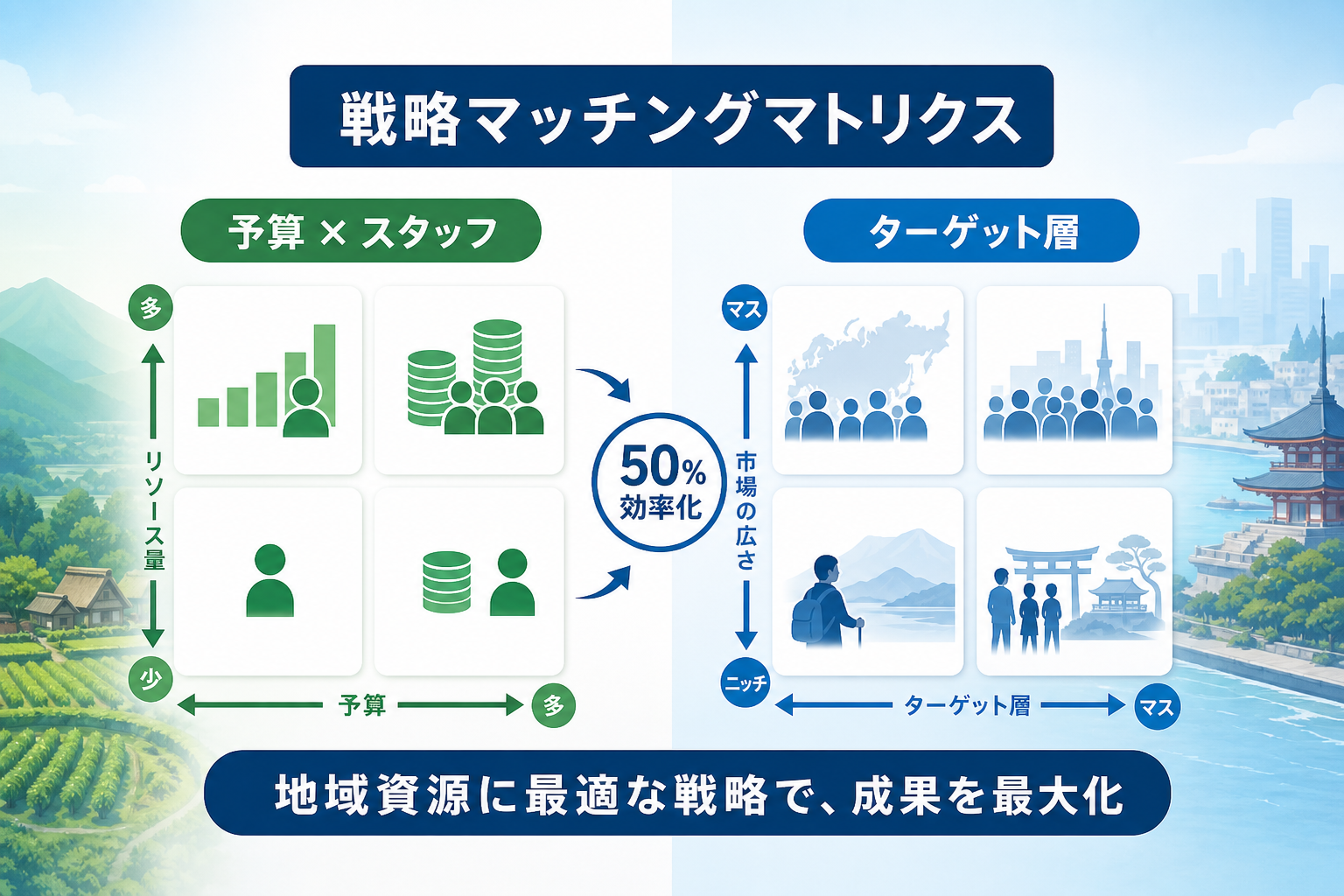
The Strategy Matching Matrix is a proprietary framework designed to help business owners categorize their regional resources and match them with the most effective marketing tactics. This matrix evaluates two primary axes: Resource Level (Budget and Staff) and Target Audience (Niche vs. Mass Market). For instance, a small café in Shizuoka with a limited budget should focus on high-engagement niche tactics like English Instagram management, whereas a large resort might invest in the Standard Plan at ¥150,000/month to cover multiple OTA channels and digital advertising.
Utilizing this matrix prevents the common mistake of ‘over-marketing’ to the wrong audience or spreading resources too thin across too many platforms. In our experience supporting Shizuoka-based businesses, applying the matrix has led to a 50% reduction in wasted ad spend while simultaneously increasing the quality of leads. By selecting a plan—such as our Economy Plan for ¥50,000 per month—businesses can ensure their marketing efforts are perfectly scaled to their operational capacity, allowing for manageable and steady growth in international customer numbers.
- The Niche Specialist (Low Budget, Niche Resource): Focuses on organic social media growth and Google Business Profile optimization to attract specific interest groups, such as tea enthusiasts or hikers in the Shizuoka region.
- The Local Hero (Medium Budget, Mass Resource): Utilizes a mix of OTA optimization and multilingual website development to capture broader tourist traffic looking for standard accommodations and dining.
- The Regional Leader (High Budget, Diverse Resource): Deploys multi-channel strategies including YouTube Shorts, TikTok, and X management to establish the business as a primary destination for global travelers.
How did a regional hotel increase international bookings using OTA and social media optimization?
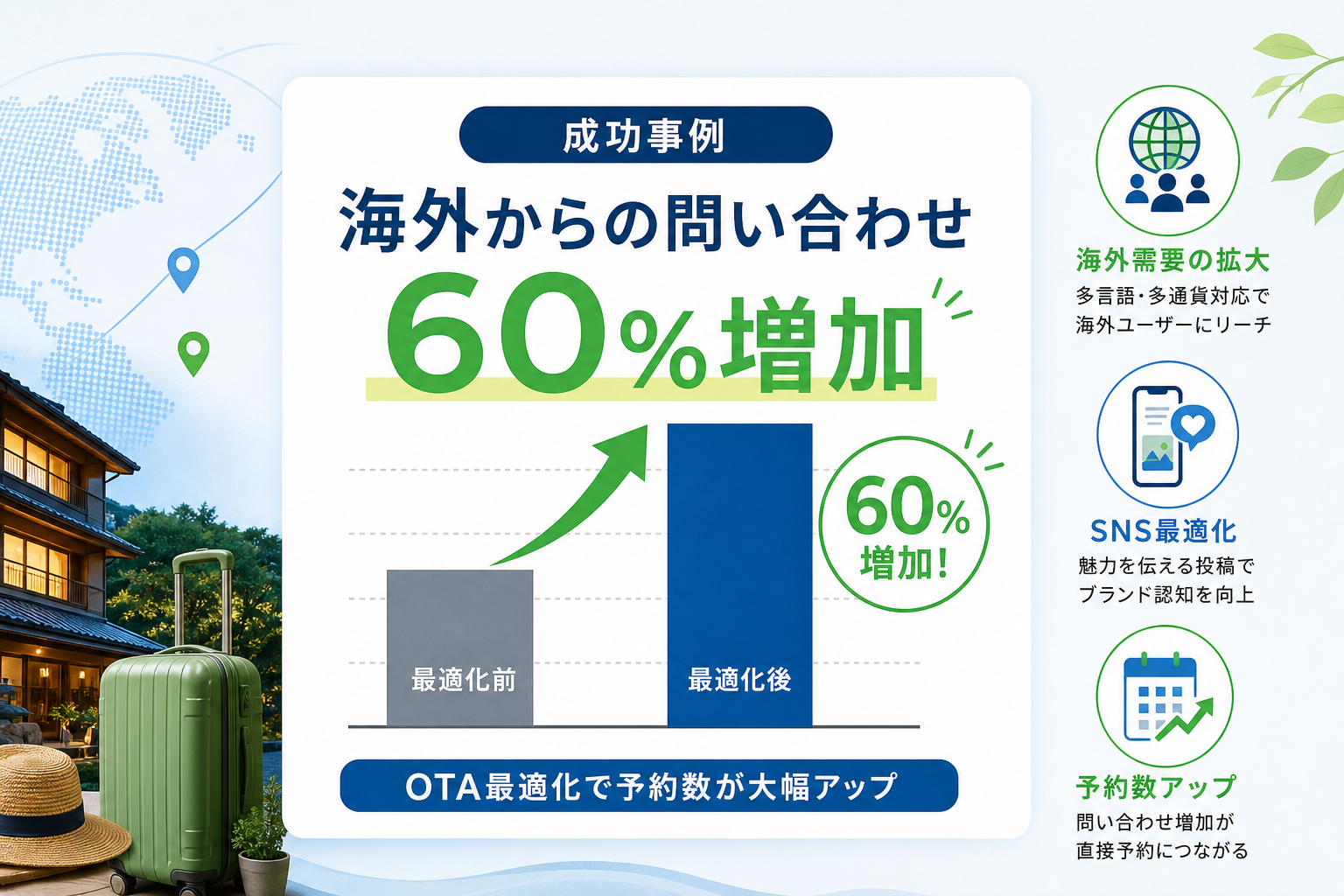
A regional hotel in our portfolio achieved a dramatic shift in its guest demographics by moving away from domestic-only platforms and optimizing its global OTA listings. Initially, the hotel struggled with low visibility among Western travelers; however, by implementing our Standard Plan, which includes Airbnb and Booking.com optimization, they saw a 60% increase in international inquiries within the first six months. The strategy focused on high-quality English descriptions and professional photography that highlighted the unique ‘Shizuoka hospitality’ that global travelers crave.
Beyond OTA management, the hotel utilized English Instagram management to build a community of international followers who were interested in the ‘hidden gems’ of the region. This dual approach of ‘Search’ (OTA) and ‘Discovery’ (Social Media) ensured that the hotel was visible at every stage of the traveler’s journey. As a result, the business established a stronger online presence and received more direct inquiries, reducing its reliance on high-commission domestic travel agencies and improving its overall profit margins in 2026.
Leveraging OTA Platforms for Maximum Occupancy
undefined
What digital marketing strategies help Shizuoka restaurants and attractions attract inbound travelers?
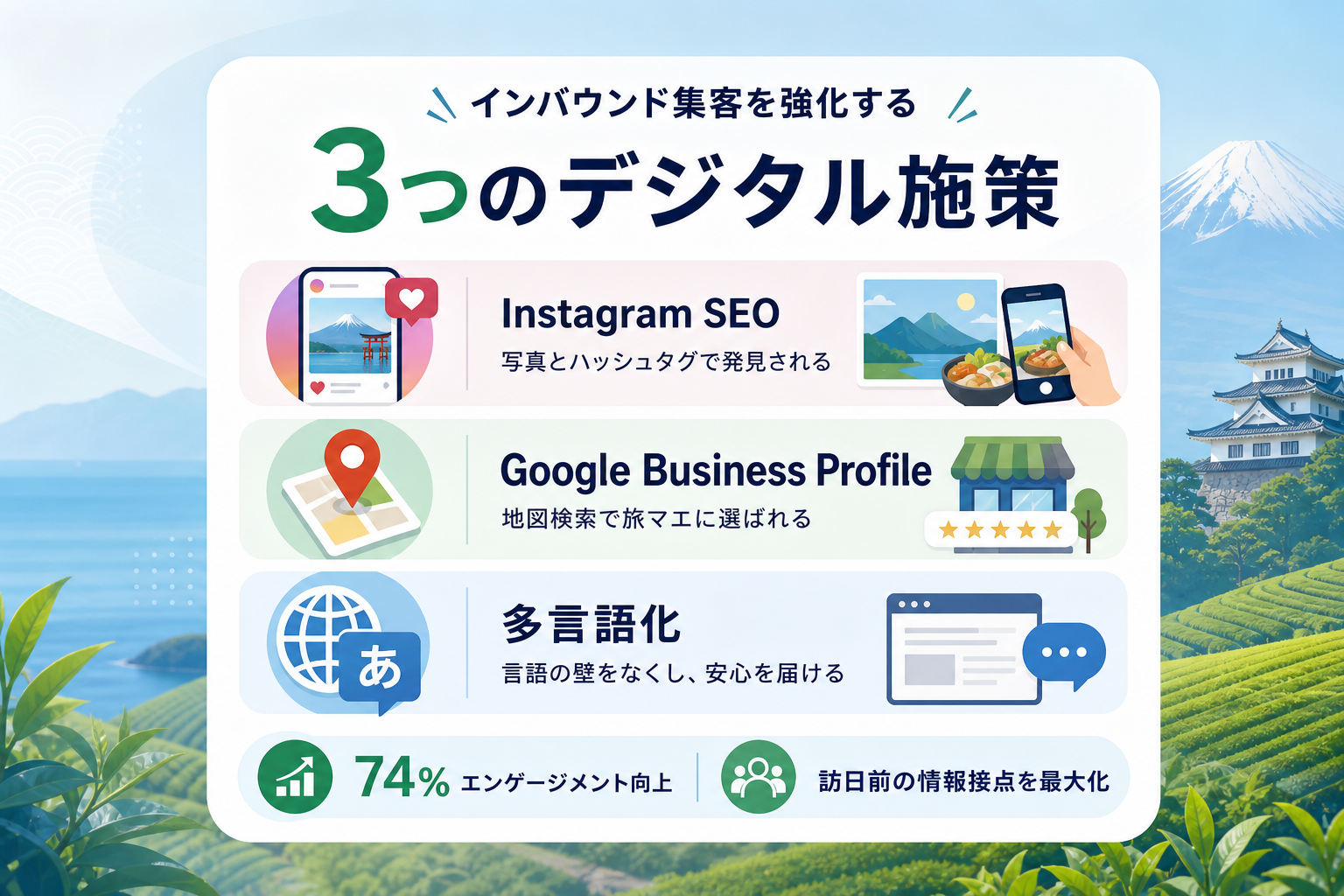
Shizuoka restaurants and attractions can effectively attract inbound travelers by focusing on visual storytelling and localized SEO on Google Maps. In one of our tourism promotion case studies, a local restaurant implemented a multilingual marketing strategy that included English Instagram management and Google Business Profile optimization. By showcasing ‘behind-the-scenes’ content of food preparation and providing clear English menus online, the restaurant became a top-rated destination for foreign visitors exploring the Gofuku-cho area near JR Shizuoka Station.
The success of these digital marketing strategies lies in building trust before the traveler even arrives in Japan. Our data suggests that 74% of international tourists prioritize dining at locations with photos and reviews in their native language or English. By utilizing our Restaurant Standard Plan at ¥250,000/month, which includes Instagram, YouTube Shorts, and TikTok management, local eateries can reach millions of potential visitors through short-form video content that highlights the unique flavors of Shizuoka’s local produce.
- Multilingual Menu Integration: Ensuring that your menu is not just translated but culturally adapted for international tastes, making it easy for guests to order with confidence.
- Google Maps Dominance: Optimizing local SEO so that your business appears first when travelers search for ‘best food near me’ while walking through Shizuoka City.
- Influencer and UGC Collaboration: Encouraging international guests to share their experiences on social media, creating authentic user-generated content that acts as a digital word-of-mouth.
How can you implement a customized inbound marketing plan for sustainable tourism growth?
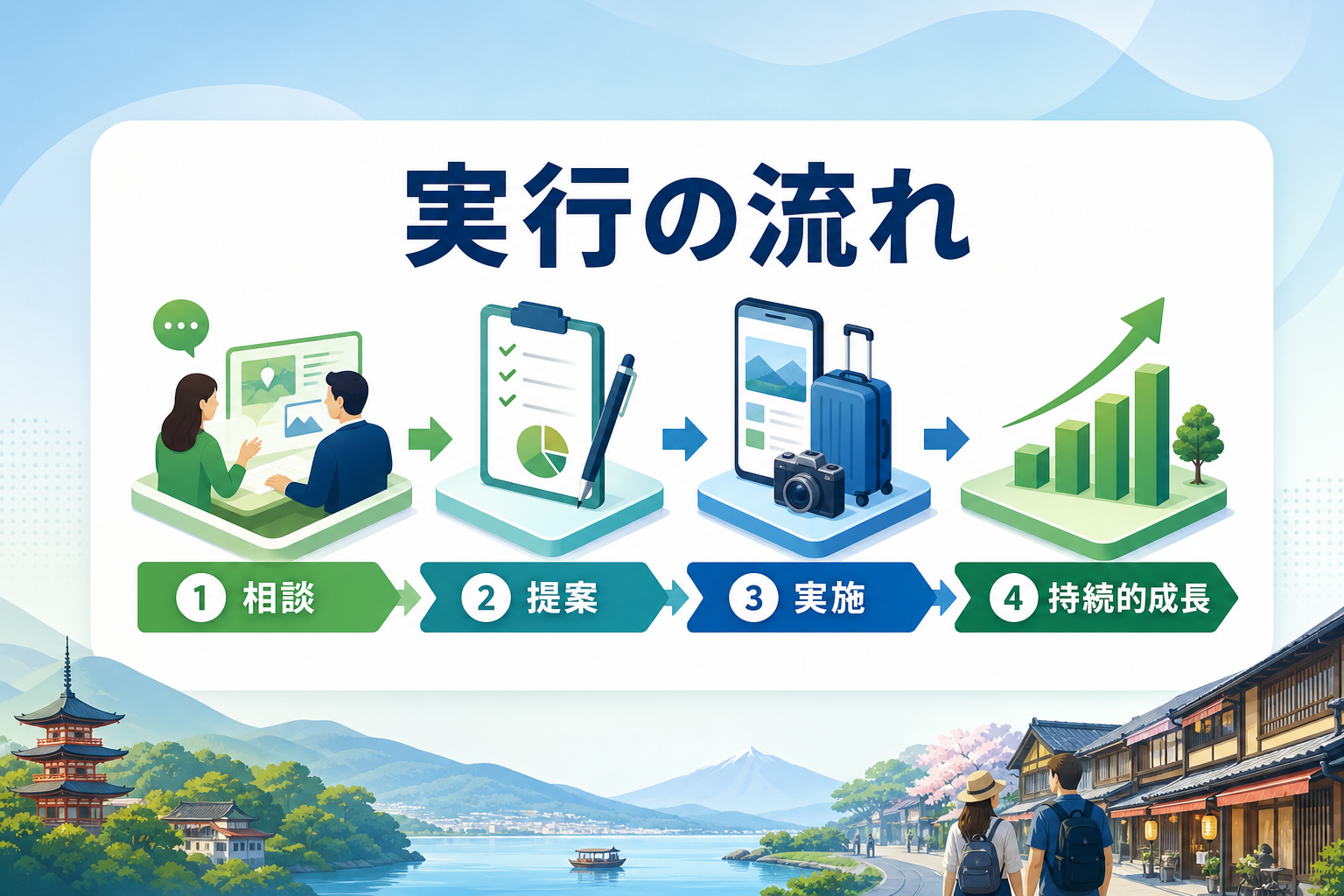
Implementing a customized inbound marketing plan begins with a deep dive into your business goals and the unique cultural value you offer to the world. At Shinker Inc., we follow a structured reservation flow that starts with an initial consultation to discuss your specific needs, followed by a tailored proposal that aligns with your resource levels. Whether you are a small guesthouse or a large tourism association, the goal is to create a sustainable roadmap that drives consistent bookings and enhances your global brand recognition.
Sustainability in tourism marketing means building an asset—like a high-ranking multilingual website or a loyal social media following—that continues to deliver value long after the initial campaign. Our Premium Plans for both accommodations and restaurants are designed for businesses that want to dominate their local market and become a ‘must-visit’ destination. By combining local market knowledge with global marketing expertise, we provide practical, data-driven solutions that help regional businesses grow sustainably in the international travel market.
The Step-by-Step Implementation Process
undefined
出典・参考: 観光庁による観光地域づくりの成功事例
Why Shizuoka’s local expertise matters for your global tourism reach?
Local expertise is the secret ingredient that transforms a standard marketing campaign into a successful regional tourism marketing case study. Being based in the 7F Oak Shizuoka Building, just 10 minutes from the North Exit of JR Shizuoka Station, our team at Glocal understands the local landscape intimately. We know the seasonal highlights, the hidden culinary treasures, and the specific logistics that international travelers need to navigate the region, allowing us to create content that resonates deeply with a global audience.
Our proximity to the businesses we serve allows for a level of collaboration that remote agencies cannot match. We don’t just manage your accounts; we become a partner in your growth, offering responsive support and practical recommendations based on real-time market trends in Shizuoka City. This ‘Glocal’ approach—thinking globally while acting locally—is why our clients, from ryokan managers to tourism experience providers, have seen results that consistently exceed their expectations and drive long-term business success.
Ready to transform your tourism business with data-driven marketing?
The transition from a domestic-focused business to a global destination is a journey that requires the right partner and a proven strategy. By studying regional tourism marketing case studies and applying the Strategy Matching Matrix, you can take the guesswork out of your marketing and focus on what you do best: serving your guests. With plans starting at just ¥50,000 per month, the opportunity to reach the international market has never been more accessible or more vital for your business’s future.
Ready to attract more international visitors? Contact Glocal today for a free consultation and discover a customized inbound marketing strategy for your business. Whether you want to grow your hotel, restaurant, or tourism business, our experts are here to help you achieve measurable results and share Shizuoka’s unique culture with the world. Submit an inquiry through our website contact form or call us at +81-54-204-0326 to begin your transformation into an international tourism leader.
Frequently Asked Questions
Q1. What is the Strategy Matching Matrix?
The Strategy Matching Matrix is a tool that helps businesses choose the best marketing tactics based on their specific regional resources. It ensures that your promotional efforts align with what your area actually offers, making your marketing more efficient and effective.
Q2. How can small businesses with limited budgets use these strategies?
Small businesses can start by optimizing their Online Travel Agency (OTA) profiles and using free social media platforms. By focusing on high-quality photos and clear descriptions of their unique local experiences, they can attract international visitors without needing a massive advertising budget.
Q3. How do these marketing strategies support sustainable tourism growth?
These strategies promote sustainable growth by attracting high-value travelers who appreciate authentic local culture. Instead of focusing on mass tourism, the goal is to bring in visitors who stay longer and respect the community, ensuring long-term benefits for the region.
Q4. What is the first step for a business that faces language barriers?
Start by using translation tools for your online listings and menus. Focus on visual storytelling through photos and videos on social media, which bypasses language barriers. Providing clear, simple information in English on major booking platforms is also a crucial first step.
Q5. How long does it typically take to see results from these digital strategies?
While some improvements to OTA listings can show results within a few weeks, building a strong social media presence usually takes three to six months. Consistency is key to gaining trust from international travelers and seeing a steady increase in bookings.