
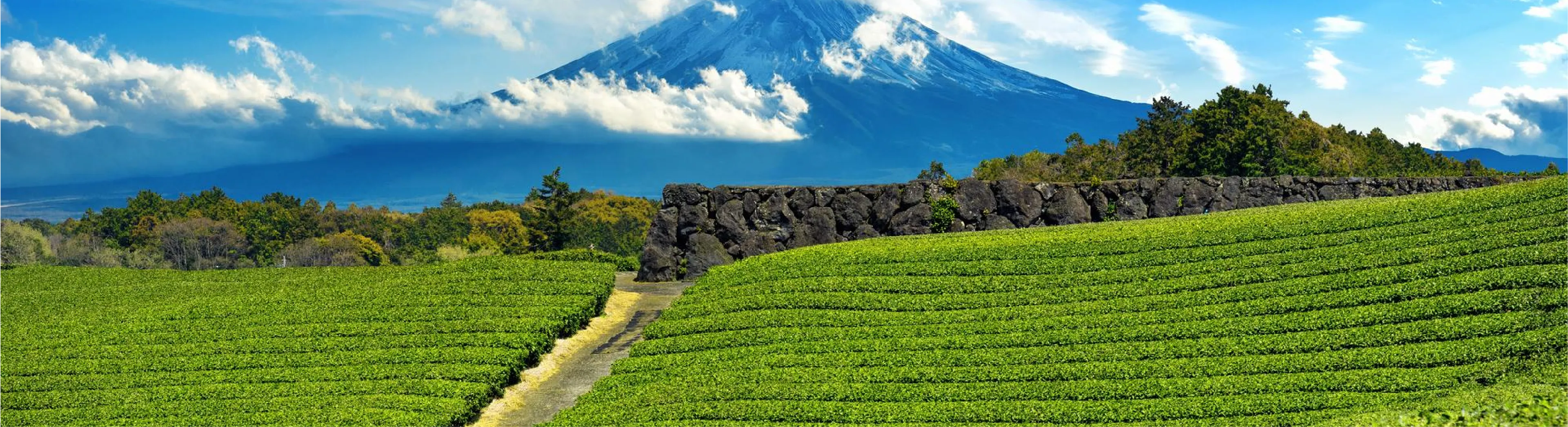
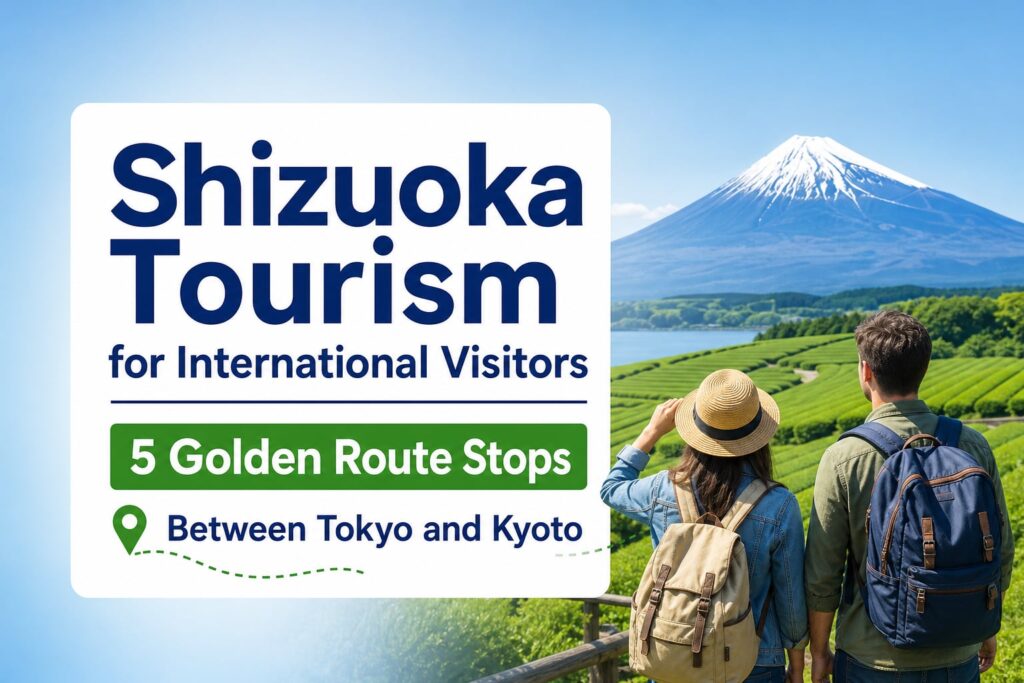
Explore Shizuoka tourism for international visitors along the Golden Route. Discover 5 top stops, Mt. Fuji views, tea terraces, and easy Shinkansen transit.
 執筆者:Hikaru SonedaCEO
Rushing between Tokyo and Kyoto on the Shinkansen often leaves overseas travelers wondering if they missed Japan’s authentic heartland.
Discover how Shizuoka tourism for international visitors unlocks magnificent Mt. Fuji views, historic green tea terraces, and soothing coastal onsen right off the bullet train.
Why should international visitors add Shizuoka to their Golden Route itinerary?
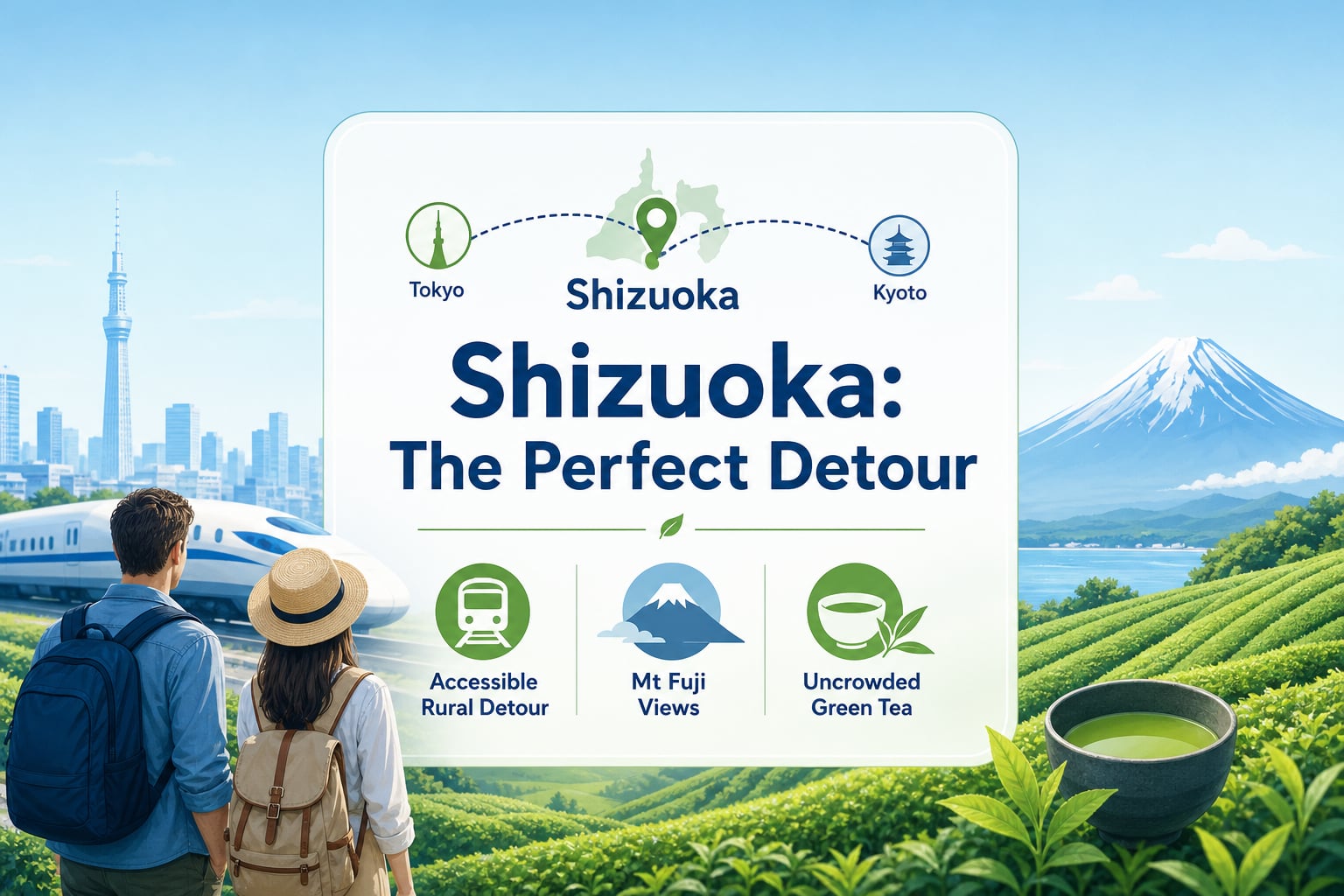
Shizuoka Prefecture provides the most accessible rural detour in Japan because the Tokaido Shinkansen cuts directly through its central basin. International travelers commuting between Tokyo and Kyoto frequently watch Mt. Fuji pass by their train window in seconds, yet stepping onto a local platform reveals uncrowded tea terraces and authentic coastal hospitality. Choosing Shizuoka tourism for international visitors transforms a transit day into a cultural highlight without adding grueling travel hours.
Official prefectural reports highlight that the region produces 439 distinct agricultural and marine products, earning its reputation as a premier food capital. From Suruga Bay seafood to heritage green tea, visitors can taste authentic culinary traditions right at the source. Stopping here allows overseas guests to escape Golden Route congestion while enjoying scenic vistas that defined classical Japanese art for centuries.
What are the 5 essential stops for Shizuoka tourism between Tokyo and Kyoto?
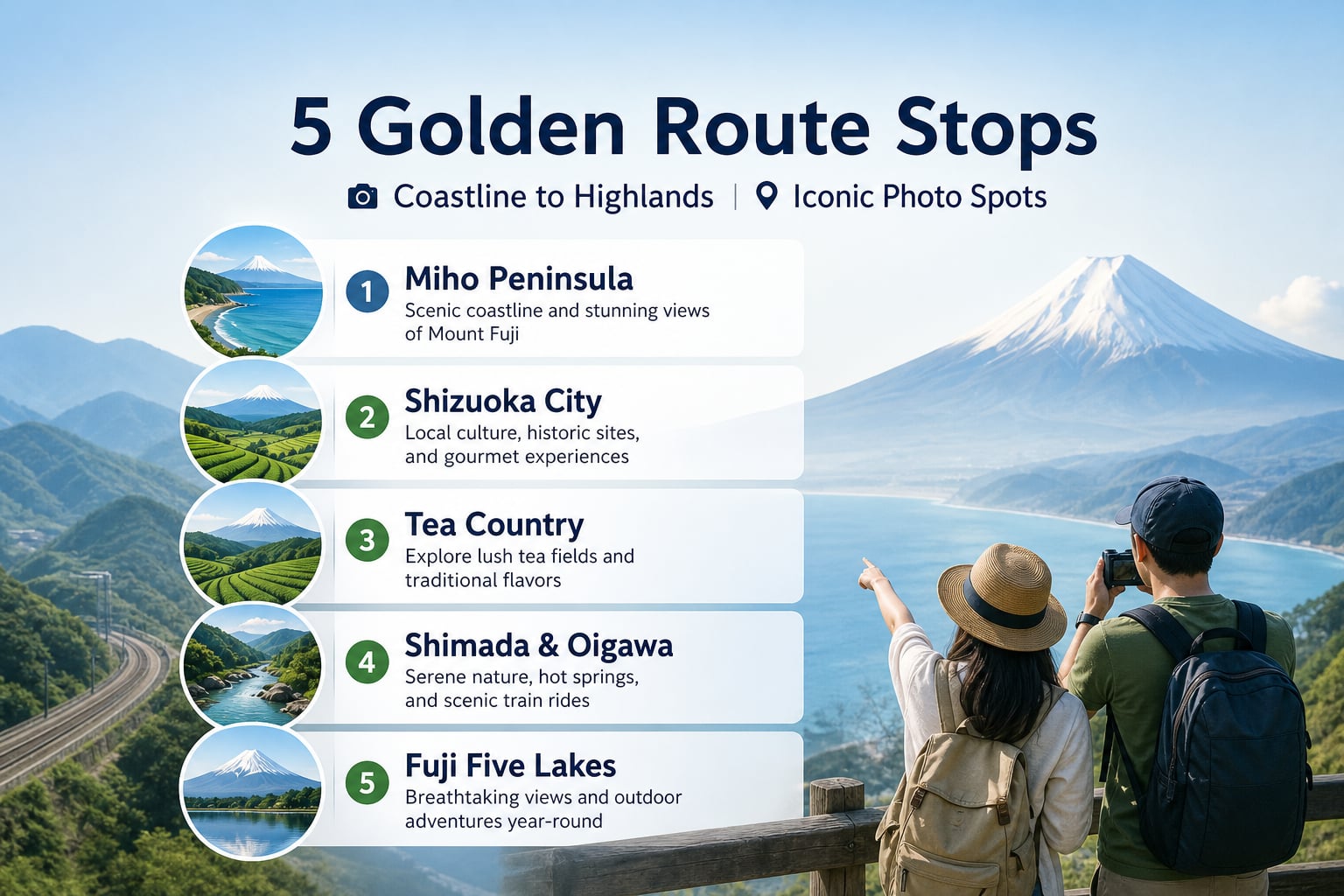
Exploring Shizuoka along the bullet train corridor allows travelers to experience distinct regional highlights ranging from Pacific coastlines to high-elevation tea plantations. Each destination features dedicated train links or local buses that connect smoothly from major Tokaido Shinkansen hubs.
Selecting these specific locations guarantees iconic photo opportunities, immersive agricultural tours, and historic relaxation spots without requiring complex car rentals. Planning your journey around these five established stops provides a well-balanced overview of the prefecture’s diverse geography.
- Nihondaira Plateau and Kunozan Toshogu Shrine: Perched above Shizuoka City, Nihondaira offers sweeping panoramic views of Mt. Fuji over Suruga Bay. A scenic ropeway connects the summit directly to Kunozan Toshogu, the historic burial shrine of Shogun Tokugawa Ieyasu.
- Miho no Matsubara Pine Grove: Part of the Mt. Fuji UNESCO World Heritage inscription, this scenic coastal pine forest features seven kilometers of dark shoreline framing snow-capped peaks, celebrated in centuries of classical ukiyo-e woodblock prints.
- Makinohara and Kawane Green Tea Plantations: Makinohara represents Japan’s largest tea-growing plateau, where rolling green hills stretch toward the horizon. Visitors can walk between manicured rows, sample fresh sencha, and participate in harvest experiences during peak picking seasons.
- Izu Peninsula Hot Spring Towns: Historic coastal and mountain retreat areas like Shuzenji Onsen and Imaihama offer therapeutic mineral baths, bamboo groves, and traditional wooden ryokan that have welcomed travelers seeking rest since ancient times.
- Lake Hamana and Hamamatsu Cultural Sites: Located on Shizuoka’s western edge, Lake Hamana provides scenic lakeside cycling, boat cruises, and renowned unagi dining, combined with Hamamatsu’s rich musical heritage as the manufacturing birthplace of world-class instruments.
How can overseas travelers easily navigate Shizuoka transit from the Shinkansen?
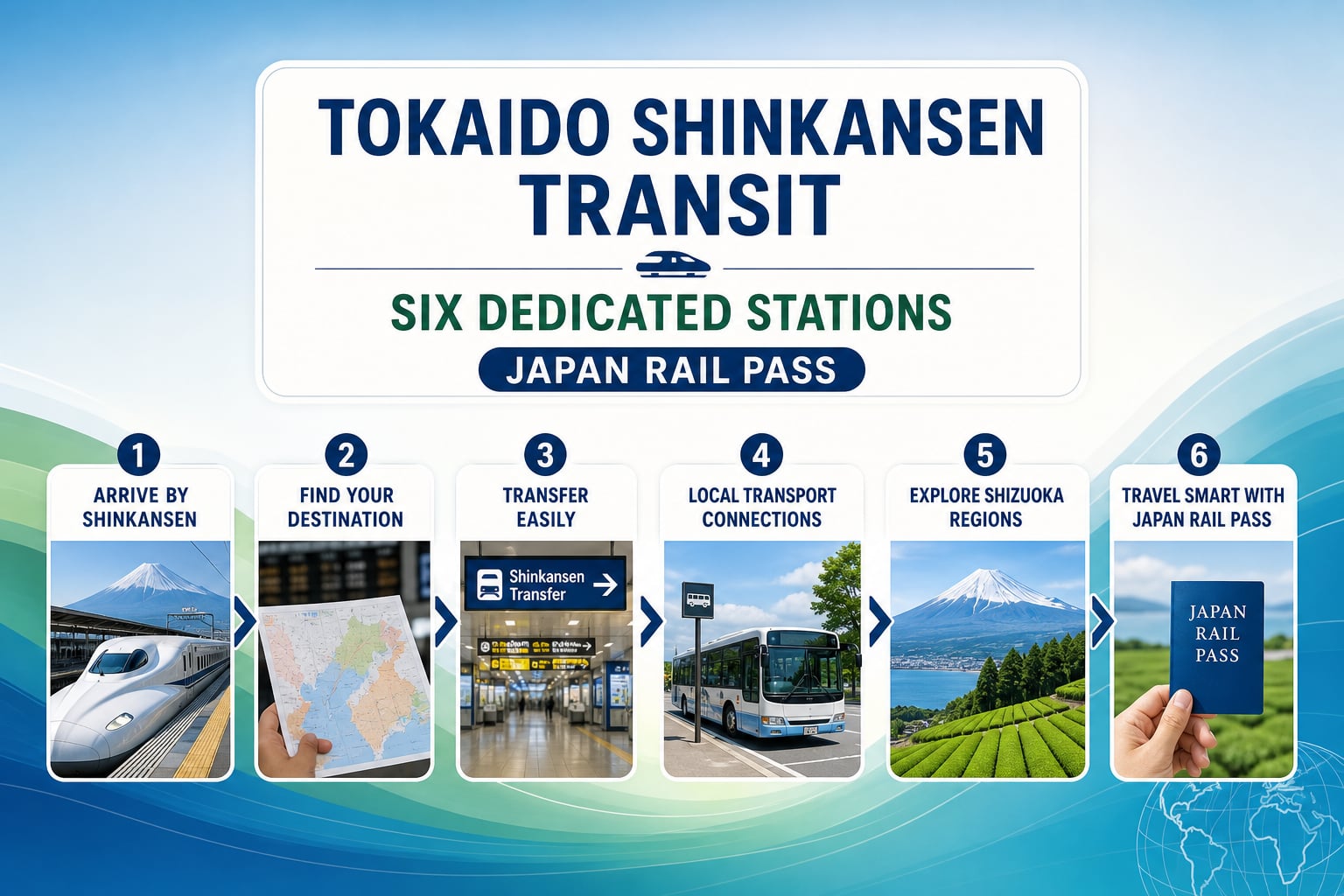
Navigating Shizuoka Prefecture is straightforward because the Tokaido Shinkansen features six dedicated stations across the prefecture: Atami, Mishima, Shin-Fuji, Shizuoka, Kakegawa, and Hamamatsu. The Kodama bullet train stops at every station, while select Hikari trains stop at Shizuoka and Hamamatsu, making transfers from Tokyo or Kyoto remarkably rapid. Equipping yourself with a Japan Rail Pass or digital IC transit card lets you switch smoothly between high-speed tracks and local scenic railways.
For travelers venturing into deeper valleys or the Izu coastline, local private transit lines like the Izu Kyuko Line and scenic ropeways integrate closely with JR networks. Station concourses provide clear English signage, coin lockers for luggage storage, and tourist information desks to help travelers catch regional buses toward scenic viewpoints.
Luggage forwarding and station locker logistics
Carrying large suitcases onto rural buses can be cumbersome, so using hands-free travel services makes Shizuoka detours vastly more comfortable. Major hubs like JR Shizuoka Station feature extensive coin locker banks and direct baggage forwarding counters that ship heavy luggage straight to your Kyoto or Tokyo hotel, freeing you to tour Mt. Fuji viewpoints unencumbered.
What authentic tea, hot spring, and dining experiences define Shizuoka tourism?
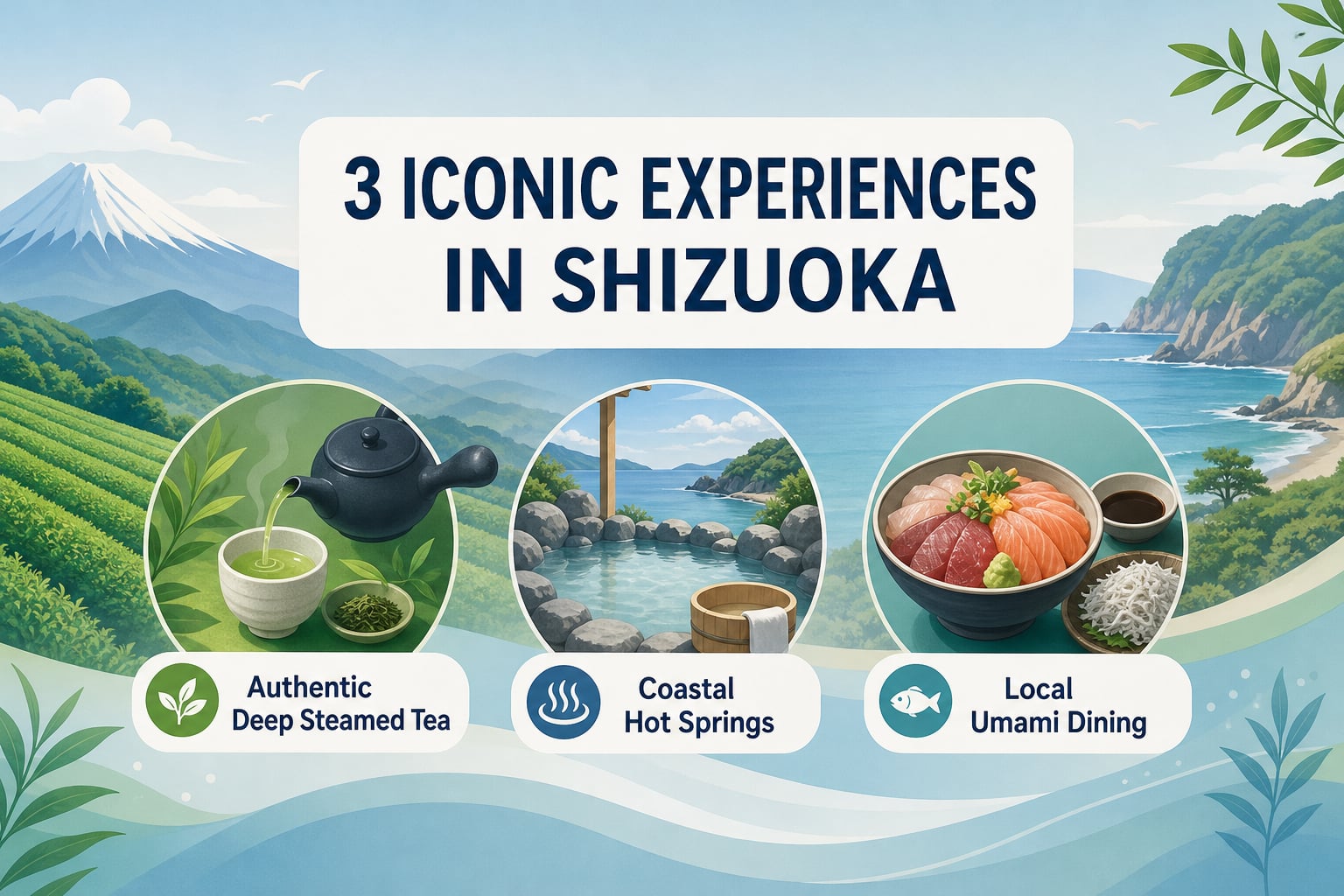
Green tea culture stands as Shizuoka’s proudest tradition, producing deep-steamed fukamushicha known for its vibrant green hue and rich umami flavor. Travelers can visit centuries-old tea houses to learn proper brewing temperatures, grind their own matcha, or walk alongside local growers on terraced hillsides. These hands-on tastings teach overseas guests how soil, mountain mist, and seasonal picking shape the nuances of premium Japanese tea.
Culinary adventures extend into Suruga Bay, home to Japan’s deepest ocean waters and exclusive marine delicacies like sakura shrimp and fresh shirasu. Visitors dining around Shimizu Port or local izakaya can pair sweet raw seafood with freshly grated Shizuoka wasabi cultivated in clear mountain streams. Finishing the evening at a historic onsen in Izu allows travelers to soak in mineral-rich waters surrounded by forested riverbanks.
How can international visitors travel smoothly across Shizuoka without speaking Japanese?
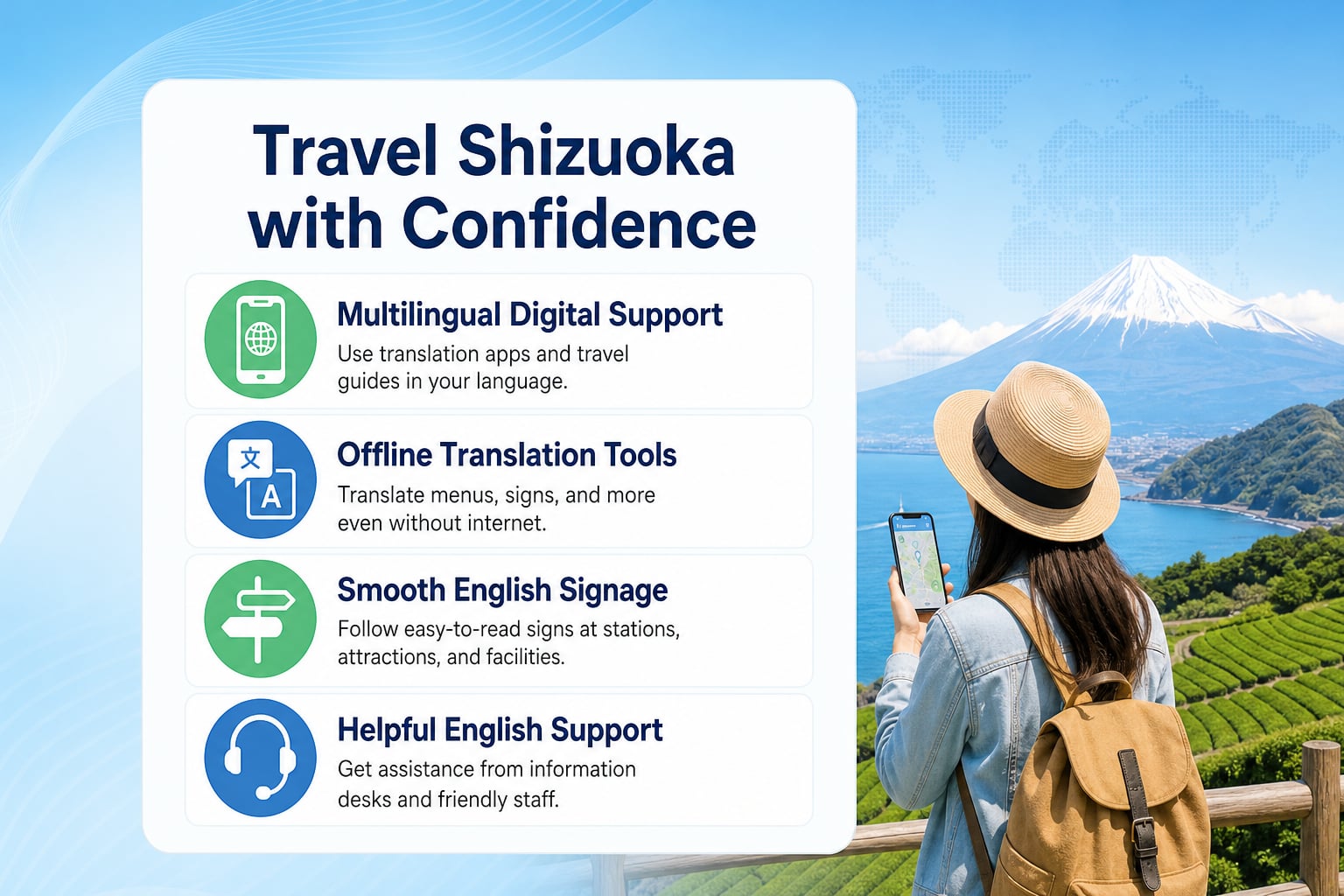
Traveling through regional Japan without speaking Japanese has become significantly easier thanks to modern digital tools and expanded hospitality resources. Major transit hubs, scenic ropeways, and popular museums throughout Shizuoka provide multilingual signage and digital audio guides in English, Korean, and traditional Chinese. Downloading offline translation applications and purchasing an eSIM or pocket Wi-Fi ensures continuous navigation access across bus lines and rural footpaths.
Local hospitality operators are increasingly trained to welcome overseas guests warmly through picture menus, English booking engines, and translation devices. Many regional dining spots feature visual ordering guides that make trying local specialties effortless. Embracing simple Japanese greetings while relying on digital maps and translated schedules guarantees a stress-free travel experience across the prefecture.
Essential digital tools for regional transit and dining
Equipping your smartphone with transit navigation apps and camera-based translation tools removes virtually all language barriers in rural stations. Official regional tourism portals offer downloadable English bus maps, while Google Maps accurately tracks local train connections across Shizuoka’s coastal and mountain lines.
How do local businesses and hotels prepare to welcome international guests?
Attracting global travelers requires regional businesses to optimize their digital touchpoints across global platforms. Tourism data from 2023 indicated that international travelers from markets like South Korea, Hong Kong, and Taiwan expanded rapidly in Shizuoka, with South Korean visitor figures rising 67 percent year-over-year. To capture this expanding audience, hotels, ryokans, and tour providers are upgrading their multilingual websites, optimizing online travel agency listings, and modernizing social media engagement.
At Glocal by Shinker, our inbound marketing team combines hands-on tourism expertise with multilingual marketing to help regional businesses connect with global travelers. Led by CEO Hikaru Soneda, who studied in the United States and worked overseas for a major travel firm, our team provides data-driven strategies that turn authentic regional culture into measurable business growth. In our company’s results, a local restaurant expanded international discovery through English Instagram management and Google Business Profile optimization, while a regional hotel increased overseas inquiries by refining OTA visibility.
What factors should tourism operators consider when partnering with an inbound marketing agency?
Selecting an inbound marketing partner requires careful evaluation of communication capabilities, contract scope, and regional market understanding. Facility managers and business owners should avoid generic promotional packages that fail to highlight authentic local narratives. A reliable agency must demonstrate practical knowledge of global traveler expectations, multilingual content creation, and search platform algorithms.
Before signing an agreement, operators should review proposal terms thoroughly to understand deliverables and cost structures. Checking exact service boundaries prevents unexpected expenses while ensuring your brand gains sustainable visibility across overseas channels.
- Initial setup scope and performance criteria: Examine whether initial setup includes comprehensive platform configuration across Google Maps and major OTAs, and clarify refund or support policies if milestones are delayed.
- Basis of commissions and monthly retainers: Confirm whether monthly fees cover routine content production or if booking commissions apply to direct reservations versus third-party channel sales.
- Invoicing schedule and payment timing: Identify when payments become due, whether retainer invoices arrive at the start or end of service cycles, and how transaction fees are calculated.
- Post-launch support and regular reporting: Verify whether monthly analytics reporting, keyword monitoring, and active customer review replies are included in the baseline agreement.
- Conditions for additional content charges: Clarify upfront whether professional on-site photography, multilingual video production, or seasonal ad spend adjustments trigger additional billing.
How can businesses start their inbound journey with Glocal by Shinker?
Launching an effective multilingual strategy begins with a structured consultation that identifies your property’s unique cultural strengths. Glocal by Shinker assists hotels, restaurants, activity providers, and regional tourism boards across Shizuoka Prefecture with customized growth strategies. Located just a 10-minute walk from the North Exit of JR Shizuoka Station, our team works closely with local operators to build lasting global visibility.
Clients praise our collaborative process for removing the friction from international marketing. In general, accommodation providers find that tailored social media support alongside streamlined English content and OTA optimization helps overseas guests discover and book local properties with ease. Our streamlined five-step consultation flow guides your business from initial inquiry to measurable market expansion.
- Submit an initial inquiry: Reach out through the Glocal website contact form, phone, or email to outline your facility’s current inbound challenges and operational goals.
- Schedule an initial consultation: Meet with our bilingual tourism marketing specialists during business hours (Monday to Friday, 9:00 AM to 6:00 PM JST) in person or online.
- Discuss business goals and inbound needs: Review target traveler demographics, current OTA listings, multilingual web assets, and social media reach to pinpoint growth opportunities.
- Receive a customized proposal and quotation: Receive a transparent service outline tailored to your property, specifying channel management, content schedules, and expected milestones.
- Sign the agreement and begin the project: Finalize terms and start executing targeted multilingual campaigns, profile enhancements, and global promotion across international travel channels.
Frequently Asked Questions
Q1. What is the Golden Route in Japan travel?
The Golden Route is the classic travel path connecting Tokyo, Kyoto, and Osaka. It is the most popular route for first-time international visitors seeking famous cultural and modern highlights.
Q2. Can I visit Shizuoka using the standard Shinkansen bullet train?
Yes, several Shinkansen bullet train stations are located directly in Shizuoka space between Tokyo and Kyoto. You can easily hop off the train to explore local sights and reboard later.
Q3. How long should international travelers spend exploring Shizuoka?
A quick visit can take a single afternoon as a stopover, but spending one to two days allows you to fully enjoy hot springs, tea plantations, and scenic views.
Q4. Is it difficult to get around Shizuoka without speaking Japanese?
Major transit hubs have English signage and multilingual ticket machines. Using mobile translation apps and route-planning tools makes navigating local buses and regional trains simple for non-Japanese speakers.
Q5. What should I do if the weather hides the view of Mt. Fuji?
If clouds block the mountain, you can still enjoy Shizuoka’s indoor green tea tastings, coastal hot spring baths, fresh local dining, and historic cultural sites throughout the region.