
Discover essential multilingual tourism support in Shizuoka. Find tourist centers, 24/7 emergency hotlines, and real-time translation tools for a smooth trip.
 執筆者:Hikaru SonedaCEO
Navigating travel logistics or welcoming international guests across central Japan can feel overwhelming without clear language resources at hand.
This guide details practical multilingual tourism support in Shizuoka, connecting you directly to verified regional translation desks, remote hotlines, and emergency medical services.
Where can travelers find official multilingual tourist information centers in Shizuoka?
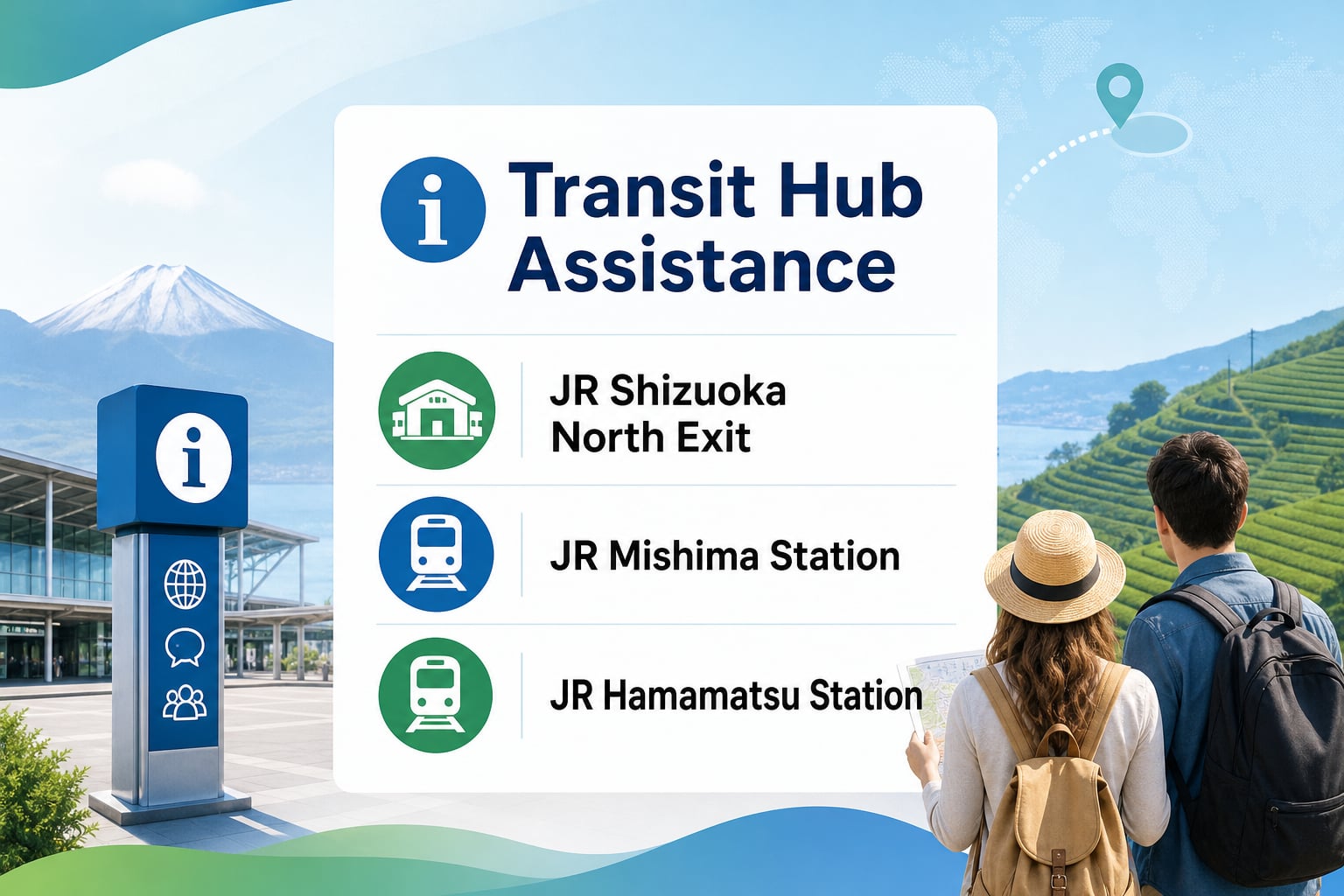
Official multilingual tourist information centers operate at primary transit hubs across Shizuoka Prefecture to assist overseas visitors upon arrival. At JR Shizuoka Station, staff at the tourist information center inside the North Exit ticket gate area provide English assistance, local transit maps, and guidance on local attractions. Visitors passing through JR Mishima Station or JR Hamamatsu Station can likewise access designated regional desks staffed with multilingual personnel who explain bus routes, train transfers, and regional luggage forwarding.
These certified facilities display Japan National Tourism Organization accreditations, verifying the presence of trained foreign-language speakers or on-demand digital translation terminals. Travelers can obtain physical brochures printed in English, Traditional Chinese, Simplified Chinese, and Korean detailing Mt. Fuji viewing spots, historical sites like Sunpu Castle Park, and local dining districts. For local business operators, connecting guests with these designated hub centers provides reliable transit orientation before visitors travel onward into regional districts.
Major Shizuoka transit hub counters offering verified language assistance
The primary service counters are situated directly within major railway terminals. JR Shizuoka Station North Exit features a dedicated information desk open daily to handle sightseeing queries and train navigation. JR Hamamatsu Station Tourist Information Center offers localized maps for western Shizuoka and Lake Hamana, while JR Mishima Station serves as the eastern transit gate providing multilingual brochures for Mt. Fuji and the northern Izu Peninsula.
- JR Shizuoka Station Information Center: Located near the North Exit ticket gates, offering in-person English guidance, sightseeing maps, and transit schedules for central Shizuoka City.
- JR Hamamatsu Station Tourist Information Center: Positioned inside the concourse, delivering English support for Lake Hamana transit, local musical instrument museums, and regional bus passes.
- JR Mishima Station Tourist Information Center: Situated at the South Exit, assisting foreign travelers with gateway transit links toward Hakone, Gotemba, and northern Izu destinations.
How can visitors access multilingual language support in rural Izu and Kawane?
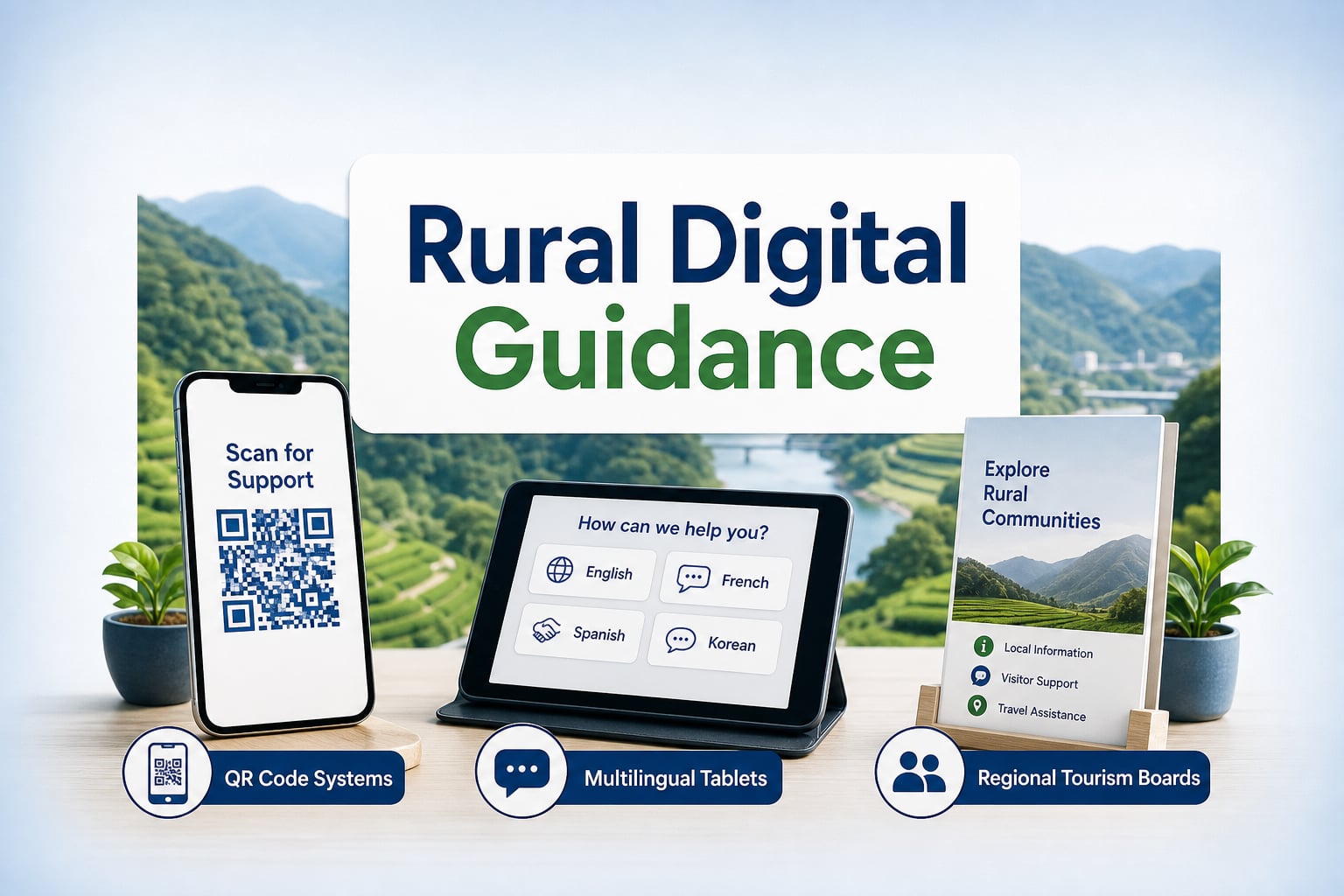
Rural destinations such as the Izu Peninsula and the Kawane mountainous corridor utilize localized digital hubs and regional tourism boards to bridge communication gaps. In regions where dedicated English-speaking desk staff are limited, local tourism associations deploy QR-code digital guidance systems and shared multilingual tablet stations. Travelers exploring Kawane along the Oigawa Railway can access station boards and pamphlets translated into English and Chinese, outlining steam locomotive schedules and suspension bridge hiking routes.
Hot spring towns across southern and western Izu, including Shimoda, Shuzenji, and Kawazu, integrate centralized municipal tourism offices that offer interpretation support for independent ryokan and local bus lines. These offices frequently supply multilingual hot spring etiquette sheets and dietary restriction translation cards for traditional dining. Hospitality operators in these rural valleys frequently collaborate with regional tourism marketing specialists to optimize English reservation platforms, helping travelers experience local culture without language friction.
Practical solutions for exploring rural Shizuoka without native Japanese fluency
Travelers entering rural valleys should save key regional digital resources prior to departure. Municipal association portals in towns like Kawanehon and Kawazu provide downloadable multilingual PDF transit guides, while local train stations display scannable translation codes at ticket gates to clarify bus connections and mountain railway transfers.
What 24/7 interpretation and emergency medical services are available across Shizuoka?
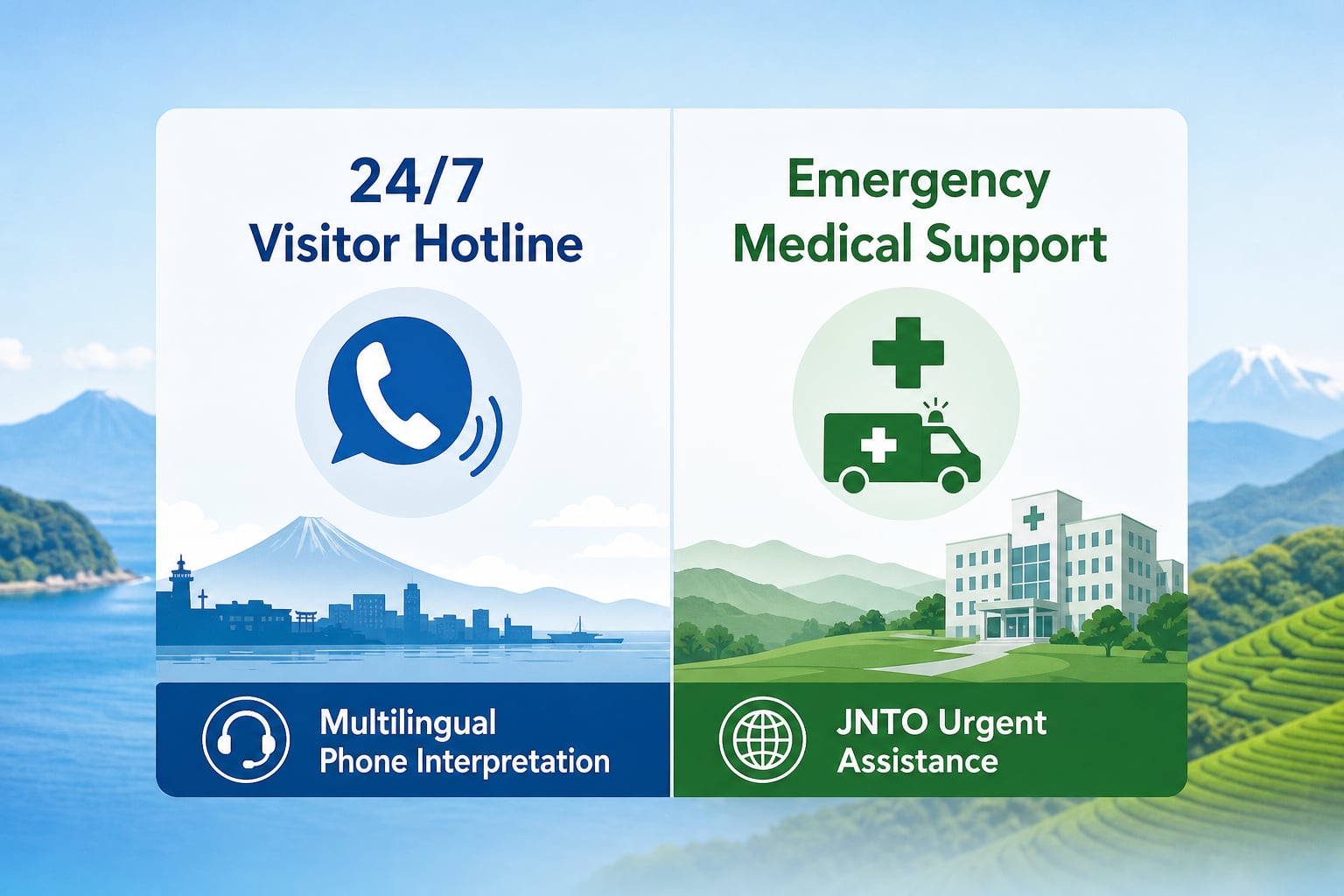
Around-the-clock telephone interpretation and medical guidance services ensure international visitors receive immediate assistance during unexpected emergencies throughout Shizuoka Prefecture. The Japan National Tourism Organization manages the 24-hour Japan Visitor Hotline, accessible by phone in English, Chinese, and Korean for emergency support, accident coordination, and urgent travel inquiries. This national service operates 365 days a year and functions seamlessly across all Shizuoka municipalities.
In medical situations, travelers and accommodation managers can access the Emergency Medical Information System maintained by prefectural authorities to locate hospitals with foreign-language capabilities. Designated acute care centers, including regional general hospitals and university medical facilities, utilize remote three-way phone interpretation servicesrvices to facilitate patient intake and medical consultations. Calling emergency services at 119 for ambulances triggers simultaneous interpretation protocols supported by regional fire command headquarters.
- Dial 119 with interpretation support: Connect immediately to fire and ambulance dispatchers who conference in three-way professional interpreters covering English, Chinese, and Korean.
- Contact the Japan Visitor Hotline: Call the toll-free 24/7 national support desk for urgent navigation, natural disaster updates, and general emergency interpretation anywhere in Shizuoka.
- Consult Shizuoka Medical Information resources: Use official prefectural search portals to find clinics and regional base hospitals equipped with multilingual intake staff or tablet-based interpretation.
Which digital translation tools provide real-time multilingual tourism support in Shizuoka?
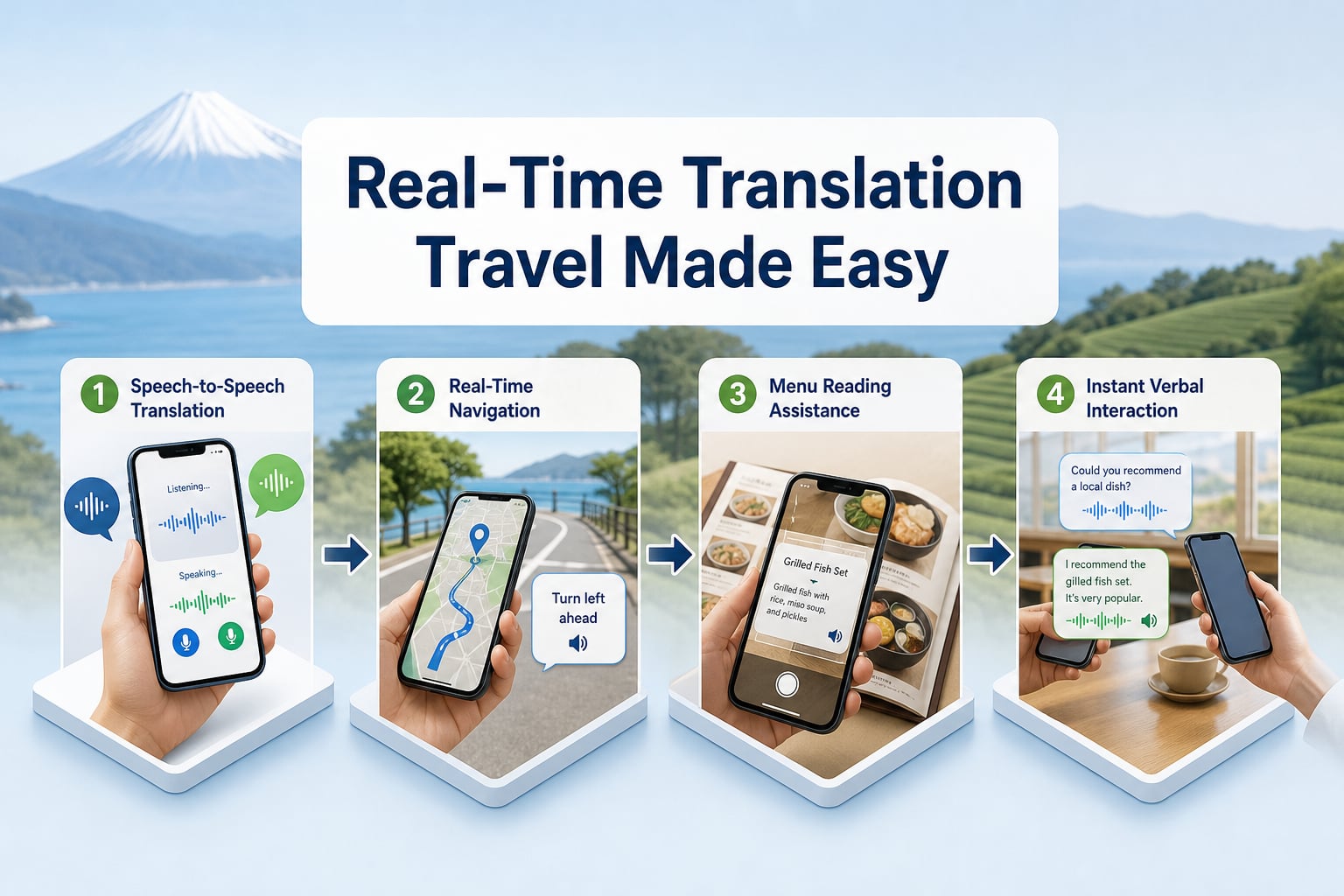
Digital translation applications provide instant, real-time linguistic support for navigation, menu reading, and direct verbal interaction across Shizuoka. A speech-to-speech translation application developed by a public research organization serves as an officially recommended toolecommended tool for tourists across Japan. Supporting a wide range of languages with high accuracy in travel-specific phrasing, VoiceTra enables natural two-way conversations between visitors and local business staff.
Furthermore, mobile camera translation features within Google Translate and regional transit portals allow visitors to instantly translate bus timetables, museum exhibit labels, and local izakaya menus. Shizuoka Prefecture also promotes regional digital tourism maps embedded with multilingual switching for English, Traditional Chinese, Simplified Chinese, and Korean. Local business owners who optimize their Google Business Profiles and digital assets ensure that these translation tools accurately render their business information for overseas patrons.
How can accommodation and restaurant operators implement multilingual support?
Implementing practical multilingual support requires local business operators to address traveler touchpoints systematically across the customer journey. Hospitality businesses should begin by optimizing digital discovery channels, ensuring property descriptions, amenity lists, and dining menus are accurately translated on online travel agencies and social media platforms. Clear visual signage paired with concise English explanations at check-in counters significantly reduces common communication hurdles for front-desk personnel.
Our inbound marketing team at Glocal by Shinker assists hotels, ryokans, and restaurants in Shizuoka with end-to-end inbound solutions. By managing English social media channels, translating menus with allergen breakdowns, and refining Google Business Profiles, local businesses can connect smoothly with overseas visitors. For example, a local restaurant implemented Glocal’s multilingual marketing strategy, including English Instagram management and Google Business Profile optimization, making it easier for international tourists to discover and enjoy the venue.
Key checklist items for local businesses enhancing their international hospitality
Establishing inbound readiness involves small, manageable adjustments. Prioritize clear dietary labeling, simple pictograms for facilities, and standardized English message templates for reservation confirmations. These simple foundational steps ensure smooth operational flow while building lasting goodwill with international guests.
- Digital listing optimization: Audit and translate your Google Business Profile, website content, and OTA profiles into natural English to drive overseas search discovery.
- Visual food menus and allergen guides: Provide photo-based menus displaying clear English dish descriptions and standardized icons for common dietary preferences and allergens.
- Tablet-assisted counter interpretation: Equip check-in desks and registers with translation apps to handle complex billing questions or local transportation advice smoothly.
What role do regional DMOs and tourism associations play in language accessibility?
Destination Management Organizations and municipal tourism associations serve as regional coordinators for multilingual tourism infrastructure across Shizuoka. These public-private bodies publish comprehensive regional visitor handbooks, fund multilingual transit signage installations, and organize hospitality seminars for local retail and lodging owners. Organizations such as the Suruga Tourism Promotion Organization actively produce foreign-language travel itineraries showcasing regional tea culture, craft traditions, and coastal scenery.
By unifying regional branding under cohesive multilingual portals, DMOs help international travelers navigate beyond urban transit lines into hidden valleys and coastal fishing ports. Tourism associations also distribute emergency safety brochures in several languages, preparing travelers for natural disaster responses such as earthquake and tsunami preparedness. For local business owners, collaborating with regional DMO initiatives offers valuable visibility on official multilingual promotional portals and regional media campaigns.
How does multilingual support drive sustainable tourism growth across Shizuoka?
Comprehensive multilingual communication creates sustainable economic growth by dispersing international visitor spending across regional communities outside major transit corridors. When foreign travelers feel confident understanding regional bus schedules, ordering local culinary specialties, and navigating traditional ryokan accommodations, their length of stay in Shizuoka increases. Inbound tourism revenue directly supports family-run tea farms, regional craft artisans, and historic hospitality venues throughout the prefecture.
At Glocal by Shinker, we believe every region possesses unique cultural narratives and authentic hospitality worth sharing with travelers worldwide. Our team, led by CEO Hikaru Soneda, combines hands-on inbound marketing experience with deep regional roots in Shizuoka to deliver measurable business outcomes. A regional hotel partnered with Glocal to improve its visibility among international travelers by optimizing OTA listings and strengthening social media marketing, significantly increasing international inquiries and brand recognition.
Selecting professional inbound marketing support for your Shizuoka business
When evaluating an external marketing partner for multilingual tourism development, business owners should review service terms carefully. Look for clear deliverables across OTA management, social media content, and English website maintenance. Partnering with a dedicated agency located directly in Shizuoka ensures responsive communication and grounded regional market knowledge.
| Quotation Item | What to Verify | Why It Matters for Your Business |
|---|---|---|
| Initial Setup Fees | Check included services, onboarding deliverables, and cancel | Prevents unforeseen upfront expenses before content producti |
| OTA & Platform Management | Confirm which platforms are covered (Airbnb, Booking.com, Tr | Ensures your property listing maintains consistent multiling |
| Social Media Management | Verify post frequency, translation quality, and covered chan | Guarantees authentic storytelling that resonates with intern |
| Ongoing Operational Support | Review response times, consultation meeting frequency, and r | Ensures regular marketing adjustments based on measurable bo |
Frequently Asked Questions
Q1. What is multilingual tourism support in Shizuoka?
It refers to services like translated guides, help desks, phone hotlines, and digital apps that assist international travelers in communicating easily throughout the region.
Q2. Do travelers have to pay to use tourist information center services?
Most general assistance, including local maps, travel advice, and basic language support at official tourist desks, is provided completely free of charge to visitors.
Q3. How can visitors connect to remote hotlines without a Japanese phone number?
You can connect using free public Wi-Fi via web call options, mobile messaging apps, or by asking station staff to dial the hotline for you.
Q4. Can emergency medical interpretation services be used for non-emergencies?
No, these services prioritize urgent medical situations. For mild illnesses or simple pharmacy visits, standard translation apps or tourist information desks are recommended instead.
Q5. Do real-time digital translation tools work in rural areas with weak mobile reception?
They might not work online, but you can download offline language packs and maps beforehand so basic translation features remain available in remote areas.