

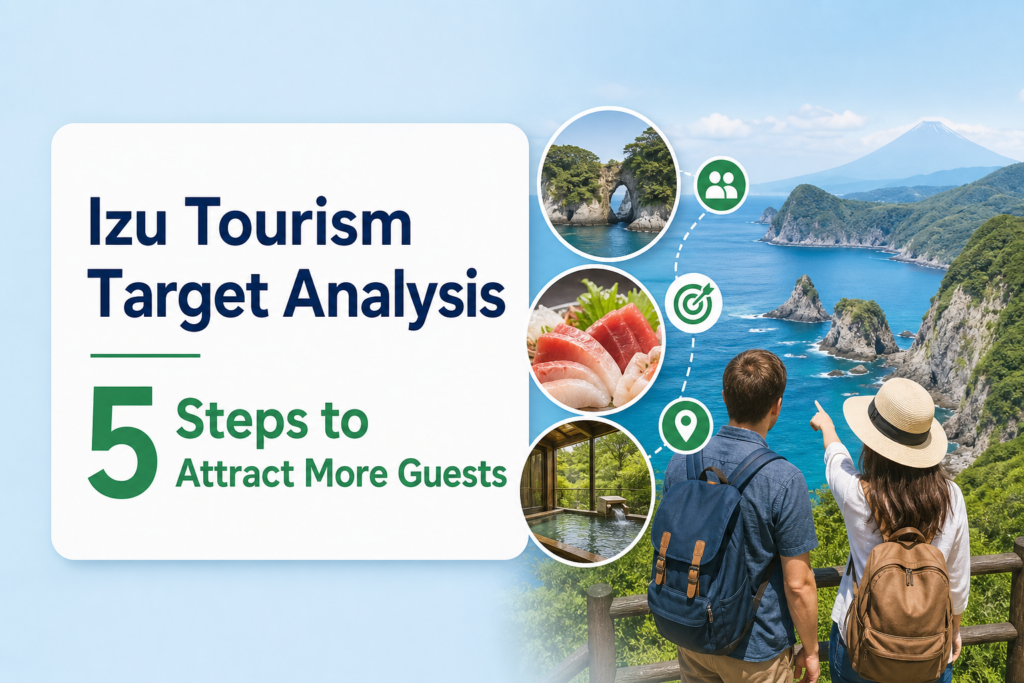
Discover how Izu tourism target analysis can boost guest numbers. Follow our 5-step marketing roadmap to attract international travelers and grow your business.
 執筆者:Hikaru SonedaCEO
Many hotel owners and tourism operators in the Izu region are struggling to regain the high guest numbers they once enjoyed while feeling overwhelmed by the complexities of modern digital marketing.
This article provides a comprehensive Izu tourism target analysis and a practical five-step roadmap to help your business attract international travelers and achieve sustainable growth.
Why is Izu tourism target analysis essential for regional business recovery?
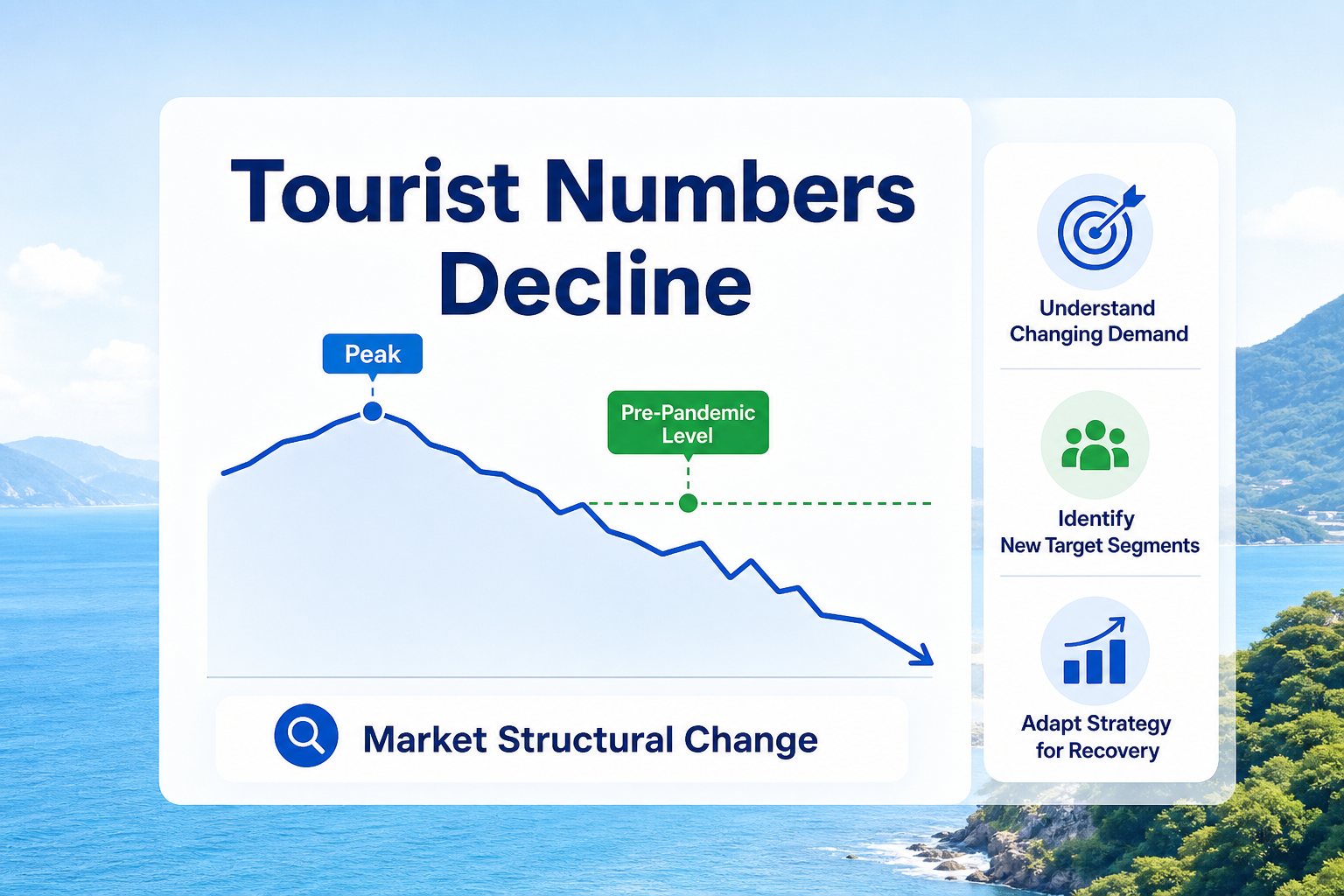
The Izu region has faced a significant structural decline in visitor numbers over the last two decades, making a precise Izu tourism target analysis critical for business survival. According to Shizuoka Prefecture statistics, the total number of tourists in Izu peaked in the early 2000s at approximately 60 million annually but fell to about 45 million by 2019. This downward trend was further exacerbated by the global pandemic in 2020, where some areas saw a staggering 40 to 50 percent decrease in visitors, particularly in major hubs like Atami, Ito, and Shimoda.
The traditional business model that relied on domestic group tours is no longer sufficient for maintaining high occupancy rates. Statistics show that the average occupancy rate for hotels and ryokans in Izu was around 50 to 60 percent in 2019, but this plummeted to the 10 percent range during the spring of 2020. With corporate group travel decreasing by roughly 60 percent compared to pre-pandemic levels, businesses must now shift their focus toward individual international travelers who seek authentic local experiences.
To recover effectively, local businesses need to understand the changing demographics and preferences of modern travelers. While domestic visitors often find the ‘hot springs and seafood’ content repetitive, international tourists view these as unique cultural assets. By analyzing data on traveler movement and satisfaction, businesses can move away from stagnant marketing and create fresh, appealing value propositions that resonate with a global audience.
参考: Izu tourism target analysis、第Ⅰ部 平成28年 観光の動向
What are the key steps to attract international travelers to Izu?
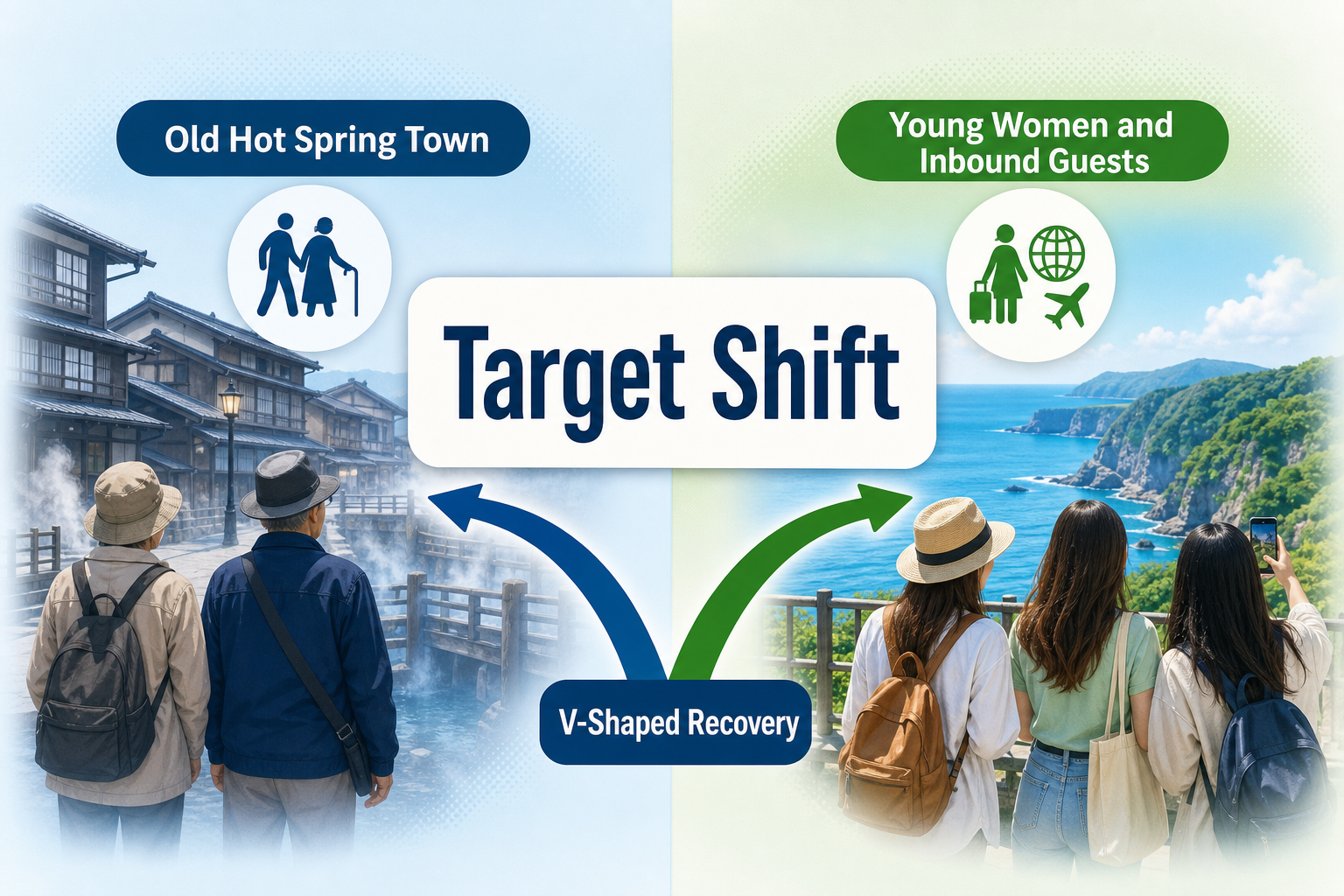
Attracting international visitors requires a strategic shift from general promotion to targeted digital engagement. One successful example of this shift is seen in a destination that rebranded from an ‘old man’s hot spring town’ to a destination for younger women and international guests, leading to a V-shaped recovery. Its overnight guests grew from 2.46 million in 2011 to 3.11 million in 2019. This was achieved by focusing on specific target segments and utilizing consistent event marketing, such as the fireworks displays held over 15 times a year.
The first step for any Izu business is to improve online visibility on global platforms where international travelers plan their trips. Many local operators currently suffer from low visibility due to a lack of English-language content and weak presence on Online Travel Agencies (OTAs). By optimizing listings on platforms like Airbnb, Booking.com, and TripAdvisor, businesses can ensure they are discoverable by the growing number of visitors returning to Japan since 2023.
Leveraging Digital Data for Precise Targeting
参考: strategic shift from general promotion to targeted digital engagement
What results did regional businesses achieve through targeted inbound marketing?
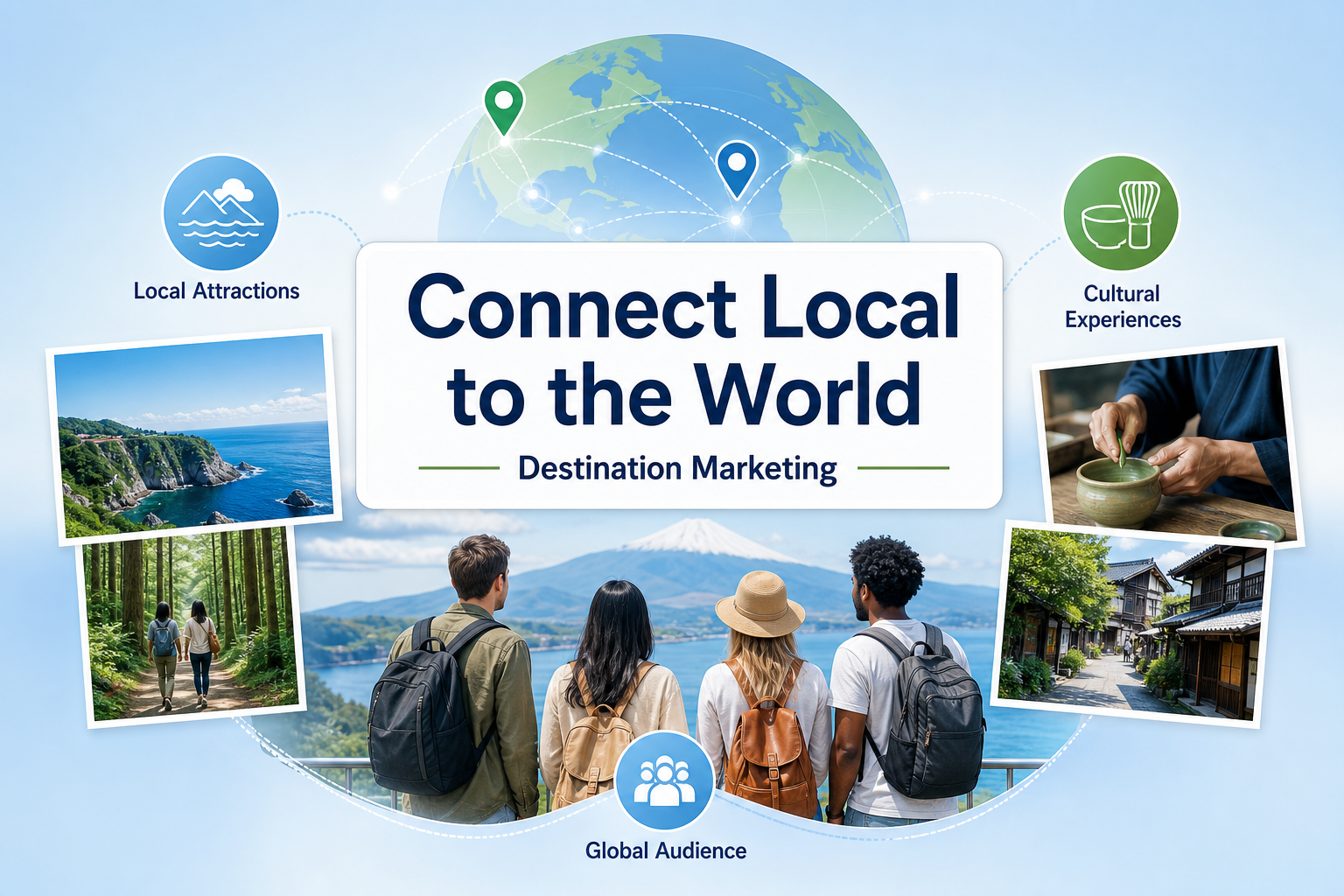
Our company’s results demonstrate that a dedicated focus on inbound marketing can transform the performance of regional tourism businesses. In one case, a tourism promotion business in Shizuoka worked with us to highlight local attractions and cultural experiences for an international audience. By creating multilingual content and implementing destination marketing strategies, the business significantly expanded its global reach. This project not only improved awareness among potential visitors but also supported sustainable growth for the local community.
Another example of our company’s results involves a regional hotel that sought to increase its bookings from overseas guests. We focused on optimizing their OTA listings and strengthening their social media presence with English-language content. As a result, the hotel established a much stronger online brand and saw a significant increase in inquiries and bookings from international travelers. This shift allowed the hotel to reduce its reliance on domestic markets and stabilize its revenue throughout the year.
参考: targeted inbound marketing
How can you apply these practical marketing steps to your business?

To successfully implement an Izu tourism target analysis, your business should follow a structured approach that prioritizes digital accessibility and cultural storytelling. Many businesses fail not because their service is poor, but because international travelers simply cannot find them or understand what they offer. By following these five practical steps, you can bridge the gap between your local hospitality and the global market.
- Analyze Current Visitor Data: Use tools like Google Business Profile insights and OTA analytics to understand your current visitor demographics and identify which international markets are showing interest in your area.
- Optimize OTA and Google Maps Listings: Ensure your business is accurately represented in English on Booking.com, Airbnb, and Google Maps. High-quality photos and clear English descriptions are essential for building trust with overseas guests.
- Develop Multilingual Content: Create a multilingual website or landing page that explains your unique value. Focus on ‘storytelling’—explain the history of your hot spring or the origin of your local ingredients to create an emotional connection.
- Engage via International Social Media: Launch an English-language Instagram or TikTok account. Use visual content to showcase the daily life, seasonal beauty, and authentic experiences that international travelers crave.
- Monitor and Refine Your Strategy: Regularly check your booking data and social media engagement. Adjust your content and advertising based on what resonates most with your target audience to ensure long-term ROI.
How does professional multilingual marketing ensure long-term success for local businesses?
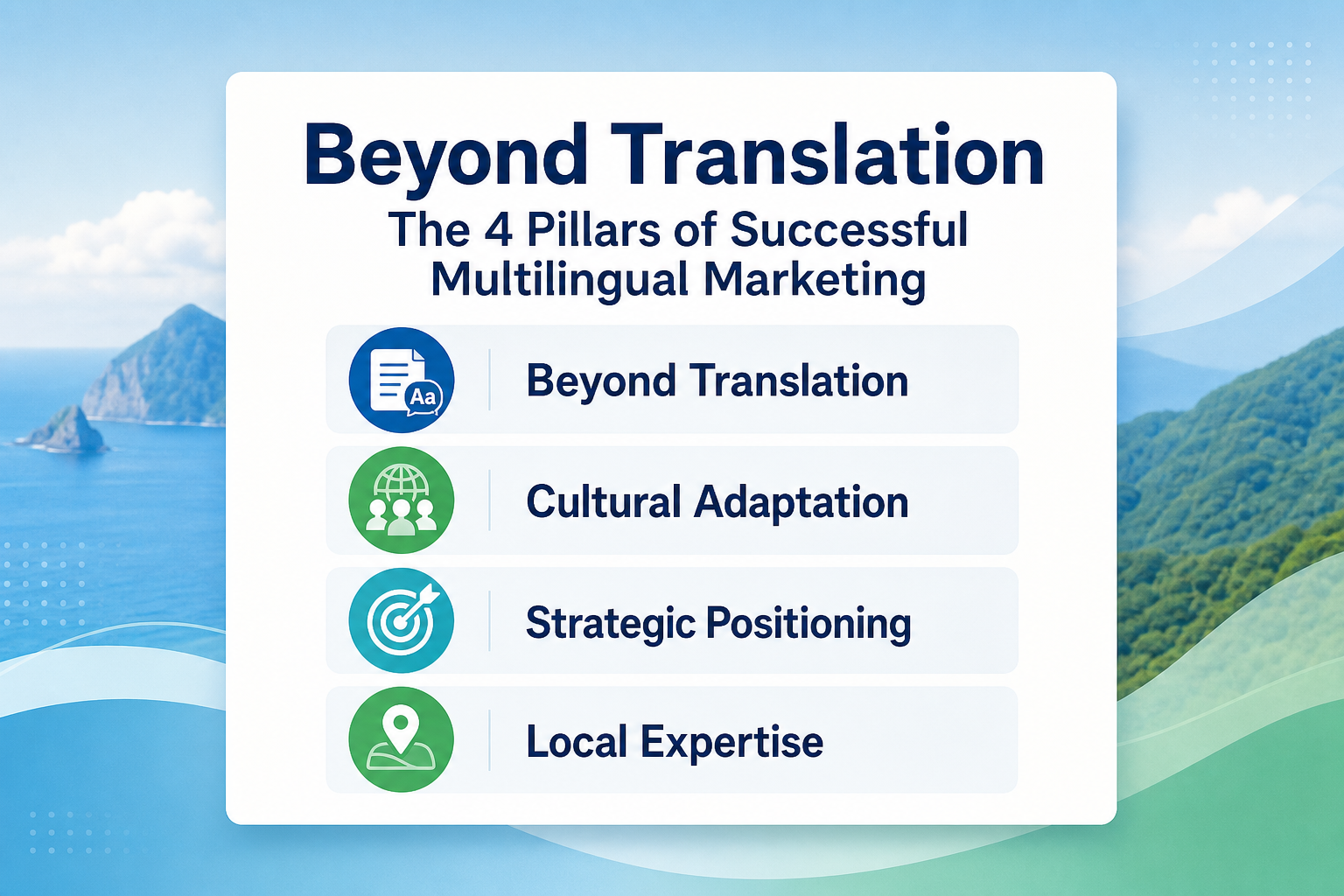
Professional marketing goes beyond simple translation; it involves cultural adaptation and strategic positioning. At Glocal by Shinker, we believe that every region has unique stories and cultures worth sharing. Our team, led by CEO Hikaru Soneda, combines international experience with local expertise to help Shizuoka businesses connect with the world. We don’t just provide translations; we build a digital bridge that reflects the authentic hospitality of your business while meeting the expectations of global travelers.
Our approach is data-driven and results-oriented, focusing on measurable outcomes like increased bookings and higher online visibility. We understand that small and medium-sized businesses have limited time and resources. That is why we offer flexible plans to make professional inbound marketing accessible to everyone from small guesthouses to established ryokans. Detailed pricing is available upon request.
| Plan Type | Target Business | Monthly Fee | Key Services |
|---|---|---|---|
| Accommodation Economy | Guesthouses / Small Hotels | Please contact us for details | OTA Optimization, Basic Inbound Support |
| Accommodation Standard | Ryokans / Hotels | Please contact us for details | OTA Management, English Instagram |
| Restaurant Economy | Cafes / Local Eateries | Please contact us for details | English Instagram Management |
| Restaurant Standard | Established Restaurants | Please contact us for details | Instagram, YouTube Shorts, TikTok |
参考: professional multilingual marketing
Analyzing the shift from domestic group tours to individual international travelers
The decline of the ‘Shain Ryoko’ or corporate employee trip has fundamentally changed the landscape of Izu tourism. Research indicates that corporate group travel has decreased by 60 percent compared to the pre-pandemic era. This shift means that the large-scale banquet halls and massive bus parking lots of the 1980s are no longer the primary drivers of revenue. Instead, the market is moving toward ‘FIT’ (Free Independent Travelers) who travel in smaller groups and prioritize personalization over standardized packages.
Individual international travelers tend to stay longer and spend more on unique local experiences compared to domestic group tourists. While the average domestic visitor might stay for only one night, there is a growing trend of international guests seeking ‘long-stay’ options ranging from one week to one month to deeply immerse themselves in the Izu lifestyle. Adapting your business to cater to these long-term visitors can significantly improve your average revenue per guest.
Overcoming local challenges: Accessibility and facility modernization in the digital age
One of the major hurdles identified in Izu tourism target analysis is the perceived difficulty of transportation and the aging of infrastructure. Many facilities were built during the 1960s to 1980s, and the resulting老朽化 (deterioration) can be a deterrent for modern guests. However, digital tools can help mitigate these issues. For example, the ‘Izuko’ MaaS (Mobility as a Service) app was tested to help visitors navigate the peninsula more easily, proving that technology can bridge the gap created by traditional transportation challenges.
Digital marketing allows businesses to turn ‘old’ into ‘authentic.’ Instead of seeing an aged ryokan as a disadvantage, targeted marketing can frame it as a ‘historic cultural experience’ for international guests who value traditional Japanese aesthetics. By improving your digital presence, you can attract guests who are specifically looking for the charm of an older building, provided that the service and online communication are modern and efficient.
To begin your journey toward a successful inbound strategy, contact Glocal by Shinker today. We are located just a 10-minute walk from the North Exit of JR Shizuoka Station and are ready to help you navigate the international tourism market. Whether you need help with OTA optimization or a complete multilingual social media strategy, our team is here to support your sustainable growth.
Frequently Asked Questions
Q1. What is Izu tourism target analysis?
It is the process of identifying and studying specific groups of travelers most likely to visit Izu. By understanding their needs, local businesses can create better services and marketing messages that directly appeal to those potential guests.
Q2. Why is targeting international travelers important for Izu’s recovery?
Focusing on international travelers helps tap into a growing market beyond local visitors. Attracting global guests increases occupancy rates and helps regional businesses recover by diversifying their customer base and reducing reliance on domestic trends alone.
Q3. How does multilingual marketing help local businesses in the long run?
Professional multilingual marketing ensures that information is accurate and culturally relevant for foreign guests. This builds trust, improves the guest experience, and leads to positive reviews, which helps maintain a steady flow of international visitors over time.
Q4. What is the first step I should take to apply these marketing steps?
The first step is to analyze your current guest data and identify which specific international groups are most interested in your offerings. Once you know your target, you can customize your digital content to match their specific travel preferences.
Q5. Can small businesses achieve results without a large marketing budget?
Yes, by following a targeted roadmap, small businesses can focus their efforts on the most effective channels. Precise targeting prevents wasting resources on broad advertising, allowing even small operators to see improvements in guest numbers through strategic inbound marketing.